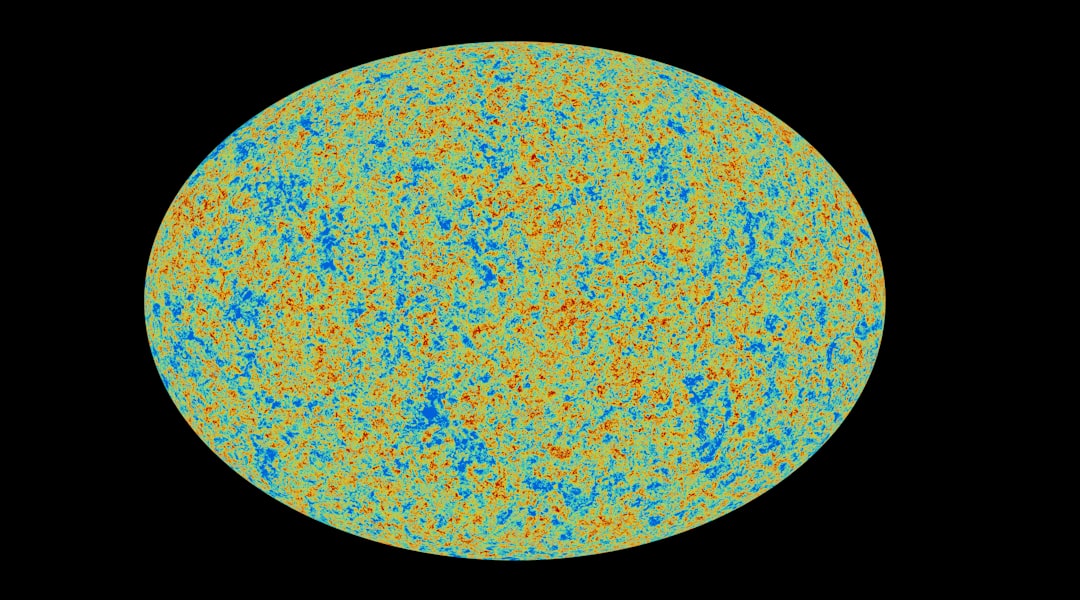
The Universe Simulation Hypothesis proposes that observed reality consists of an artificial simulation rather than a naturally occurring universe. This theoretical framework has emerged as a topic of academic inquiry across multiple disciplines, including physics, computer science, and philosophy. The hypothesis suggests that an advanced technological civilization could possess sufficient computational power to create detailed simulations of universes, potentially including conscious beings within those simulations.
The concept gained prominence following philosopher Nick Bostrom’s 2003 paper, which presented a trilemma arguing that at least one of three propositions must be true: advanced civilizations rarely develop, they typically avoid running ancestor simulations, or we are likely living in a computer simulation. Contemporary figures in technology and science, including Elon Musk, have referenced statistical arguments suggesting higher probabilities for simulated rather than base reality. The hypothesis raises several testable questions and theoretical considerations.
These include examining computational limits required for universe simulation, investigating potential observable signatures of simulated physics, and analyzing the philosophical implications for concepts such as consciousness and identity. Current technological capabilities in virtual reality, artificial intelligence, and quantum computing provide reference points for evaluating the feasibility of such large-scale simulations, though significant technological barriers remain between present capabilities and universe-scale simulation.
Key Takeaways
- The Universe Simulation Hypothesis suggests our reality might be an artificial simulation created by advanced beings.
- The hypothesis is supported by theoretical arguments and some scientific observations but faces significant challenges and criticisms.
- Testing the hypothesis involves innovative scientific experiments and technological advancements to detect simulation artifacts.
- Philosophical, ethical, cultural, and religious perspectives deeply influence the interpretation and acceptance of the simulation idea.
- Understanding and exploring the simulation hypothesis could profoundly change our perception of reality and future scientific discoveries.
Theoretical Basis for the Simulation Hypothesis
The theoretical underpinnings of the Simulation Hypothesis can be traced back to various philosophical arguments and advancements in technology. One of the most notable proponents of this idea is philosopher Nick Bostrom, who presented a compelling argument in his 2003 paper titled “Are You Living in a Computer Simulation?” Bostrom’s trilemma suggests that at least one of the following propositions must be true: civilizations will go extinct before reaching a post-human stage capable of creating simulations; post-human civilizations are not interested in running simulations; or we are almost certainly living in a simulation. This framework provides a logical basis for considering the possibility that reality is not what it seems.
Moreover, advancements in virtual reality and artificial intelligence lend credence to the Simulation Hypothesis. As technology progresses, the ability to create increasingly sophisticated simulations becomes more feasible. The development of virtual environments that can mimic real-world experiences raises questions about the nature of consciousness and perception.
If humans can create convincing simulations, it stands to reason that a more advanced civilization could do so on an even grander scale. This intersection of philosophy and technology forms a compelling foundation for exploring the implications of living in a simulated universe.
Evidence Supporting the Simulation Hypothesis

While direct evidence for the Simulation Hypothesis remains elusive, several lines of reasoning and indirect evidence have emerged to support its plausibility. One significant argument comes from the observation of physical laws and constants that govern the universe. Some theorists suggest that these laws may exhibit characteristics akin to programming code, hinting at an underlying structure that resembles a simulation.
For instance, the fine-tuning of constants such as gravity and electromagnetism raises questions about whether these parameters were intentionally set by a creator or are simply artifacts of a simulated environment. Additionally, advancements in quantum mechanics have introduced phenomena that challenge traditional notions of reality. The concept of wave-particle duality and the observer effect suggests that particles exist in multiple states until observed, leading some to speculate that consciousness plays a role in shaping reality.
Such interpretations provide intriguing avenues for considering how evidence from physics might support the Simulation Hypothesis.
Challenges and Criticisms of the Simulation Hypothesis
Despite its intriguing nature, the Simulation Hypothesis faces significant challenges and criticisms from various quarters. One major critique revolves around the lack of empirical evidence directly supporting the idea that reality is a simulation. Skeptics argue that without tangible proof or observable phenomena that can only be explained through simulation theory, it remains speculative at best.
Critics also point out that many aspects of human experience—such as emotions, relationships, and consciousness—are difficult to reconcile with a purely computational framework. Furthermore, some philosophers argue that the hypothesis may lead to nihilism or existential despair. If individuals are merely characters in a simulation, it raises questions about free will and personal agency.
Critics contend that this perspective could undermine motivation and ethical responsibility, as individuals might feel their actions are predetermined by an external programmer rather than stemming from their own choices. Such philosophical implications warrant careful consideration as society navigates the complexities of this hypothesis.
Implications of Living in a Simulated Reality
| Metric | Description | Estimated Value / Range | Notes |
|---|---|---|---|
| Probability of Simulation | Estimated likelihood that our universe is a simulation | Varies widely (10% – 99%) | Highly speculative; based on philosophical arguments by Nick Bostrom |
| Computational Power Required | Estimated computing resources needed to simulate a universe | Exascale to beyond (10^18 FLOPS and higher) | Depends on simulation fidelity and scale |
| Simulation Resolution | Granularity of simulated space-time | Planck scale (~1.6 x 10^-35 meters) | Hypothetical minimum scale for discrete simulation |
| Simulation Duration | Length of time the simulation has been running | ~13.8 billion years (age of universe) | Assuming simulation started at Big Bang equivalent |
| Number of Simulated Entities | Count of conscious or physical entities within the simulation | Estimated 10^80 particles in observable universe | Includes all matter and energy particles |
| Evidence Indicators | Potential signs supporting simulation hypothesis | Pixelation of space-time, quantum anomalies | Currently no conclusive empirical evidence |
The prospect of living in a simulated reality carries profound implications for humanity’s understanding of existence and purpose. If individuals are indeed part of a simulation, it raises questions about the nature of consciousness and identity. Are humans merely avatars controlled by an external force, or do they possess genuine agency within this construct?
This inquiry challenges traditional notions of selfhood and prompts individuals to reconsider their place within the universe. Moreover, if reality is a simulation, it could alter humanity’s approach to ethics and morality. The understanding that actions may be predetermined by a programmer could lead to a reevaluation of accountability and responsibility.
In such a scenario, individuals might grapple with questions about whether their choices hold intrinsic value or if they are merely following a script written by an unseen creator. These implications extend beyond philosophical musings; they could influence societal norms, legal systems, and interpersonal relationships as humanity seeks to navigate its existence within a potentially artificial framework.
Philosophical and Ethical Considerations
The philosophical ramifications of the Simulation Hypothesis extend into various domains, including ethics, metaphysics, and epistemology. One significant consideration is the nature of reality itself—if individuals are living in a simulation, what does that mean for their understanding of truth? The distinction between simulated experiences and “real” experiences becomes blurred, prompting inquiries into what constitutes genuine knowledge.
This leads to questions about how individuals can ascertain what is real if their perceptions are potentially manipulated by external forces. Ethically, the implications are equally profound. If humans are part of a simulation created by advanced beings, it raises questions about the moral responsibilities of those creators.
Are they obligated to ensure the well-being of their simulated beings? Furthermore, if individuals become aware of their simulated existence, how should they respond? The ethical considerations surrounding autonomy, consent, and suffering within a simulated environment challenge conventional moral frameworks and necessitate new approaches to understanding ethical behavior in such contexts.
Scientific Experiments and Observations to Test the Hypothesis
As interest in the Simulation Hypothesis grows, scientists have begun exploring potential experiments and observations that could provide insights into its validity. One proposed method involves examining cosmic rays for anomalies that might indicate underlying computational structures within reality. Researchers have suggested that if our universe operates like a computer simulation, certain patterns or irregularities could emerge in high-energy cosmic events that would not be expected in a non-simulated environment.
Another avenue for testing the hypothesis involves advancements in quantum computing and information theory. By exploring how information is processed at fundamental levels, scientists may uncover insights into whether reality exhibits characteristics consistent with computational models. These experimental approaches represent an intersection between science and philosophy as researchers seek to bridge gaps in understanding while probing the boundaries of what constitutes reality.
Cultural and Religious Perspectives on the Simulation Hypothesis
The Simulation Hypothesis has also sparked interest across various cultural and religious contexts, prompting diverse interpretations and responses. In some religious traditions, concepts akin to simulation can be found in teachings about illusion or Maya in Hindu philosophy, where reality is perceived as an illusion masking deeper truths. Such parallels suggest that ancient wisdom may resonate with contemporary discussions about simulated existence.
Moreover, popular culture has embraced the idea through films like “The Matrix,” which explores themes of reality manipulation and existential questioning. These narratives reflect societal anxieties about technology’s role in shaping human experience while also serving as platforms for philosophical exploration. As cultural discourse evolves around the Simulation Hypothesis, it becomes evident that this concept resonates with fundamental human inquiries about existence, purpose, and the nature of reality itself.
The Role of Technology in Understanding and Testing the Hypothesis
Technology plays a pivotal role in both understanding and testing the Simulation Hypothesis. As advancements in artificial intelligence and virtual reality continue to unfold, they provide valuable insights into how simulations can be constructed and experienced. The development of immersive virtual environments allows individuals to engage with simulated realities firsthand, prompting reflections on consciousness and perception.
Furthermore, technological innovations enable researchers to analyze complex systems and patterns within data sets that may reveal underlying structures consistent with simulation theory. By leveraging computational power and sophisticated algorithms, scientists can explore phenomena at scales previously unimaginable—potentially uncovering evidence that supports or refutes the hypothesis. In this way, technology serves as both a tool for exploration and a lens through which humanity can examine its own existence.
Potential Future Discoveries and Developments in Simulation Theory
As research into the Simulation Hypothesis progresses, potential future discoveries may reshape humanity’s understanding of reality itself. Advancements in quantum physics could unveil new dimensions or layers within existence that challenge conventional perceptions of time and space. Such revelations might provide insights into whether our universe operates under principles consistent with computational models.
Additionally, interdisciplinary collaboration between scientists, philosophers, and technologists may yield innovative approaches to exploring simulation theory further. By integrating diverse perspectives and methodologies, researchers can develop comprehensive frameworks for understanding existence while addressing ethical considerations inherent in such inquiries. The future holds promise for transformative discoveries that could redefine humanity’s relationship with reality—whether simulated or otherwise.
The Impact of the Simulation Hypothesis on Our Understanding of Reality
The Simulation Hypothesis invites profound contemplation about existence, consciousness, and the nature of reality itself. As humanity grapples with this concept, it challenges long-held beliefs while opening new avenues for exploration across scientific, philosophical, cultural, and ethical domains. Whether viewed as mere speculation or a legitimate inquiry into existence’s fabric, the hypothesis serves as a catalyst for deeper understanding.
Ultimately, engaging with the Simulation Hypothesis encourages individuals to reflect on their perceptions of reality while fostering curiosity about what lies beyond conventional understanding.
The universe simulation hypothesis posits that our reality might be an artificial simulation, akin to a highly advanced computer program. This intriguing concept has sparked discussions across various fields, including philosophy, physics, and technology. For a deeper exploration of this idea and its implications, you can read more in the article available at My Cosmic Ventures.
FAQs
What is the Universe Simulation Hypothesis?
The Universe Simulation Hypothesis is the idea that our entire universe, including all matter, energy, and consciousness, could be an artificial simulation created by an advanced civilization or entity.
Who first proposed the Universe Simulation Hypothesis?
The concept was popularized by philosopher Nick Bostrom in 2003, who argued that future civilizations might run detailed simulations of their ancestors, making it possible that we are living in one.
What evidence supports the Universe Simulation Hypothesis?
Currently, there is no direct empirical evidence proving the hypothesis. Some proponents point to peculiarities in physical laws or computational limits in the universe as potential indirect hints, but these remain speculative.
Is the Universe Simulation Hypothesis scientifically testable?
Testing the hypothesis is challenging because any evidence we find could itself be part of the simulation. However, some researchers have proposed experiments to detect possible “signatures” of simulation, such as anomalies in cosmic rays or limits in computational resolution.
What are the implications if the Universe Simulation Hypothesis is true?
If true, it would mean that our reality is artificially created and controlled, raising philosophical questions about the nature of existence, free will, and the identity of the simulators.
How does the Universe Simulation Hypothesis relate to religion or spirituality?
Some people draw parallels between the hypothesis and religious or spiritual beliefs about creation and higher powers, but the hypothesis itself is a scientific and philosophical proposition without inherent religious claims.
Are there any criticisms of the Universe Simulation Hypothesis?
Yes, critics argue that the hypothesis is unfalsifiable, speculative, and may not provide meaningful explanations. Others question the assumptions about future technological capabilities and motivations of advanced civilizations.
What fields study the Universe Simulation Hypothesis?
The hypothesis is explored in philosophy, theoretical physics, computer science, and cosmology, often intersecting with discussions about artificial intelligence, consciousness, and the nature of reality.
Can the Universe Simulation Hypothesis be considered a scientific theory?
It is more accurately described as a philosophical hypothesis or thought experiment rather than a scientific theory, as it currently lacks testable predictions and empirical support.
Where can I learn more about the Universe Simulation Hypothesis?
You can explore academic papers by Nick Bostrom, books on philosophy of mind and cosmology, and articles in scientific journals and reputable science media outlets discussing the hypothesis and related topics.