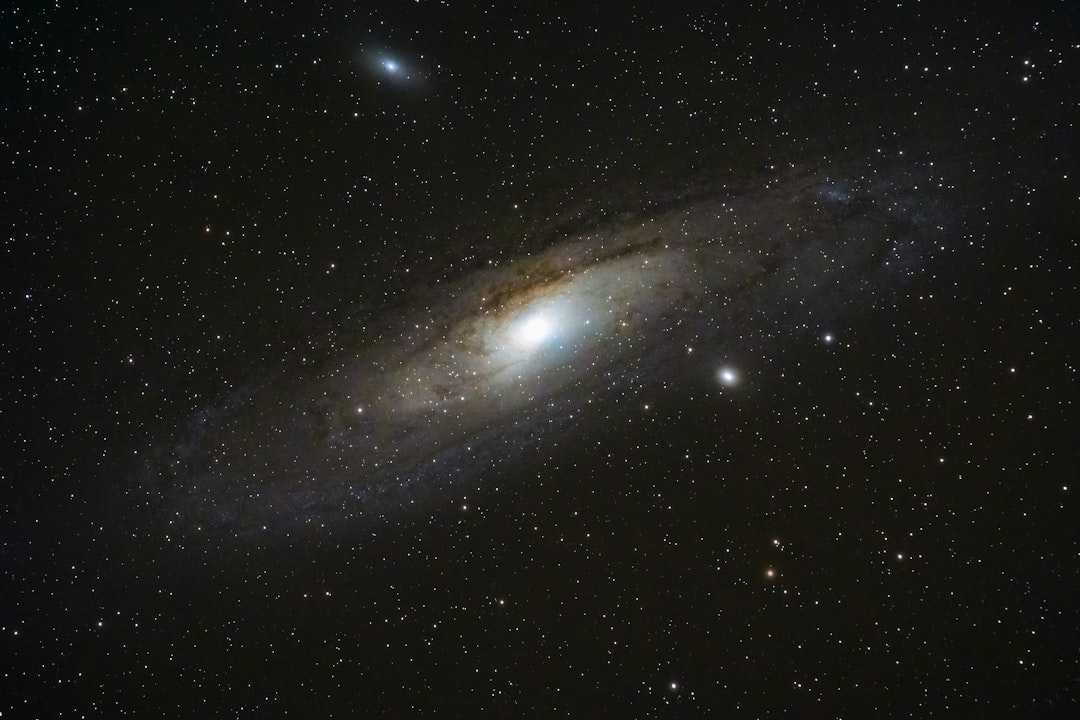
The universe, in its vastness and complexity, can be perceived as a self-correcting code, an intricate tapestry woven from the threads of physical laws, cosmic events, and biological processes. This perspective invites a deeper understanding of how the cosmos operates, suggesting that it is not merely a chaotic expanse but rather a dynamic system capable of adjusting and refining itself over time. The notion of the universe as a self-correcting entity challenges traditional views of determinism and randomness, proposing instead that there exists an underlying order that governs the evolution of all things.
As humanity continues to explore the cosmos, the idea of a self-correcting universe offers profound implications for both scientific inquiry and philosophical contemplation. It raises questions about the nature of existence, the role of consciousness, and the interconnectedness of all phenomena. By examining the universe through this lens, one can appreciate the delicate balance between chaos and order, and how this balance contributes to the ongoing narrative of creation and destruction that defines the cosmos.
Key Takeaways
- The universe operates like a self-correcting code, continuously adjusting through fundamental physical laws.
- Feedback mechanisms and chaos-order dynamics enable the universe to adapt, self-repair, and evolve over time.
- Biological systems reflect the universe’s self-correcting nature, highlighting its characteristics as a living, complex adaptive system.
- Entropy plays a crucial role in balancing disorder and order within the universe’s self-correction processes.
- Viewing the universe as a self-correcting code offers profound implications for scientific understanding and philosophical perspectives.
The Laws of Physics: The Fundamental Code of the Universe
At the heart of the universe’s self-correcting nature lies the fundamental laws of physics, which serve as the foundational code governing all interactions and phenomena. These laws, from Newton’s laws of motion to Einstein’s theory of relativity, provide a framework through which the behavior of matter and energy can be understood. They are not arbitrary constructs but rather universal principles that have withstood the test of time, revealing a remarkable consistency in how the universe operates.
The laws of physics act as a guiding force, ensuring that even in moments of apparent chaos, there is an underlying order that facilitates self-correction. For instance, when celestial bodies collide or when particles interact at high energies, the outcomes may seem unpredictable. However, these events are still bound by physical laws that dictate their behavior, allowing for a return to equilibrium over time.
This self-correcting mechanism is evident in phenomena such as gravitational attraction, which ensures that planets remain in stable orbits around stars, or thermodynamic principles that govern energy transfer and transformation.
Evolution of the Universe: A Continuous Self-Correction Process

The evolution of the universe itself can be viewed as a continuous process of self-correction, marked by cycles of creation and destruction. From the Big Bang to the formation of galaxies, stars, and planets, each stage in this grand narrative reflects an ongoing adjustment to the conditions present at any given moment. The universe is not static; it is in a constant state of flux, adapting to changes in energy distribution, matter density, and cosmic expansion.
This evolutionary process is characterized by feedback loops that facilitate self-correction. For example, when a star exhausts its nuclear fuel, it undergoes a transformation that can lead to its collapse into a black hole or its explosion as a supernova. These events not only reshape the immediate environment but also contribute to the formation of new stars and planets from the remnants of their predecessors.
Thus, the universe’s evolution is not merely a linear progression but rather a complex interplay of forces that continuously refine its structure and composition.
The Role of Feedback Mechanisms in the Universe
| Feedback Mechanism | Description | Scale | Impact on Universe | Example |
|---|---|---|---|---|
| Stellar Feedback | Energy and matter released by stars through winds and supernovae | Star clusters, galaxies | Regulates star formation, enriches interstellar medium | Supernova explosions dispersing heavy elements |
| AGN Feedback | Energy output from active galactic nuclei affecting surrounding gas | Galactic, intergalactic | Suppresses or triggers star formation, influences galaxy evolution | Jets from supermassive black holes heating gas |
| Cosmic Microwave Background (CMB) Feedback | Radiation feedback from the early universe affecting matter distribution | Cosmological | Shapes large-scale structure formation | Photon-baryon interactions in early universe |
| Dark Energy Feedback | Acceleration of universe expansion influencing matter clustering | Cosmological | Determines fate and structure growth of universe | Accelerated expansion observed via supernovae |
| Galactic Winds | Outflows of gas driven by star formation and AGN activity | Galactic | Removes gas, regulates star formation rates | Starburst-driven winds in star-forming galaxies |
Feedback mechanisms play a crucial role in the self-correcting nature of the universe, acting as catalysts for change and adaptation. These mechanisms can be observed across various scales, from subatomic particles to entire galaxies. In essence, feedback loops allow systems to respond to changes in their environment, promoting stability and resilience.
One prominent example of feedback in action is found in ecological systems on Earth. When populations of organisms fluctuate due to environmental pressures or resource availability, these changes trigger responses that can either stabilize or destabilize the ecosystem. Similarly, in astrophysics, feedback mechanisms govern star formation rates within galaxies.
When new stars form, they emit radiation and stellar winds that can either trigger further star formation or inhibit it by dispersing surrounding gas and dust. This interplay illustrates how feedback mechanisms are integral to maintaining balance within complex systems.
The Universe’s Ability to Adapt and Adjust to External Influences
The universe’s capacity for adaptation extends beyond internal feedback mechanisms; it also encompasses responses to external influences. Cosmic events such as supernovae or gamma-ray bursts can have far-reaching effects on surrounding regions of space, prompting adjustments in matter distribution and energy flow.
For instance, when a massive star explodes as a supernova, it releases an immense amount of energy and material into space. This event not only enriches the interstellar medium with heavy elements but also triggers shockwaves that compress nearby gas clouds, potentially leading to new star formation. Such adaptations highlight the interconnectedness of cosmic processes and demonstrate how external influences can catalyze significant changes within the universe.
Self-Correction in Biological Systems: The Universe as a Living Organism
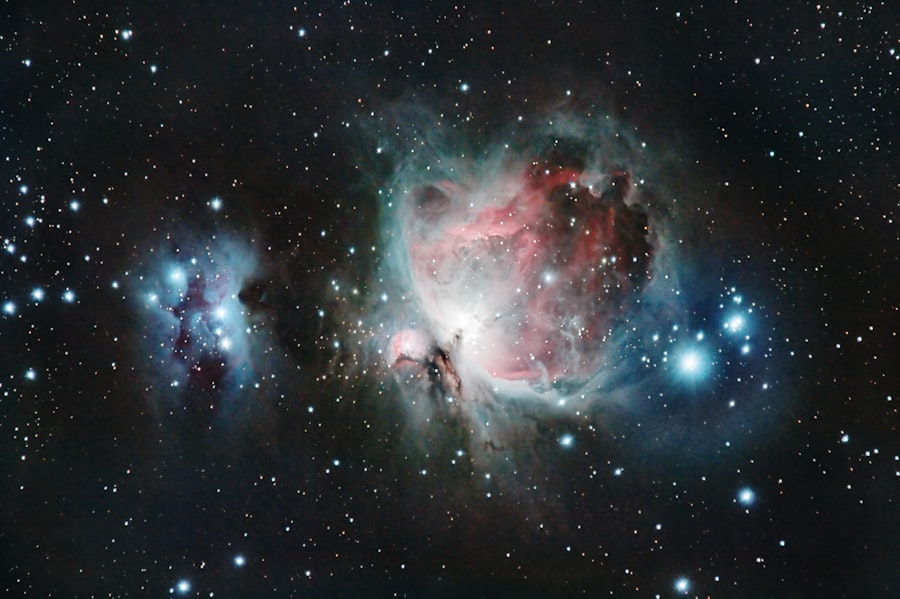
The concept of self-correction is not limited to physical processes; it also extends into biological systems, suggesting that the universe may be likened to a living organism. Just as living beings possess mechanisms for homeostasis—maintaining internal stability despite external fluctuations—the universe exhibits similar qualities through its capacity for self-regulation. In biological systems, feedback loops are essential for maintaining health and balance.
For example, when an organism experiences stress or injury, it activates repair mechanisms that work to restore normal function. Similarly, the universe’s self-correcting nature can be observed in phenomena such as cosmic inflation or dark energy’s role in counteracting gravitational collapse. These processes reflect an inherent drive toward stability and regeneration within the cosmos.
The Role of Chaos and Order in the Self-Correction of the Universe
Chaos and order coexist within the universe, each playing a vital role in its self-correcting dynamics.
This interplay between chaos and order is evident in various natural phenomena, from weather patterns to cosmic structures.
In chaotic systems, small changes can lead to significant consequences—a concept often referred to as the “butterfly effect.” However, this chaos is not devoid of structure; rather, it can give rise to emergent properties that enhance complexity and adaptability. For instance, turbulent flows in fluids may seem erratic but can lead to organized patterns over time. Similarly, cosmic events such as galaxy mergers may initially disrupt existing structures but ultimately contribute to the formation of new galactic configurations.
The Universe’s Capacity for Self-Repair and Regeneration
The universe’s ability to self-repair and regenerate is evident across various scales and contexts. From cosmic phenomena like supernovae enriching interstellar space with elements necessary for life to biological processes such as cellular regeneration, self-repair mechanisms are fundamental to sustaining existence. In astrophysics, when stars die and explode, they scatter their materials across vast distances.
This process not only contributes to the creation of new stars but also enriches planets with essential elements for life. On Earth, ecosystems demonstrate remarkable resilience through processes like succession—where disturbed environments gradually recover and regenerate over time. These examples illustrate how self-repair mechanisms are woven into the fabric of both cosmic and biological systems.
The Role of Entropy in the Self-Correction of the Universe
Entropy plays a paradoxical yet crucial role in the self-correcting nature of the universe. As defined by thermodynamics, entropy measures disorder within a system; however, it also drives processes toward equilibrium. In this sense, entropy acts as both a force for chaos and a catalyst for order.
The second law of thermodynamics states that entropy tends to increase over time in isolated systems. Yet this increase does not imply inevitable decay; rather, it fosters conditions conducive to self-correction. For example, when energy disperses within a system, it can lead to new configurations that promote stability.
In cosmology, this principle is reflected in processes such as cosmic expansion and cooling after the Big Bang—events that ultimately set the stage for structure formation within the universe.
The Universe as a Complex Adaptive System
Viewing the universe as a complex adaptive system provides valuable insights into its self-correcting nature. Complex adaptive systems are characterized by numerous interconnected components that interact dynamically with one another and their environment. This perspective emphasizes adaptability and resilience in response to changing conditions.
In such systems, small perturbations can lead to significant changes over time—a hallmark of self-correction. For instance, ecosystems exhibit complex interactions among species that allow them to adapt to environmental shifts. Similarly, cosmic structures evolve through interactions among galaxies and dark matter halos.
By recognizing the universe as a complex adaptive system, one can appreciate its inherent capacity for self-correction amid uncertainty.
Implications of the Universe as a Self-Correcting Code for Science and Philosophy
The notion of the universe as a self-correcting code carries profound implications for both scientific inquiry and philosophical exploration. It challenges conventional paradigms by suggesting that randomness and determinism are not mutually exclusive but rather intertwined aspects of existence. This perspective encourages scientists to seek deeper connections among seemingly disparate phenomena while fostering interdisciplinary collaboration.
Philosophically, viewing the universe as a self-correcting entity invites contemplation on humanity’s place within this grand tapestry. It raises questions about consciousness, purpose, and interconnectedness—issues that have long intrigued thinkers across cultures and epochs. Ultimately, embracing this perspective may inspire a more holistic understanding of existence—one that recognizes both chaos and order as essential components of life’s intricate dance within the cosmos.
In conclusion, perceiving the universe as a self-correcting code enriches our understanding of its complexities while inviting deeper inquiry into our own existence within this vast expanse. Through exploring its fundamental laws, evolutionary processes, feedback mechanisms, adaptability to external influences, and capacity for regeneration, one can appreciate how intricately woven together all aspects of reality truly are. As humanity continues its quest for knowledge about itself and its surroundings—both scientifically and philosophically—it becomes increasingly clear that embracing this perspective may illuminate pathways toward greater wisdom about life itself amidst an ever-evolving cosmos.
The concept of the universe as a self-correcting code offers fascinating insights into the fundamental nature of reality, suggesting that the cosmos has an inherent ability to maintain order and balance. For a deeper exploration of this idea, you can read more in the related article found here: The Universe as a Self-Correcting Code. This article delves into the mechanisms that may allow the universe to adapt and evolve, providing a thought-provoking perspective on the interconnectedness of all things.
WATCH THIS! Scientists Say The Universe Is A Quantum Computer (And We Are The Output)
FAQs
What does it mean to describe the universe as a self-correcting code?
Describing the universe as a self-correcting code suggests that the fundamental laws and structures of the universe operate similarly to error-correcting codes in information theory. This means that the universe has built-in mechanisms to maintain stability and consistency by correcting deviations or “errors” in physical processes.
How is the concept of error correction applied in physics?
In physics, error correction is often discussed in the context of quantum error correction, where quantum information is protected from decoherence and noise. The idea extends to the universe by proposing that physical laws inherently prevent or correct inconsistencies, ensuring the universe’s coherence over time.
What scientific theories support the idea of the universe as a self-correcting code?
Theories in quantum information science, quantum gravity, and holographic principles support this idea. For example, the AdS/CFT correspondence in string theory suggests that spacetime geometry can be described by quantum error-correcting codes, implying a self-correcting structure at a fundamental level.
Is the universe literally a computer code?
No, the universe is not literally a computer code. The analogy is used to describe how physical laws might function similarly to codes that detect and correct errors, maintaining the universe’s order and consistency.
What implications does this concept have for our understanding of physics?
If the universe operates like a self-correcting code, it could provide new insights into the nature of spacetime, quantum mechanics, and gravity. It may help unify different physical theories and improve our understanding of how information is preserved in the universe.
Can this concept be tested experimentally?
Testing the universe as a self-correcting code is challenging but ongoing research in quantum computing, black hole physics, and quantum gravity aims to find evidence supporting this framework through experiments and observations.
Who are some key researchers in this field?
Researchers such as John Preskill, Patrick Hayden, and others working in quantum information theory and quantum gravity have contributed significantly to the development of ideas related to the universe as a self-correcting code.
How does this idea relate to quantum error correction?
Quantum error correction is a method to protect quantum information from errors due to decoherence. The concept that the universe itself uses similar mechanisms suggests that fundamental physical processes might inherently correct errors to preserve information and maintain physical laws.
Does this concept explain the stability of physical laws over time?
Yes, the idea implies that the universe’s self-correcting nature helps maintain the consistency and stability of physical laws despite fluctuations or disturbances, ensuring the universe’s long-term coherence.
Is the self-correcting code concept widely accepted in the scientific community?
While it is a compelling and active area of research, the concept is still theoretical and not universally accepted. It represents a promising approach to understanding complex physical phenomena but requires further evidence and development.