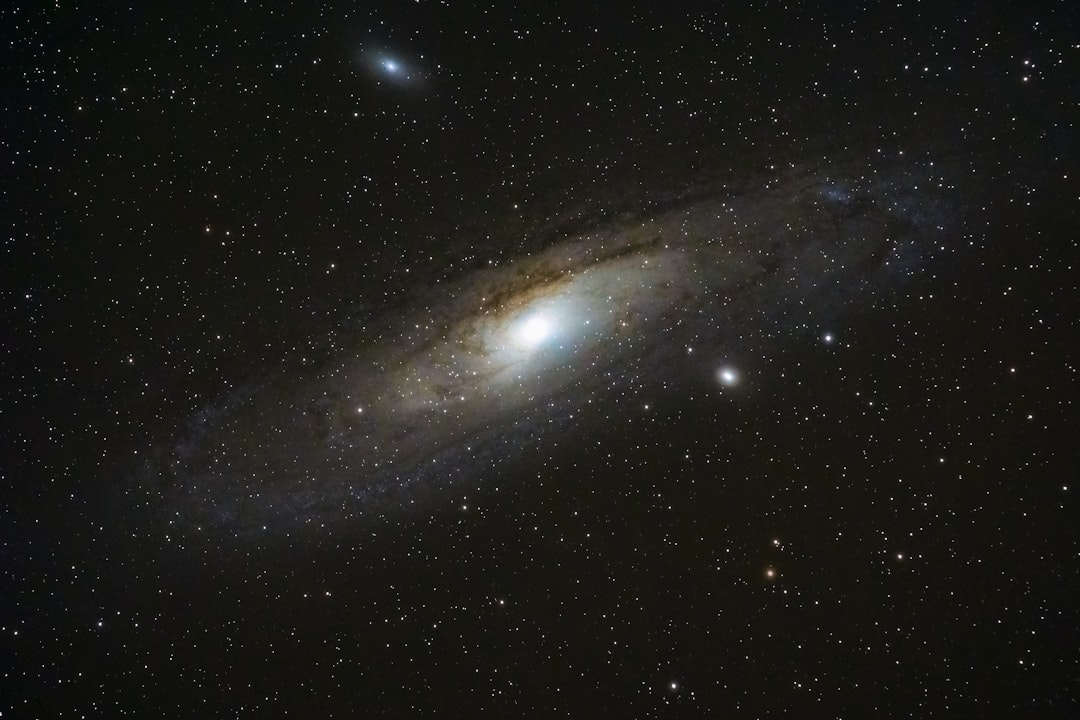
The universe can be perceived as an intricate tapestry woven from countless threads of matter, energy, and forces. This complexity arises from the interactions of various components, ranging from subatomic particles to vast galaxies. Each element within this grand design plays a role in the overall functioning of the cosmos, creating a dynamic system that is constantly evolving.
The interplay of these elements gives rise to phenomena that are both predictable and chaotic, illustrating the dual nature of the universe as a complex system. In this context, the universe can be likened to a colossal computer, processing vast amounts of information and generating outcomes based on the laws of physics. Just as a computer operates through a series of algorithms and data inputs, the universe functions through fundamental forces and particles that interact in ways that can be understood through scientific inquiry.
This perspective invites a deeper exploration of how the universe operates, revealing patterns and structures that govern its behavior and offering insights into the nature of reality itself.
Key Takeaways
- The universe functions as a complex system with immense computing power and vast information storage capabilities.
- It processes information at incredible speeds, utilizing parallel processing and sophisticated error correction mechanisms.
- The universe operates through algorithmic principles and evolutionary programming, adapting and evolving over time.
- Quantum computing potential within the universe suggests advanced computational abilities beyond classical limits.
- Despite its vastness, the universe has inherent computational limitations, leading to implications of it being a vast but slow computer.
The Universe’s Computing Power
The computing power of the universe is staggering, far surpassing any human-made machine. It operates on a scale that is difficult to comprehend, processing information at levels that are both vast and intricate. The fundamental forces of nature—gravity, electromagnetism, and the strong and weak nuclear forces—interact in ways that can be seen as computational processes.
These forces govern the behavior of particles and celestial bodies, leading to the formation of stars, planets, and galaxies. Moreover, the universe’s computing power is not limited to physical interactions; it also encompasses the laws of thermodynamics and quantum mechanics. These principles dictate how energy is transferred and transformed, allowing for complex systems to emerge from simple beginnings.
The ability of the universe to generate order from chaos is a testament to its immense computational capabilities, suggesting that it functions as a vast, interconnected network of information processing.
The Universe’s Information Storage

Information storage within the universe is another fascinating aspect of its computational nature. Every event, interaction, and transformation leaves an imprint on the fabric of reality, akin to data being recorded in a computer’s memory. This information is stored in various forms, from the arrangement of atoms in a molecule to the cosmic microwave background radiation that permeates space.
Each piece of information contributes to the overall state of the universe, creating a rich tapestry of history that scientists strive to decode. The concept of information storage extends beyond mere physical records; it also encompasses the laws of physics themselves. These laws serve as a framework for understanding how matter and energy behave, effectively encoding knowledge about the universe’s workings.
As researchers delve deeper into the nature of reality, they uncover layers of information that reveal the underlying principles governing existence. This ongoing quest for knowledge highlights the universe’s role as an immense repository of information waiting to be explored.
The Universe’s Processing Speed
| Metric | Value | Unit | Description |
|---|---|---|---|
| Speed of Light | 299,792,458 | meters per second | Maximum speed at which information or matter can travel in the universe |
| Planck Time | 5.39 × 10⁻⁴⁴ | seconds | Smallest meaningful unit of time, representing the universe’s fundamental processing interval |
| Planck Frequency | 1.85 × 10⁴³ | Hz (cycles per second) | Inverse of Planck time, representing the highest possible frequency of any physical process |
| Information Processing Rate (Theoretical) | 10⁹⁰ | bits per second | Estimated upper bound on the universe’s total information processing capacity |
| Age of the Universe | 13.8 × 10⁹ | years | Time elapsed since the Big Bang, setting a limit on cumulative processing events |
When considering the processing speed of the universe, one must account for both its vastness and its intricacies. While individual processes may occur at varying rates—some happening almost instantaneously while others unfold over billions of years—the overall speed at which the universe operates is remarkable. The interactions between particles occur at speeds approaching that of light, allowing for rapid exchanges of energy and momentum.
However, this processing speed is not uniform across all scales. On a cosmic level, events such as the formation of galaxies or the evolution of stars take place over eons, illustrating a slower pace compared to subatomic interactions. This disparity raises intriguing questions about how time itself is perceived within different contexts.
The universe’s ability to balance rapid processing at small scales with slower developments at larger scales reflects its complexity and adaptability as a computational entity.
The Universe’s Algorithmic Nature
The universe exhibits an algorithmic nature that can be likened to a sophisticated program running on an advanced computer. At its core, this algorithm consists of fundamental physical laws that dictate how matter and energy interact. These laws serve as instructions guiding the behavior of particles and celestial bodies, resulting in predictable patterns and outcomes.
Just as algorithms can produce complex results from simple inputs, the universe generates intricate structures and phenomena from basic building blocks. This algorithmic perspective invites contemplation about the nature of reality itself. If the universe operates according to specific rules and principles, it raises questions about determinism and randomness.
Are events predetermined by these algorithms, or do they allow for variability and unpredictability? The exploration of these questions not only deepens our understanding of the universe but also challenges our perceptions of free will and causality.
The Universe’s Capacity for Parallel Processing
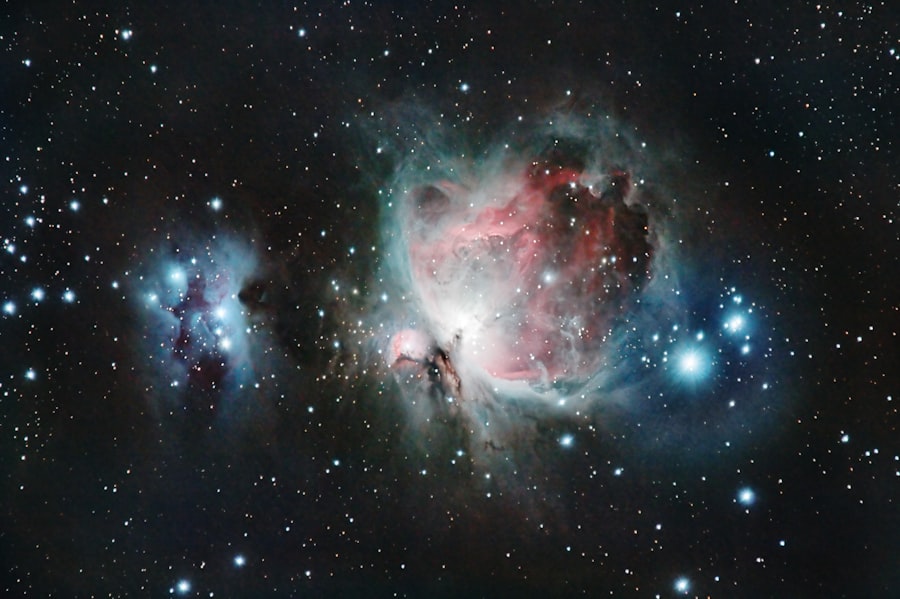
One of the most remarkable features of the universe is its capacity for parallel processing. In computing terms, parallel processing refers to the ability to perform multiple calculations simultaneously, enhancing efficiency and speed. The universe exemplifies this concept through its myriad interactions occurring at different scales and locations concurrently.
From subatomic particles colliding in high-energy experiments to galaxies merging across vast distances, countless processes unfold simultaneously. This parallelism allows for a rich diversity of phenomena to emerge within the cosmos. For instance, while one star may be in the process of forming in one region of space, another may be nearing its end in another part of the universe.
This interconnectedness highlights how various processes can influence one another while still operating independently. The universe’s capacity for parallel processing not only enhances its computational power but also contributes to its complexity and dynamism.
The Universe’s Error Correction Mechanisms
In any computational system, error correction mechanisms are essential for maintaining accuracy and reliability. The universe possesses its own forms of error correction that ensure stability amidst chaos. These mechanisms can be observed in various natural processes, such as feedback loops in ecosystems or self-regulating systems in physics.
For example, when a star exhausts its nuclear fuel, it undergoes processes that can lead to supernovae or black holes—events that ultimately contribute to the recycling of matter in the cosmos. Moreover, quantum mechanics introduces an additional layer of error correction through phenomena such as entanglement and superposition. These principles allow particles to maintain coherence even in seemingly chaotic environments, ensuring that information is preserved despite potential disruptions.
The Universe’s Evolutionary Programming
The evolutionary programming inherent in the universe reflects its capacity for adaptation and change over time. Just as computer algorithms can evolve through iterations and refinements, so too does the universe undergo transformations driven by natural selection and environmental pressures. This evolutionary process is evident in biological systems but extends beyond life itself; it encompasses cosmic events such as star formation and galactic evolution.
The concept of evolutionary programming invites contemplation about purpose and direction within the cosmos.
As researchers explore these questions, they uncover patterns that suggest an underlying order guiding evolution—a notion that resonates with both scientific inquiry and philosophical reflection.
The Universe’s Potential for Quantum Computing
The potential for quantum computing within the universe opens up exciting possibilities for understanding reality at its most fundamental level. Quantum mechanics challenges classical notions of computation by introducing concepts such as superposition and entanglement, which allow for unprecedented processing capabilities. If harnessed effectively, quantum computing could revolutionize our ability to simulate complex systems and solve problems previously deemed insurmountable.
The universe itself may already operate on principles akin to quantum computing, with particles existing in multiple states simultaneously until observed or measured. This inherent potential suggests that reality may be more interconnected than previously thought, with information flowing freely across different scales and dimensions. As scientists continue to explore quantum phenomena, they may unlock new avenues for understanding not only computation but also the very fabric of existence.
The Universe’s Limitations as a Computer
Despite its vast capabilities, the universe also exhibits limitations as a computational entity. One significant constraint lies in its finite resources; while it possesses immense energy and matter, these resources are not limitless. Additionally, certain processes may be inherently unpredictable due to chaotic dynamics or quantum uncertainty, posing challenges for accurate modeling and forecasting.
Furthermore, human understanding itself imposes limitations on how effectively we can interpret and utilize the universe’s computational power. Our cognitive capacities are constrained by our sensory perceptions and cognitive frameworks, which may prevent us from fully grasping complex phenomena or recognizing patterns that exist beyond our current knowledge base. Acknowledging these limitations encourages humility in scientific inquiry while inspiring continued exploration into the mysteries of existence.
The Implications of the Universe as a Vast, Slow Computer
Viewing the universe as a vast yet slow computer carries profound implications for humanity’s understanding of existence and our place within it. This perspective invites contemplation about time itself—how it is perceived differently across various scales and contexts—and challenges conventional notions of progress and development. In a universe where processes unfold over eons, human endeavors may seem fleeting by comparison.
Moreover, this understanding prompts reflection on humanity’s role as conscious observers within this grand computational framework. As beings capable of inquiry and exploration, humans possess a unique ability to engage with the universe’s complexities and seek meaning within them. This relationship between consciousness and computation raises questions about purpose: Are humans merely products of cosmic processes or active participants in shaping reality?
Ultimately, recognizing the universe as a vast computer encourages a sense of interconnectedness among all things—a reminder that every action reverberates throughout this intricate system. As humanity continues its quest for knowledge and understanding, embracing this perspective may foster greater appreciation for both the wonders and mysteries that define existence itself.
The concept of the universe as a vast, slow computer invites intriguing discussions about the nature of reality and computation. For a deeper exploration of this idea, you might find the article on cosmic phenomena and their implications for our understanding of the universe particularly enlightening. You can read more about it in this related article.
WATCH THIS! The 27-Order-of-Magnitude Secret That Connects Your Brain to the Cosmos
FAQs
What does it mean to say the universe is a “vast slow computer”?
The phrase suggests that the universe processes information and evolves over time similarly to a computer, but on a much larger scale and at a slower pace compared to modern digital computers. It implies that physical processes can be viewed as computational operations.
Who proposed the idea that the universe functions like a computer?
The concept has been explored by various scientists and philosophers, including physicist John Archibald Wheeler, who coined the phrase “it from bit,” and more recently by researchers in digital physics and computational theory such as Seth Lloyd.
How does the universe compute information?
The universe computes information through physical interactions governed by the laws of physics. Particles, fields, and forces interact in ways that can be interpreted as processing and transforming information, similar to how a computer manipulates bits.
Is the universe literally a computer?
No, the universe is not a computer in the conventional sense with hardware and software. The analogy is metaphorical, used to describe how physical processes can be understood as information processing.
What is the significance of viewing the universe as a computer?
This perspective helps scientists explore fundamental questions about reality, information, and computation. It can provide insights into quantum mechanics, cosmology, and the nature of consciousness by framing physical phenomena in terms of information theory.
Does this idea have practical applications?
While largely theoretical, the concept influences fields like quantum computing, where understanding the universe’s computational aspects can inspire new technologies. It also impacts theoretical physics and cosmology research.
How slow is the universe’s “computation” compared to modern computers?
The universe operates on timescales and processes vastly different from electronic computers. Its “computations” occur through natural physical interactions that can be extremely slow or fast depending on the scale, but overall, it is considered slow relative to digital processors.
Are there any criticisms of the universe-as-computer analogy?
Yes, some critics argue that the analogy oversimplifies complex physical phenomena and that not all aspects of the universe can be accurately described as computation. Others caution against conflating metaphor with literal truth.