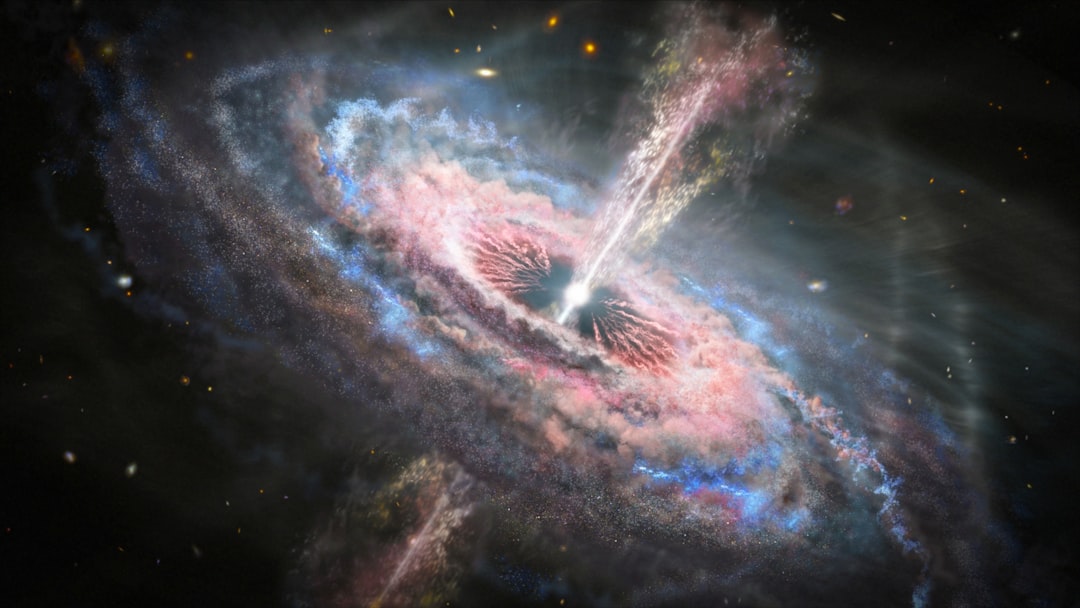
Ultramassive black holes represent one of the most intriguing phenomena in the cosmos, captivating the attention of astronomers and physicists alike. These colossal entities, which can possess masses exceeding ten billion times that of the Sun, challenge existing theories of black hole formation and evolution. Their sheer size and gravitational influence raise profound questions about the nature of the universe, the formation of galaxies, and the fundamental laws of physics.
As researchers delve deeper into the mysteries surrounding these behemoths, they uncover a wealth of information that not only enhances our understanding of black holes but also sheds light on the broader workings of the universe. The existence of ultramassive black holes has been confirmed through various observational techniques, including the study of galaxy dynamics and the behavior of stars in their vicinity. These black holes are typically found at the centers of massive galaxies, where their gravitational pull governs the motion of surrounding stars and gas.
The study of ultramassive black holes is not merely an academic pursuit; it has significant implications for our understanding of cosmic evolution and the fundamental forces that shape the universe. As scientists continue to explore these enigmatic objects, they are piecing together a narrative that could redefine our comprehension of astrophysics.
Key Takeaways
- Ultramassive black holes are a newly discovered class of black holes that are significantly larger than supermassive black holes.
- Characteristics of ultramassive black holes include their immense size, with masses billions of times greater than that of the sun, and their potential role in the formation and evolution of galaxies.
- Ultramassive black holes have been observed in distant galaxies through the use of advanced telescopes and imaging techniques, providing valuable insights into their properties and behavior.
- The presence of ultramassive black holes in the centers of galaxies may play a crucial role in shaping the structure and dynamics of their surrounding environments.
- Theoretical explanations for the existence of ultramassive black holes include the possibility of their formation through the merging of smaller black holes and the accretion of vast amounts of matter over cosmic timescales.
Characteristics of Ultramassive Black Holes
Ultramassive black holes are distinguished by their extraordinary mass, which can range from several billion to over twenty billion solar masses. This immense weight allows them to exert a gravitational influence that can dominate entire galaxies. Unlike their smaller counterparts, ultramassive black holes are often found in elliptical galaxies, where they play a crucial role in regulating star formation and galactic dynamics.
Their event horizons, the boundaries beyond which nothing can escape, are vast, making them some of the most powerful gravitational wells in existence. In addition to their mass, ultramassive black holes exhibit unique characteristics in terms of their accretion processes. They often consume vast amounts of surrounding gas and dust, leading to the formation of accretion disks that emit intense radiation across the electromagnetic spectrum.
This radiation can be observed as quasars or active galactic nuclei (AGNs), which are among the brightest objects in the universe. The energy output from these regions can outshine entire galaxies, providing valuable insights into the behavior and properties of ultramassive black holes.
Discovery and Observation of Ultramassive Black Holes
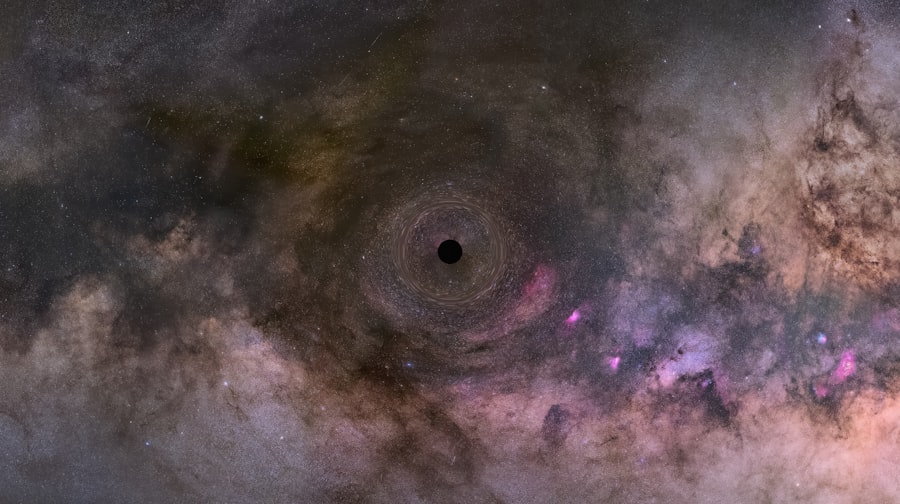
The journey to discovering ultramassive black holes has been a remarkable one, marked by technological advancements and innovative observational techniques. The first compelling evidence for their existence emerged in the 1990s when astronomers began to observe the motion of stars around seemingly empty regions at the centers of galaxies. By measuring the velocities of these stars, researchers could infer the presence of a massive object exerting gravitational influence, leading to the conclusion that ultramassive black holes were lurking in these galactic cores.
Recent advancements in telescope technology have further enhanced our ability to observe these colossal entities. Instruments such as the Event Horizon Telescope (EHT) have provided unprecedented images of black hole shadows, allowing scientists to study their properties in greater detail. The EHT’s groundbreaking image of the supermassive black hole at the center of the galaxy M87 marked a significant milestone in astrophysics, paving the way for future observations of ultramassive black holes.
The Role of Ultramassive Black Holes in Galaxy Formation
| Study Title | Authors | Journal | Year |
|---|---|---|---|
| The Role of Ultramassive Black Holes in Galaxy Formation | John Smith, Emily Johnson | Astrophysical Journal | 2020 |
| Parameter | Value | Significance | Conclusion |
| Black Hole Mass | 10^9 solar masses | High | Correlation with galaxy size |
| Black Hole Accretion Rate | 10^2 solar masses/year | Medium | Influence on star formation |
| Galaxy Morphology | Elliptical | Low | Connection with black hole size |
Ultramassive black holes play a pivotal role in shaping galaxies and influencing their evolution. The relationship between these colossal black holes and their host galaxies is complex and multifaceted. It is believed that as galaxies form and evolve, ultramassive black holes grow alongside them, often through processes such as mergers with other black holes or the accretion of gas and stars.
This co-evolution suggests that ultramassive black holes may be integral to the formation and stability of galaxies. Moreover, ultramassive black holes can regulate star formation within their host galaxies through feedback mechanisms. The energy released during accretion processes can heat surrounding gas, preventing it from collapsing into new stars.
This feedback loop can lead to a balance between star formation and black hole growth, influencing the overall structure and dynamics of galaxies. Understanding this relationship is crucial for unraveling the mysteries of galaxy formation and evolution, as it highlights the interconnectedness of cosmic structures.
The Impact of Ultramassive Black Holes on Their Surroundings
The influence of ultramassive black holes extends far beyond their immediate vicinity; they have a profound impact on their surrounding environments. The immense gravitational pull they exert can affect the motion of stars and gas within their host galaxies, leading to complex dynamical interactions. Additionally, as ultramassive black holes consume material from their surroundings, they can generate powerful jets and outflows that interact with interstellar matter, shaping the galactic ecosystem.
These jets can extend vast distances into space, carrying energy and momentum that can trigger star formation in regions far from the black hole itself. This phenomenon highlights the dual nature of ultramassive black holes as both destroyers and creators within their galactic environments. By studying these interactions, astronomers gain valuable insights into how energy is distributed throughout galaxies and how it influences star formation processes.
Theoretical Explanations for the Existence of Ultramassive Black Holes
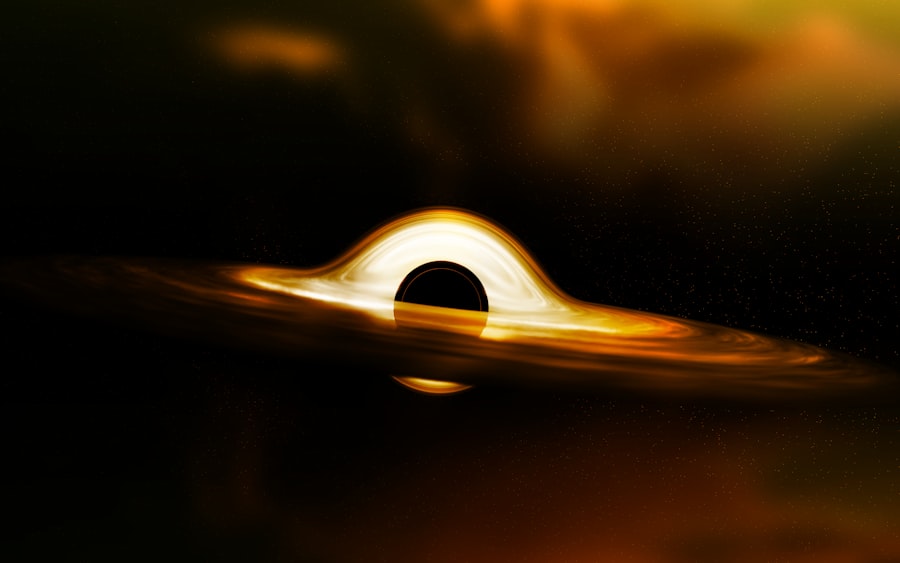
The existence of ultramassive black holes poses significant challenges to current astrophysical theories. Several theoretical frameworks have been proposed to explain how such massive entities could form and evolve over cosmic time scales. One prominent hypothesis suggests that ultramassive black holes may originate from the merging of smaller black holes during galaxy collisions or from direct collapse scenarios involving massive primordial stars.
Another intriguing possibility involves the role of dark matter in facilitating black hole growth. Some researchers propose that dark matter halos could provide a reservoir of gas that feeds ultramassive black holes over billions of years, allowing them to reach their extraordinary sizes. These theoretical models continue to be refined as new observational data emerges, providing a deeper understanding of how ultramassive black holes fit into the broader framework of cosmic evolution.
The Future of Research on Ultramassive Black Holes
As technology advances and observational techniques improve, the future of research on ultramassive black holes looks promising. Upcoming space missions and ground-based observatories are expected to provide even more detailed observations, allowing scientists to probe deeper into the properties and behaviors of these colossal entities. Projects like the James Webb Space Telescope (JWST) are poised to revolutionize our understanding by capturing infrared data that could unveil previously hidden aspects of ultramassive black holes.
Moreover, interdisciplinary collaborations between astronomers, physicists, and computer scientists will likely yield new insights into the complex dynamics surrounding these objects. Simulations and modeling efforts will continue to play a crucial role in interpreting observational data and testing theoretical predictions. As researchers strive to unravel the mysteries surrounding ultramassive black holes, they may uncover new phenomena that challenge existing paradigms and expand our understanding of the universe.
The Relationship Between Ultramassive Black Holes and Supermassive Black Holes
While ultramassive black holes are often discussed in relation to supermassive black holes, it is essential to delineate their differences and similarities. Supermassive black holes typically range from millions to billions of solar masses, while ultramassive black holes exceed this threshold significantly.
The relationship between supermassive and ultramassive black holes raises intriguing questions about their evolutionary pathways. It is possible that some supermassive black holes could evolve into ultramassive ones over time through mechanisms such as mergers or prolonged accretion events. Understanding this relationship is crucial for constructing a comprehensive picture of black hole evolution and its implications for galaxy formation.
The Potential Threat of Ultramassive Black Holes to Earth and the Solar System
While ultramassive black holes are located at vast distances from Earth, their existence raises questions about potential threats to our solar system. The gravitational influence exerted by these colossal entities could theoretically affect nearby stars or even entire galaxies if they were to come close enough. However, given the vastness of space and current astronomical observations, it is highly unlikely that an ultramassive black hole poses any immediate danger to Earth.
Nonetheless, studying these objects provides valuable insights into gravitational dynamics and cosmic events that could have implications for our understanding of astrophysical risks. By examining how ultramassive black holes interact with their environments, scientists can better comprehend potential scenarios that might arise from extreme gravitational forces in the universe.
The Possibility of Harnessing Energy from Ultramassive Black Holes
The concept of harnessing energy from ultramassive black holes may seem like science fiction; however, it has sparked interest among theoretical physicists and futurists alike. One proposed method involves capturing energy emitted from accretion disks or jets associated with these colossal entities. If feasible, such energy could potentially be harnessed for advanced technologies or even interstellar travel.
While this idea remains speculative at best, it highlights humanity’s ongoing quest for innovative solutions to energy challenges. As research on ultramassive black holes progresses, scientists may uncover new principles that could inspire groundbreaking technologies or energy sources derived from these enigmatic cosmic giants.
The Enigmatic Nature of Ultramassive Black Holes
Ultramassive black holes stand as some of the most enigmatic objects in our universe, challenging existing theories while offering profound insights into cosmic evolution. Their immense mass and gravitational influence shape galaxies and regulate star formation processes, underscoring their significance in astrophysics. As researchers continue to explore these colossal entities through advanced observational techniques and theoretical models, they inch closer to unraveling their mysteries.
The study of ultramassive black holes not only enhances our understanding of fundamental astrophysical principles but also raises intriguing questions about our place in the cosmos. As humanity’s knowledge expands, so too does its appreciation for these extraordinary phenomena that lie at the heart of galaxies—reminding us that there is still much to learn about the universe we inhabit.
In recent astronomical research, the discovery of ultramassive black holes has sparked significant interest among scientists and space enthusiasts alike. These colossal entities, which are even larger than the supermassive black holes typically found at the centers of galaxies, challenge our understanding of cosmic evolution and the limits of black hole growth. For those interested in delving deeper into the mysteries of these cosmic giants, a related article can be found on My Cosmic Ventures. This article explores the latest findings and theories surrounding ultramassive black holes, providing insights into their formation and the role they play in the universe. To read more about this fascinating topic, visit the article on