
The Tilted Solar System: Understanding the Planetary Plane
When one looks out at the night sky, it can create an illusion of celestial bodies scattered haphazardly, each adrift on its own independent trajectory. However, the reality of our solar system is far more structured, a cosmic ballet choreographed with surprising regularity. While the planets may appear to circle the Sun from our perspective, their orbits are not random. Instead, they largely reside within a flattened disk, a concept referred to as the planetary plane, or more technically, the ecliptic. Understanding this plane is crucial to comprehending the dynamics and evolution of our solar system, and indeed, many exoplanetary systems as well.
The apparent inclination of these orbits is not uniform. While Earth’s orbit defines the ecliptic, other planets deviate from this plane by varying degrees. This deviation, however, is relatively minor for the major planets, suggesting a common origin and a significant event or process that established this general orientation. This article will delve into the nature of the planetary plane, explore the reasons for its existence, examine the implications of orbital inclinations, and consider how this understanding informs our search for other worlds.
The ecliptic is not an arbitrary line drawn in the sky. It is, in fact, the plane of Earth’s orbit around the Sun. Imagine the Sun as the central hub of a grand, cosmic carousel. Earth, in its annual journey, travels along a roughly circular path around this hub. The flat surface traced by this path is the ecliptic. From our vantage point on Earth, the Sun appears to move along this path throughout the year, and the constellations it passes through are known as the zodiac.
Defining the Ecliptic Plane
Technically, the ecliptic plane is a geometric plane passing through the center of the Sun and containing the orbit of the Earth. It is a fundamental reference plane in astronomy, much like the equator is for Earth’s geography. All celestial objects that have formed from the same protoplanetary disk as Earth tend to orbit the Sun within or very close to this plane. Think of it as the original “foundation” upon which the solar system was built.
The Sun’s Apparent Motion and the Ecliptic
The apparent path of the Sun across the sky over the course of a year is called the ecliptic. This path is not a straight line but a tilted band against the background of stars. The tilt of the Earth’s axis relative to its orbital plane is what causes the seasons, but the ecliptic itself is the plane of that orbit. The Sun’s journey along this plane is what marks our calendar year.
What’s In a Name? The Origin of “Ecliptic”
The term “ecliptic” itself is derived from the ancient Greek word “ekleipsis,” meaning “eclipse.” This is because solar and lunar eclipses can only occur when the Moon is near the intersection of its orbital plane with the ecliptic plane. The Moon’s orbit is also tilted relative to the ecliptic, and it’s only when these orbital planes align in a specific way that an eclipse is possible.
The tilt of the solar system’s plane, known as the ecliptic, has intrigued astronomers for centuries, and understanding its origins can shed light on the dynamics of planetary formation. For a deeper exploration of this topic, you can read a related article that discusses the gravitational influences and historical events that contributed to this tilt at My Cosmic Ventures. This resource provides valuable insights into the complex interactions that shape our solar system’s structure and orientation in space.
Orbital Inclinations: Deviations from the Norm
While the major planets – Mercury, Venus, Earth, Mars, Jupiter, Saturn, Uranus, and Neptune – all orbit within a relatively narrow range of inclinations to the ecliptic, they are not perfectly coplanar. Each planet has a slight tilt, a deviation from the ideal flatness of the planetary plane. These inclinations are like small wobbles in the otherwise smooth rotation of a spinning top.
Inner vs. Outer Planets: A Trend in Inclination
A closer look reveals a subtle trend. The inner, terrestrial planets (Mercury, Venus, Earth, and Mars) generally have smaller inclinations compared to the outer, gas and ice giants (Jupiter, Saturn, Uranus, and Neptune). Mercury, with an inclination of about 7 degrees relative to the ecliptic, is the most inclined of the major planets. Jupiter, on the other hand, is remarkably well-aligned, with an inclination of less than 1.3 degrees. Uranus and Neptune, however, exhibit larger inclinations of about 0.77 degrees and 1.77 degrees respectively. This observed difference in inclinations may hint at different formation histories or subsequent evolutionary processes.
Mercury: The Eccentric Outlier
Mercury’s notable inclination is a puzzle for planetary scientists. Its orbit is also the most eccentric (least circular) among the major planets. Various theories attempt to explain this, including past gravitational interactions with other planets or even a captured object that was later tidally locked. Regardless of the cause, Mercury’s orbit serves as a reminder that our solar system is not perfectly ordered.
The Gas Giants’ Slight Wobble
Even the gas giants, which are so massive and exert significant gravitational influence, are not perfectly aligned with the ecliptic. Jupiter and Saturn, being closer to the plane, suggest they formed in a more settled region of the protoplanetary disk. Uranus and Neptune, however, display slightly larger inclinations, suggesting they might have formed in or migrated through regions where gravitational perturbations were more pronounced.
The Genesis of the Planetary Plane: A Protoplanetary Disc Story
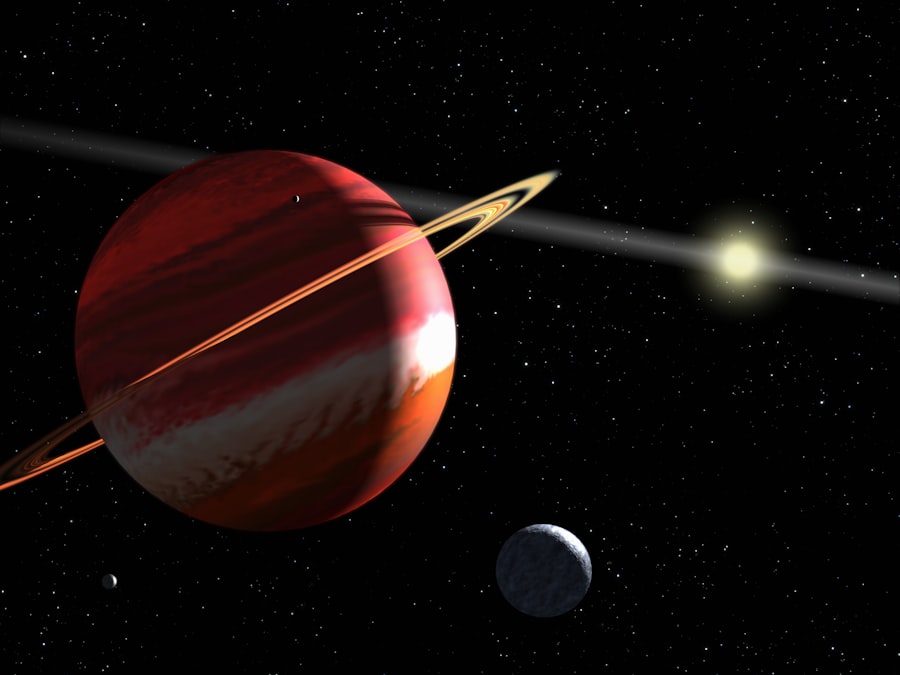
The prevailing theory for the formation of the planetary plane centers on the concept of a protoplanetary disk. Our solar system, like countless others, began as a vast, swirling cloud of gas and dust, a stellar nursery poised for cosmic creation. This cloud, under the influence of gravity, began to collapse, and as it did, it spun faster. Like a dancer pulling their arms in to spin faster, the collapsing cloud flattened into a disk.
Collapse and Conservation of Angular Momentum
The fundamental principle at play here is the conservation of angular momentum. As the cloud contracted under gravity, its angular momentum had to be conserved. This means that any rotation present in the initial cloud would be amplified as the cloud shrunk. The most efficient way for this angular momentum to be distributed and for the cloud to settle into a stable state was for it to flatten into a disk. Think of a spinning pizza dough; as it’s tossed and spun, it naturally flattens out.
The Sun at the Center, Planets in the Disk
At the heart of this flattened disk, the Sun began to ignite, gathering the vast majority of the matter. Within the swirling disk, dust grains collided and stuck together, gradually growing into larger bodies – planetesimals. These planetesimals, in turn, accreted more material, eventually forming the planets we know today. Because virtually all this material was contained within the disk, the resulting planets naturally formed with orbits that were roughly coplanar with that disk.
Collisions and Accretion: Building Blocks of Planets
The process of planet formation was not a gentle one. It involved countless collisions between planetesimals, ranging from minor bumps to cataclysmic impacts. These collisions played a crucial role in both gathering mass and potentially influencing the final orbital inclinations of the planets. While the initial disk provided the planar foundation, subsequent gravitational interactions and late-stage giant impacts could have subtly altered these orientations.
Why the Plane Matters: Implications for Solar System Dynamics
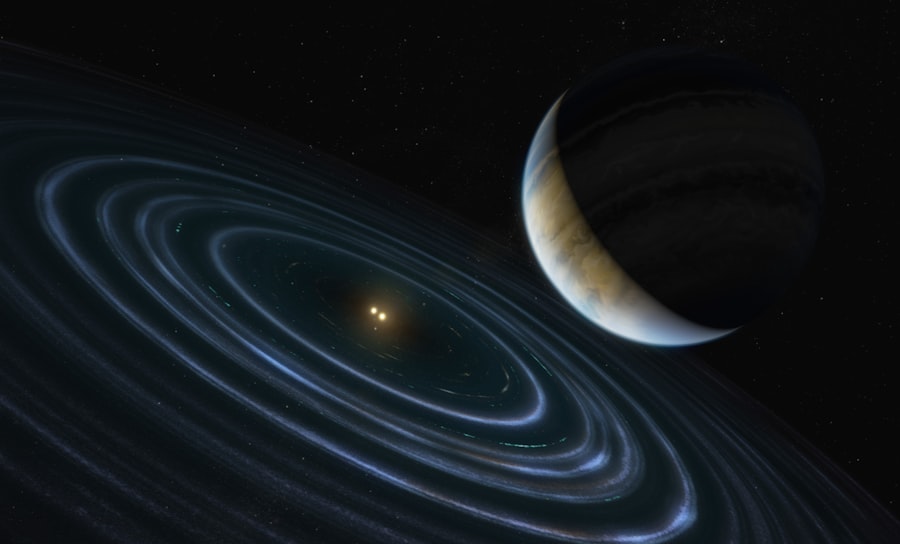
The existence of a distinct planetary plane has profound implications for the dynamics and evolution of our solar system. It dictates the relative motions of the planets and influences phenomena like asteroid and comet trajectories. Understanding this plane is like understanding the racetrack on which the celestial runners compete.
Gravitational Interactions and Stability
The near-coplanarity of the planetary orbits contributes to the long-term stability of the solar system. If planets were orbiting at wildly different inclinations, their gravitational interactions would be far more complex and potentially disruptive, leading to chaotic orbits and even ejections from the solar system over vast timescales. The flattened disk provides a degree of order that prevents such extreme scenarios. Imagine trying to herd a group of marbles rolling on a flat table versus marbles rolling on a bumpy, uneven surface. The flat table allows for more predictable movement.
The Asteroid Belt and Kuiper Belt
The asteroid belt, located between Mars and Jupiter, and the Kuiper Belt, beyond Neptune, also largely reside within or near the planetary plane. These belts are remnants of the early solar system, material that did not coalesce into planets. Their distribution further supports the idea of a common formation environment within a disk. The gravitational influence of Jupiter, the most massive planet, plays a significant role in shaping the asteroid belt, keeping it distinct from the planetary orbits.
Comet Orbits: A Different Story
While most planets and many asteroids follow the planetary plane, comets often tell a different story. Many comets, particularly those originating from the Oort Cloud (a hypothetical spherical shell far beyond the Kuiper Belt), can have highly inclined orbits. This suggests that these icy bodies were flung out of the original protoplanetary disk and now reside in a more three-dimensional reservoir. Their trajectories are not bound to the same planar constraints as the planets.
The tilt of the solar system’s plane, known as the ecliptic, has intrigued astronomers for centuries, and understanding its origins can shed light on the dynamics of our cosmic neighborhood. A related article explores the various factors that contribute to this tilt, including gravitational interactions and the formation of the solar system itself. For those interested in delving deeper into this fascinating topic, you can read more about it in this insightful piece found here. By examining these influences, we can gain a better appreciation for the complex history that shaped our solar system.
Exoplanets and the Planetary Plane: Understanding Other Worlds
| Metric | Value/Description | Explanation |
|---|---|---|
| Solar System Plane Tilt Angle | ~7.25° | The angle between the Sun’s equatorial plane and the ecliptic plane (Earth’s orbital plane). |
| Cause of Tilt | Angular Momentum of Protoplanetary Disk | The solar system formed from a rotating disk of gas and dust, which was not perfectly aligned with the Sun’s rotation axis. |
| Influence of Nearby Stars | Minor gravitational perturbations | Nearby stars during the Sun’s formation may have caused slight tilting of the protoplanetary disk. |
| Precession Rate of Solar Axis | ~10,000 years per cycle | The Sun’s rotation axis slowly precesses, contributing to changes in tilt over long timescales. |
| Impact on Planetary Orbits | Orbital inclinations within a few degrees | Planets orbit close to the ecliptic plane, reflecting the original disk’s orientation. |
| Solar Nebula Hypothesis | Accepted model | Explains the tilt as a natural outcome of the collapse of a rotating molecular cloud. |
The study of exoplanets – planets orbiting stars other than our Sun – has revealed that planetary systems are not unique to our cosmic neighborhood. The discovery of thousands of exoplanets has provided invaluable insights into planet formation and the diversity of planetary systems. Many of these exoplanets are also found to orbit their stars in configurations that resemble our own planetary plane.
Common Formation Mechanisms: The Protoplanetary Disc Replicated
The prevalence of planetary disks around young stars suggests that the formation of a planetary plane is a common outcome of star and planet formation. When astronomers observe exoplanetary systems, they often find that the planets orbit their host star in a flattened, disk-like structure, mirroring the early stages of our own solar system. This reinforces the universality of the protoplanetary disk model.
Detection Bias: The Challenges of Observing Inclinations
However, our current methods of detecting exoplanets, such as the transit method (observing the dimming of a star as a planet passes in front of it) and the radial velocity method (detecting the wobble of a star caused by a planet’s gravity), are most effective at finding planets that are close to the line of sight between the star and Earth. This introduces a detection bias, meaning we are more likely to find systems with planets orbiting close to our plane of observation. Planets with highly inclined orbits relative to our line of sight are more difficult to detect.
The Diversity of Planetary Systems
Despite the detection bias, the observed exoplanetary systems showcase a remarkable diversity. While many exhibit a planar arrangement, others present surprising configurations. We have found “hot Jupiters” orbiting extremely close to their stars, “super-Earths” and “mini-Neptunes” unlike anything in our solar system, and even planets orbiting binary stars. While these systems may deviate from the neat planar structure of our own, their existence still points to the fundamental role of protoplanetary disks in their formation. The variations in these systems can highlight the chaotic nature of planet formation and the potential for later dynamic interactions that can dramatically alter orbital configurations.
Future Observational Techniques
As observational techniques improve, astronomers will be able to characterize the orbital inclinations of exoplanets with greater precision. Future telescopes and more sophisticated analysis methods will allow us to move beyond this detection bias and gain a more comprehensive understanding of the true diversity of planetary system architectures, including the prevalence of non-planar configurations. This will help us to answer fundamental questions about how planets form and evolve in different environments.
In conclusion, the planetary plane, defined by the ecliptic, is a fundamental characteristic of our solar system. It is a testament to the universal processes of star and planet formation, largely governed by the collapse of a rotating protoplanetary disk. While orbital inclinations, like Mercury’s nudge or the gas giants’ slight wobbles, reveal the subtle complexities and evolutionary history of our solar system, they do not negate the overarching planar structure. As we continue to explore the cosmos and discover exoplanetary systems, the concept of the planetary plane remains a crucial framework for understanding the organization and dynamics of planetary bodies, offering a familiar foundation as we venture into the unknown.
FAQs
1. What does it mean that the solar system plane is tilted?
The solar system plane, also known as the ecliptic plane, is the flat, disk-like region in which most of the planets orbit the Sun. Its tilt refers to the angle between this plane and another reference plane, such as the Sun’s equatorial plane or the galactic plane.
2. Why is the solar system plane tilted relative to the Sun’s equator?
The solar system plane is tilted about 7.25 degrees relative to the Sun’s equator because the Sun’s rotation axis and the angular momentum of the protoplanetary disk from which the planets formed were not perfectly aligned during the early formation of the solar system.
3. How did the solar system’s tilt originate during its formation?
The tilt likely originated from the initial conditions of the molecular cloud that collapsed to form the Sun and planets. Turbulence, magnetic fields, and gravitational interactions in the early solar nebula caused the angular momentum vectors of the Sun and the surrounding disk to differ, resulting in the observed tilt.
4. Does the tilt of the solar system plane affect planetary orbits?
The tilt itself does not significantly affect the stability of planetary orbits, as planets orbit within the ecliptic plane. However, the tilt is important for understanding the dynamics and evolution of the solar system, including how the Sun’s rotation and planetary orbits interact.
5. Is the solar system plane tilted relative to the galaxy?
Yes, the solar system plane is tilted by about 60 degrees relative to the plane of the Milky Way galaxy. This large tilt reflects the complex motions and history of the solar system as it orbits the galactic center.