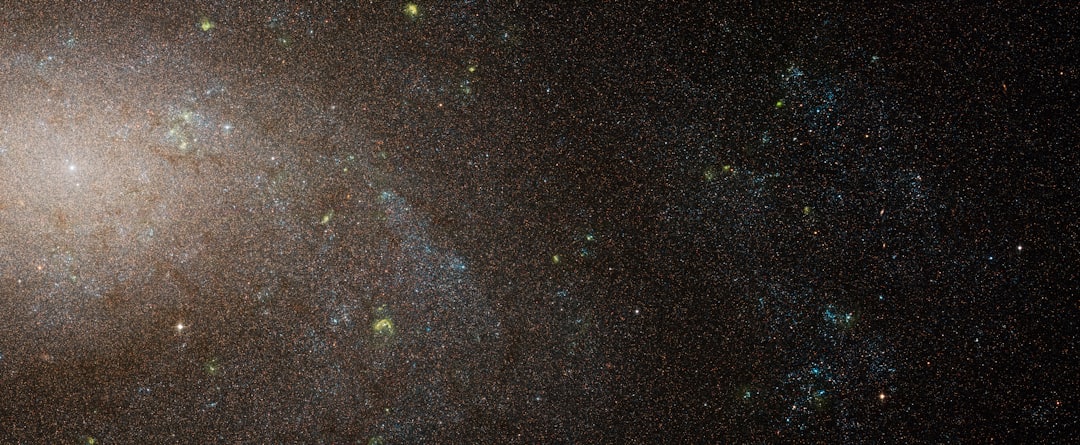
The concept of the Spacetime Block Universe offers a profound reinterpretation of reality, challenging the intuitive human perception of time as a linear progression from past to present to future. Within this model, spacetime is not a dynamic stage upon which events unfold, but rather a static, four-dimensional block encompassing all events that have ever occurred, are currently occurring, or will ever occur. This perspective, deeply rooted in the principles of Albert Einstein’s theories of relativity, suggests a universe where time is not flowing, but rather already “there” in its entirety, much like the spatial dimensions.
The genesis of the Block Universe concept can be traced directly to Einstein’s revolutionary insights into the nature of space and time. His Special Theory of Relativity, introduced in 1905, revealed a fundamental interconnectedness between these two previously distinct entities. You can learn more about the block universe theory by watching this insightful video.
Special Relativity’s Unification of Space and Time
Prior to Einstein, Isaac Newton’s classical mechanics posited an absolute space and an absolute time, independent of any observer. Events occurred at specific points in space and at specific moments in time, universally agreed upon by all. Einstein, however, demonstrated that measurements of space and time intervals are relative to the observer’s motion. Two observers in relative motion will disagree on the simultaneity of events and on the duration of time intervals (time dilation) and the lengths of objects (length contraction).
This relativity arises from the constancy of the speed of light in all inertial frames of reference. To reconcile this constant speed with the principles of relative motion, space and time must adjust themselves. Mathematically, these adjustments are elegantly captured by the Lorentz transformations, which blend spatial and temporal coordinates into a single four-dimensional continuum known as spacetime.
Minkowski Spacetime and the Four-Dimensional Fabric
In 1908, Hermann Minkowski, Einstein’s former mathematics professor, provided a crucial geometrical interpretation of Special Relativity. He declared, “Henceforth, space by itself, and time by itself, are doomed to fade away into mere shadows, and only a kind of union of the two will preserve an independent reality.” Minkowski’s contribution was to render spacetime as a unified four-dimensional manifold, often visualized as a “block” or “fabric.”
Within Minkowski spacetime, events are represented as points, and the trajectory of an object through spacetime is depicted as a “worldline.” An individual’s entire history, from birth to death, is a pre-existing worldline stretching through this four-dimensional block. The familiar notions of “past,” “present,” and “future” are not absolute but depend on the observer’s relative motion and their specific “now slice” of the block.
General Relativity and the Curvature of Spacetime
Einstein’s General Theory of Relativity, published in 1915, extended these concepts to include gravity. In this theory, gravity is not a force acting across space, but rather a manifestation of the curvature of spacetime itself. Massive objects warp the fabric of spacetime, and other objects (including light) follow the geodesics, or “straightest possible paths,” through this curved geometry.
This curvature further reinforces the Block Universe concept, as it demonstrates that spacetime is not merely a passive backdrop but an active participant in the dynamics of the universe. The distribution of matter and energy dictates the geometry of spacetime, and this geometry, in turn, influences the motion of matter and energy. This intrinsic link solidifies the view of spacetime as a unified, immutable entity.
The concept of the spacetime block universe presents a fascinating perspective on the nature of time and existence, suggesting that past, present, and future are equally real and exist simultaneously. For those interested in exploring this idea further, a related article can be found at My Cosmic Ventures, which delves into the implications of this theory on our understanding of reality and consciousness.
Implications for the Nature of Time
The Block Universe model carries profound implications for our understanding of time, challenging our intuitive, often anthropocentric, view of its passage.
The Illusion of Temporal Flow
One of the most radical departures from everyday experience is the assertion that the “flow” of time is an illusion. From the Block Universe perspective, all moments – past, present, and future – exist simultaneously within the four-dimensional block. There is no special, privileged “now” that moves through time.
This can be likened to a film reel. All frames of the film exist simultaneously on the reel, and the “unfolding” narrative arises from the projection of those frames. Similarly, our experience of time is analogous to our consciousness “moving” along our worldline, perceiving individual “now slices” of the pre-existing block. The feeling of temporal passage, of things happening to us, is a product of our consciousness and its interaction with this unchanging reality.
Determinism and Free Will
The Block Universe model often fuels discussions about determinism. If all events, past, present, and future, are already fixed points within the spacetime block, does this imply that all events are predetermined? If your future choices are already “there,” then where does free will reside?
This is a deep philosophical conundrum. Some interpretations suggest a strong form of determinism, where every action and choice is an inevitable consequence encoded within the fabric of spacetime itself. Other interpretations attempt to reconcile the Block Universe with a form of free will, perhaps by suggesting that our “choices” are simply part of the pre-existing intricate pattern, and that our experience of making a choice is genuine within that framework. However, the Block Universe, by its very nature, challenges the intuitive notion of an open future filled with unmade decisions.
The “A-Series” and “B-Series” of Time
Philosophers of time often distinguish between two primary conceptions: the “A-series” and the “B-series.” The A-series is the dynamic view, where events are characterized by their temporal properties of past, present, and future, and these properties continually change as time “flows.” Events move from future, to present, to past.
The B-series, in contrast, is the static view, where events are ordered by their temporal relations of “earlier than” and “later than.” These relations are fixed and unchanging. The Block Universe aligns strongly with the B-series concept of time, where all temporal relations are given once and for all. The “now” is merely a subjective designation, not an objective feature of reality.
Observational and Theoretical Support

While the Block Universe is primarily a theoretical construct arising from the equations of relativity, several lines of reasoning and observational phenomena lend it support or are at least consistent with its tenets.
The Invariance of Spacetime Intervals
A crucial aspect of relativity is the invariance of the spacetime interval. While observers in relative motion disagree on separate measurements of space and time, they agree on the “spacetime distance” between two events. This invariant interval, much like the Euclidean distance between two points in space, suggests that spacetime itself possesses an inherent, unchanging structure, independent of any particular observer’s perspective.
This invariance reinforces the idea that spacetime is a unified entity rather than a malleable backdrop that warps arbitrarily. The spacetime interval serves as a fundamental metric of this four-dimensional reality.
Black Holes and Event Horizons
The physics of black holes provides another compelling example of spacetime’s unified nature. The event horizon of a black hole is a boundary in spacetime beyond which events cannot affect an external observer. Once something crosses the event horizon, its future trajectory is inexorably towards the singularity.
From the perspective of a distant observer, an object approaching a black hole appears to slow down and “freeze” at the event horizon, its light becoming increasingly redshifted until it fades from view. This phenomenon can be interpreted as the object’s worldline asymptoting towards the event horizon within the spacetime block, never quite crossing it from the distant observer’s perspective. The event horizon itself is a fixed boundary in spacetime, not something that dynamically appears or disappears.
Cosmological Models and the Universe’s History
Many cosmological models, such as the Lambda-CDM model which describes our observable universe, implicitly or explicitly endorse a Block Universe view. These models trace the entire history of the universe from the Big Bang to its potential future, often depicted as a single, overarching narrative within a four-dimensional manifold.
The expansion of the universe, the formation of cosmic structures, and the eventual fate of the cosmos are all described as elements of this grand, pre-existing spacetime structure. While these models do not directly prove the Block Universe, they are consistent with its underlying philosophical premise that the entire cosmic history is a single, unified entity.
Challenges and Criticisms
Despite its theoretical coherence within the framework of relativity, the Block Universe faces various philosophical and intuitive challenges.
The Problem of “Becoming”
Perhaps the most significant criticism revolves around the intuitive human experience of “becoming” – the feeling that the present moment is continually unfolding and that new events are genuinely coming into existence. The Block Universe, by positing that all events already exist, struggles to account for this deeply felt experience. If the future is already “there,” then how can we genuinely feel that we are moving towards it or shaping it?
Some philosophers argue that our experience of “becoming” is a fundamental aspect of reality that the Block Universe simply fails to capture. Others suggest that “becoming” is a subjective phenomenon, a feature of consciousness rather than an objective property of the universe itself.
The Role of Consciousness and Subjectivity
The Block Universe’s static nature clashes with the dynamic, conscious experience of time. If past, present, and future are equally real, what distinguishes our “now”? Why do we appear to only perceive a single, fleeting slice of this four-dimensional block?
This leads to questions about the nature of consciousness. Is consciousness merely tracking a pre-existing worldline, or does it somehow carve out a “present moment” from the larger block? The Block Universe often pushes these questions into the realm of philosophy of mind, suggesting that the “present” might be an emergent property of conscious experience rather than a fundamental property of spacetime.
The Arrow of Time
Another challenge is the “arrow of time” – the observed asymmetry between past and future. Entropy universally tends to increase, information tends to be lost, and processes generally proceed in one temporal direction (e.g., a broken glass does not spontaneously reassemble). The Block Universe, by presenting a symmetrical view of time, struggles to intrinsically explain this observed asymmetry.
While physical laws themselves are often time-symmetric, the universe’s initial low-entropy state at the Big Bang is often invoked to explain the thermodynamic arrow of time. However, within a truly static Block Universe, explaining why we experience time flowing in a particular direction remains a subject of ongoing debate and interpretation.
The concept of the spacetime block universe presents a fascinating perspective on the nature of time and existence, suggesting that past, present, and future are equally real. This idea has sparked numerous discussions in both philosophical and scientific circles. For those interested in exploring this topic further, an insightful article can be found on My Cosmic Ventures, which delves into the implications of this theory on our understanding of reality. You can read more about it in this article.
Broader Philosophical Implications
| Metric | Description | Value / Example |
|---|---|---|
| Dimension | Number of dimensions in the spacetime block universe | 4 (3 spatial + 1 temporal) |
| Time Representation | How time is represented in the block universe model | As a fixed dimension, all events coexist |
| Key Concept | Fundamental idea behind the block universe | Past, present, and future are equally real |
| Origin | Philosophical and scientific roots | Einstein’s theory of relativity and eternalism |
| Implication on Free Will | Effect on the concept of free will | Deterministic view, future is fixed |
| Spacetime Interval | Invariant measure between events in spacetime | Δs² = -c²Δt² + Δx² + Δy² + Δz² |
| Light Cone | Defines causal structure in spacetime | Separates events into past, future, and elsewhere |
| Philosophical View | Viewpoint on time and existence | Eternalism vs Presentism debate |
The Block Universe model extends beyond physics, touching upon fundamental questions about existence, fate, and the nature of reality itself.
The Nature of Reality and Existence
If the Block Universe is an accurate description of reality, then it implies a radically different ontology – a different understanding of what it means for something to exist. Instead of events coming into and out of existence, all events simply “are.” This can be a challenging concept to grasp, as our ordinary language and conceptual frameworks are built upon a dynamic, flowing view of time.
It suggests that our universe is a singular, unchanging structure, a vast cosmic tapestry with all events woven into its fabric from the very beginning. The “death” of a star, the “birth” of a galaxy, or the “creation” of a memory are not moments of emergence but pre-existing components of this eternal block.
Reconciling with Quantum Mechanics
One of the grand challenges in modern physics is the unification of General Relativity and Quantum Mechanics. While the Block Universe concept fits elegantly within General Relativity, its relationship with Quantum Mechanics is less straightforward. Quantum mechanics introduces inherent probabilities, uncertainties, and the collapse of wave functions, which seem to imply a non-deterministic, open future.
Some interpretations of quantum mechanics, such as the Many-Worlds Interpretation, possess a certain affinity with the Block Universe by suggesting that all possible outcomes of quantum events already exist in different “branches” of the universe, again implying a kind of pre-existing totality. However, a truly unified picture remains elusive, and the tension between the deterministic and static implications of the Block Universe and the probabilistic nature of quantum mechanics is a significant area of ongoing research.
A Timeless Perspective on Existence
Ultimately, the Spacetime Block Universe offers a profoundly timeless perspective on existence. It invites us to consider time not as a river that carries us along, but as another dimension, akin to height, width, or depth, which we traverse. Just as a traveler can see all points on a landscape from an aerial view simultaneously, the Block Universe posits that all moments in time are similarly “visible” within the overarching structure of spacetime.
This viewpoint, while counter-intuitive, compels us to re-evaluate our preconceived notions of reality, challenging us to move beyond anthropocentric biases and embrace a more comprehensive, four-dimensional understanding of the cosmos. Whether regarded as a literal truth or a powerful metaphorical tool, the Block Universe remains a cornerstone of modern relativistic physics and a catalyst for deep philosophical inquiry into the nature of time itself. It is a concept that continues to provoke thought and inspire debate, pushing the boundaries of human understanding of the universe we inhabit.
FAQs
What is the spacetime block universe theory?
The spacetime block universe theory is a concept in physics and philosophy that views time as a dimension similar to space. According to this theory, past, present, and future events all coexist in a four-dimensional block, meaning that time is fixed and unchanging.
Who developed the idea of the spacetime block universe?
The idea is closely associated with the theory of relativity, developed by Albert Einstein. The block universe concept arises naturally from the mathematical framework of special and general relativity, which treats time as a dimension integrated with the three spatial dimensions.
How does the block universe differ from our everyday experience of time?
In everyday life, we experience time as flowing from the past through the present to the future. The block universe challenges this by suggesting that all points in time exist simultaneously, and the flow of time is an illusion or a feature of human consciousness.
What implications does the block universe have for free will?
If the block universe is correct and the future is as fixed as the past, it raises philosophical questions about free will and determinism. Some interpretations suggest that all events are predetermined, while others argue that free will can still exist within this framework.
Is the block universe theory widely accepted?
While the block universe is a popular interpretation of relativity, it is not universally accepted. Some physicists and philosophers prefer alternative views of time, such as presentism or the growing block universe, which treat the nature of time differently.
Does the block universe theory have experimental support?
The block universe is consistent with the mathematical structure of relativity, which has been extensively tested and confirmed. However, the interpretation of time as a block is philosophical and not directly testable by experiments.
How does the block universe relate to quantum mechanics?
The relationship between the block universe and quantum mechanics is complex and an area of ongoing research. Some interpretations of quantum mechanics are compatible with the block universe, while others suggest a more dynamic or indeterminate view of time.
Can the block universe concept help in understanding time travel?
The block universe framework implies that all events in time exist simultaneously, which theoretically allows for the possibility of time travel. However, practical and paradoxical issues related to time travel remain unresolved within this concept.