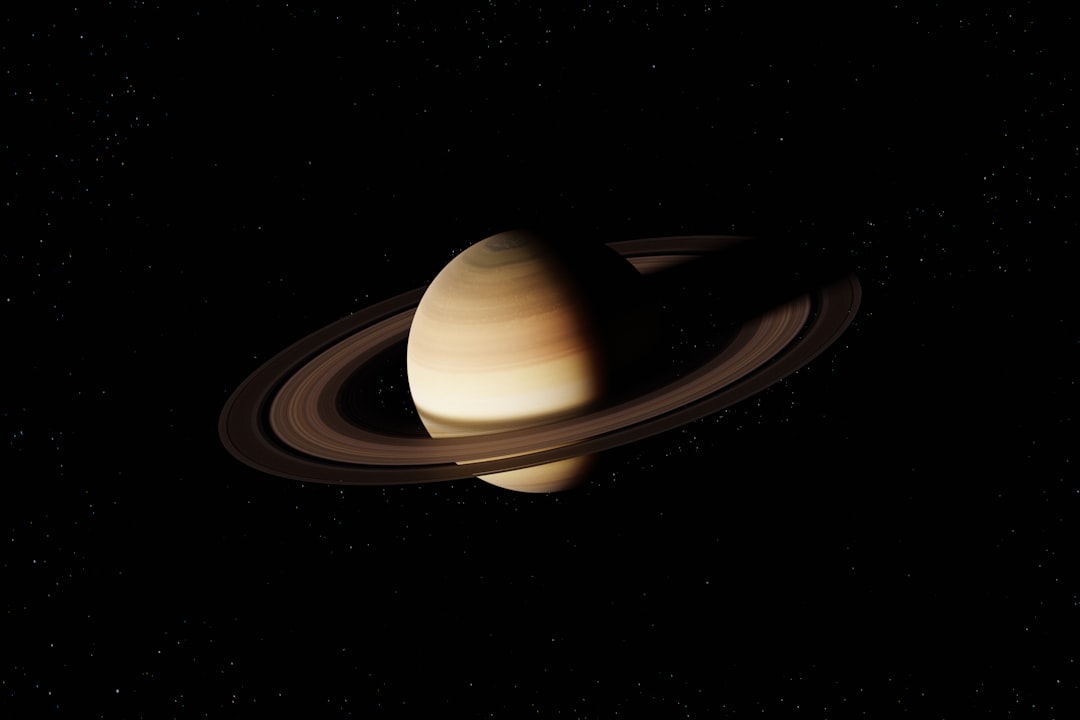
The notion of our Sun being accompanied by a less conspicuous stellar sibling has long been a persistent whisper in the astronomical community, a ghost in the machine of our understanding of the solar system. For decades, this concept, often referred to as “Nemesis,” has been relegated to the realm of speculative astrophysics, a potential guardian or destroyer lying in wait in the outer darkness. However, recent theoretical advancements and a re-examination of existing data are breathing new life into this intriguing, albeit controversial, idea. This article delves into the renewed scientific inquiry into the possibility of a binary companion to our Sun and the implications such a celestial partner might hold for our solar system’s history and future.
The very earliest inklings of a potential solar companion did not arise from direct observation, but rather from attempts to explain a handful of persistent anomalies within our solar system. The prevailing model, a single, solitary Sun governing its planetary domain, seemed to struggle with certain phenomena that defied simple gravitational explanation.
The Oort Cloud’s Mysterious Perturbations
One of the most compelling lines of argument for a binary companion stems from the nature of the Oort Cloud. This vast, spherical shell of icy bodies, located at the very fringes of our solar system, is the presumed birthplace of long-period comets. However, the observed distribution and behavior of these comets have presented a puzzle.
The Eccentricity of Cometary Orbits
Many long-period comets exhibit highly eccentric orbits, meaning they stretch far out into the void and then swing back in towards the Sun. While gravitational interactions with the planets can shepherd some of these bodies, the sheer number and the peculiar distribution of their aphelia (the furthest point from the Sun) suggested a more significant, external influence. Think of a shepherd guiding a flock; our planets are akin to the shepherd’s immediate presence, but what if there’s a larger, unseen force subtly influencing the flock’s overall migration patterns from afar?
The Periodic Nature of Cometary Showers
Furthermore, studies of impact cratering on Earth and other terrestrial planets have hinted at periodic “showers” of comets and asteroids impacting the inner solar system. These showers, occurring roughly every 26 to 30 million years, are not easily accounted for by the relatively stable gravitational environment dominated by the Sun and its planets. The regularity of these events, like the ticking of a cosmic clock, pointed towards a recurring external trigger.
The Nemesis Hypothesis: A First Attempt at Explanation
It was in this context that the Nemesis hypothesis, first formally proposed in the 1980s, emerged as a potential explanation. The idea was that a dim, red dwarf star, or perhaps a brown dwarf, in a wide orbit around our Sun could periodically disturb the Oort Cloud.
The Red Dwarf Scenario
The original Nemesis hypothesis favored a red dwarf star, a type of star much fainter than our Sun. Such a star, being less luminous, would have easily evaded direct detection until relatively recently, making it a plausible, yet elusive, celestial neighbor. Its gravitational tug, even at vast distances, could be sufficient to dislodge comets from the Oort Cloud, sending them hurtling towards the inner solar system.
Brown Dwarfs: The Stellar ‘Almost’
Another possibility considered was a brown dwarf, often referred to as a “failed star.” These objects are more massive than planets but lack the mass to ignite nuclear fusion in their cores, rendering them much cooler and dimmer than stars. A brown dwarf companion would similarly possess the necessary gravitational influence without being easily visible.
The solar system binary companion theory posits that our solar system may have once had a binary partner, which could explain various gravitational anomalies and the orbits of distant celestial bodies. For a deeper exploration of this intriguing concept, you can read a related article that delves into the implications and evidence surrounding this theory at My Cosmic Ventures. This resource provides valuable insights into the ongoing research and debates within the astronomical community regarding the potential existence of a companion star and its effects on our solar system’s dynamics.
Re-energized Research: New Data and Refined Models
While the initial Nemesis hypothesis faced significant skepticism and a lack of direct observational evidence, recent advancements in astronomical observation and computational modeling have rekindled interest and provided new avenues for investigation. The ghost is starting to cast a more defined shadow.
Probing the Interstellar Medium
The vast emptiness between stars, the interstellar medium, is no longer considered entirely empty. Precisely mapping the distribution of matter in the solar neighborhood is crucial in the search for any hidden companions.
The Gaia Mission’s Precision
The European Space Agency’s Gaia mission has revolutionized our understanding of the Milky Way’s stellar population, providing unprecedentedly accurate measurements of the positions and movements of billions of stars. This star catalog is an intricate map, and any deviation or unexpected gravitational pull within its meticulously charted territory could be a sign of an unseen object.
Galactic Environmental Factors
Beyond our immediate solar system, the Sun’s journey through the Milky Way Galaxy also plays a role. As our Sun orbits the galactic center, it passes through regions of varying stellar density and gravitational potential. Some theories suggest that these galactic encounters, rather than an internal binary companion, could be responsible for perturbing the Oort Cloud. However, the regularity of the hypothesized cometary showers still often points to a more localized, consistent influence.
Advanced Simulations and N-Body Dynamics
The power of modern supercomputers has allowed astronomers to run sophisticated simulations of complex gravitational interactions, modeling the long-term evolution of planetary systems with greater fidelity.
Simulating Oort Cloud Dynamics
These simulations can now accurately model the gravitational influence of a hypothetical binary companion on the Oort Cloud, testing whether such an object can indeed reproduce the observed cometary flux and periodicity. These are not mere sketches; they are intricate, evolving blueprints of the solar system’s past and future under various scenarios.
Accounting for Stellar Encounters
Simulations also incorporate the effects of the Sun’s passage through the galactic disk and its interactions with passing stars. By comparing the outcomes of these simulations with and without a binary companion, researchers can discern which model better explains the observed phenomena.
Potential Candidates: Narrowing Down the Search
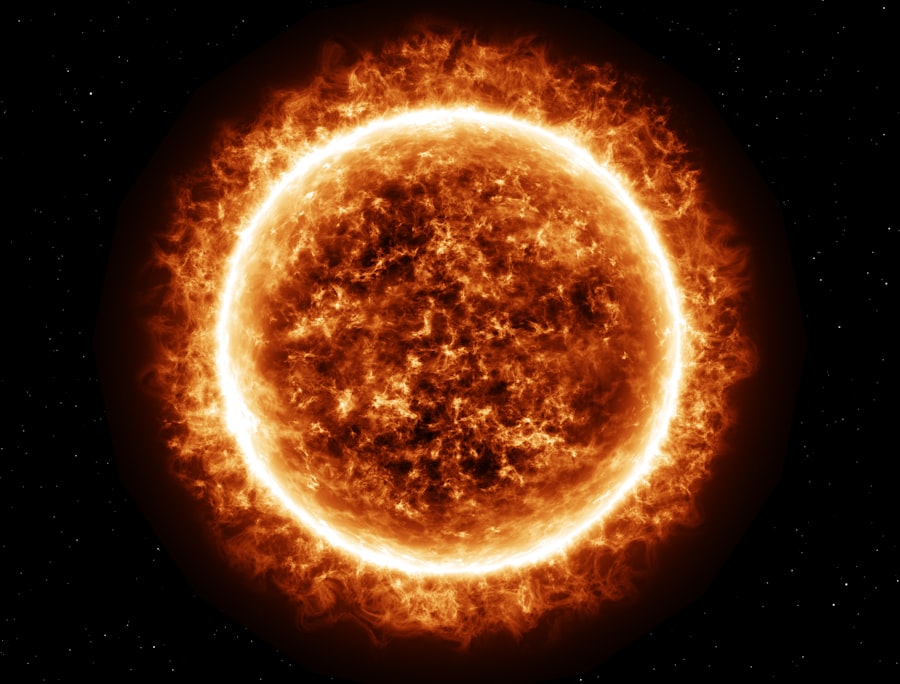
The renewed interest has led to the formulation of more specific theories about the nature and location of a potential solar companion, moving beyond broad hypotheses to more concrete scenarios.
The “Scholz’s Star” Connection
One particular object that has garnered attention is a low-mass red dwarf star known as Scholz’s Star. Discovered in 2015, this star has a particularly unusual trajectory, suggesting it made a close pass through the inner solar system a few million years ago.
A Wandering Wanderer
Scholz’s Star’s trajectory is so peculiar that it has led some to speculate that it was once part of our solar system, perhaps ejected during the formation process or captured and subsequently lost. Its recent close passage, within the last 100,000 years, has reignited discussions about its potential role in perturbing the Oort Cloud, possibly having caused a more recent wave of cometary impacts.
The Timing Mismatch
However, the timing of Scholz’s Star’s closest approach does not perfectly align with the proposed 26-30 million year cycle of comet showers. While it could have contributed to more recent, smaller-scale events, it may not be the sole culprit for the long-term periodicity.
Infra-Red Surveys and Faint Object Detection
The search for faint, cool objects requires specialized telescopes and detection techniques, particularly in the infrared spectrum, where such objects emit most of their radiation.
WISE and Beyond
The Wide-field Infrared Survey Explorer (WISE) mission has been instrumental in this search, scanning the sky for previously uncataloged objects. While WISE has cataloged numerous faint objects, none have definitively been identified as a solar companion. Ongoing and future infrared surveys continue to push the boundaries of detection.
Direct Imaging Challenges
The sheer vastness of space and the overwhelming brightness of our Sun make directly imaging a faint companion at a significant distance an immense challenge. It’s akin to trying to spot a firefly next to a colossal searchlight. The light from the companion is often lost in the glare of our own star.
Implications for Solar System History and Evolution
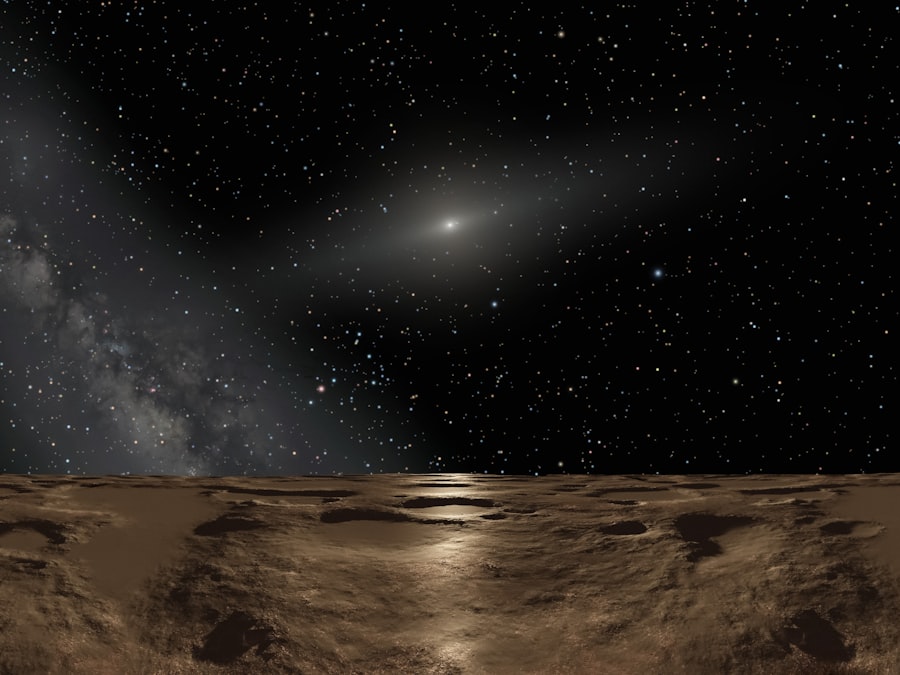
The existence of a binary companion would fundamentally alter our understanding of the solar system’s formation, evolution, and its history of life. The narrative of our cosmic home would gain a co-author.
The Formation of the Solar System
Current models of star and planet formation often assume a single star. The presence of a binary companion would necessitate a revision of these models, introducing new dynamics into the protoplanetary disk.
Early Gravitational Instability
In a binary system, the gravitational interactions between the two stars and the surrounding gas and dust disk could lead to different patterns of angular momentum transfer and accretion. This could influence the masses and final orbits of the planets that eventually form.
Ejection and Capture Events
The gravitational dance of a binary system could also lead to the ejection of material from the protoplanetary disk or even the capture of rogue celestial bodies. This might explain the unusual composition of certain planets or moons.
The Terrestrial Impact Record
As mentioned earlier, the proposed periodicity of cometary showers linked to a binary companion has significant implications for the impact history of Earth and other terrestrial planets.
Periods of Intense Bombardment
If a binary companion exists, there would have been periods in Earth’s history when it was subjected to a significantly higher flux of comets and asteroids. These impacts could have had profound effects on the planet’s geology, climate, and the very conditions necessary for the emergence and evolution of life.
A Cosmic Influence on Life’s Trajectory
Some researchers have even speculated that these periods of intense bombardment might have played a role in driving evolutionary change by introducing new organic molecules or by causing mass extinction events that opened ecological niches for new species to evolve. The argument is that life’s story might have been punctuated and shaped by these periodic celestial visitors.
The Dark Matter Connection?
While not a primary focus of the binary companion theory, some speculative ideas have emerged that link the search for a companion to the enigma of dark matter.
Modified Gravity Theories
Certain theories of modified gravity attempt to explain gravitational anomalies without invoking dark matter. In some of these frameworks, the gravitational influence attributed to a distant binary companion could be interpreted as evidence for these theories. However, these are highly fringe ideas at this stage.
A “Stealth” Companion
Another, more tenuous, idea is that a very diffuse, dark matter-rich object could act as a gravitational companion without being directly visible. This remains largely in the realm of theoretical exploration.
Recent studies have shed light on the intriguing concept of the solar system binary companion theory, which suggests that our Sun may have once had a companion star. This theory has sparked interest in the astronomical community, leading to various hypotheses about the implications for planetary formation and the dynamics of our solar system. For those interested in exploring this topic further, a related article can be found at My Cosmic Ventures, where researchers delve into the potential effects of such a companion on the orbits of planets and the overall stability of the solar system.
The Ongoing Quest: What Lies Ahead?
| Metric | Value/Description |
|---|---|
| Theory Name | Solar System Binary Companion Theory (Nemesis Hypothesis) |
| Proposed Companion Type | Red dwarf star or brown dwarf |
| Hypothesized Orbital Distance | Approximately 1.5 light-years (about 100,000 AU) |
| Orbital Period | 26 million years (approximate) |
| Purpose of Theory | Explain periodic mass extinctions on Earth via comet perturbations |
| Evidence Supporting Theory | Periodic extinction patterns, comet showers inferred from crater records |
| Evidence Against Theory | No direct observation of companion; infrared surveys (WISE) found no such object |
| Current Status | Hypothetical; largely disfavored but still discussed in some scientific circles |
| Related Objects | Nemesis (hypothetical star), Tyche (hypothetical planet) |
The question of whether our Sun has a binary companion remains an open and active area of research. While definitive proof is still elusive, the scientific endeavor continues with a renewed sense of purpose.
Future Observational Prospects
The next generation of telescopes, both ground-based and space-based, will offer enhanced capabilities for detecting faint objects and probing the outer solar system.
The Vera C. Rubin Observatory
The Vera C. Rubin Observatory, with its wide-field survey capabilities, is poised to discover many more faint trans-Neptunian objects, potentially revealing subtle gravitational influences from unseen bodies. It’s like equipping our eyes with a supernatural ability to pierce through the cosmic veil.
Next-Generation Space Telescopes
Future space telescopes, with even greater sensitivity and resolution, will be crucial for directly imaging any potential companion or for detecting the subtle gravitational perturbations it might exert on known objects.
Theoretical Refinements and Predictive Power
As observational data becomes more abundant, theoretical models will continue to be refined, leading to more precise predictions about the characteristics of any potential companion.
Constraining Orbital Parameters
Future research will aim to constrain the possible orbital parameters (size, eccentricity, inclination) of a companion that would be consistent with the observed phenomena. This will narrow down the search space, making targeted observations more effective.
The Significance of Absence
Conversely, the continued absence of a detected companion, despite increasingly sensitive searches, will also provide valuable information. It will either strengthen the evidence for alternative explanations for the observed anomalies or force a re-evaluation of the very assumptions underlying the binary companion hypothesis.
The solar system’s binary companion, whether it exists or remains a tantalizing phantom, represents a frontier in our quest to understand our place in the cosmos. The ongoing research is a testament to the enduring human desire to unravel the universe’s mysteries, pushing the boundaries of our knowledge with every observation, every simulation, and every intriguing question. The possibility of a hidden partner in our cosmic dance continues to inspire a generation of astronomers to look a little closer, a little deeper, into the dark.
FAQs
What is the Solar System binary companion theory?
The Solar System binary companion theory suggests that the Sun may have a distant, unseen companion star or massive object orbiting it. This companion could influence the orbits of objects in the outer Solar System and potentially explain certain astronomical observations.
Why do scientists consider the possibility of a binary companion to the Sun?
Scientists consider this possibility because some patterns in the orbits of distant objects, such as those in the Kuiper Belt or Oort Cloud, are difficult to explain with the known planets alone. A binary companion could help account for these anomalies by exerting gravitational effects.
Has a binary companion to the Sun been discovered?
As of now, no direct evidence of a binary companion to the Sun has been found. Various searches using telescopes and sky surveys have not confirmed the existence of such an object, though the theory remains under investigation.
What types of objects could serve as a binary companion to the Sun?
Potential binary companions could range from a faint red or brown dwarf star to a massive planet-like object, sometimes referred to as “Nemesis” or “Planet Nine.” These objects would be difficult to detect due to their distance and low brightness.
How would the presence of a binary companion affect the Solar System?
If a binary companion exists, it could influence the orbits of comets and distant small bodies, possibly triggering comet showers or affecting the stability of the outer Solar System. It might also provide insights into the formation and evolution of the Solar System.