The universe, with its vastness and complexity, has long captivated the human imagination. From the twinkling stars that adorn the night sky to the intricate workings of the human brain, there exists a profound connection that transcends the boundaries of science and philosophy. This cosmic connection invites exploration into the similarities between galaxies and neurons, two seemingly disparate entities that share remarkable parallels in structure and function.
As researchers delve deeper into these connections, they uncover insights that not only enhance our understanding of the cosmos but also illuminate the intricacies of human consciousness.
Both systems are characterized by complex networks that facilitate communication and interaction, whether it be through the gravitational forces that bind stars together or the electrical impulses that transmit information within the brain.
By examining these similarities, one can begin to appreciate the interconnectedness of all things, suggesting that the universe operates as a cohesive whole where every element plays a vital role in the grand tapestry of existence.
Key Takeaways
- Galaxies and neurons share striking structural and functional similarities, suggesting a cosmic connection.
- Dark matter and energy play crucial roles in both the behavior of galaxies and the functioning of neurons.
- The relationship between consciousness and the universe hints at a deeper, interconnected reality.
- Understanding this cosmic connection could drive breakthroughs in neuroscience and astrophysics.
- The concept carries profound philosophical and spiritual implications about our place in the universe.
The Similarities Between Galaxies and Neurons
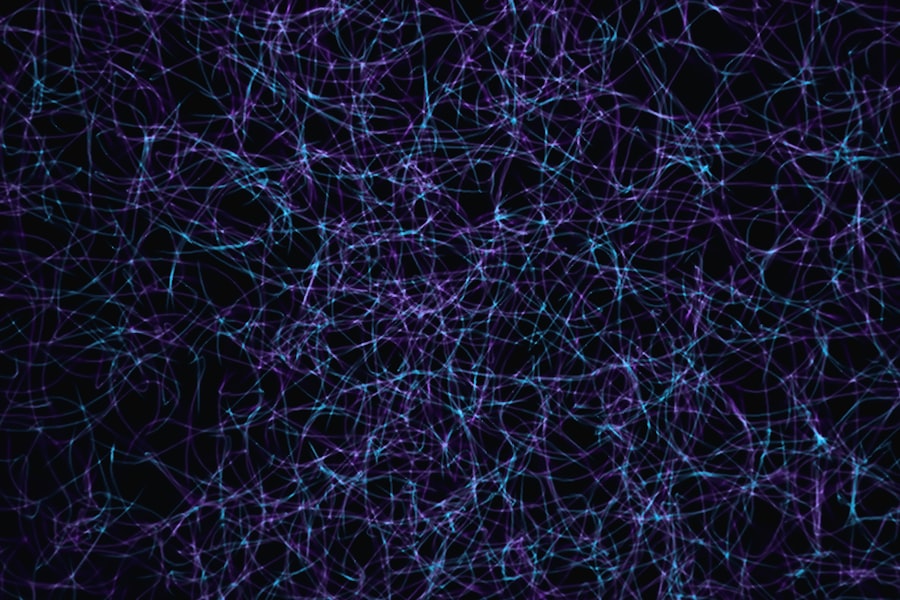
At first glance, galaxies and neurons may appear to be worlds apart; however, a closer examination reveals striking similarities in their architecture and functionality. Both galaxies and neurons are organized into intricate networks that allow for efficient communication and processing of information. In galaxies, stars are bound together by gravitational forces, forming clusters and superclusters that create a vast cosmic web.
Similarly, neurons are interconnected through synapses, forming neural networks that enable the transmission of signals throughout the brain.
For instance, the branching patterns of neurons resemble the spiral arms of galaxies, suggesting a universal design principle at play.
This resemblance raises intriguing questions about the nature of organization in the universe and whether similar laws govern both cosmic and biological systems. The parallels extend beyond mere structure; they also encompass function. Just as galaxies evolve over time through processes such as star formation and supernova explosions, neurons adapt and change in response to experiences and learning.
The Structure and Function of Galaxies
Galaxies are colossal systems composed of stars, gas, dust, and dark matter, all bound together by gravity. They come in various shapes and sizes, from spiral galaxies like the Milky Way to elliptical and irregular forms. The structure of a galaxy is not merely a random arrangement; it is a carefully orchestrated system where each component plays a specific role.
Stars within a galaxy are born from clouds of gas and dust, igniting nuclear fusion in their cores and emitting light that illuminates the cosmos. The function of galaxies extends beyond mere aesthetics; they serve as fundamental building blocks of the universe. Galaxies are sites of stellar evolution, where new stars are born while others reach the end of their life cycles.
This dynamic process contributes to the recycling of materials in the universe, enriching interstellar space with elements necessary for life. Furthermore, galaxies interact with one another through gravitational forces, leading to phenomena such as galaxy mergers and collisions that can trigger bursts of star formation.
The Structure and Function of Neurons
| Neuron Part | Structure | Function | Typical Size | Signal Type |
|---|---|---|---|---|
| Cell Body (Soma) | Contains nucleus and organelles | Maintains cell health and integrates signals | 10-25 µm diameter | N/A |
| Dendrites | Branched projections from soma | Receive incoming signals from other neurons | Variable, up to 100 µm length | Graded potentials |
| Axon | Long, thin projection | Conducts electrical impulses away from soma | Up to 1 meter in humans | Action potentials |
| Myelin Sheath | Fatty insulating layer around axon | Increases speed of electrical signal transmission | Varies, thickness ~1 µm | N/A |
| Nodes of Ranvier | Gaps in myelin sheath | Facilitate rapid signal conduction via saltatory conduction | 1 µm length | Action potentials |
| Axon Terminals | Branched endings of axon | Release neurotransmitters to communicate with other cells | 1-5 µm diameter | Chemical signals |
Neurons, the fundamental units of the nervous system, exhibit a remarkable structure that enables them to transmit information rapidly and efficiently. Each neuron consists of three main parts: the cell body, dendrites, and axon. Dendrites receive signals from other neurons, while the axon transmits electrical impulses away from the cell body to communicate with neighboring neurons.
This intricate design allows for complex signaling pathways that underpin all cognitive functions. The function of neurons is equally fascinating. They communicate through electrochemical signals known as action potentials, which travel along axons to reach synapses—the junctions between neurons.
At these synapses, neurotransmitters are released, facilitating communication between neurons. This process is essential for everything from reflexes to higher-order thinking. Neurons also exhibit plasticity, meaning they can adapt their connections based on experience, learning, and environmental changes.
This adaptability is crucial for memory formation and cognitive development.
The Role of Dark Matter in Galaxies and Neurons
Dark matter plays a pivotal role in shaping galaxies, yet its influence extends beyond astrophysics into realms that may parallel neurological processes. In galaxies, dark matter constitutes a significant portion of their total mass, exerting gravitational forces that govern their structure and dynamics. It acts as an invisible scaffolding that holds galaxies together, influencing their formation and evolution over billions of years.
In a metaphorical sense, one might consider dark matter’s role in neurons as analogous to the unseen forces that shape human thoughts and behaviors. While not directly comparable in a physical sense, one could argue that there are underlying influences—such as genetics, environment, and experiences—that shape neural connections and cognitive processes. Just as dark matter remains elusive yet essential for understanding cosmic structures, these unseen factors are crucial for comprehending the complexities of human consciousness.
The Role of Energy in Galaxies and Neurons
Energy is a fundamental component in both galaxies and neurons, driving processes that sustain life and cosmic phenomena alike. In galaxies, energy is produced through nuclear fusion within stars, releasing light and heat that illuminate the universe. This energy fuels stellar formation and influences galactic dynamics, creating an intricate balance between gravitational forces and energetic processes.
In neurons, energy is equally vital for maintaining cellular functions. Neurons rely on adenosine triphosphate (ATP) to power their activities, including the generation of action potentials and neurotransmitter release. The flow of ions across neuronal membranes generates electrical signals that facilitate communication within neural networks.
This energy-dependent process underscores the importance of metabolic health for optimal brain function.
The Connection Between Consciousness and the Universe
The exploration of consciousness has long intrigued philosophers and scientists alike. As researchers investigate the nature of consciousness, they often draw parallels between individual awareness and the broader universe. Some theorists propose that consciousness may not be confined solely to human experience but could be an intrinsic aspect of the cosmos itself—a universal consciousness that connects all living beings.
This perspective invites contemplation on how individual consciousness mirrors cosmic processes. Just as galaxies evolve over time through interactions and transformations, human consciousness may also undergo shifts influenced by experiences and relationships. The interconnectedness observed in both realms suggests that understanding consciousness may require a holistic approach that considers not only biological factors but also cosmic principles.
The Implications for Understanding the Universe
The parallels between galaxies and neurons carry profound implications for humanity’s understanding of both neuroscience and astrophysics. By recognizing these connections, researchers can foster interdisciplinary collaboration that bridges gaps between fields traditionally viewed as separate. Insights gained from studying neural networks may inform models of galactic behavior, while discoveries in astrophysics could inspire new approaches to understanding brain function.
Moreover, this interconnected perspective encourages a shift in how humanity perceives its place within the universe. Rather than viewing themselves as isolated entities, individuals may come to see themselves as integral parts of a larger cosmic tapestry—each contributing to a collective consciousness that transcends individual existence.
The Potential for Advancements in Neuroscience and Astrophysics
As scientists continue to explore the connections between galaxies and neurons, there lies immense potential for advancements in both neuroscience and astrophysics. By applying principles from one field to another, researchers may uncover innovative solutions to complex problems. For instance, techniques used to analyze cosmic structures could enhance imaging technologies in neuroscience, leading to improved understanding of brain disorders.
Conversely, insights gained from studying neural networks may inspire new models for understanding galaxy formation and evolution. This cross-pollination of ideas could pave the way for groundbreaking discoveries that reshape humanity’s understanding of both mind and cosmos.
The Philosophical and Spiritual Significance of the Cosmic Connection
The cosmic connection between galaxies and neurons extends beyond scientific inquiry into realms of philosophy and spirituality. Many philosophical traditions emphasize interconnectedness as a fundamental aspect of existence—an idea echoed in various spiritual teachings that advocate for unity among all living beings. Recognizing this connection can foster a sense of belonging within the universe, encouraging individuals to cultivate compassion and empathy toward others.
Furthermore, contemplating the relationship between consciousness and the cosmos invites deeper reflection on humanity’s purpose within this vast expanse. It raises questions about free will, destiny, and the nature of existence itself—prompting individuals to seek meaning beyond material pursuits.
Embracing the Interconnectedness of the Universe
In conclusion, exploring the cosmic connection between galaxies and neurons reveals profound insights into both the universe at large and human consciousness. By recognizing the similarities in structure and function between these two realms, humanity can embrace a holistic understanding of existence—one that acknowledges interdependence rather than isolation. As researchers continue to unravel these connections, they pave the way for advancements in both neuroscience and astrophysics while inviting philosophical contemplation on humanity’s place within this grand tapestry.
Ultimately, embracing this interconnectedness fosters a deeper appreciation for life itself—a reminder that every individual is part of something far greater than themselves—a cosmic dance that unites all beings across time and space.
The intriguing connection between galaxies and neurons highlights the fascinating patterns that emerge in both the cosmos and the human brain. This relationship is explored in greater detail in the article available on My Cosmic Ventures, which delves into the structural similarities and the underlying principles that govern these complex systems. For more insights, you can read the article [here](https://www.mycosmicventures.com/).
WATCH THIS! The 27-Order-of-Magnitude Secret That Connects Your Brain to the Cosmos
FAQs
What does it mean that galaxies and neurons “rhyme”?
The phrase “galaxies and neurons rhyme” is a metaphorical way to describe the surprising structural similarities between the large-scale organization of galaxies in the universe and the network of neurons in the human brain. Both systems exhibit complex, branching patterns and interconnected networks despite their vastly different scales and functions.
How are the structures of galaxies and neurons similar?
Both galaxies and neurons form intricate, web-like networks. Galaxies are connected by cosmic filaments forming a vast cosmic web, while neurons connect through dendrites and axons to create neural networks. These patterns show fractal-like branching and clustering, suggesting similar organizational principles.
Why do scientists compare galaxies to neurons?
Scientists compare galaxies to neurons to explore whether similar physical or mathematical principles govern the formation and organization of complex networks across different scales. This comparison helps in understanding universal patterns in nature and may provide insights into both cosmology and neuroscience.
Are the similarities between galaxies and neurons purely visual or functional as well?
The similarities are primarily structural and visual rather than functional. Galaxies and neurons operate on completely different principles and scales—galaxies are massive collections of stars and matter governed by gravity, while neurons are biological cells transmitting electrical signals. The “rhyme” refers to analogous patterns rather than shared functions.
What scientific methods are used to study the similarities between galaxies and neurons?
Researchers use imaging techniques, network analysis, fractal mathematics, and computational modeling to study the patterns in both cosmic structures and neural networks. These methods help quantify similarities in connectivity, clustering, and branching patterns.
Does the similarity between galaxies and neurons suggest a deeper connection?
While the structural similarities are intriguing, there is no evidence of a direct physical or causal connection between galaxies and neurons. The resemblance likely arises from universal principles of network formation and optimization found in complex systems.
Can understanding galaxy structures help in neuroscience, or vice versa?
Studying the organizational principles of one complex network can inspire new approaches in analyzing the other. For example, techniques developed in neuroscience for mapping neural connections might be adapted to study cosmic structures, and vice versa, fostering interdisciplinary research.
Is the concept of galaxies and neurons “rhyming” widely accepted in the scientific community?
The idea is more of a poetic analogy used to highlight fascinating structural parallels rather than a formal scientific theory. It is appreciated for its ability to inspire curiosity and interdisciplinary dialogue but is not a mainstream scientific hypothesis.