
Physics contains numerous theories and models that have been superseded by more comprehensive frameworks as scientific understanding has advanced. These earlier theories, while no longer considered the most accurate descriptions of natural phenomena, continue to influence contemporary physics research and education.
Historical theories that have been replaced or refined still provide valuable insights into the progression of scientific thought. Many foundational concepts introduced by earlier physicists remain relevant to modern applications, even when the original theoretical frameworks have been updated or replaced. The evolution of physical theories illustrates the cumulative nature of scientific progress.
Earlier models often serve as stepping stones to more sophisticated understanding, and their mathematical formulations frequently appear as limiting cases or approximations within newer theories. This progression shows how scientific knowledge develops through continuous refinement and expansion of existing concepts.
Key Takeaways
- Physics has evolved from classical to modern theories, with some older theories becoming redundant yet still influential.
- Redundant theories often provide foundational insights that shape current scientific understanding and methodologies.
- The legacy of physics plays a crucial role in guiding future research and preserving scientific heritage.
- Ethical considerations arise when deciding which redundant theories to retain or discard in scientific progress.
- Education is key to appreciating the balance between redundancy and legacy, fostering informed advancements in physics.
The Evolution of Physics: From Classical to Modern
The journey of physics is marked by significant milestones that illustrate its evolution from classical to modern paradigms. In classical physics, you encounter the works of luminaries such as Isaac Newton and James Clerk Maxwell, whose laws of motion and electromagnetism provided a framework for understanding physical phenomena. These foundational theories were revolutionary in their time, offering explanations for a wide range of observations.
However, as you will discover, the advent of modern physics brought forth new challenges that classical theories could not adequately address. With the emergence of quantum mechanics and relativity in the early 20th century, the landscape of physics transformed dramatically. You may find it fascinating how these modern theories challenged long-held beliefs about space, time, and matter.
Quantum mechanics introduced concepts such as wave-particle duality and uncertainty, while Einstein’s theory of relativity redefined your understanding of gravity and the fabric of spacetime. This evolution illustrates how scientific inquiry is a dynamic process, constantly refining and redefining itself in light of new evidence and insights. Explore the fascinating connection between a near death experience quantum physics in this insightful video.
Redundant Theories in Physics: Examples and Explanations
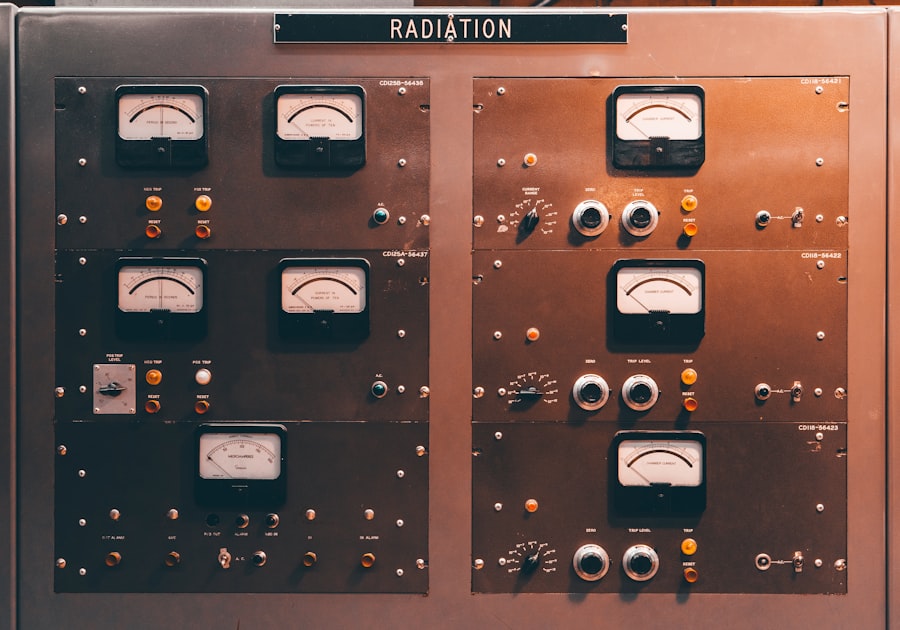
As you navigate through the history of physics, you will encounter several theories that have become redundant over time. One prominent example is the caloric theory of heat, which posited that heat was a fluid-like substance. This theory was widely accepted until it was supplanted by the kinetic theory of gases and thermodynamics, which provided a more accurate understanding of heat as a form of energy transfer.
The transition from caloric theory to modern thermodynamics exemplifies how scientific progress often involves discarding outdated models in favor of more robust explanations. Another notable instance is the phlogiston theory, which attempted to explain combustion as a process involving a substance called phlogiston. This theory dominated chemical thought until Antoine Lavoisier’s work on oxidation revealed that combustion involves oxygen rather than an elusive fluid.
As you reflect on these examples, consider how redundancy in physics serves a purpose; it highlights the iterative nature of scientific discovery. Each redundant theory contributes to a broader understanding by illustrating what was once believed and how those beliefs were challenged and ultimately transformed.
The Role of Legacy in Physics: Impact and Influence
The legacy of physics extends beyond individual theories; it encompasses the methodologies and philosophical underpinnings that have shaped scientific inquiry. As you explore this legacy, you will recognize that many contemporary physicists build upon the ideas established by their predecessors. The impact of figures like Newton and Einstein is evident in modern research, where their principles continue to inform experimental design and theoretical exploration.
Moreover, the legacy of physics influences not only scientific thought but also technological advancements that permeate everyday life. From the development of semiconductors to advancements in medical imaging technologies, the principles derived from classical and modern physics have led to innovations that enhance your quality of life. This interconnectedness between legacy and practical application underscores the importance of preserving historical knowledge while fostering new discoveries.
The Interplay Between Redundancy and Legacy in Physics
| Metric | Description | Value | Unit | Notes |
|---|---|---|---|---|
| Redundancy Level | Degree of overlapping components in legacy physics systems | 35 | Percent | Measured as percentage of duplicated code or functionality |
| Legacy Codebase Size | Total lines of code in legacy physics modules | 120,000 | Lines of Code | Includes deprecated and active physics calculations |
| Physics Engine Update Frequency | Average time between updates to legacy physics engine | 18 | Months | Long update cycles contribute to legacy status |
| Performance Overhead | Extra computational cost due to redundant physics calculations | 15 | Percent CPU Usage | Measured during typical simulation runs |
| Compatibility Issues | Number of known compatibility problems with modern systems | 12 | Issues | Includes hardware and software incompatibilities |
| Refactoring Effort | Estimated person-hours to modernize legacy physics code | 2,500 | Hours | Based on current code complexity and redundancy |
The relationship between redundancy and legacy in physics is complex and multifaceted. As you examine this interplay, you may find it intriguing how redundant theories can serve as stepping stones toward greater understanding. While they may no longer hold validity in light of new evidence, they often provide valuable insights into the thought processes and methodologies of earlier scientists.
This historical context enriches your appreciation for contemporary theories and highlights the cumulative nature of scientific knowledge. Furthermore, legacy can sometimes breathe new life into redundant theories. In certain cases, ideas once deemed obsolete may find renewed relevance in light of emerging technologies or interdisciplinary approaches.
For instance, concepts from classical mechanics may be revisited in fields such as quantum computing or nanotechnology, where their foundational principles can inform cutting-edge research. This dynamic relationship illustrates that redundancy does not equate to irrelevance; rather, it can contribute to a richer understanding of complex phenomena.
The Importance of Preserving Legacy in Physics

Preserving the legacy of physics is essential for fostering future advancements in science. As you engage with historical texts and research, you will come to appreciate how past discoveries inform current inquiries. The preservation of legacy ensures that valuable insights are not lost to time but instead serve as a foundation for future exploration.
This continuity is vital for maintaining a sense of identity within the scientific community and for inspiring new generations of physicists. Moreover, preserving legacy involves not only safeguarding historical documents but also promoting an understanding of the philosophical implications behind scientific discoveries. As you study physics, consider how ethical considerations shape research practices and influence societal perceptions of science.
By acknowledging the legacy of past physicists, you can cultivate a deeper awareness of your responsibility as a steward of knowledge, ensuring that future advancements are grounded in ethical principles.
The Ethical Considerations of Redundancy in Physics
The concept of redundancy in physics raises important ethical questions regarding scientific inquiry and communication. As you reflect on redundant theories, consider how they may have influenced public perception or policy decisions during their time. For instance, certain outdated models may have led to misconceptions about health or environmental issues, highlighting the need for clear communication about scientific progress.
Additionally, ethical considerations extend to how scientists approach their work in light of redundancy. As you engage with contemporary research, think about the responsibility researchers have to critically evaluate existing theories and communicate their findings transparently. This commitment to ethical inquiry ensures that science remains a trustworthy pursuit aimed at advancing human knowledge rather than perpetuating outdated beliefs.
The Future of Physics: Balancing Redundancy and Legacy
Looking ahead, the future of physics hinges on finding a balance between embracing redundancy and honoring legacy. As you contemplate this balance, consider how emerging technologies such as artificial intelligence and machine learning are reshaping research methodologies. These advancements may lead to new discoveries that challenge existing paradigms while simultaneously drawing upon historical knowledge.
Moreover, fostering an environment that encourages interdisciplinary collaboration can enhance this balance. By integrating insights from fields such as philosophy, sociology, and history into your understanding of physics, you can cultivate a more holistic perspective on scientific inquiry. This approach not only honors the legacy of past physicists but also prepares you for a future where redundancy may play a role in shaping new theories.
The Societal and Cultural Implications of Redundancy and Legacy in Physics
The interplay between redundancy and legacy in physics extends beyond academia; it has profound societal and cultural implications as well. As you engage with scientific concepts, consider how they influence public discourse on critical issues such as climate change, energy policy, and technological innovation. The legacy of physics informs societal values and priorities, shaping how communities respond to emerging challenges.
Furthermore, recognizing redundancy within scientific discourse can foster a culture of critical thinking among the public. By understanding that scientific knowledge is not static but rather an evolving tapestry woven from past insights, individuals can develop a more nuanced perspective on contemporary issues. This cultural shift encourages informed dialogue about science’s role in society and empowers individuals to engage with complex topics thoughtfully.
The Role of Education in Understanding the Redundancy and Legacy of Physics
Education plays a pivotal role in helping individuals grasp the concepts of redundancy and legacy within physics. As you navigate your educational journey, consider how curricula can be designed to emphasize historical context alongside contemporary theories. By integrating lessons on redundant theories with discussions about their legacies, educators can foster critical thinking skills that empower students to appreciate the iterative nature of scientific discovery.
Moreover, engaging students with hands-on experiments that illustrate both classical principles and modern advancements can deepen their understanding. By bridging the gap between theory and practice, education can cultivate a generation of physicists who are not only knowledgeable but also aware of their responsibility to honor past contributions while pushing the boundaries of knowledge forward.
Embracing the Redundancy and Legacy of Physics for Future Advancements
In conclusion, embracing both redundancy and legacy within physics is essential for fostering future advancements in science.
The interplay between these elements serves as a reminder that scientific inquiry is an ongoing journey—one that requires humility in recognizing past mistakes while celebrating enduring contributions.
By valuing both redundancy and legacy, you position yourself as an active participant in the ongoing dialogue within the scientific community. This perspective not only enhances your appreciation for the complexities of physics but also empowers you to contribute meaningfully to future discoveries that will shape our understanding of the universe for generations to come.
In exploring the concept of redundancy in legacy physics, it’s essential to consider how outdated theories can still influence modern scientific thought. A related article that delves into this topic can be found on My Cosmic Ventures, which discusses the implications of legacy systems in the context of contemporary physics. For more insights, you can read the article [here](https://www.mycosmicventures.com/sample-page/).
FAQs
What is redundancy in physics?
Redundancy in physics refers to the presence of multiple elements or components that serve the same function within a system. This can help ensure reliability and fault tolerance, as the failure of one component does not necessarily lead to the failure of the entire system.
What does legacy physics mean?
Legacy physics typically refers to older or traditional physical theories, models, or experimental methods that have been established and used over a long period. These may still be relevant or foundational but can sometimes be superseded by newer theories or technologies.
How are redundancy and legacy physics related?
Redundancy and legacy physics can be related in the context of maintaining or upgrading physical systems or experiments. Legacy systems may incorporate redundant components to preserve functionality, and understanding legacy physics is important when integrating new technologies with older systems.
Why is redundancy important in physical systems?
Redundancy is important because it increases the reliability and safety of physical systems. In critical applications such as aerospace, nuclear reactors, or experimental apparatus, redundant components help prevent total system failure due to individual component malfunctions.
Can legacy physics concepts become obsolete?
Yes, some legacy physics concepts can become obsolete as new discoveries and technologies emerge. However, many legacy concepts remain fundamental and continue to provide a basis for understanding and further development in physics.
How do physicists handle redundancy in experiments?
Physicists handle redundancy by designing experiments with multiple measurement methods or backup systems to verify results and ensure data integrity. This approach helps reduce errors and increases confidence in experimental outcomes.
Is redundancy always beneficial in physics?
While redundancy generally improves reliability, it can also increase complexity, cost, and maintenance requirements. Therefore, the benefits of redundancy must be balanced against these factors depending on the specific application.
What challenges arise from legacy physics in modern research?
Challenges include integrating old theoretical frameworks with new data, updating or replacing outdated equipment, and reconciling legacy models with contemporary understanding. Researchers must carefully evaluate legacy physics to ensure it remains applicable and accurate.