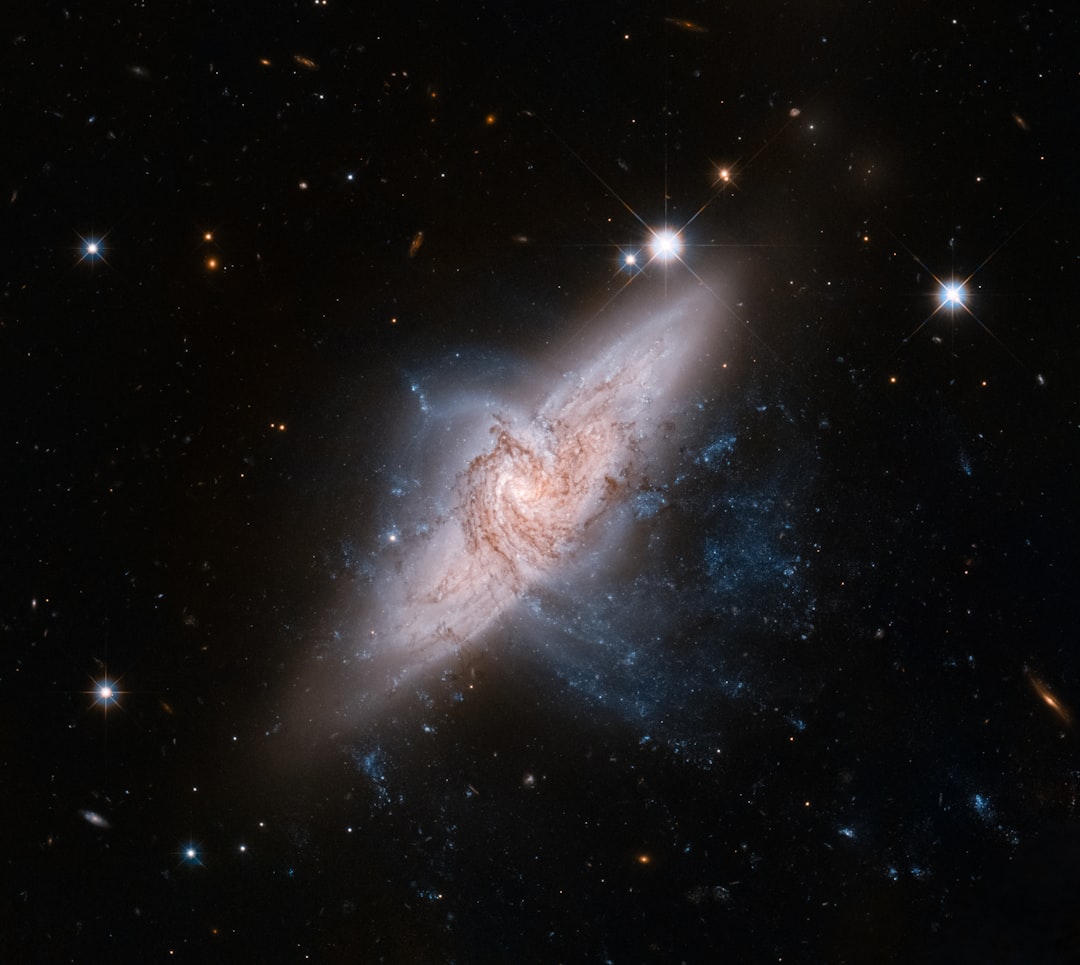
The study of early galaxies offers a fascinating glimpse into the formative years of the universe. These primordial structures, which emerged shortly after the Big Bang, serve as the building blocks of the cosmos as we know it today. Understanding early galaxies is crucial for unraveling the mysteries of cosmic evolution, as they provide insights into the conditions that prevailed in the universe’s infancy.
Researchers are particularly interested in how these galaxies formed, evolved, and influenced their surroundings, as they hold the key to understanding the broader narrative of cosmic history. Early galaxies are not merely distant points of light; they are complex systems that played a pivotal role in shaping the universe. They were the sites of intense star formation and the cradle of chemical enrichment, setting the stage for the development of more complex structures.
By studying these ancient entities, astronomers can piece together the timeline of cosmic evolution and gain a deeper appreciation for the intricate processes that govern galaxy formation and growth.
Key Takeaways
- Early galaxies provide crucial insights into the formation and evolution of the universe.
- The Big Bang theory explains the origin of the universe and the formation of galaxies.
- Dark matter plays a significant role in the formation and structure of galaxies.
- The formation of the first stars marked a crucial milestone in the evolution of early galaxies.
- Studying early galaxies is essential for understanding the universe’s reionization and evolution.
The Big Bang and the Formation of the Universe
The Big Bang theory posits that the universe began approximately 13.8 billion years ago from an infinitely dense point known as a singularity. This monumental event marked the inception of space and time, leading to an expansion that continues to this day. As the universe expanded, it cooled, allowing for the formation of subatomic particles and eventually simple atoms, primarily hydrogen and helium.
This primordial soup laid the groundwork for the first galaxies to emerge. In the aftermath of the Big Bang, gravitational forces began to play a crucial role in shaping the universe.
These collapsing regions formed the first stars and galaxies, marking a significant milestone in cosmic history. The formation of these early galaxies was not a uniform process; rather, it was influenced by various factors, including local gravitational interactions and the distribution of dark matter.
The Role of Dark Matter in Galaxy Formation
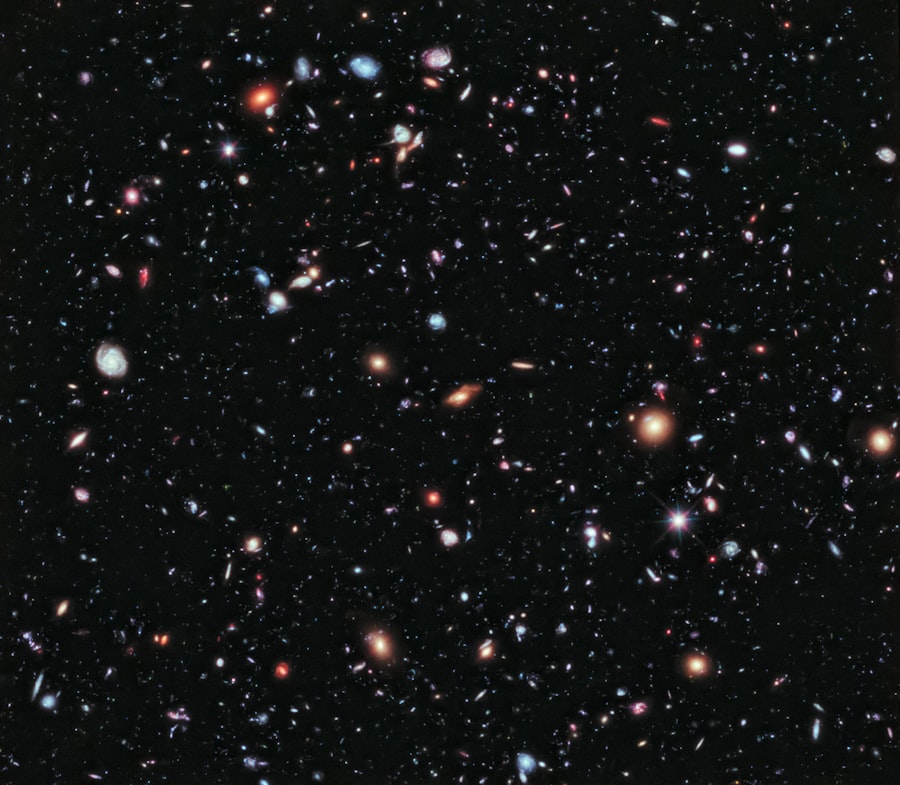
Dark matter, an elusive and invisible substance that makes up about 27% of the universe’s total mass-energy content, plays a fundamental role in galaxy formation. Although it cannot be observed directly, its presence is inferred through its gravitational effects on visible matter. Dark matter acts as a scaffolding for galaxies, providing the necessary gravitational pull to attract gas and dust, which ultimately leads to star formation.
The distribution of dark matter in the early universe was not uniform; it formed clumps and halos that served as gravitational wells for baryonic matter. As gas fell into these dark matter halos, it cooled and condensed, leading to the birth of stars and galaxies. This interplay between dark matter and baryonic matter is essential for understanding how galaxies formed and evolved over time.
Without dark matter, the formation of galaxies would have been significantly hindered, resulting in a vastly different cosmic landscape.
The Formation of the First Stars
| Aspect | Metrics |
|---|---|
| Time Period | Between 100 million and 200 million years after the Big Bang |
| Temperature | Around 1000 Kelvin |
| Mass | Estimated to be tens to hundreds of times the mass of the Sun |
| Composition | Primarily composed of hydrogen and helium |
| Formation Process | Triggered by the gravitational collapse of dense regions in the early universe |
The formation of the first stars, often referred to as Population III stars, marked a transformative period in cosmic history. These stars were composed almost entirely of hydrogen and helium, lacking heavier elements that are produced in later generations of stars. Their formation occurred within dense regions of gas that collapsed under gravity, leading to temperatures and pressures sufficient for nuclear fusion to ignite.
These early stars were massive and short-lived, burning through their nuclear fuel at an astonishing rate. Their explosive deaths in supernova events enriched the surrounding interstellar medium with heavier elements, paving the way for subsequent generations of stars and galaxies. The light emitted by these first stars also played a crucial role in reionizing the universe, transforming it from a neutral state into one filled with ionized gas.
This process was instrumental in shaping the conditions for future star formation and galaxy evolution.
The Rapid Growth of Early Galaxies
Early galaxies experienced rapid growth during their formative years, driven by intense star formation and accretion processes. As gas continued to flow into these nascent structures, they became sites of vigorous starburst activity. This period of rapid star formation not only contributed to the growth of individual galaxies but also influenced their morphology and structure.
The interactions between early galaxies were also significant during this time. Mergers and collisions between smaller galaxies led to the formation of larger structures, further accelerating their growth. These interactions played a vital role in shaping galaxy evolution, leading to diverse morphologies ranging from irregular shapes to more organized spiral structures.
The rapid growth phase of early galaxies set the stage for the complex tapestry of galaxy types observed in the present-day universe.
Observing Early Galaxies with Modern Telescopes
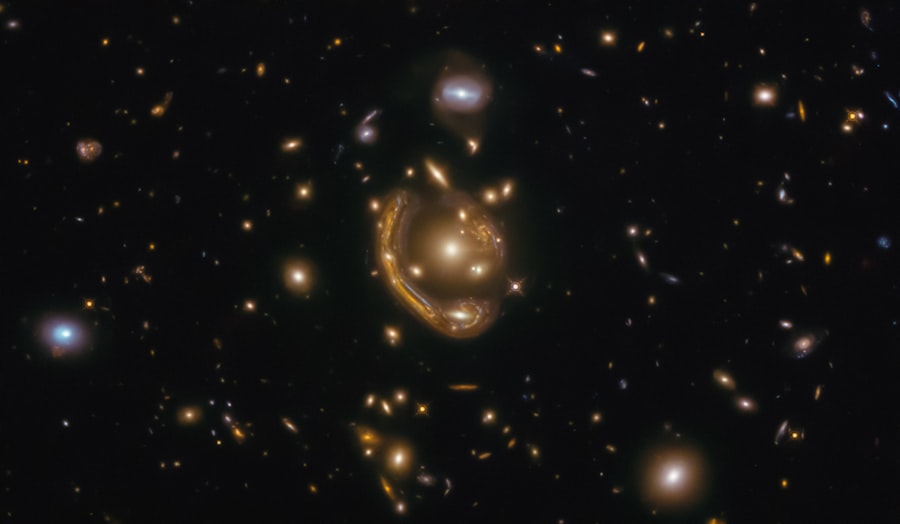
The quest to observe early galaxies has been greatly enhanced by advancements in modern telescopes and observational techniques. Instruments such as the Hubble Space Telescope and ground-based observatories equipped with adaptive optics have allowed astronomers to peer deeper into space than ever before. These observations have revealed a wealth of information about distant galaxies that formed just a few hundred million years after the Big Bang.
Recent missions like the James Webb Space Telescope (JWST) are poised to revolutionize our understanding of early galaxies even further. With its ability to capture infrared light, JWST can detect faint signals from some of the earliest galaxies formed in the universe. By studying their properties—such as their mass, star formation rates, and chemical compositions—astronomers can gain insights into how these galaxies evolved over time and their role in cosmic history.
The Impact of Early Galaxies on the Reionization of the Universe
The reionization epoch represents a critical phase in cosmic history when neutral hydrogen gas became ionized due to intense radiation from early stars and galaxies. This process occurred roughly between 400 million to 1 billion years after the Big Bang and was largely driven by the light emitted from early galaxies. As these galaxies formed and evolved, they produced vast amounts of ultraviolet radiation that ionized surrounding hydrogen gas, transforming the universe from an opaque state into one filled with ionized plasma.
The impact of early galaxies on reionization is profound; they not only contributed to this transformative process but also shaped the large-scale structure of the universe. Understanding how reionization occurred is essential for comprehending galaxy formation and evolution since it influenced subsequent star formation rates and galaxy interactions. The study of early galaxies thus provides critical insights into this pivotal epoch in cosmic history.
The Evolution of Early Galaxies Over Time
As time progressed, early galaxies underwent significant evolutionary changes influenced by various factors such as mergers, interactions with their environment, and internal processes like star formation and supernova feedback. These evolutionary pathways led to diverse outcomes; some galaxies grew larger through mergers while others remained relatively small but experienced sustained star formation. The evolution of early galaxies is also marked by changes in their chemical composition over time.
As stars formed and died within these galaxies, they enriched their surroundings with heavier elements through supernova explosions and stellar winds. This chemical enrichment played a crucial role in shaping subsequent generations of stars and influencing galaxy dynamics. By studying how early galaxies evolved over billions of years, astronomers can better understand the processes that led to the rich diversity observed in today’s universe.
The Connection Between Early Galaxies and Supermassive Black Holes
A compelling area of research is the connection between early galaxies and supermassive black holes (SMBHs). Observations suggest that most massive galaxies harbor SMBHs at their centers, raising questions about how these enigmatic objects formed alongside their host galaxies. It is believed that SMBHs grew rapidly during the same period when early galaxies were forming through processes such as accretion of gas and mergers with other black holes.
The relationship between SMBHs and their host galaxies is complex; they appear to influence each other’s growth through feedback mechanisms. For instance, energetic outflows from SMBHs can regulate star formation within their host galaxies by heating or expelling gas. Understanding this interplay is crucial for unraveling the co-evolutionary history of galaxies and black holes throughout cosmic time.
The Importance of Studying Early Galaxies for Understanding the Universe
Studying early galaxies is vital for comprehending not only galaxy formation but also broader cosmological questions regarding the evolution of matter and energy in the universe. These ancient structures provide insights into fundamental processes such as star formation rates, chemical enrichment, and reionization—all critical components for understanding how complex structures emerged from a homogeneous state. Moreover, early galaxies serve as laboratories for testing theoretical models of cosmology and astrophysics.
By comparing observations with simulations, researchers can refine their understanding of dark matter’s role in galaxy formation or explore alternative theories regarding cosmic evolution.
Future Research Directions in the Study of Early Galaxies
As technology continues to advance, future research on early galaxies promises to yield even more groundbreaking discoveries. Upcoming telescopes like NASA’s James Webb Space Telescope will enable astronomers to probe deeper into cosmic history than ever before, potentially uncovering previously hidden details about galaxy formation and evolution during critical epochs. Additionally, interdisciplinary approaches combining observational data with theoretical modeling will enhance our understanding of complex phenomena such as feedback processes between stars and black holes or interactions among multiple galaxies within clusters.
As researchers continue to explore these avenues, they will undoubtedly uncover new insights that will reshape our understanding of early galaxies and their significance within the grand narrative of cosmic evolution. In conclusion, early galaxies represent a crucial chapter in understanding our universe’s history. From their formation shortly after the Big Bang to their role in reionization and connections with supermassive black holes, these ancient structures offer invaluable insights into cosmic evolution.
As research progresses with advanced observational tools and theoretical frameworks, humanity’s grasp on these primordial entities will continue to deepen, illuminating our place within an ever-expanding cosmos.
The rapid formation of early galaxies has long puzzled astronomers, prompting numerous studies to unravel this cosmic mystery. A related article that delves into this intriguing topic can be found on My Cosmic Ventures. This article explores the various theories and observations that have been proposed to explain how galaxies in the early universe managed to form at such an accelerated pace. For a deeper understanding of these cosmic phenomena, you can read more about it by visiting the article on My Cosmic Ventures.
WATCH THIS! Did JWST DISPROVE The BIG BANG?!?!
FAQs
What is the current understanding of how early galaxies formed so fast?
The current understanding is that early galaxies formed rapidly due to the presence of large amounts of gas and dark matter in the early universe. This allowed for the rapid formation of stars and the subsequent assembly of galaxies.
What role did dark matter play in the rapid formation of early galaxies?
Dark matter is thought to have played a crucial role in the rapid formation of early galaxies by providing the gravitational pull necessary to bring together large amounts of gas and allow for the formation of stars and galaxies.
How do scientists study the formation of early galaxies?
Scientists study the formation of early galaxies using a combination of observations from telescopes and computer simulations. Observations of distant galaxies provide insight into their properties, while simulations help to model the processes that led to their formation.
What are some of the key challenges in understanding the rapid formation of early galaxies?
Some of the key challenges in understanding the rapid formation of early galaxies include the complex interplay between gas, dark matter, and the formation of stars, as well as the limitations of current observational and computational techniques in studying the early universe.
What are some of the implications of understanding the rapid formation of early galaxies?
Understanding the rapid formation of early galaxies can provide insight into the evolution of the universe, the formation of structures on cosmic scales, and the conditions that led to the emergence of the first galaxies and stars. This knowledge can also help refine our understanding of the fundamental processes that govern the universe.