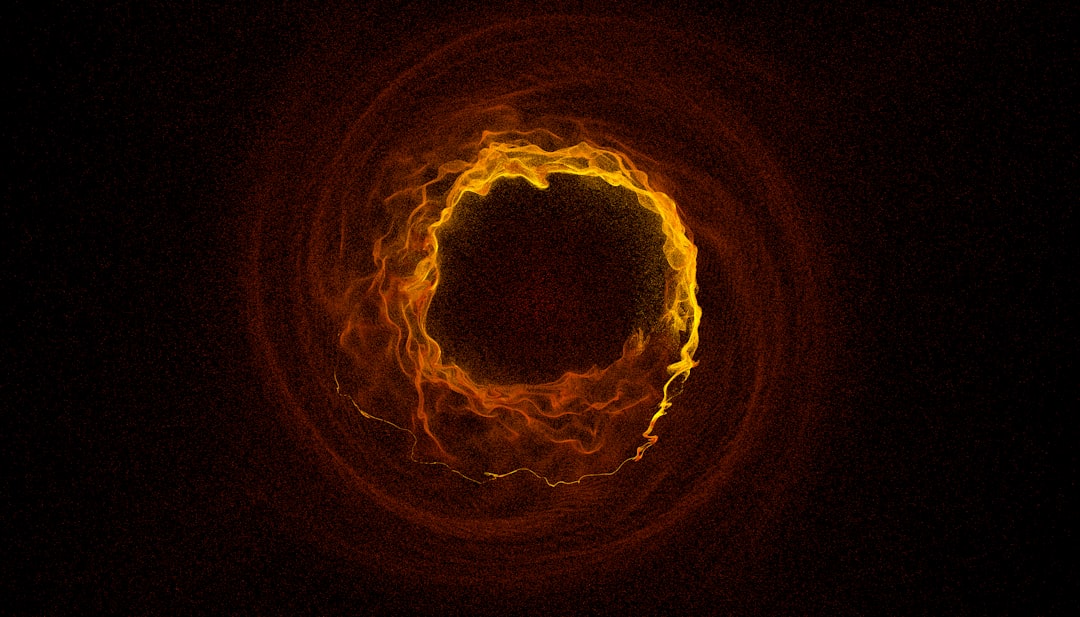
Black holes, enigmatic entities in the cosmos, have captivated the imagination of scientists and the public alike. Among their many intriguing characteristics, spin stands out as a particularly fascinating aspect. The spin of a black hole is not merely a trivial detail; it plays a crucial role in understanding the dynamics of these massive objects and their interactions with the surrounding universe.
As astrophysicists delve deeper into the nature of black holes, the significance of their spin becomes increasingly apparent, influencing everything from the formation of accretion disks to the generation of gravitational waves. The concept of spin in black holes is rooted in the principles of angular momentum, a fundamental property that governs the motion of objects in space. As black holes form from the collapse of massive stars, they retain a portion of their progenitor’s angular momentum, leading to a variety of spin states.
This spin can range from zero to nearly maximal, with implications for the black hole’s behavior and its influence on nearby matter. Understanding black hole spin is essential for unraveling the mysteries of these cosmic giants and their role in the evolution of galaxies and the universe itself.
Key Takeaways
- Black hole spin is a fundamental property that affects the behavior and interactions of black holes with their surroundings.
- Angular momentum is a key concept in physics that describes the rotational motion of an object, including black holes.
- Spin in astrophysics refers to the intrinsic angular momentum of celestial objects, such as black holes, and plays a crucial role in their dynamics.
- Black hole spin influences the emission of gravitational waves, providing valuable information about the nature of black holes.
- Observational evidence, such as X-ray emissions and spectral lines, supports the existence of black hole spin and its impact on surrounding matter and energy.
The Basics of Angular Momentum in Physics
Angular momentum is a cornerstone concept in physics, representing the rotational equivalent of linear momentum. It is a vector quantity, defined as the product of an object’s moment of inertia and its angular velocity. In classical mechanics, angular momentum is conserved in isolated systems, meaning that unless acted upon by an external force, the total angular momentum remains constant.
This principle extends to astrophysical phenomena, where it governs the motion of celestial bodies and the dynamics of systems ranging from planets to galaxies. In the context of black holes, angular momentum takes on a unique significance. When a massive star exhausts its nuclear fuel, it may undergo gravitational collapse, forming a black hole.
During this process, some of the star’s angular momentum is conserved and transferred to the newly formed black hole. The result is a spinning black hole, characterized by its angular momentum, which can profoundly affect its properties and interactions with surrounding matter. The conservation of angular momentum ensures that black holes can exhibit a range of spin states, influencing their formation and evolution over cosmic timescales.
Understanding the Concept of Spin in Astrophysics

In astrophysics, spin refers to the intrinsic angular momentum possessed by celestial objects, including black holes. Unlike ordinary objects that spin on an axis, black holes are described by their mass and spin parameters, which are encapsulated in the Kerr metric—a solution to Einstein’s equations of general relativity. This metric characterizes rotating black holes and reveals how their spin affects spacetime geometry around them.
The spin of a black hole can be quantified using a dimensionless parameter known as the Kerr parameter or a*, which ranges from 0 (non-rotating) to 1 (maximally rotating). A black hole with a higher spin parameter exhibits distinct properties compared to its non-rotating counterpart. For instance, spinning black holes can have an ergosphere—a region outside the event horizon where objects cannot remain stationary relative to an outside observer.
This unique feature has profound implications for energy extraction processes and the behavior of matter in their vicinity.
The Role of Black Hole Spin in Gravitational Waves
| Black Hole Spin | Gravitational Waves |
|---|---|
| High Spin | Produces stronger gravitational waves |
| Low Spin | Produces weaker gravitational waves |
| Spin Direction | Affects the polarization of gravitational waves |
| Spin Magnitude | Impacts the frequency and amplitude of gravitational waves |
Gravitational waves, ripples in spacetime caused by accelerating masses, have emerged as a groundbreaking area of research in astrophysics. The spin of black holes plays a pivotal role in the generation and characteristics of these waves. When two black holes merge, their spins influence the dynamics of the merger process, affecting the frequency and amplitude of the emitted gravitational waves.
The interplay between black hole spins can lead to various merger scenarios, including aligned spins, anti-aligned spins, or misaligned spins. Each configuration produces distinct gravitational wave signatures detectable by observatories like LIGO and Virgo. The analysis of these signals provides valuable insights into the properties of merging black holes, including their masses and spins.
As gravitational wave astronomy continues to evolve, understanding how spin influences these cosmic events will be crucial for unraveling the mysteries surrounding black hole formation and evolution.
Observational Evidence for Black Hole Spin
The quest to measure black hole spin has gained momentum with advancements in observational techniques and technologies.
One prominent approach involves studying X-ray emissions from accretion disks surrounding black holes.
When matter spirals into a black hole, it forms an accretion disk that emits X-rays due to intense gravitational forces and frictional heating. The properties of these X-ray emissions can reveal information about the black hole’s spin. For instance, if a black hole spins rapidly, it can cause the inner edge of the accretion disk to be located closer to the event horizon, resulting in higher-energy X-ray emissions.
By analyzing these emissions and their spectral features, astronomers can estimate the spin rates of black holes with increasing precision.
Theoretical Models for Black Hole Spin
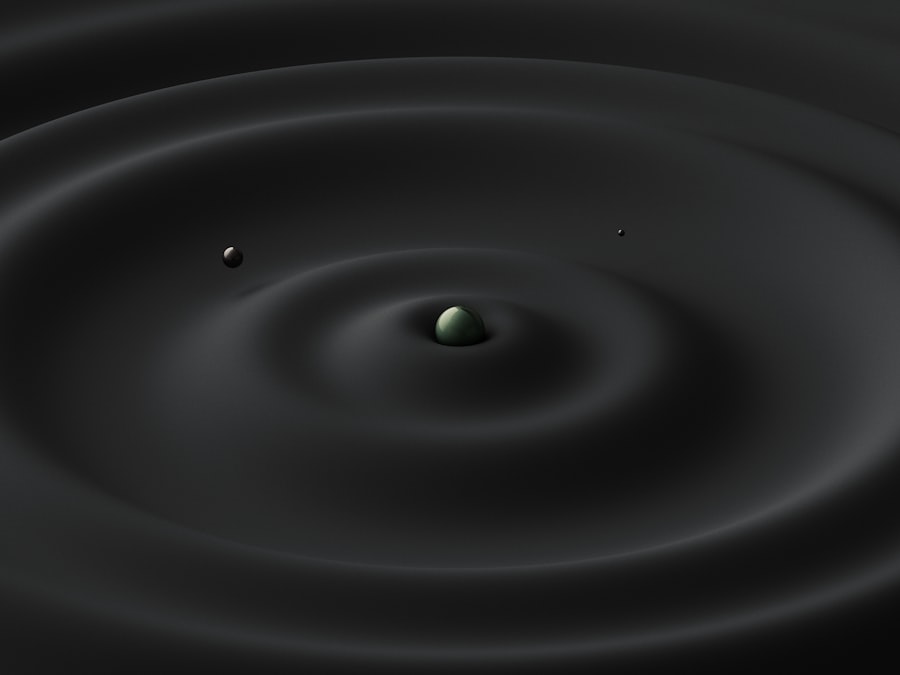
Theoretical models play a crucial role in understanding black hole spin and its implications for astrophysical processes. One prominent framework is the Kerr solution to Einstein’s equations, which describes rotating black holes and provides insights into their structure and behavior. This model predicts various phenomena associated with spinning black holes, including frame-dragging effects and the existence of an ergosphere.
These models aim to capture the intricate interactions between black holes and their surroundings, shedding light on how spin influences accretion processes and jet formation. By comparing theoretical predictions with observational data, scientists can refine their understanding of black hole spin and its role in shaping cosmic structures.
Effects of Black Hole Spin on Accretion Disks
The spin of a black hole has profound effects on its accretion disk—the swirling mass of gas and dust that orbits around it. A rapidly spinning black hole can significantly alter the dynamics within its accretion disk compared to a non-rotating counterpart. For instance, as matter approaches a spinning black hole, it experiences frame-dragging effects due to the rotation of spacetime itself.
This frame-dragging phenomenon can lead to enhanced angular momentum transfer within the accretion disk, resulting in increased efficiency in converting gravitational energy into radiation. Consequently, spinning black holes often exhibit higher luminosities than their non-rotating counterparts. Additionally, the inner edge of an accretion disk around a rapidly spinning black hole can be located closer to the event horizon, allowing for more efficient energy extraction processes.
The Connection Between Black Hole Spin and Jet Formation
One of the most striking manifestations of black hole activity is the formation of relativistic jets—narrow beams of particles ejected at nearly the speed of light from regions near supermassive black holes. The connection between black hole spin and jet formation is an area of active research that has yielded intriguing insights into how these powerful jets are generated. Theories suggest that a rapidly spinning black hole can create strong magnetic fields through dynamo processes within its accretion disk.
These magnetic fields can channel energy away from the black hole’s rotation into collimated jets. The alignment between the black hole’s spin axis and the jets’ direction plays a critical role in determining jet properties such as velocity and composition. Observations have shown that jets are often aligned with the spin axis of their host black holes, providing compelling evidence for this connection.
Black Hole Spin and the Penrose Process
The Penrose process is a theoretical mechanism proposed by physicist Roger Penrose that allows for energy extraction from rotating black holes. This process exploits the unique properties associated with spinning black holes, particularly within their ergospheres—the regions where spacetime is dragged around by the rotating mass. In essence, particles entering the ergosphere can split into two fragments: one falling into the black hole while the other escapes with additional energy.
This energy extraction mechanism has profound implications for understanding how rotating black holes can influence their surroundings and potentially power high-energy astrophysical phenomena such as jets or gamma-ray bursts.
The Impact of Black Hole Spin on the Surrounding Space-Time
The presence of a spinning black hole has far-reaching consequences for spacetime geometry in its vicinity. According to general relativity, mass and energy warp spacetime; thus, a rotating mass creates complex structures that affect nearby objects’ motion and trajectories. This warping leads to phenomena such as frame-dragging, where objects moving near a spinning black hole experience changes in their paths due to spacetime being dragged along with the rotation.
The impact on surrounding space-time extends beyond mere gravitational effects; it also influences how matter behaves near a black hole. For instance, particles approaching a spinning black hole may experience different gravitational forces depending on their trajectory relative to its rotation axis. This intricate interplay between spin and spacetime geometry is essential for understanding various astrophysical processes occurring around these enigmatic objects.
Future Directions in the Study of Black Hole Spin
As technology advances and observational techniques improve, future research on black hole spin promises to yield exciting discoveries that could reshape our understanding of these cosmic giants. Upcoming missions such as space-based gravitational wave observatories will enhance scientists’ ability to detect mergers involving spinning black holes with unprecedented precision. Moreover, advancements in high-energy astrophysics will allow researchers to probe deeper into accretion processes around supermassive black holes at galactic centers.
By combining observational data with sophisticated theoretical models, scientists aim to unravel complex questions about how spin influences galaxy formation and evolution over cosmic timescales. In conclusion, studying black hole spin is not merely an academic pursuit; it holds profound implications for understanding fundamental aspects of our universe—from gravitational waves to cosmic jets and beyond. As researchers continue to explore this captivating field, they will undoubtedly uncover new insights that deepen humanity’s understanding of one of nature’s most mysterious phenomena.
The fascinating physics of black hole spin has been a topic of intense research, shedding light on the fundamental nature of these enigmatic cosmic objects. For a deeper understanding of this subject, you can explore the article on black hole dynamics and their implications in the universe at this link. This resource provides valuable insights into how the spin of black holes affects their surroundings and the formation of jets, contributing to our overall comprehension of astrophysical phenomena.
WATCH THIS! The Invisible Threat: A Rogue Black Hole Headed for Our Solar System?
FAQs
What is black hole spin?
Black hole spin refers to the rotation of a black hole around its axis. This rotation affects the behavior of matter and light around the black hole, as well as the properties of the black hole itself.
How is black hole spin measured?
Black hole spin is measured using a parameter called the dimensionless spin parameter, denoted by “a”. This parameter ranges from 0 (non-rotating) to 1 (maximally rotating).
What are the effects of black hole spin?
The spin of a black hole affects the accretion disk of matter surrounding it, as well as the jets of particles and radiation that are emitted from the black hole. It also influences the gravitational waves emitted during black hole mergers.
How does black hole spin impact the formation of accretion disks?
The spin of a black hole affects the orientation and stability of the accretion disk of matter that forms around it. Higher spin can lead to more efficient energy extraction from the accretion disk.
What role does black hole spin play in the emission of gravitational waves?
The spin of a black hole affects the properties of the gravitational waves emitted during black hole mergers. It can also provide information about the formation and evolution of black hole binaries.
Can black hole spin change over time?
Black hole spin can change over time due to processes such as accretion of matter, mergers with other black holes, and interactions with surrounding objects. These changes can have significant effects on the behavior of black holes in the universe.