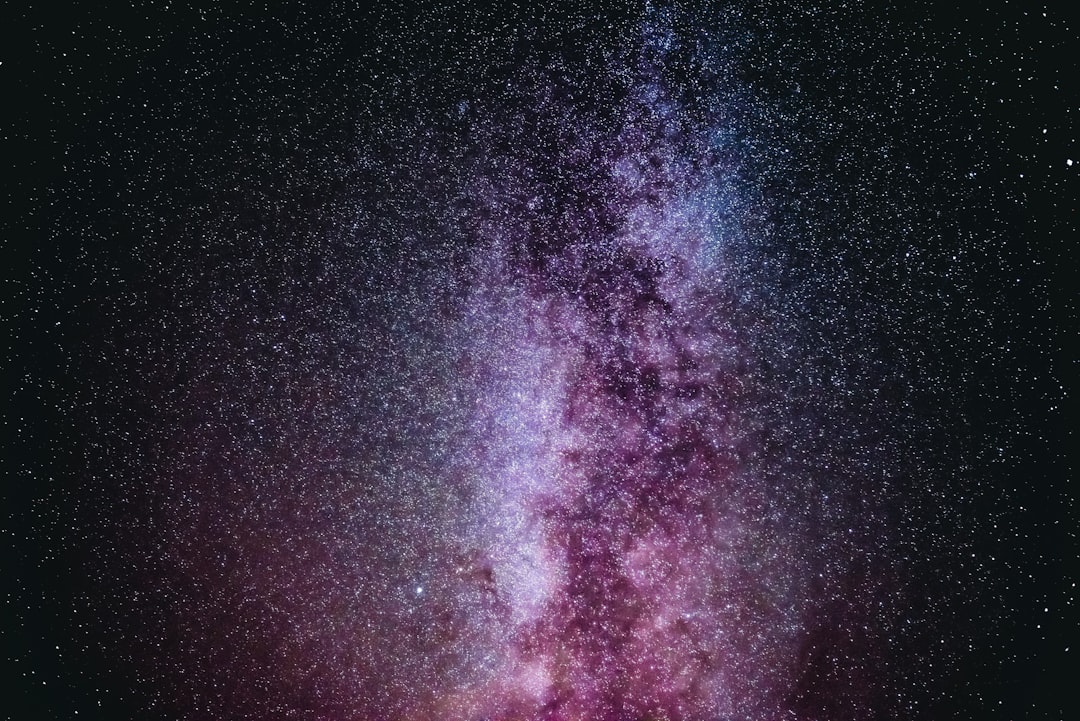
The Milky Way galaxy, our cosmic home, is not a placid, stationary island in the ocean of space. Instead, it is engaged in a relentless, high-speed journey. Recent astronomical observations and sophisticated modeling have revealed that the Milky Way is hurtling through the universe at an astonishing velocity of approximately 600 kilometers per second. This rapid motion is not an anomaly but rather a consequence of the gravitational ballet that governs the cosmos, a ceaseless dance of galaxies influenced by their neighbors and the large-scale structure of the universe. Understanding this velocity is crucial for comprehending our galaxy’s place and destiny within the grand cosmic tapestry.
The motion of the Milky Way is not a spontaneous event but rather the result of immense gravitational forces exerted by other celestial bodies, both near and far. These forces act like unseen hands, continuously pulling and pushing our galaxy, dictating its trajectory through the cosmic void.
The Local Group: A Celestial Neighborhood
At a relatively close cosmic distance, the Milky Way is part of a collection of galaxies known as the Local Group. This gravitational cluster, containing over 50 galaxies, is dominated by the Milky Way and the Andromeda Galaxy, our closest major galactic neighbor.
Andromeda’s Pull: A Collision Course
The Andromeda Galaxy (M31), approximately 2.5 million light-years away, is the most significant influencer of the Milky Way’s local motion. Their mutual gravitational attraction is substantial, drawing them towards each other.
The Projected Collision: A Cosmic Merger
Current models predict that the Milky Way and Andromeda are on a collision course, with an estimated encounter in about 4.5 billion years. While the galaxies themselves will not directly collide intact, their constituent stars will be so spread out that direct stellar collisions will be exceptionally rare. Instead, the galaxies will merge, forming a larger elliptical galaxy, often dubbed “Milkomeda” or “Milkdromeda.” This merger will drastically reshape both galaxies over billions of years.
The Triangulum Galaxy: A Bystander in the Dance
The Triangulum Galaxy (M33), the third-largest member of the Local Group, also exerts a gravitational influence, though less pronounced than Andromeda’s. It is gravitationally bound to the Andromeda-Milky Way system.
Orbital Mechanics Within the Group
The dynamics within the Local Group are complex, involving the interplay of the gravitational fields of all its members. The Milky Way’s motion is a vector sum of its individual interactions with each of these galaxies, primarily driven by the dominant Andromeda influence.
The Virgo Supercluster: A Larger Gravitational Dominion
Beyond the Local Group, the Milky Way resides within a larger cosmic structure called the Virgo Supercluster. This vast conglomeration of galaxy groups and clusters imposes a more significant gravitational influence on our galaxy’s overall motion.
The Virgo Cluster’s Gravitational Well
The Virgo Cluster, a dense collection of over a thousand galaxies, acts as a massive gravitational well. The Milky Way, along with the Local Group, is being pulled towards the center of this cluster. This pull contributes significantly to the 600 km/s velocity.
Galactic Motion as a Gravitational Slingshot
The movement towards the Virgo Cluster can be conceptualized as being caught in a cosmic slingshot, where the immense gravity of the cluster accelerates the Milky Way and its entourage.
The Great Attractor: An Enigmatic Cosmic Hub
Perhaps the most influential factor in the Milky Way’s rapid trajectory is a region of space known as the Great Attractor. This is not a single object but rather a concentration of mass in the universe that is drawing galaxies towards it from vast distances.
The Shapley Supercluster’s Influence
The Great Attractor is believed to be primarily driven by the gravitational pull of the Shapley Supercluster, a colossal structure of galaxies located approximately 650 million light-years away. This supercluster is one of the most massive structures known in the observable universe.
Unseen Dependencies: The Dark Matter Contribution
A significant portion of the mass responsible for the Great Attractor’s pull is thought to be dark matter, an invisible form of matter that interacts gravitationally but does not emit or absorb light. The distribution of dark matter plays a crucial role in shaping the large-scale structure of the universe and, consequently, galactic motions.
Recent studies have revealed that our Milky Way galaxy is moving at an astonishing speed of approximately 600 kilometers per second through the cosmos. This remarkable velocity not only highlights the dynamic nature of our galaxy but also raises intriguing questions about its interactions with neighboring galaxies and the overall structure of the universe. For more insights into the movement of the Milky Way and its implications, you can read a related article on this topic at My Cosmic Ventures.
Measuring the Cosmic Rush: How We Know Our Speed
Determining the Milky Way’s velocity is a testament to the ingenuity of modern astronomy and physics. It involves a combination of precise measurements and sophisticated data analysis that allows us to “see” motion across unimaginable distances.
Redshift and Blueshift: The Doppler Effect in Space
The primary tool for measuring the motion of distant objects in the universe is the Doppler effect, as observed in light. Just as the pitch of a siren changes as it moves towards or away from an observer, the wavelength of light from celestial objects is altered by their motion.
Redshift: Moving Away
When a celestial object is moving away from us, the light it emits is stretched to longer wavelengths, appearing redder. This phenomenon is known as redshift.
Quantifying Distance and Velocity
The amount of redshift is directly proportional to the object’s recession velocity. By measuring the redshift of light from distant galaxies, astronomers can calculate how fast they are moving away from us.
Blueshift: Moving Closer
Conversely, when a celestial object is moving towards us, the light it emits is compressed to shorter wavelengths, appearing bluer. This phenomenon is called blueshift.
Andromeda’s Blueshift: An Approaching Neighbor
The light from the Andromeda Galaxy exhibits a blueshift, indicating that it is moving towards the Milky Way. This observation is a key piece of evidence for the impending merger.
Peculiar Velocity: Relative to the Cosmic Sea
The velocity of the Milky Way is composed of two main components: the Hubble flow, which is the expansion of the universe itself, and what astronomers call “peculiar velocity.” Peculiar velocity is the motion of a galaxy relative to the overall expansion of space, driven by local gravitational influences.
Deconstructing Cosmic Motion
Astronomers must carefully account for the Hubble flow when determining a galaxy’s peculiar velocity. This is achieved by observing a multitude of galaxies at varying distances and understanding the relationship between distance and recession velocity.
Removing the Universal Expansion: A Necessary Step
Imagine being on a moving walkway at an airport. Your movement relative to the walkway is your peculiar velocity, while the walkway itself is the expansion of the universe. To understand your personal gait, you must first account for the walkway’s speed.
Cosmic Microwave Background (CMB): A Universal Reference Frame
The Cosmic Microwave Background (CMB) radiation, the afterglow of the Big Bang, provides a near-perfect cosmic reference frame. By observing the slight temperature variations in the CMB, astronomers can determine our motion relative to this ancient light.
The Dipole Anisotropy: A Signature of Motion
The CMB exhibits a distinct pattern known as the dipole anisotropy. This means that one part of the sky appears slightly warmer (blueshifted) and the opposite part appears slightly cooler (redshifted). This dipole is a direct manifestation of the Milky Way’s motion through the universe relative to the CMB rest frame.
Measuring Our Cosmic Drift
The magnitude and direction of this dipole anisotropy allow astronomers to precisely calculate the Milky Way’s velocity relative to the CMB. This measurement is remarkably consistent, indicating a motion of approximately 600 km/s.
The Consequences of Speed: What Our Motion Means
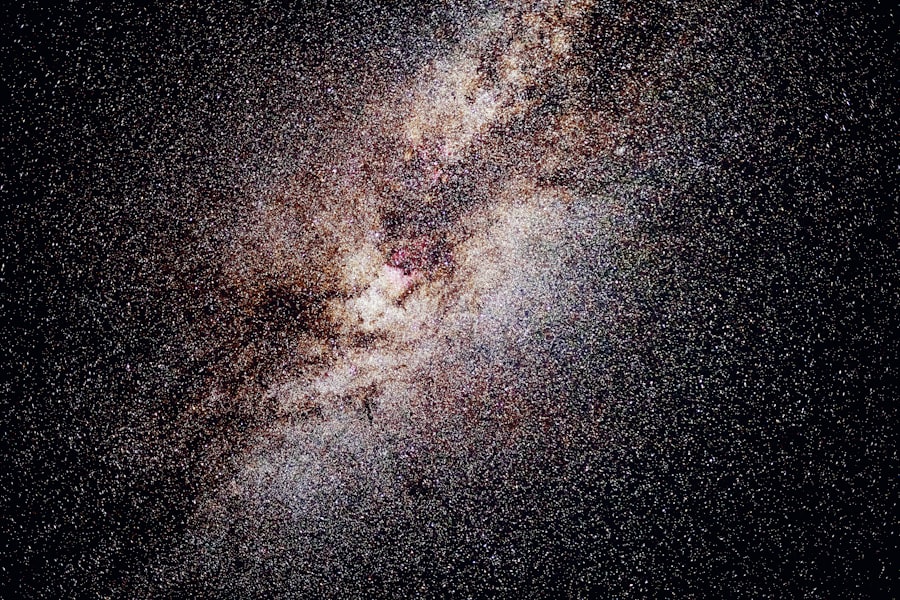
The Milky Way’s rapid movement has several implications for our understanding of the galaxy’s current state and its future evolution. It’s not just a number; it’s a dynamic indicator of our place in the cosmic neighborhood.
Galactic Evolution: Shaping the Future
The constant motion and gravitational interactions are not merely transient events but fundamental drivers of galactic evolution. Our speed influences how we gather matter and how we will eventually interact with other galaxies.
Interactions and Mergers: A Sculpting Process
The Milky Way’s trajectory dictates its interactions with other galaxies. These encounters, especially significant mergers like the one with Andromeda, are powerful forces that sculpt galactic structure, trigger star formation, and redistribute stars and gas clouds.
Long-Term Cosmic Neighborhood Dynamics
Understanding our velocity allows us to model the long-term dynamics of our local cosmic neighborhood. We can predict when and how we will interact with other galaxies, leading to the formation of larger structures.
Local Group Dynamics: A Gravitational Dance Floor
The speed of the Milky Way is a crucial element in understanding the intricate gravitational dance of the Local Group. Our motion influences the orbits of smaller satellite galaxies and the overall stability of the group.
Satellite Galaxies: Orbiting Our Speedy Home
The smaller dwarf galaxies that orbit the Milky Way, such as the Sagittarius Dwarf Spheroidal Galaxy, are not simply passive passengers. Their orbits are dictated by the Milky Way’s motion and gravitational field, and they are often tidally disrupted over time.
The Milky Way’s Trail: A Cosmic Wake
As the Milky Way moves, it leaves a gravitational trail, influencing the distribution and orbits of gas and dark matter in its wake. This can lead to the formation of stellar streams and other observable structures.
The Universe’s Large-Scale Structure: A Cosmic Interconnectedness
Our galaxy’s velocity is a direct consequence of the universe’s vast, interconnected web of matter. The Milky Way is not an isolated entity but is being pulled along by the gravitational forces that shape the cosmic web.
Cosmic Filaments and Voids: The Universe’s Scaffolding
The universe is structured into a network of vast filaments and voids, where galaxies are concentrated along the filaments and emptiness resides in the voids. The Milky Way’s motion is largely dictated by its position within this large-scale structure, moving towards denser regions.
Mapping the Cosmic Landscape
By studying the motion of our own galaxy and countless others, astronomers can create detailed maps of the universe’s large-scale structure, revealing patterns and concentrations of mass that were once invisible.
The Great Attractor and Beyond: Unraveling Our Ultimate Destination
The concept of the Great Attractor highlights the fact that our galaxy is not moving randomly but is being drawn towards a massive concentration of matter. This raises questions about our ultimate cosmic destination.
The Laniakea Supercluster: A Grander Cosmic Home
Recent research has redefined our understanding of the Great Attractor, proposing that it lies at the center of a much larger structure called the Laniakea Supercluster. This supercluster encompasses not only the Virgo Supercluster but also several other adjacent superclusters.
Defining the Boundaries of our Cosmic Dominion
Laniakea, meaning “immense heaven” in Hawaiian, is a region of space where all galaxies within it are gravitationally bound to flow towards the supercluster’s center. Our galaxy is a part of this vast gravitational basin.
A New Perspective on Galactic Neighbors
This concept of Laniakea places the Milky Way within a structure that is hundreds of millions of light-years across, encompassing billions of galaxies. Our immediate neighbors in the Local Group are part of a much grander cosmic neighborhood.
The Flow Towards the Center: A Cosmic River
Within Laniakea, the Milky Way and all other galaxies are moving towards a common gravitational center, much like water flowing towards a drain. Our velocity of 600 km/s is a component of this larger, directed flow.
Understanding Galactic Trajectories
By understanding the gravitational influences within Laniakea, astronomers can trace the past and predict the future trajectories of galaxies within this supercluster.
Long-Term Cosmic Evolution: A Slow but Powerful Drift
This continuous drift towards the center of Laniakea suggests a slow but powerful evolutionary process for our galactic neighborhood, ultimately leading to further concentrations of mass.
Recent studies have revealed that our Milky Way galaxy is moving through space at an astonishing speed of 600 kilometers per second. This incredible velocity not only highlights the dynamic nature of our galaxy but also raises intriguing questions about its interactions with neighboring galaxies and the overall structure of the universe. For those interested in exploring this topic further, you can read more about the Milky Way’s movement and its implications in a related article found here. Understanding these cosmic movements can deepen our appreciation of the vastness and complexity of the universe we inhabit.
The Significance of 600 km/s: A Moving Galaxy in a Dynamic Universe
| Metric | Value | Unit | Description |
|---|---|---|---|
| Speed of Milky Way | 600 | km/s | Approximate velocity of the Milky Way galaxy moving through space |
| Speed in km/h | 2,160,000 | km/h | Equivalent speed converted from km/s to km/h |
| Speed in miles per second | 373 | miles/s | Equivalent speed converted from km/s to miles per second |
| Speed in miles per hour | 1,342,000 | miles/h | Equivalent speed converted from km/s to miles per hour |
| Reference Frame | Cosmic Microwave Background | – | Speed measured relative to the cosmic microwave background radiation |
| Direction | Approximately towards the constellation Leo | – | General direction of the Milky Way’s motion |
The figure of 600 kilometers per second for the Milky Way’s velocity is not just a scientific statistic; it underscores the dynamic and ever-evolving nature of the universe. It’s a profound reminder that we are on a journey, propelled by forces we are only beginning to fully comprehend.
Our Place in the Cosmic Tapestry: Not a Fixed Point
Our rapid motion challenges the intuitive notion of a stationary universe. It reveals that galaxies are active participants in a grand, cosmic ballet, constantly influenced by their surroundings. The Milky Way is not a static painting but a vibrant, moving brushstroke on the canvas of the cosmos.
The Universe as a Living Entity: Constant Motion and Change
The universe is not a static display but a dynamic entity, in constant flux. The movement of galaxies is a fundamental aspect of this dynamism, driving evolution and shaping the structures we observe.
A Universe of Interactions: Gravity as the Conductor
The constant motion is a consequence of gravity, the universal architect. It orchestrates the dance of galaxies, pulling them together, pushing them apart, and dictating the grand cosmic ballet.
Revisiting Cosmic Models: Refining Our Understanding
Accurate measurements of galactic velocities, including our own, are vital for refining our cosmological models. These velocities provide crucial data points for testing theories about dark matter, dark energy, and the overall evolution of the universe.
Testing Cosmological Parameters: Constraints from Motion
The speed at which galaxies move provides constraints on the values of various cosmological parameters, such as the Hubble constant and the density of matter in the universe.
The Interplay of Theory and Observation: A Continuous Dialogue
This ongoing interplay between theoretical predictions and observational data is how our understanding of the universe advances. The speed of the Milky Way is a key piece of this ever-expanding puzzle.
A Glimpse into the Future: The Milky Way’s Cosmic Destiny
Understanding our current velocity offers a glimpse into the Milky Way’s potential cosmic destiny. The gravitational influences that are shaping our present motion will continue to shape our future.
The Andromeda Merger: A Glimpse of Our Galactic Future
The projected merger with Andromeda, driven by our current trajectory, is a profound reminder of the long-term processes that shape galaxies. Our speed today is a precursor to the dramatic transformations of the distant future.
The Evolution of Stellar Populations: A Cosmic Legacy
As galaxies merge, their stellar populations are mixed and reshaped. The 600 km/s motion is a step in this grand process, contributing to the eventual composition and structure of the larger galaxy that will emerge.
The Milky Way’s rapid pace through the universe is a compelling testament to the power of gravity and the dynamic nature of the cosmos. At approximately 600 kilometers per second, our galaxy is a participant in a grand, sweeping cosmic dance, influenced by the gravitational tugs of its neighbors and the immense structures that dominate the universe. This speed is not a random phenomenon but a quantifiable consequence of the gravitational interactions that have shaped galaxies for billions of years. By understanding this relentless motion, we gain deeper insights into our place within the vast cosmic tapestry, the evolution of our galaxy, and the ultimate destiny that awaits us in the grand theater of the universe.
FAQs
1. How fast is the Milky Way moving?
The Milky Way is moving at approximately 600 kilometers per second relative to the cosmic microwave background radiation.
2. What causes the Milky Way to move at such high speeds?
The Milky Way’s motion is influenced by the gravitational pull of nearby galaxies, galaxy clusters, and large-scale structures in the universe, causing it to move through space at high speeds.
3. In which direction is the Milky Way moving?
The Milky Way is moving toward a region known as the “Great Attractor,” a gravitational anomaly located in the direction of the constellations Centaurus and Hydra.
4. How do scientists measure the speed of the Milky Way?
Scientists measure the Milky Way’s speed by observing the cosmic microwave background radiation and detecting the Doppler shift caused by the galaxy’s motion relative to this radiation.
5. Does the Milky Way’s movement affect life on Earth?
The Milky Way’s movement through space does not have a direct impact on life on Earth, as the galaxy’s motion occurs on a cosmic scale and over very long time periods.