
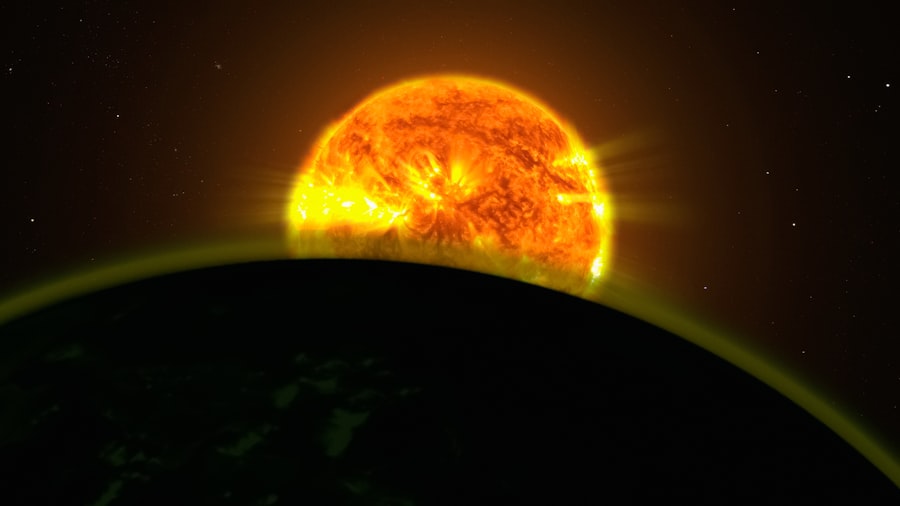
Solar flares are intense bursts of radiation emanating from the sun’s surface, resulting from the release of magnetic energy associated with sunspots. These phenomena can vary in size and intensity, with some flares being relatively minor while others can unleash vast amounts of energy, equivalent to millions of hydrogen bombs exploding simultaneously. The study of solar flares is crucial not only for understanding solar dynamics but also for assessing their potential impact on Earth and its technological systems.
As society becomes increasingly reliant on satellite technology for communication, navigation, and weather forecasting, the implications of solar flares on these systems have garnered significant attention. The sun operates on an approximately 11-year cycle of solar activity, during which the frequency and intensity of solar flares can fluctuate dramatically. During periods of heightened solar activity, known as solar maximum, the likelihood of solar flares increases, posing a greater risk to satellites orbiting the Earth.
Understanding the nature of these solar events is essential for satellite operators and researchers alike, as it allows them to develop strategies to mitigate potential disruptions and safeguard critical infrastructure.
Key Takeaways
- Solar flares are sudden, intense bursts of radiation from the sun that can impact satellite orbits and communication systems.
- Understanding satellite orbits is crucial for predicting and mitigating the impact of solar flares on satellite operations.
- Solar flares can disrupt satellite communication, leading to potential loss of data and connectivity.
- Satellite electronics are at risk of damage from solar flares, which can lead to costly repairs and replacements.
- Solar flares can also impact global positioning systems (GPS), affecting navigation and location-based services.
Understanding Satellite Orbits
Satellites are placed in specific orbits around the Earth to perform various functions, including communication, weather monitoring, and scientific research. The most common types of orbits include geostationary, low Earth orbit (LEO), and medium Earth orbit (MEO). Geostationary satellites maintain a fixed position relative to the Earth’s surface, orbiting at an altitude of approximately 35,786 kilometers.
This allows them to provide continuous coverage over specific regions, making them ideal for telecommunications and broadcasting. In contrast, low Earth orbit satellites operate at altitudes ranging from about 160 to 2,000 kilometers. These satellites are often used for Earth observation and scientific missions due to their proximity to the planet.
Medium Earth orbit satellites, situated between LEO and geostationary orbits, are commonly employed for navigation systems like GPS. Each type of orbit presents unique advantages and challenges, particularly concerning exposure to space weather phenomena such as solar flares.
The Effect of Solar Flares on Satellite Orbits

Solar flares can significantly influence satellite orbits by altering the atmospheric conditions in which these satellites operate. When a solar flare occurs, it releases a surge of high-energy particles and radiation that can expand the Earth’s atmosphere. This expansion increases atmospheric drag on satellites in lower orbits, potentially causing them to lose altitude more rapidly than anticipated.
As a result, satellite operators must continuously monitor their spacecraft’s trajectory and make necessary adjustments to maintain their intended orbits. Moreover, the energetic particles emitted during a solar flare can also affect the ionosphere, a layer of the Earth’s atmosphere that plays a crucial role in radio wave propagation. Changes in the ionosphere can lead to fluctuations in satellite orbits, complicating the task of maintaining precise positioning and stability.
Understanding these effects is vital for satellite operators to ensure that their systems remain functional and reliable in the face of solar activity.
Disruption of Satellite Communication
| Year | Number of Disruptions | Duration of Disruptions (hours) |
|---|---|---|
| 2018 | 15 | 120 |
| 2019 | 20 | 180 |
| 2020 | 10 | 90 |
One of the most immediate consequences of solar flares is the disruption they can cause to satellite communication systems. The intense radiation emitted during a flare can interfere with radio signals transmitted between satellites and ground stations. This interference can manifest as signal degradation, loss of communication, or even complete outages in some cases.
For industries that rely heavily on satellite communication—such as aviation, maritime operations, and emergency services—these disruptions can have serious implications. In addition to direct communication disruptions, solar flares can also affect the performance of satellite-based technologies that depend on precise timing and synchronization. For instance, satellites used for telecommunications may experience delays or errors in data transmission due to fluctuations in signal quality caused by solar activity.
As a result, operators must be prepared to implement contingency plans to minimize the impact of these disruptions on their services.
Potential Damage to Satellite Electronics
The high-energy particles released during solar flares pose a significant risk to satellite electronics. These particles can penetrate satellite shielding and cause damage to sensitive components, leading to malfunctions or even complete failure of the spacecraft. The effects of such damage can range from temporary glitches—such as loss of data or brief interruptions in service—to catastrophic failures that render a satellite inoperable.
To mitigate these risks, satellite manufacturers often incorporate radiation-hardened components designed to withstand exposure to space radiation. However, even with these precautions in place, there remains a level of vulnerability inherent in all satellite systems. As solar activity increases during periods of heightened solar maximum, operators must remain vigilant and prepared for potential electronic failures that could arise from solar flare events.
Impact on Global Positioning Systems (GPS)
Global Positioning Systems (GPS) are particularly susceptible to the effects of solar flares due to their reliance on signals transmitted from satellites orbiting the Earth. Solar flares can disrupt these signals by altering the ionosphere’s density and composition, leading to inaccuracies in positioning data. This can have far-reaching consequences for various applications that depend on precise GPS information, including navigation for vehicles, aircraft, and maritime vessels.
In addition to affecting positioning accuracy, solar flares can also lead to temporary outages in GPS services. During intense solar events, users may experience degraded performance or complete loss of signal, which can be especially problematic for industries that rely on real-time navigation data. As such, understanding the potential impact of solar flares on GPS technology is essential for ensuring the reliability and safety of navigation systems worldwide.
Strategies for Mitigating the Impact of Solar Flares
To address the challenges posed by solar flares, satellite operators have developed several strategies aimed at mitigating their impact. One approach involves enhancing monitoring systems that track solar activity in real-time. By utilizing data from solar observatories and space weather prediction models, operators can anticipate potential flare events and take proactive measures to protect their satellites.
Another strategy involves implementing operational protocols that allow satellites to enter safe modes during periods of heightened solar activity.
This precautionary measure helps minimize potential damage and ensures that critical functions remain operational during solar events.
Importance of Monitoring Solar Flare Activity
Monitoring solar flare activity is crucial for understanding the potential risks associated with these phenomena and their impact on satellite operations. By keeping track of solar activity through various observational tools—such as satellites equipped with specialized instruments—scientists can gain valuable insights into the behavior of the sun and its influence on space weather. This monitoring not only aids in predicting when solar flares are likely to occur but also helps inform satellite operators about necessary precautions they should take during periods of increased activity.
By fostering collaboration between space weather researchers and satellite operators, it becomes possible to develop more effective strategies for managing the risks associated with solar flares.
Case Studies of Solar Flare Impact on Satellite Orbits
Several notable case studies illustrate the impact of solar flares on satellite operations throughout history. One such example occurred in 1989 when a powerful solar flare caused significant disruptions to communication satellites and power grids across North America. The event highlighted the vulnerability of technological infrastructure to space weather phenomena and underscored the need for improved monitoring and preparedness.
Another case study involved the European Space Agency’s Cluster mission in 2003 when a series of intense solar flares led to unexpected changes in satellite orbits. The mission team had to make rapid adjustments to maintain proper positioning and ensure data collection continued uninterrupted. These incidents serve as reminders of the importance of understanding solar flare dynamics and their potential consequences for satellite operations.
Future Challenges and Opportunities in Satellite Orbit Management
As reliance on satellite technology continues to grow, so too do the challenges associated with managing satellite orbits in an increasingly active space environment. The rise in small satellite constellations presents both opportunities and challenges for operators seeking to navigate potential disruptions caused by solar flares. While these constellations offer enhanced coverage and capabilities, they also increase the complexity of managing multiple satellites within overlapping orbits.
Looking ahead, advancements in technology may provide new solutions for mitigating the impact of solar flares on satellite operations. Innovations in materials science could lead to improved shielding techniques that enhance satellite resilience against radiation exposure. Additionally, enhanced predictive models for space weather could enable more accurate forecasting of solar flare events, allowing operators to implement timely protective measures.
Conclusion and Recommendations for Satellite Operators
In conclusion, understanding the effects of solar flares on satellite operations is essential for ensuring the reliability and functionality of critical technological systems. As society becomes increasingly dependent on satellites for communication, navigation, and data collection, it is imperative that operators remain vigilant in monitoring solar activity and implementing strategies to mitigate potential disruptions. Satellite operators are encouraged to invest in advanced monitoring systems that provide real-time data on solar activity while fostering collaboration with space weather researchers to enhance predictive capabilities.
Additionally, developing robust contingency plans that account for potential disruptions caused by solar flares will be vital in maintaining operational integrity during periods of heightened solar activity. By prioritizing these measures, satellite operators can better navigate the challenges posed by solar flares while capitalizing on opportunities for innovation in satellite technology management.
Solar flares, which are sudden eruptions of intense high-energy radiation from the sun’s surface, can have significant impacts on satellite orbits. These flares can increase the density of the Earth’s upper atmosphere, causing increased drag on satellites and potentially altering their orbits. For a deeper understanding of how solar flares affect satellite operations and the measures taken to mitigate these impacts, you can explore a related article on this topic by visiting My Cosmic Ventures. This resource provides valuable insights into the challenges faced by satellite operators and the technological advancements aimed at safeguarding these critical assets in space.
🌌 WATCH THIS! The Billion-Dollar Satellite That Will Trap Humanity on Earth
FAQs
What are solar flares?
Solar flares are sudden and intense bursts of energy and radiation from the sun’s surface. They can release as much energy as a billion megatons of TNT and can cause disturbances in the Earth’s atmosphere and near-Earth space environment.
How do solar flares impact satellite orbits?
Solar flares can cause an increase in the density of the Earth’s upper atmosphere, leading to increased drag on satellites in low Earth orbit. This can result in a decrease in the satellite’s altitude and can affect its orbital lifetime.
Can solar flares damage satellites?
Yes, solar flares can cause damage to satellites by disrupting their electronics and communication systems. The increased radiation levels during a solar flare can also affect the performance of satellite components.
How do satellite operators mitigate the impact of solar flares?
Satellite operators can mitigate the impact of solar flares by adjusting the satellite’s orbit, reducing its exposure to increased atmospheric drag. They can also implement radiation-hardened designs for satellite components to minimize the effects of increased radiation levels during a solar flare.
Are there any other impacts of solar flares on satellite operations?
In addition to affecting satellite orbits and damaging satellite components, solar flares can also disrupt satellite communications and navigation systems. This can lead to temporary outages and interruptions in satellite services.