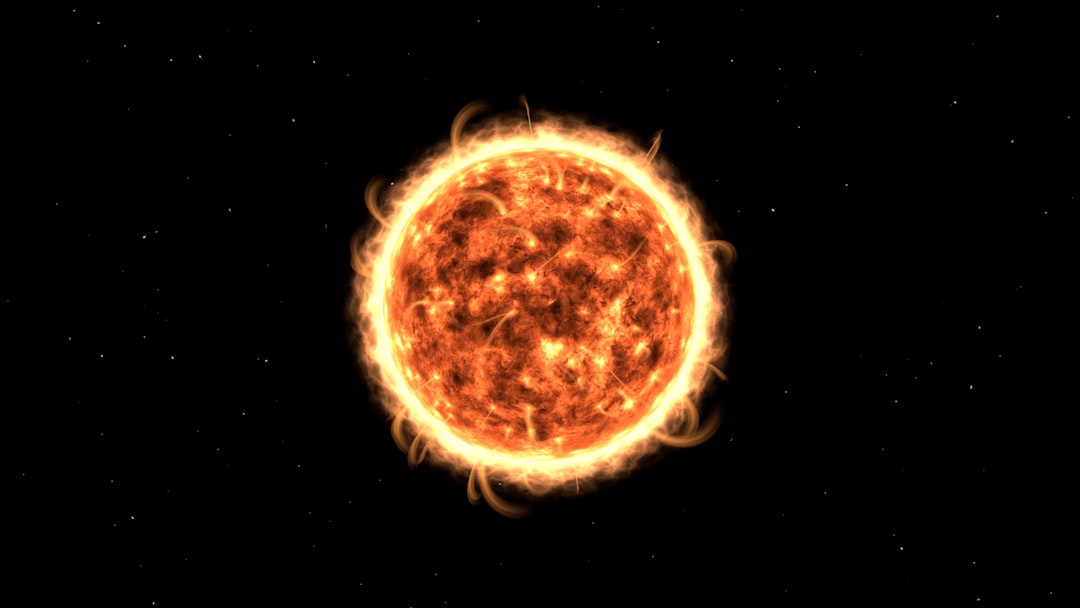
The concept of the Heat Death of the Universe represents a theoretical ultimate fate, wherein all energy in the cosmos asymptotically approaches a state of maximum entropy, rendering it unable to sustain any further thermodynamic processes. This theory, rooted in the second law of thermodynamics, posits a future where the universe reaches a state of thermodynamic equilibrium, characterized by uniform temperature and density, and an utter lack of free energy to facilitate work.
The genesis of the heat death theory can be traced back to the foundational principles of thermodynamics, particularly the second law. This law asserts that the total entropy of an isolated system can only increase over time, or remain constant in idealized reversible processes. For the universe, considered as an isolated system on the grandest scale, this implies an inexorable journey towards increasing disorder and a dilution of energy. You can learn more about the block universe theory in this insightful video.
Rudolf Clausius and the Universal Entropy
It was Rudolf Clausius who, in 1865, first articulated the idea of the “heat death of the universe.” His work on the nature of heat and energy led him to theorize that if the universe were a closed system, its total entropy would inevitably rise to a maximum. Once this maximum is reached, no further conversion of heat into mechanical work would be possible, signifying the cessation of all activity.
The Role of Thermodynamics
The core of the heat death scenario lies in the transfer and degradation of energy. In any energy transformation, a portion of the energy becomes unusable for performing work. This unusable energy contributes to the overall entropy of the system. Imagine a highly organized system – a universe brimming with stars, galaxies, and energetic processes. Over vast timescales, these processes, governed by thermodynamic laws, will invariably lead to a more disorganized, randomized state.
The concept of the heat death of the universe, which posits a future state where the universe has reached maximum entropy and can no longer sustain processes that increase entropy, is a fascinating topic in cosmology. For those interested in exploring this idea further, a related article can be found at My Cosmic Ventures, where the implications of such a scenario on the fate of the universe are discussed in detail.
The Universe’s Slow Descent into Inactivity
The transition to a state of heat death is not an instantaneous event but a gradual, prolonged process spanning unfathomably immense timescales. It involves the eventual exhaustion of all stellar fuel, the decay of matter, and the dissipation of all forms of energy.
The Twilight of Stars
The primary engines of energy in the universe are stars, which generate warmth and light through nuclear fusion. However, stars have finite lifespans. Larger, more massive stars burn through their fuel rapidly, ending their lives in spectacular supernovae or collapsing into black holes. Smaller stars, though longer-lived, will eventually exhaust their hydrogen reserves and cool down, becoming white dwarfs, then black dwarfs. This process, occurring over trillions of years, will systematically reduce the universe’s primary energy sources.
Evaporation of Black Holes
Even black holes, often considered the ultimate gravitational traps, are not eternal. Stephen Hawking’s theory of Hawking radiation suggests that black holes slowly evaporate by emitting particles. While the timescale for this evaporation is incredibly long, far exceeding the current age of the universe, it ultimately contributes to the universe’s total entropy, returning their energy to the cosmic soup, albeit in a highly diluted form.
Proton Decay and the End of Matter
A more speculative but crucial aspect of the heat death scenario involves proton decay. While not yet experimentally observed, some grand unified theories (GUTs) predict that protons, the building blocks of atomic nuclei, are not truly stable and will eventually decay into lighter particles like positrons and gamma rays. If proton decay occurs, even at an extremely slow rate, it would mean that all baryonic matter—everything we perceive as solid—would eventually cease to exist, dissolving into a diffuse fog of radiation and leptons.
The Final States of a Dying Cosmos

As the universe progresses towards its heat death, its composition and characteristics undergo profound transformations, leading to a drastically different cosmic landscape.
A Universe of Diluted Radiation
With stars having extinguished, black holes evaporated, and protons decayed, the universe would be comprised primarily of a tenuous soup of photons, neutrinos, electrons, and positrons, sparsely distributed across vast, cold expanses. The average energy per particle would be exceedingly low, leading to a near-zero temperature across the cosmos.
An Ever-Expanding Void
Concurrent with the dissipation of energy is the ongoing expansion of the universe. Current cosmological models suggest that this expansion will continue indefinitely, pushing galaxies and all pockets of matter further and further apart. In the heat death scenario, this expansion exacerbates the dilution of energy and matter, preventing any significant gravitational interactions or energy concentrations.
The Void of Nothingness
Imagine the final state: an infinite, dark, and utterly motionless void. No stars to illuminate the darkness, no galaxies to coalesce, no chemical reactions to occur, no biological processes to unfold. Just a uniform distribution of fundamental particles and radiation, at an extremely low, even temperature, with no gradients or differences to drive any form of activity. This isn’t just an absence of life, but an absence of all activity, all change, all potential.
Alternative Cosmic Fates: A Counter-Narrative
While the heat death remains a leading candidate for the universe’s ultimate fate, it is crucial to acknowledge that other theoretical possibilities exist, each with its own implications for the cosmic future. Our understanding of cosmology is still evolving, and new discoveries could potentially alter these predictions.
The Big Crunch: A Reversal of Expansion
One prominent alternative is the “Big Crunch,” a scenario wherein the universe’s expansion eventually reverses, leading to a contraction. If the universe’s average density were sufficiently high, gravity could overcome the outward thrust of expansion, causing all matter to eventually collapse back in on itself, potentially re-creating the conditions of the Big Bang. However, current observations, notably the accelerating expansion driven by dark energy, make the Big Crunch scenario less probable.
The Big Rip: An Accelerating Annihilation
A more extreme alternative, fueled by a specific model of dark energy, is the “Big Rip.” In this scenario, the repulsive force of dark energy continuously increases, eventually becoming so powerful that it overcomes all fundamental forces, ripping apart galaxies, stars, planets, and even individual atoms in a catastrophic final event. This would represent an end even more dramatic and destructive than the gradual decay of the heat death.
Cyclic Universe Theories: Eternal Recurrence
Some theories propose a “cyclic universe,” where the cosmos undergoes an endless series of Big Bangs and Big Crunches, constantly being reborn and re-forming. These models circumvent the notion of a definitive end by positing an eternal cycle of creation and destruction. However, the mechanisms driving such cycles remain highly speculative and lack strong observational support.
The concept of the heat death of the universe is a fascinating topic that explores the ultimate fate of our cosmos, suggesting a future where all energy is evenly distributed and no thermodynamic free energy exists to perform work. For those interested in delving deeper into this subject, a related article can be found on My Cosmic Ventures, which discusses the implications of this theory on the nature of time and existence. You can read more about it in this insightful piece here.
The Human Perspective: Contemplating the Cosmic Endgame
| Metric | Description | Relevance to Heat Death Universe Meaning |
|---|---|---|
| Entropy | Measure of disorder or randomness in a system | Key concept; heat death occurs when entropy reaches maximum, leading to no usable energy |
| Thermodynamic Equilibrium | State where all parts of a system have the same temperature and no energy flows | Represents the final state of the universe in heat death scenario |
| Time Scale | Estimated time until heat death occurs | Trillions of years; indicates the long-term fate of the universe |
| Energy Availability | Amount of usable energy in the universe | Approaches zero as heat death progresses, meaning no work can be performed |
| Cosmological Constant | Energy density of empty space affecting universe expansion | Influences the rate of expansion, impacting heat death timeline |
| Meaning in Philosophy | Interpretations of heat death’s implications on existence and purpose | Often symbolizes ultimate entropy and existential finality |
The contemplation of the heat death of the universe can evoke a profound sense of awe and, for some, a degree of existential unease. It speaks to the ultimate impermanence of all things, even on a cosmic scale.
The Scale of Time
Understanding the heat death requires an appreciation of astronomical timescales. The processes involved unfold over periods so vast that they dwarf the entire history of humanity, of Earth, and even of the solar system. The universe, in its current vibrant state, is merely in its cosmic infancy compared to the ages yet to unfold. This perspective can humble the human mind, reminding us of our fleeting existence within a universe of immense endurance.
The Philosophical Implications
The heat death raises fundamental philosophical questions about purpose, meaning, and the nature of existence. If the universe is destined to end in a state of utter inactivity, does that diminish the significance of its current complexity and the emergence of consciousness? Or does it underscore the preciousness of the present moment, a fleeting period of warmth and light in an otherwise infinitely dark future? These are questions that theologians, philosophers, and scientists have pondered, grappling with the stark implications of a cosmic endgame.
Our Limited Understanding
It is crucial to remember that our current understanding of the universe, while extensive, is still incomplete. The existence of dark matter and dark energy, for instance, highlights the vast unknowns that remain. Future discoveries in physics and cosmology could potentially fundamentally alter our predictive capabilities regarding the universe’s ultimate fate. Therefore, while the heat death remains a compelling and well-supported theory based on current knowledge, the cosmic narrative may yet hold surprises. As you consider these vast cosmic narratives, remember that our pursuit of knowledge, even regarding the most distant future, enriches our comprehension of the universe we inhabit, and perhaps, our place within it.
FAQs
What does the term “heat death of the universe” mean?
The heat death of the universe refers to a theoretical scenario in which the universe has reached a state of maximum entropy, meaning all energy is evenly distributed and no thermodynamic work can occur. In this state, the universe would be in thermodynamic equilibrium and effectively “dead” in terms of energy flow and life-supporting processes.
Why is it called “heat death” if it involves no heat?
The term “heat death” is somewhat misleading because it does not imply the universe becomes hot. Instead, it means that all energy differences have evened out, so no heat transfer or energy exchange can take place. The universe would be uniformly cold and inert.
What causes the heat death of the universe?
Heat death is caused by the second law of thermodynamics, which states that entropy, or disorder, tends to increase over time in an isolated system. As the universe expands and energy spreads out, usable energy decreases until no work can be performed.
Is the heat death of the universe inevitable?
According to current scientific understanding and the laws of thermodynamics, heat death is considered the most likely ultimate fate of the universe if it continues to expand indefinitely. However, this is based on current models and assumptions about cosmic expansion and energy distribution.
How long will it take for the heat death to occur?
The heat death of the universe is expected to occur on an extremely long timescale, far beyond the current age of the universe—on the order of 10^100 years or more. This is much longer than the lifespan of stars or galaxies.
What happens to matter and energy during heat death?
During heat death, matter will decay into subatomic particles, and energy will be uniformly spread out. No gradients or differences in energy will exist to drive physical processes, resulting in a cold, dark, and lifeless universe.
Are there other possible fates of the universe besides heat death?
Yes, other theoretical outcomes include the Big Crunch (universe collapses), Big Rip (universe tears apart), and cyclic models. However, current observations of cosmic expansion favor the heat death scenario.
Can heat death be reversed or avoided?
Based on current physics, heat death is irreversible because entropy tends to increase. Avoiding it would require new physics or mechanisms that can decrease entropy on a universal scale, which are not currently known.