The future of artificial intelligence (AI) is a landscape rapidly being sculpted by innovation, promising to reshape industries, redefine human capabilities, and fundamentally alter the fabric of society. From the intricate dance of algorithms to the burgeoning potential of sentient machines, AI’s trajectory points towards a period of unprecedented advancement and significant societal impact. This exploration delves into these advancements, examining the implications for various sectors and the overarching questions that arise as AI matures.
Machine learning, the engine powering much of contemporary AI, continues its relentless march of progress. Its ability to discern patterns in vast datasets, learn from experience, and make predictions without explicit programming has made it an indispensable tool. We are witnessing a deepening of its capabilities, moving beyond simple pattern recognition to more nuanced forms of understanding and reasoning.
Deep Learning and Neural Networks
Deep learning, a subset of machine learning characterized by multi-layered neural networks, has been a major catalyst for recent breakthroughs. These networks, inspired by the structure and function of the human brain, are becoming increasingly complex, allowing them to process data with remarkable sophistication.
Advancements in Network Architectures
Researchers are constantly refining neural network architectures to enhance their efficiency and efficacy. Innovations such as convolutional neural networks (CNNs) have revolutionized image and video analysis, while recurrent neural networks (RNNs) and their successors, like Long Short-Term Memory (LSTM) networks and transformers, have dramatically improved natural language processing (NLP). The development of transformer models, for instance, has been a watershed moment, enabling sophisticated understanding and generation of human language, powering applications from translation services to sophisticated chatbots. This evolution is akin to building a more intricate and finely tuned instrument, capable of capturing subtler melodies within the data.
Reinforcement Learning Techniques
Reinforcement learning (RL) allows AI agents to learn through trial and error, optimizing their actions to achieve specific goals in dynamic environments. This paradigm has seen significant strides, moving beyond game-playing prowess to applications in robotics, autonomous systems, and even scientific discovery. The ability of RL agents to adapt and strategize in complex, unpredictable scenarios is a testament to their growing autonomy and learning capacity. Consider it as teaching an apprentice not just by showing them how to do a task, but by letting them experiment and learn from their successes and failures, much faster than any human could.
Transfer Learning and Few-Shot Learning
The challenge of training AI models on massive datasets is being addressed by techniques like transfer learning and few-shot learning. Transfer learning allows pre-trained models, developed on extensive data, to be adapted to new, related tasks with minimal additional training. Few-shot learning aims to enable AI systems to learn new concepts from very few examples, mimicking human learning capabilities more closely. This progress is like inheriting a vast library of knowledge and then using that foundation to quickly understand a new book, rather than starting from scratch with every single text.
For those interested in exploring the latest advancements in artificial intelligence, I recommend checking out the article on the impact of AI on various industries available at My Cosmic Ventures. This article delves into how AI is transforming sectors such as healthcare, finance, and education, highlighting both the opportunities and challenges that come with these technological innovations.
The Rise of Generative AI and Creative Applications
Generative AI, a branch of AI focused on creating new data, has captured public imagination. Its ability to produce text, images, music, and even code has opened up novel avenues for creativity and innovation.
Text Generation and Natural Language Understanding
The advancements in NLP, particularly with transformer models, have led to highly sophisticated text generation capabilities. AI systems can now write articles, compose poetry, generate marketing copy, and even assist in coding. The nuances of human language, once a formidable barrier, are being increasingly navigated, allowing for more coherent and contextually relevant outputs. This is akin to a scribe who, having studied every known manuscript, can now not only copy but also contribute new narratives with remarkable fluency.
Image and Art Generation
Generative Adversarial Networks (GANs) and diffusion models have propelled image generation to extraordinary levels. AI can now create photorealistic images, generate art in various styles, and even synthesize entirely new visual concepts. This technology has applications in graphic design, virtual reality, and content creation, democratizing artistic expression. The digital canvas has expanded, and AI is now a brush capable of painting worlds unseen.
Music and Code Generation
Beyond text and images, AI is also making inroads into music composition and code generation. AI models can learn musical styles and generate original compositions, while others can assist programmers by suggesting code snippets, debugging, and even writing entire functions. This has the potential to accelerate creative processes and streamline software development workflows.
AI in Science and Research: Accelerating Discovery
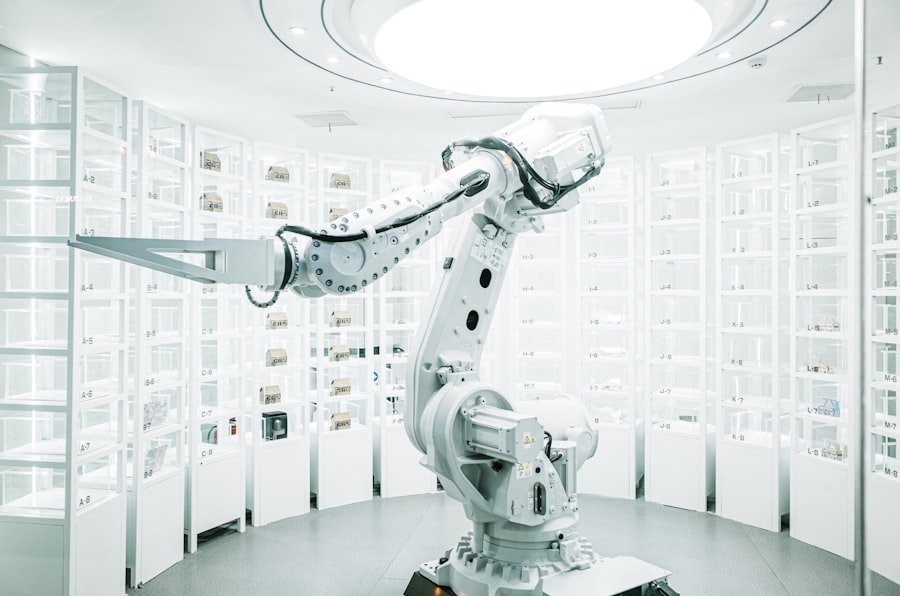
The application of AI in scientific research is proving to be a powerful accelerant for discovery. By analyzing complex datasets, simulating intricate systems, and identifying novel patterns, AI is pushing the boundaries of human knowledge across various disciplines.
Drug Discovery and Development
AI is revolutionizing drug discovery by accelerating the identification of potential drug candidates, predicting their efficacy and toxicity, and optimizing clinical trial design. Machine learning algorithms can sift through vast chemical libraries and biological data, uncovering relationships that human researchers might miss. This can drastically reduce the time and cost associated with bringing new medicines to market. Imagine an AI as a tireless research assistant, sifting through mountains of scientific literature and experimental data, flagging promising avenues that would take human researchers years to uncover.
Material Science and Engineering
In material science, AI is being employed to design and discover new materials with desired properties. By simulating atomic interactions and predicting material behavior, AI can help engineers create novel alloys, polymers, and composites for applications ranging from aerospace to renewable energy. This goes beyond traditional trial-and-error, enabling a more targeted and efficient approach to material innovation.
Climate Modeling and Environmental Science
AI is also playing a crucial role in understanding and addressing climate change. Machine learning models are being used to analyze complex climate data, improve weather forecasting, predict natural disasters, and optimize renewable energy systems. The ability of AI to process and interpret massive datasets from satellites, sensors, and historical records provides invaluable insights into environmental trends and potential mitigation strategies.
The Impact of AI on the Workforce and Economy

The widespread adoption of AI technologies will inevitably have profound effects on the global workforce and economy. While concerns about job displacement are valid, AI also presents opportunities for increased productivity, new job creation, and economic growth.
Automation and Job Displacement
One of the most significant conversations surrounding AI is its potential to automate tasks currently performed by humans. Repetitive, rule-based jobs are particularly susceptible. However, the narrative is not solely one of displacement; it is also about augmentation and transformation.
Reskilling and Upskilling Initiatives
As AI automates certain tasks, the demand for skills that complement AI capabilities – such as critical thinking, creativity, emotional intelligence, and complex problem-solving – will likely rise. Governments, educational institutions, and businesses will need to invest heavily in reskilling and upskilling programs to equip the workforce for the evolving job market. This is like preparing a ship for new voyages by updating its navigation systems and crew training for uncharted waters.
Augmentation and New Job Creation
AI is not just replacing jobs; it is also augmenting human capabilities and creating entirely new roles. AI-powered tools can enhance human efficiency and decision-making in fields like healthcare, finance, and education. Furthermore, the development, deployment, and maintenance of AI systems will necessitate a new generation of AI specialists, data scientists, ethicists, and trainers. The AI revolution, much like past industrial revolutions, will likely see the emergence of entirely new professions that are difficult to envision from today’s vantage point.
Economic Productivity and Growth
The potential for AI to boost economic productivity is substantial. By optimizing processes, improving efficiency, and enabling innovation, AI can drive economic growth and create new markets. The ability to automate tasks and analyze data at scale can lead to significant cost savings and increased output across industries. However, ensuring that the benefits of this economic growth are broadly shared will be a critical societal challenge.
Artificial intelligence continues to reshape various industries, and understanding its implications is crucial for both businesses and consumers. A recent article discusses the transformative effects of AI on healthcare, highlighting how machine learning algorithms are improving diagnostic accuracy and patient care. For further insights, you can read more about these advancements in the related article found here: AI in Healthcare. This exploration into AI’s role in medicine underscores the importance of staying informed about technological innovations that can enhance our lives.
Ethical Considerations and Societal Implications of AI
| Metric | Description | Value / Statistic | Source / Year |
|---|---|---|---|
| AI Market Size | Global market value of AI technology | USD 136.55 billion | Statista, 2023 |
| AI Adoption Rate | Percentage of companies using AI in operations | 35% | McKinsey, 2023 |
| AI Research Papers Published | Number of AI-related academic papers published annually | ~150,000 | arXiv, 2023 |
| Top AI Programming Language | Most commonly used programming language for AI development | Python | Stack Overflow Survey, 2023 |
| AI Job Growth Rate | Annual growth rate of AI-related job postings | 29% | LinkedIn, 2023 |
| AI Accuracy in Image Recognition | Top AI models’ accuracy on ImageNet dataset | ~88% | ImageNet Challenge, 2023 |
| AI Energy Consumption | Estimated energy usage of training large AI models | 300 MWh per model | OpenAI, 2023 |
As AI becomes more integrated into our lives, profound ethical questions and societal implications demand careful consideration and proactive management. These are not merely technical challenges but fundamental questions about humanity’s relationship with its creations.
Bias in AI Systems
AI systems learn from the data they are trained on. If this data contains biases, the AI will inevitably reflect and even amplify those biases. This can lead to discriminatory outcomes in areas such as hiring, loan applications, and criminal justice. Addressing bias requires rigorous data auditing, diverse development teams, and the development of fairness-aware AI algorithms. The ghost in the machine, if not carefully managed, can perpetuate historical injustices.
The Future of Privacy and Surveillance
The vast amounts of data that AI systems process raise significant concerns about privacy. The ability of AI to analyze personal data, track behavior, and make inferences about individuals could lead to unprecedented levels of surveillance. Robust regulations and ethical guidelines are necessary to protect individual privacy and prevent the misuse of AI for mass surveillance. Our digital footprints are becoming ever more scrutinized, and AI is the magnifying glass.
Autonomous Systems and Accountability
As AI systems become more autonomous, questions of accountability become paramount. Who is responsible when an autonomous vehicle causes an accident, or when an AI makes a flawed medical diagnosis? Establishing clear frameworks for responsibility and liability is crucial for building trust and ensuring the safe deployment of autonomous AI. The buck must stop somewhere, even when the decision-maker isn’t human.
The Singularity and Existential Risk
The concept of the “singularity” – a hypothetical point where AI surpasses human intelligence and undergoes rapid self-improvement – raises discussions about existential risks. While speculative, it underscores the importance of developing AI responsibly and ensuring that its goals remain aligned with human values. The ultimate ambition of AI, and our ability to control it, is a horizon that requires continuous vigilance and foresight.
The future of artificial intelligence is not a predetermined script, but a narrative being written by ongoing research, development, and societal choices. The advancements are undeniable, the impacts are set to be transformative, and the journey ahead will undoubtedly be one of both extraordinary opportunity and significant challenge. Navigating this path requires a commitment to innovation tempered by wisdom, foresight, and a deep consideration for the human values that should guide our technological evolution.

WATCH NOW ▶️ Do we live in a matrix?
FAQs
What is artificial intelligence (AI)?
Artificial intelligence (AI) refers to the simulation of human intelligence in machines that are programmed to think, learn, and perform tasks typically requiring human intelligence, such as problem-solving, speech recognition, and decision-making.
What are the main types of artificial intelligence?
The main types of AI include Narrow AI, which is designed for specific tasks; General AI, which can perform any intellectual task a human can do; and Superintelligent AI, which surpasses human intelligence in all aspects, though this remains theoretical.
How is artificial intelligence used in everyday life?
AI is used in various everyday applications such as virtual assistants (e.g., Siri, Alexa), recommendation systems (e.g., Netflix, Amazon), autonomous vehicles, fraud detection, and personalized marketing.
What are the benefits of artificial intelligence?
AI offers benefits like increased efficiency and accuracy, automation of repetitive tasks, enhanced data analysis, improved healthcare diagnostics, and the ability to solve complex problems faster than humans.
What are some ethical concerns related to artificial intelligence?
Ethical concerns include privacy issues, job displacement due to automation, bias in AI algorithms, lack of transparency in decision-making, and the potential misuse of AI technologies.