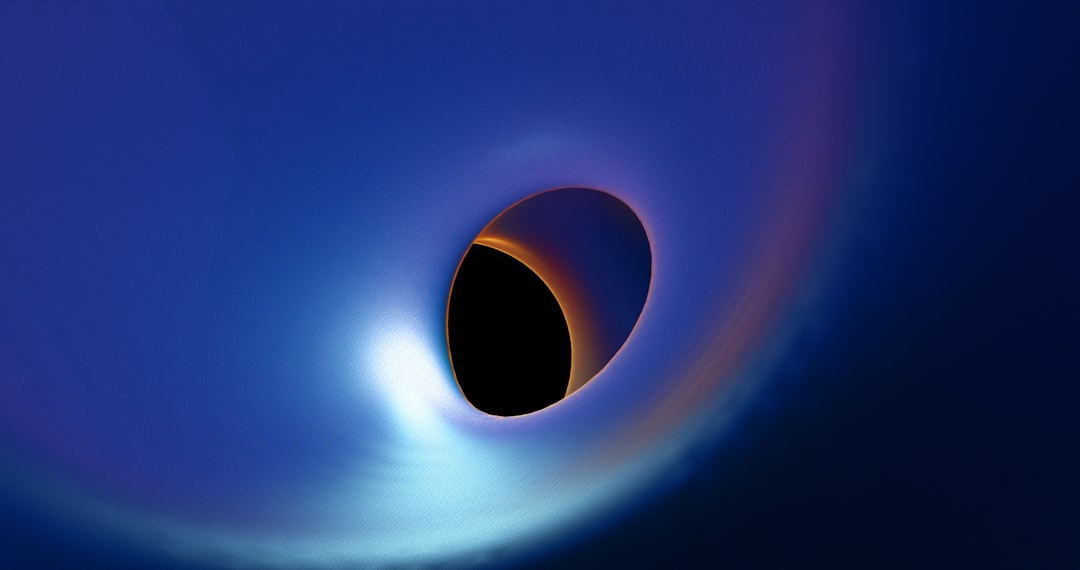
Black holes have long captivated the imagination of scientists and the general public alike. These enigmatic cosmic entities, formed from the remnants of massive stars, possess gravitational forces so intense that nothing, not even light, can escape their grasp. The concept of a black hole challenges the very fabric of our understanding of physics, pushing the boundaries of what is known about the universe.
As researchers delve deeper into the mysteries surrounding these celestial phenomena, they uncover insights that not only enhance our comprehension of black holes but also illuminate the fundamental laws governing the cosmos. The allure of black holes lies not only in their mysterious nature but also in their profound implications for the study of space and time. They serve as natural laboratories for testing theories of gravity and quantum mechanics, offering a unique perspective on the interplay between these two fundamental aspects of physics.
As scientists continue to explore the depths of black holes, they are not merely seeking to understand these cosmic giants; they are also striving to unravel the secrets of the universe itself.
Key Takeaways
- Black holes form from the collapse of massive stars and have a boundary called the event horizon.
- There are several types of black holes, including stellar, supermassive, intermediate, and primordial.
- The singularity at a black hole’s center is a point of infinite density where known physics breaks down.
- Hawking radiation suggests black holes can slowly evaporate over time, leading to the information paradox.
- Observations of black holes rely on detecting their effects on nearby matter and light, as they emit no light themselves.
The Formation of Black Holes
The formation of black holes is a complex process that begins with the life cycle of massive stars. When a star exhausts its nuclear fuel, it can no longer support itself against gravitational collapse. This leads to a dramatic end-of-life event known as a supernova, where the outer layers of the star are expelled into space, leaving behind a dense core.
If this core’s mass exceeds a certain threshold, typically around three solar masses, it collapses under its own gravity, resulting in the formation of a black hole. There are several pathways to black hole formation, each dependent on the initial mass and composition of the progenitor star. For instance, in binary systems, one star may siphon material from its companion, leading to an increase in mass that can trigger collapse.
Additionally, some black holes may form from the merging of neutron stars or through the direct collapse of massive gas clouds in the early universe. Each scenario highlights the diverse mechanisms at play in the cosmic dance that gives rise to these fascinating objects.
Types of Black Holes

Black holes can be categorized into several distinct types based on their mass and formation processes. The most commonly recognized types are stellar black holes, supermassive black holes, and intermediate black holes. Stellar black holes are formed from the remnants of individual massive stars and typically have masses ranging from about three to several tens of solar masses.
These black holes are often found in binary systems or as solitary entities within galaxies. Supermassive black holes, on the other hand, reside at the centers of most galaxies and can possess masses equivalent to millions or even billions of suns. Their formation remains an area of active research, with theories suggesting they may have originated from the merging of smaller black holes or from the direct collapse of massive gas clouds in the early universe.
Intermediate black holes, which fall between stellar and supermassive black holes in terms of mass, are less understood and remain a topic of ongoing investigation.
The Event Horizon
| Metric | Value |
|---|---|
| Release Year | 1997 |
| Director | Paul W. S. Anderson |
| Genre | Science Fiction, Horror |
| Runtime | 96 minutes |
| IMDB Rating | 6.7/10 |
| Box Office Gross | 23 million |
| Main Cast | Laurence Fishburne, Sam Neill, Kathleen Quinlan |
| Production Company | Paramount Pictures |
The event horizon is a critical feature of black holes, marking the boundary beyond which nothing can escape their gravitational pull. It is often described as a point of no return; once an object crosses this threshold, it is inexorably drawn toward the singularity at the center of the black hole. The event horizon is not a physical surface but rather a mathematical boundary defined by the escape velocity required to overcome the black hole’s gravity.
The size of the event horizon varies depending on the mass of the black hole. For stellar black holes, it may be just a few kilometers across, while for supermassive black holes, it can extend to millions or even billions of kilometers. This vast difference in scale highlights the diverse nature of black holes and their varying effects on surrounding matter.
The event horizon also plays a crucial role in our understanding of time and space; as an object approaches this boundary, time appears to slow down relative to an outside observer, leading to fascinating implications for our perception of reality.
The Singularity
At the heart of every black hole lies a singularity, a point where gravitational forces compress matter to an infinitely small volume and density becomes infinite. This region is shrouded in mystery and represents a breakdown in our current understanding of physics. The laws of general relativity predict that all matter collapsing into a black hole will ultimately be crushed into this singularity, where spacetime curvature becomes extreme.
The nature of singularities raises profound questions about the fundamental structure of reality. As physicists grapple with these enigmas, they seek a unified theory that can reconcile general relativity with quantum mechanics. The singularity challenges our understanding of causality and time itself; within its confines, traditional notions of space and time cease to function as we know them.
This paradoxical nature makes singularities one of the most intriguing aspects of black hole physics.
Hawking Radiation and Black Hole Evaporation
In 1974, physicist Stephen Hawking proposed a groundbreaking theory that introduced the concept of Hawking radiation. According to this theory, black holes are not entirely black; they can emit radiation due to quantum effects near their event horizons. This phenomenon occurs when virtual particle-antiparticle pairs spontaneously form near the event horizon.
If one particle falls into the black hole while the other escapes, it results in a net loss of mass for the black hole over time. Hawking radiation implies that black holes can gradually lose mass and energy, leading to their eventual evaporation. This process raises intriguing questions about the lifespan of black holes and their ultimate fate in the universe.
While stellar black holes may take billions of years to evaporate completely, supermassive black holes could persist for much longer periods before succumbing to this phenomenon. The implications of Hawking radiation extend beyond mere theoretical musings; they challenge our understanding of thermodynamics and information conservation in quantum mechanics.
The Information Paradox
The information paradox is one of the most contentious issues in modern theoretical physics, stemming from Hawking’s discovery of radiation emitted by black holes. According to quantum mechanics, information cannot be destroyed; however, if a black hole evaporates completely through Hawking radiation, it appears that any information about the matter that fell into it is lost forever. This contradiction has sparked intense debate among physicists and has led to various proposed resolutions.
Some theorists suggest that information may be preserved in subtle correlations within Hawking radiation itself or that it could be stored on the event horizon in a holographic manner. Others propose that new physics may emerge at the singularity that allows for information recovery. The resolution of this paradox is crucial for reconciling quantum mechanics with general relativity and has significant implications for our understanding of reality itself.
Observing Black Holes
Despite their elusive nature, astronomers have developed innovative techniques to observe black holes indirectly. One primary method involves studying their effects on nearby stars and gas clouds. By analyzing the motion of these objects under the influence of a black hole’s gravity, scientists can infer its presence and estimate its mass.
Additionally, when matter falls into a black hole, it forms an accretion disk that emits intense radiation across various wavelengths, including X-rays and gamma rays. The Event Horizon Telescope (EHT) project marked a significant milestone in observational astronomy by capturing an image of a supermassive black hole’s shadow in 2019. This groundbreaking achievement provided direct visual evidence for the existence of black holes and opened new avenues for research into their properties and behavior.
As technology continues to advance, astronomers are poised to uncover even more about these enigmatic objects and their role in shaping galaxies.
Supermassive Black Holes
Supermassive black holes are among the most fascinating objects in astrophysics due to their immense size and influence on galaxy formation and evolution. Typically found at the centers of galaxies, these colossal entities can have masses ranging from millions to billions of solar masses. Their presence is often inferred from observations of high-velocity stars orbiting around them or from emissions produced by accreting material.
The origins of supermassive black holes remain an area of active research and debate among scientists. Several theories have been proposed regarding their formation mechanisms, including direct collapse from massive gas clouds shortly after the Big Bang or growth through mergers with other black holes over cosmic time scales. Understanding how these giants came into existence is crucial for unraveling the history and evolution of galaxies throughout the universe.
Intermediate Black Holes
Intermediate black holes occupy a mysterious niche between stellar and supermassive black holes, with masses ranging from hundreds to thousands of solar masses. Despite their potential significance in understanding cosmic evolution, they remain elusive and poorly understood compared to their more massive counterparts. Their existence challenges current models of black hole formation and raises questions about how they fit into the broader picture of cosmic structure.
Recent observational efforts have begun to shed light on intermediate black holes, with some candidates identified in dense star clusters or through gravitational wave detections from merging events. These discoveries suggest that intermediate black holes may play a crucial role in galaxy formation and evolution by influencing star dynamics within clusters or contributing to supermassive black hole growth through mergers.
Primordial Black Holes
Primordial black holes are hypothesized to have formed in the early universe shortly after the Big Bang due to density fluctuations in matter distribution. Unlike stellar or supermassive black holes that arise from stellar evolution or mergers, primordial black holes could have formed independently from any stellar processes.
The existence of primordial black holes has significant implications for cosmology and dark matter research. Some theories propose that they could account for a portion of dark matter in the universe, providing insights into its composition and behavior. Ongoing searches for primordial black holes involve studying gravitational waves from mergers or examining cosmic microwave background radiation for signatures indicative of their presence.
In conclusion, black holes represent one of the most intriguing frontiers in modern astrophysics. From their formation processes to their diverse types and enigmatic properties like Hawking radiation and singularities, these cosmic giants challenge our understanding of fundamental physics while offering profound insights into the nature of reality itself. As observational techniques advance and theoretical frameworks evolve, humanity stands on the brink of uncovering even more secrets hidden within these captivating celestial phenomena.
Black holes are fascinating cosmic entities that form from the remnants of massive stars after they undergo gravitational collapse. As these stars exhaust their nuclear fuel, they can no longer support themselves against the force of gravity, leading to the formation of a black hole. Interestingly, black holes are not just eternal; they can also evaporate over time through a process known as Hawking radiation. For a deeper understanding of these phenomena, you can read more in this related article on black holes and their lifecycle at My Cosmic Ventures.
WATCH THIS! The Paradox That Broke Physics: Quantum vs. Black Holes
FAQs
What is a black hole?
A black hole is a region in space where gravity is so strong that nothing, not even light, can escape from it. It forms when a massive amount of matter is concentrated in a very small area.
How are black holes formed?
Black holes are typically formed from the remnants of massive stars that have ended their life cycles. When such a star exhausts its nuclear fuel, it can collapse under its own gravity, leading to the formation of a black hole.
What types of black holes exist?
There are several types of black holes, including stellar black holes formed from collapsing stars, supermassive black holes found at the centers of galaxies, and intermediate black holes which are thought to be formed by the merging of smaller black holes.
What is black hole evaporation?
Black hole evaporation refers to the theoretical process by which black holes lose mass and energy over time through the emission of Hawking radiation, eventually leading to their disappearance.
Who proposed the concept of black hole evaporation?
The concept of black hole evaporation was proposed by physicist Stephen Hawking in 1974, who showed that black holes can emit radiation due to quantum effects near the event horizon.
How does Hawking radiation work?
Hawking radiation arises from quantum fluctuations near the event horizon, where particle-antiparticle pairs are created. One particle may fall into the black hole while the other escapes, causing the black hole to lose energy and mass.
Can black holes completely evaporate?
According to current theories, black holes can eventually evaporate completely over extremely long timescales, although this process is very slow for large black holes.
What happens when a black hole evaporates?
When a black hole evaporates, it loses mass and shrinks until it disappears, releasing the remaining energy as radiation. The exact final stages of evaporation are still a subject of research.
Are black holes dangerous to Earth?
Black holes are not inherently dangerous to Earth unless one were to come very close, which is highly unlikely. Most black holes are far away in space and do not pose a threat.
How do scientists study black holes?
Scientists study black holes by observing their effects on nearby matter, such as the motion of stars and gas clouds, and by detecting radiation emitted from the accretion disks around them. Recent advances include imaging black hole shadows using radio telescopes.