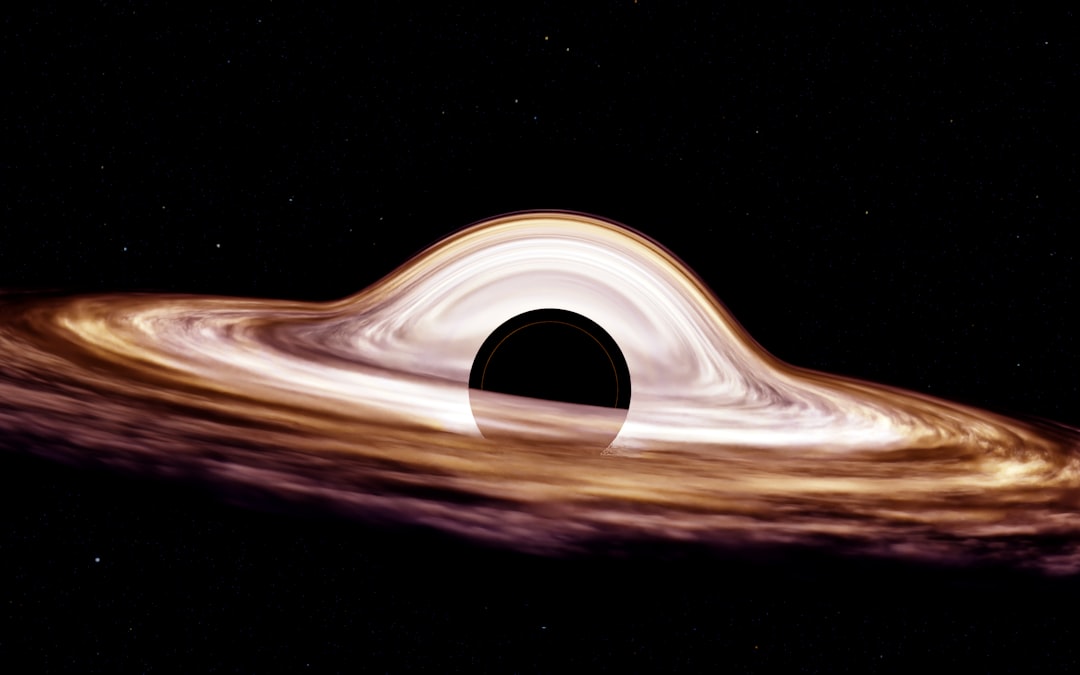
The concept of direct collapse black holes has emerged as a significant area of interest within astrophysics, particularly in the quest to understand the formation of massive black holes in the early universe. Unlike traditional black holes, which typically form from the remnants of massive stars after they exhaust their nuclear fuel, direct collapse black holes are theorized to arise from the rapid collapse of primordial gas clouds. This theory posits that under certain conditions, these gas clouds can bypass the intermediate stages of stellar evolution, leading to the formation of supermassive black holes much earlier in cosmic history than previously thought.
The implications of direct collapse black holes extend far beyond their formation. They challenge existing paradigms regarding the growth and evolution of black holes and their relationship with galaxies. As researchers delve deeper into this phenomenon, they uncover new insights into the dynamics of the early universe, the nature of dark matter, and the processes that govern cosmic structure formation.
The exploration of direct collapse black holes not only enriches our understanding of black hole physics but also opens new avenues for investigating the fundamental laws of the universe.
Key Takeaways
- Direct collapse black hole theory proposes that massive black holes can form directly from the collapse of primordial gas clouds without the need for a star to first form and then collapse.
- Direct collapse black holes are thought to have formed in the early universe, within the first billion years after the Big Bang, and may have played a crucial role in the formation and evolution of galaxies.
- Observing direct collapse black holes can provide valuable insights into the early universe and the processes that led to the formation of the first black holes.
- Theoretical models of direct collapse involve complex simulations of the collapse of primordial gas clouds and the formation of massive black holes, and are still the subject of ongoing research and debate.
- Understanding direct collapse black holes and their connection to gravitational waves can provide important clues about the evolution of galaxies and the nature of the early universe.
The Formation of Massive Black Holes
Massive black holes, particularly those found at the centers of galaxies, have long fascinated astronomers and cosmologists. Their formation is a complex process that involves various mechanisms, including stellar evolution, mergers, and accretion. Traditionally, it was believed that these black holes formed from the remnants of massive stars that underwent supernova explosions.
However, this model struggles to explain the existence of supermassive black holes observed in the early universe, which appear to have formed too quickly for conventional stellar evolution processes. Recent studies suggest that massive black holes may also form through direct collapse mechanisms. In this scenario, massive clouds of primordial gas can collapse directly into black holes without forming stars first.
This process is thought to occur in environments with high densities and low metallicity, conditions prevalent in the early universe. By bypassing the intermediate stages of stellar formation, direct collapse black holes can grow rapidly, potentially reaching masses equivalent to millions or even billions of solar masses within a relatively short time frame.
The Role of Direct Collapse in Black Hole Formation
Direct collapse plays a pivotal role in understanding how supermassive black holes could have formed so early in cosmic history. The theory suggests that when a sufficiently massive gas cloud collapses under its own gravity, it can form a black hole directly rather than going through the typical star formation process. This mechanism is particularly relevant in regions of the universe where gas is abundant and metal-poor, as these conditions favor rapid collapse.
The direct collapse model posits that these primordial gas clouds can reach critical densities that trigger gravitational instability. As the cloud collapses, it heats up and may fragment into smaller clumps; however, if it remains sufficiently massive and dense, it can avoid fragmentation and continue collapsing into a black hole. This process not only explains the rapid formation of supermassive black holes but also provides insights into their growth mechanisms during the early stages of galaxy formation.
Understanding the Early Universe
| Topic | Metrics |
|---|---|
| Big Bang Theory | Expansion rate, Cosmic microwave background radiation |
| Particle Physics | Elementary particles, Quark-gluon plasma |
| Cosmic Inflation | Scalar field, Horizon problem |
| Dark Matter | Mass density, Weakly interacting massive particles |
| Dark Energy | Accelerated expansion, Cosmological constant |
To fully grasp the significance of direct collapse black holes, one must consider the conditions present in the early universe. Shortly after the Big Bang, the universe was a hot, dense environment filled with hydrogen and helium gas. As it expanded and cooled, regions of higher density began to form, leading to the creation of stars and galaxies.
However, this period also saw the emergence of unique conditions that could facilitate direct collapse. In particular, the lack of heavy elements in the primordial gas meant that cooling processes were less efficient than in later epochs. This inefficiency allowed gas clouds to remain hot and dense for longer periods, increasing the likelihood of direct collapse into black holes.
Understanding these early conditions is crucial for astrophysicists as they seek to unravel the mysteries surrounding galaxy formation and the evolution of cosmic structures.
Observing Direct Collapse Black Holes
Observing direct collapse black holes presents significant challenges due to their elusive nature and the vast distances involved. However, advancements in observational technology and techniques have begun to yield promising results. Astronomers are utilizing powerful telescopes equipped with advanced imaging capabilities to detect high-redshift quasars and other luminous objects that may be powered by direct collapse black holes.
One approach involves studying the spectral signatures emitted by these distant quasars. By analyzing their light spectra, researchers can infer properties such as mass and accretion rates, providing valuable insights into the characteristics of potential direct collapse black holes. Additionally, gravitational lensing effects can help identify these objects by magnifying their light as it passes through massive foreground galaxies.
Theoretical Models of Direct Collapse

Theoretical models play a crucial role in advancing our understanding of direct collapse black holes. Researchers have developed various simulations to explore how primordial gas clouds behave under different conditions and how they might evolve into black holes. These models take into account factors such as gas density, temperature, and metallicity to predict when and how direct collapse might occur.
One prominent model suggests that direct collapse is most likely to happen in environments with low metallicity, where cooling processes are less effective. In such scenarios, gas clouds can maintain high temperatures and pressures, allowing them to collapse directly into black holes without forming stars first. These theoretical frameworks not only help explain existing observations but also guide future research efforts aimed at identifying direct collapse black holes in the universe.
Challenges and Controversies in Direct Collapse Black Hole Theory
Despite its promise, direct collapse black hole theory is not without its challenges and controversies. One major point of contention revolves around the specific conditions required for direct collapse to occur. While some researchers argue that low metallicity is essential for this process, others contend that additional factors may also play a role, such as turbulence within gas clouds or external influences from nearby structures.
Furthermore, there is ongoing debate regarding the efficiency of direct collapse compared to other formation mechanisms. Some scientists question whether direct collapse can account for all observed supermassive black holes or if it represents just one pathway among many. As researchers continue to gather data and refine their models, these discussions will be crucial for establishing a comprehensive understanding of black hole formation.
Implications for Astrophysics and Cosmology
The implications of direct collapse black hole theory extend far beyond individual black hole formation events; they resonate throughout astrophysics and cosmology as a whole. Understanding how supermassive black holes form can shed light on galaxy evolution and structure formation in the universe. These massive entities are believed to play a significant role in regulating star formation rates within galaxies and influencing their overall dynamics.
Moreover, direct collapse black holes may provide insights into dark matter’s role in cosmic evolution. As researchers explore how these black holes interact with their surroundings, they may uncover new information about dark matter’s influence on galaxy formation and growth. The study of direct collapse black holes thus holds promise for addressing some of the most profound questions in modern astrophysics.
Future Research and Observations
As interest in direct collapse black holes continues to grow, future research efforts will focus on refining theoretical models and enhancing observational capabilities. Upcoming telescopes and observatories are expected to provide unprecedented views of distant galaxies and quasars, allowing astronomers to probe deeper into cosmic history than ever before. Additionally, interdisciplinary collaborations between theorists and observational astronomers will be essential for advancing knowledge in this field.
By combining theoretical predictions with observational data, researchers can develop more robust models that account for various factors influencing black hole formation. This collaborative approach will be vital for unraveling the complexities surrounding direct collapse black holes and their role in shaping the universe.
Direct Collapse Black Holes and Gravitational Waves
The study of direct collapse black holes also intersects with gravitational wave research, an area that has gained significant attention since the first detection of gravitational waves in 2015. As more advanced detectors come online, scientists anticipate observing gravitational waves generated by mergers involving direct collapse black holes. These events could provide valuable insights into their properties and formation mechanisms.
Gravitational wave signals offer a unique opportunity to study black hole populations across different epochs in cosmic history. By analyzing these signals, researchers can gain insights into how often direct collapse occurs compared to other formation pathways. This information will be crucial for refining models of black hole evolution and understanding their impact on galaxy dynamics.
The Connection between Direct Collapse Black Holes and Galaxy Evolution
Finally, understanding direct collapse black holes is integral to comprehending galaxy evolution as a whole. Supermassive black holes are believed to influence their host galaxies through feedback mechanisms that regulate star formation rates and drive galactic winds. By studying how these black holes form and grow through direct collapse processes, astronomers can gain insights into how galaxies evolve over time.
The relationship between direct collapse black holes and galaxy evolution highlights the interconnectedness of various cosmic phenomena. As researchers continue to explore this relationship, they will uncover new dimensions of knowledge about how galaxies form, grow, and interact with their environments throughout cosmic history. The ongoing investigation into direct collapse black holes promises to reshape our understanding of both individual celestial objects and the broader structure of the universe itself.
For those interested in delving deeper into this intriguing topic, a related article can be found on My Cosmic Ventures. This article explores the mechanisms and implications of direct collapse black holes, providing a comprehensive overview of current research and theories. To read more about this captivating subject, visit the article on My Cosmic Ventures.
WATCH THIS! 🌌The Biggest Black Hole Is A LIE
FAQs
What is direct collapse black hole theory?
Direct collapse black hole theory is a hypothesis that suggests supermassive black holes could form directly from the collapse of massive gas clouds in the early universe, without the need for a pre-existing stellar system.
How does direct collapse black hole theory differ from other theories of black hole formation?
Unlike other theories of black hole formation, such as the collapse of massive stars or the merging of smaller black holes, direct collapse black hole theory proposes that supermassive black holes could form in the absence of any pre-existing stars or black holes.
What evidence supports direct collapse black hole theory?
Observations of distant quasars and the rapid growth of supermassive black holes in the early universe provide some evidence for direct collapse black hole theory. Additionally, computer simulations have shown that the conditions in the early universe could have allowed for the direct collapse of gas clouds into supermassive black holes.
What are the implications of direct collapse black hole theory?
If direct collapse black hole theory is confirmed, it would have significant implications for our understanding of the early universe and the formation of supermassive black holes. It could also impact our understanding of galaxy formation and evolution.
What are the challenges and limitations of direct collapse black hole theory?
One of the main challenges of direct collapse black hole theory is the lack of direct observational evidence for the formation of supermassive black holes through this process. Additionally, the physical conditions required for direct collapse are still not fully understood, and more research and observations are needed to confirm this theory.