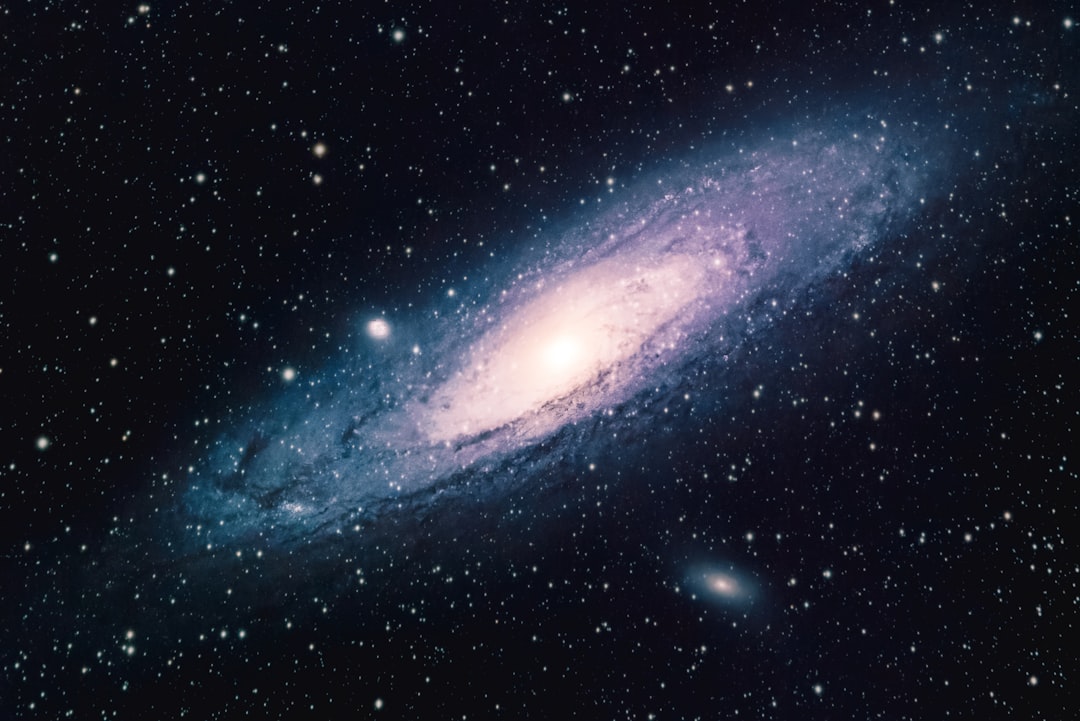
The cosmological constant problem represents a fundamental challenge in theoretical physics and cosmology. It emerges from the vast discrepancy between the observed value of dark energy driving the universe’s accelerated expansion and quantum field theory’s theoretical predictions. This inconsistency creates a significant knowledge gap regarding fundamental cosmic principles, prompting researchers to investigate various theoretical approaches to resolve this disparity.
The cosmological constant (Λ) denotes a uniform energy density permeating all space. Its implications are far-reaching, affecting our understanding of how the universe evolves and its ultimate fate. This problem transcends purely scientific boundaries, raising profound philosophical questions about reality’s nature and the limitations of scientific knowledge.
Scientists addressing this problem face both complex mathematical challenges and broader theoretical implications for attempts to unify gravitational theory with quantum mechanics. Resolving the cosmological constant problem could fundamentally transform our understanding of the universe’s structure and humanity’s position within the cosmic framework.
Key Takeaways
- The cosmological constant problem highlights a major discrepancy between theoretical predictions and observed values of vacuum energy density.
- Einstein originally introduced the cosmological constant to achieve a static universe, later calling it his “biggest blunder.”
- Quantum field theory predicts a much larger cosmological constant than observed, posing significant theoretical challenges.
- Observational evidence, such as the accelerated expansion of the universe, supports a small but nonzero cosmological constant.
- Various approaches, including string theory and the anthropic principle, are being explored to resolve the cosmological constant problem.
Historical Background of the Cosmological Constant
The roots of the cosmological constant can be traced back to the early 20th century, a period marked by groundbreaking advancements in physics and astronomy. In 1917, Albert Einstein introduced the cosmological constant as part of his general theory of relativity. At that time, the prevailing belief was that the universe was static and unchanging.
However, Einstein’s equations suggested that a static universe was inherently unstable. To counteract this instability, he introduced Λ as a means to create a repulsive force that would balance gravitational attraction, allowing for a stable cosmic model. Einstein’s initial motivation for incorporating the cosmological constant was to align his theory with contemporary observations.
However, this endeavor took an unexpected turn when Edwin Hubble’s observations in the late 1920s revealed that the universe was, in fact, expanding. This discovery led Einstein to abandon his cosmological constant, famously referring to it as his “greatest blunder.” Nevertheless, the concept would resurface decades later, particularly with the advent of modern cosmology and the discovery of dark energy in the late 20th century.
Einstein’s Contribution to the Cosmological Constant
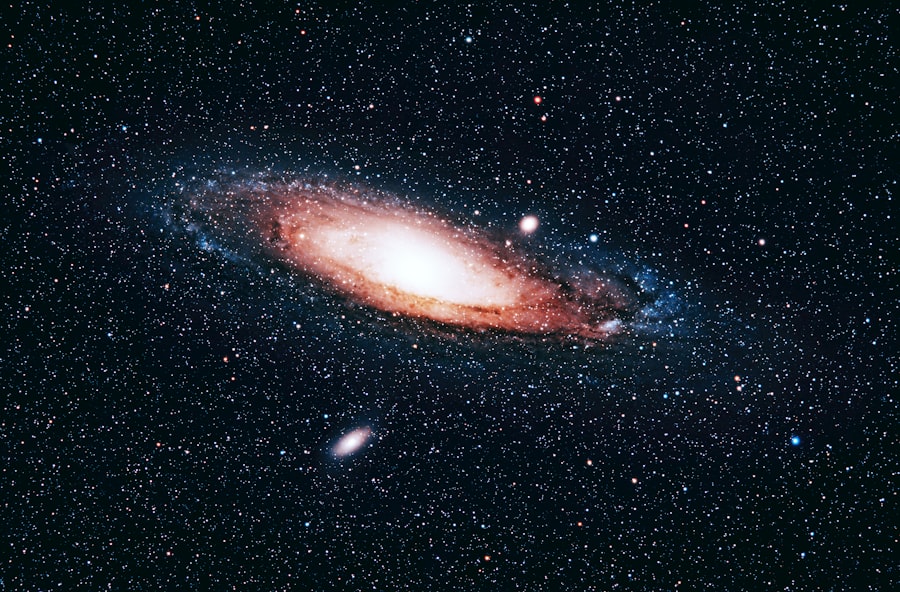
Einstein’s introduction of the cosmological constant was a pivotal moment in theoretical physics. By incorporating Λ into his equations, he provided a mechanism that allowed for a static universe, which was consistent with the scientific consensus of his time. This bold move demonstrated Einstein’s willingness to adapt his theories in response to observational evidence, showcasing his profound understanding of both mathematics and physics.
The cosmological constant served as a mathematical tool that enabled him to maintain a stable universe within the framework of general relativity. However, Einstein’s abandonment of the cosmological constant after Hubble’s findings marked a significant shift in cosmological thought. The realization that the universe was expanding led to a reevaluation of static models and opened new avenues for exploration.
Despite its initial dismissal, Einstein’s cosmological constant would later gain renewed interest as astronomers began to uncover evidence for an accelerated expansion of the universe in the late 1990s. This resurgence highlighted not only Einstein’s foresight but also the enduring relevance of his work in shaping contemporary cosmology.
Theoretical Challenges and Inconsistencies
The cosmological constant problem is characterized by profound theoretical challenges and inconsistencies that have puzzled physicists for decades. One of the primary issues lies in the vast disparity between the predicted value of Λ from quantum field theory and its observed value in cosmology. Quantum field theory suggests that vacuum fluctuations should contribute an enormous amount of energy density to space, leading to a predicted cosmological constant on the order of 10^120 times greater than what is observed.
This staggering difference raises fundamental questions about our understanding of quantum mechanics and gravity. Moreover, this inconsistency is not merely a numerical anomaly; it reflects deeper issues within theoretical frameworks. The failure to reconcile these two vastly different values points to potential gaps in our understanding of fundamental physics.
As physicists delve into this problem, they confront not only mathematical challenges but also philosophical implications regarding the nature of reality itself. The cosmological constant problem serves as a reminder that our current theories may be incomplete or require significant revision to account for observed phenomena.
Observational Evidence and the Cosmological Constant
| Metric | Value / Estimate | Unit | Description |
|---|---|---|---|
| Observed Cosmological Constant (Λ) | 1.1 x 10-52 | m-2 | Value inferred from observations of the accelerated expansion of the universe |
| Vacuum Energy Density (Quantum Field Theory prediction) | ~10113 | J/m3 | Estimated vacuum energy density from quantum zero-point fluctuations |
| Observed Vacuum Energy Density | ~10-9 | J/m3 | Energy density corresponding to the observed cosmological constant |
| Discrepancy Factor | ~10120 | Dimensionless | Ratio between theoretical vacuum energy density and observed value |
| Hubble Constant (H0) | 67.4 | km/s/Mpc | Current rate of expansion of the universe |
| Dark Energy Density Parameter (ΩΛ) | 0.69 | Dimensionless | Fraction of the total energy density of the universe attributed to dark energy |
Observational evidence plays a crucial role in shaping our understanding of the cosmological constant and its implications for the universe. The discovery of cosmic acceleration in 1998, through observations of distant supernovae, provided compelling evidence for a non-zero cosmological constant. These observations indicated that galaxies were moving away from each other at an accelerating rate, suggesting that an unknown form of energy—later termed dark energy—was driving this expansion.
Further support for the existence of dark energy came from measurements of cosmic microwave background radiation and large-scale structure surveys. These observations have consistently pointed toward a universe composed predominantly of dark energy, with estimates suggesting that it constitutes approximately 68% of the total energy density of the cosmos. Despite this compelling evidence, questions remain regarding the nature and origin of dark energy, as well as its relationship with the cosmological constant.
Attempts to Solve the Cosmological Constant Problem
In light of the profound challenges posed by the cosmological constant problem, physicists have proposed various approaches to find a resolution. One prominent avenue involves modifying existing theories or developing new frameworks that can account for both quantum mechanics and gravity. Some researchers have explored modifications to general relativity itself, seeking alternative theories that could provide insights into dark energy and its role in cosmic expansion.
Another approach involves investigating potential connections between quantum field theory and gravity through concepts such as holography or emergent gravity. These ideas suggest that spacetime itself may emerge from more fundamental principles, potentially offering a pathway to reconcile discrepancies between observed and predicted values of Λ. While these attempts are still in their infancy, they represent a concerted effort within the scientific community to address one of the most pressing issues in contemporary physics.
Quantum Field Theory and the Cosmological Constant
Quantum field theory (QFT) plays a central role in understanding particle physics and has significant implications for addressing the cosmological constant problem. In QFT, vacuum fluctuations are expected to contribute an enormous amount of energy density due to virtual particles constantly popping in and out of existence. This prediction leads to an estimated value for Λ that is vastly larger than what is observed in cosmology.
The challenge lies in reconciling this theoretical prediction with empirical observations. Some physicists have proposed mechanisms such as supersymmetry or extra dimensions as potential solutions to mitigate this discrepancy. Supersymmetry posits that every particle has a superpartner with different spin properties, which could help cancel out contributions to vacuum energy.
Similarly, theories involving extra dimensions may provide alternative explanations for dark energy by altering our understanding of gravity at cosmic scales. Despite these efforts, no consensus has emerged regarding how QFT can be reconciled with observations related to dark energy and Λ. The interplay between quantum mechanics and gravity remains one of the most profound challenges in theoretical physics, underscoring the need for further exploration and innovation.
String Theory and the Cosmological Constant
String theory offers another intriguing perspective on addressing the cosmological constant problem. As a candidate for a unified theory of fundamental forces, string theory posits that elementary particles are not point-like objects but rather one-dimensional strings vibrating at different frequencies. This framework introduces additional dimensions beyond our familiar three-dimensional space and time, which could potentially influence our understanding of dark energy.
In string theory, various mechanisms have been proposed to explain why vacuum energy might be much lower than expected. For instance, certain compactifications—where extra dimensions are curled up—could lead to a cancellation of vacuum energy contributions or result in a landscape of possible vacuum states with varying energy densities. This landscape approach suggests that our universe may reside in a specific vacuum state among many possibilities, providing a potential explanation for why Λ appears so small.
However, string theory remains highly speculative and has yet to produce definitive predictions that can be tested through observation. While it offers tantalizing possibilities for addressing fundamental questions about nature, including those related to dark energy and Λ, significant challenges remain before it can be fully integrated into our understanding of cosmology.
Anthropic Principle and the Cosmological Constant
The anthropic principle introduces a philosophical dimension to discussions surrounding the cosmological constant problem. This principle posits that certain physical constants must take on values compatible with human existence; otherwise, observers like us would not be here to contemplate these questions. In this context, some theorists argue that the small value of Λ may be explained by selection effects: we find ourselves in a universe where conditions allow for life because only such universes can support observers.
This perspective raises intriguing questions about fine-tuning and probability within cosmology. If there are many possible universes with varying values for Λ—some conducive to life and others not—then it becomes less surprising that we inhabit one where conditions are favorable for human existence. However, critics argue that invoking anthropic reasoning may sidestep deeper questions about fundamental physics and could lead to an acceptance of unexplained phenomena without seeking underlying principles.
The anthropic principle remains a contentious topic within scientific discourse, highlighting tensions between empirical inquiry and philosophical interpretation. As researchers continue to grapple with the cosmological constant problem, they must navigate these complex philosophical waters while striving for deeper insights into the nature of reality.
Future Directions in Solving the Cosmological Constant Problem
As physicists continue their quest to unravel the mysteries surrounding the cosmological constant problem, several promising directions emerge for future research. One avenue involves further exploration of modified gravity theories that could provide alternative explanations for cosmic acceleration without relying on dark energy or Λ.
Additionally, advancements in observational techniques hold great promise for refining measurements related to dark energy and Λ. Upcoming astronomical surveys aim to map large-scale structures more precisely and investigate cosmic expansion with greater accuracy. Such data could provide critical constraints on theoretical models and help guide researchers toward viable solutions.
Moreover, interdisciplinary collaboration between physicists, astronomers, and philosophers may yield new perspectives on this enduring problem. By fostering dialogue across disciplines, researchers can explore innovative ideas that transcend traditional boundaries and challenge existing paradigms.
Implications for Cosmology and Fundamental Physics
The implications of resolving the cosmological constant problem extend far beyond theoretical curiosity; they touch upon fundamental questions about our universe’s structure and evolution. A deeper understanding of dark energy could reshape our comprehension of cosmic history and influence models predicting its future trajectory. Furthermore, insights gained from addressing this problem may have profound consequences for unifying gravity with quantum mechanics—a long-sought goal in theoretical physics.
As researchers strive to reconcile these two pillars of modern science, breakthroughs related to Λ could illuminate pathways toward a more comprehensive understanding of fundamental forces. Ultimately, grappling with the cosmological constant problem serves as both a challenge and an opportunity for physicists seeking to deepen their understanding of reality itself. As they navigate this intricate landscape filled with theoretical complexities and observational enigmas, they inch closer toward unraveling one of nature’s most profound mysteries—a journey that promises to reshape our understanding of existence itself.
The cosmological constant problem remains one of the most perplexing issues in modern physics, as it highlights the discrepancy between the observed energy density of the vacuum and the theoretical predictions from quantum field theory. For a deeper understanding of this issue, you can explore a related article that discusses various approaches to resolving the cosmological constant problem. Check it out here: My Cosmic Ventures.
FAQs
What is the cosmological constant?
The cosmological constant is a term introduced by Albert Einstein in his equations of General Relativity. It represents a constant energy density filling space homogeneously, often associated with the energy of the vacuum.
Why is the cosmological constant important in cosmology?
The cosmological constant is important because it affects the expansion rate of the universe. It is currently associated with dark energy, which is believed to drive the accelerated expansion of the universe.
What is the cosmological constant problem?
The cosmological constant problem refers to the large discrepancy between the theoretical predictions of vacuum energy density from quantum field theory and the observed value of the cosmological constant inferred from cosmological measurements. The predicted value is many orders of magnitude larger than what is observed.
How large is the discrepancy in the cosmological constant problem?
The discrepancy is enormous, with theoretical predictions exceeding observational values by about 120 orders of magnitude, making it one of the biggest unsolved problems in theoretical physics.
What causes the cosmological constant problem?
The problem arises because quantum field theory predicts a huge vacuum energy due to zero-point fluctuations, but this energy does not appear to gravitate as expected. Reconciling these predictions with observations is challenging.
Are there any proposed solutions to the cosmological constant problem?
Several approaches have been proposed, including modifications to gravity, new symmetries, anthropic reasoning within the multiverse framework, and dynamical dark energy models. However, no consensus solution has been found.
How does the cosmological constant relate to dark energy?
The cosmological constant is the simplest form of dark energy, representing a constant energy density that permeates space. Dark energy is the term used to describe the unknown cause of the universe’s accelerated expansion, of which the cosmological constant is a leading candidate.
Has the cosmological constant been measured?
Yes, observations such as those from Type Ia supernovae, the cosmic microwave background, and large-scale structure surveys have measured the cosmological constant’s effects, indicating a small positive value consistent with an accelerating universe.
Why is solving the cosmological constant problem important?
Solving this problem is crucial for understanding the fundamental nature of space, time, and energy. It could provide insights into quantum gravity, the unification of forces, and the ultimate fate of the universe.