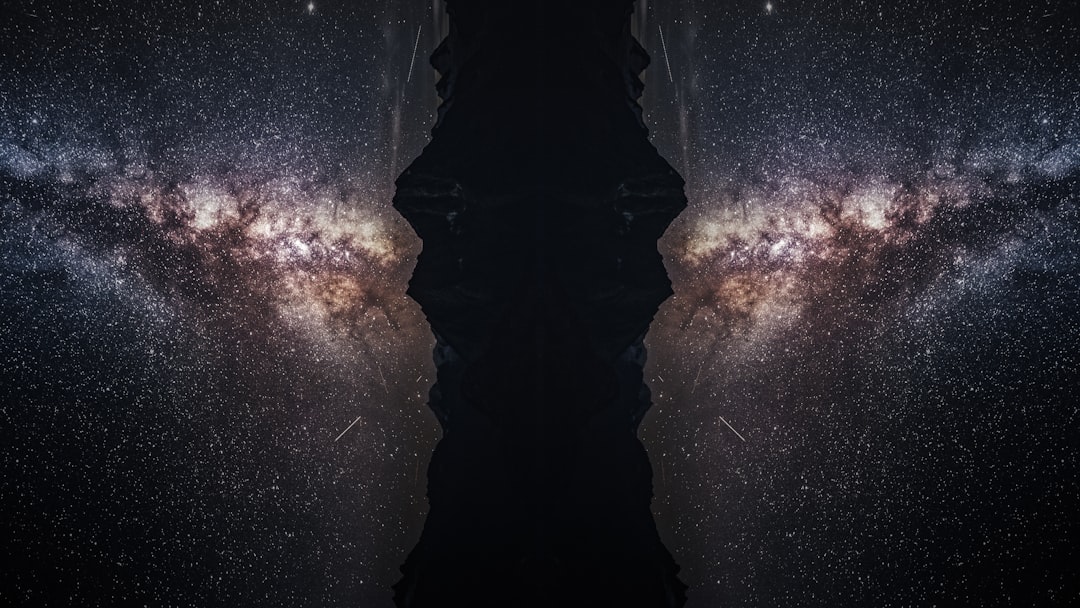
The cosmic scale illusion is a fascinating phenomenon that highlights the discrepancies between human perception and the vastness of the universe. It serves as a reminder of how limited human senses can be when confronted with the enormity of space and time. This illusion manifests in various ways, from the way individuals perceive celestial bodies to how they interpret the size of objects in their immediate environment.
The cosmic scale illusion invites contemplation about humanity’s place in the universe and challenges the understanding of size and distance. As individuals gaze at the night sky, they often find themselves awestruck by the twinkling stars and distant galaxies. However, what they may not realize is that their perception of these celestial entities is heavily influenced by their limited frame of reference.
The vast distances between stars and planets can create a misleading sense of scale, leading to misconceptions about their actual size and proximity. This article will explore the various factors that contribute to the cosmic scale illusion, including perspective, cultural influences, technological advancements, and psychological implications.
Key Takeaways
- The Cosmic Scale Illusion refers to the tendency for humans to misperceive the size of objects in the universe due to the limitations of our sensory and cognitive systems.
- Perspective plays a significant role in how we perceive the size of objects, as our distance and angle of view can greatly influence our perception of scale.
- Cultural and environmental factors, such as upbringing and exposure to certain objects, can also impact our perception of size, leading to variations in size perception across different cultures.
- Technology, such as photography and virtual reality, can distort our perception of size by altering the visual information we receive, leading to further discrepancies in size perception.
- Our brain processes and interprets size information through a complex network of sensory inputs and cognitive processes, which can lead to errors in size perception.
The Influence of Perspective on Size Perception
Perspective plays a crucial role in how individuals perceive size, particularly when it comes to objects in the cosmos. The human brain relies on visual cues to gauge dimensions, often using familiar objects as reference points.
This comparative analysis can lead to significant misjudgments, especially when applied to celestial bodies that are incomprehensibly larger than anything found on Earth. Moreover, the phenomenon of foreshortening can further distort size perception. When objects are viewed at an angle, their dimensions can appear compressed, leading to an underestimation of their actual size.
This effect is particularly pronounced in astronomy, where planets and stars may seem smaller than they truly are due to their immense distances from Earth. As a result, individuals may struggle to grasp the true scale of the universe, leading to a sense of disconnection from the cosmic expanse.
The Role of Cultural and Environmental Factors in Size Perception
Cultural background and environmental context significantly shape how individuals perceive size. Different cultures have varying interpretations of space and scale, influenced by historical narratives, artistic representations, and scientific understanding. For example, ancient civilizations often depicted celestial bodies in ways that reflected their cultural beliefs and values, which could skew perceptions of size and importance.
In some cultures, certain stars or planets were revered as deities, leading to exaggerated representations that did not align with their actual dimensions. Environmental factors also play a pivotal role in shaping size perception. Urban environments filled with towering skyscrapers can create a sense of scale that contrasts sharply with rural landscapes dominated by expansive horizons.
This juxtaposition can lead individuals to develop a skewed understanding of size based on their surroundings. Furthermore, exposure to various natural phenomena—such as mountains, oceans, or vast deserts—can influence how people interpret the size of celestial objects. The interplay between cultural narratives and environmental contexts ultimately contributes to the complexity of size perception.
The Impact of Technology on Our Perception of Size
| Technology | Impact on Perception of Size |
|---|---|
| Virtual Reality | Can create a sense of scale and size that may not exist in reality |
| Augmented Reality | Can overlay digital information onto the physical world, altering perception of size |
| Smartphones | Can display images and videos that may distort perception of size |
| 3D Printing | Can create physical objects of various sizes, altering perception of what is possible |
Advancements in technology have revolutionized humanity’s understanding of size in both terrestrial and cosmic contexts. Telescopes and space probes have provided unprecedented insights into the dimensions of celestial bodies, revealing that many stars are far larger than previously imagined. These technological tools have allowed scientists to measure distances and sizes with remarkable accuracy, challenging long-held beliefs about the universe’s scale.
However, technology can also contribute to misconceptions about size. For instance, images captured by telescopes often depict celestial objects in ways that exaggerate their colors or sizes for aesthetic purposes. While these images are scientifically valuable, they can lead to misunderstandings among the general public regarding the true nature of these objects.
Additionally, virtual reality and augmented reality technologies have created immersive experiences that can distort perceptions of size by manipulating spatial relationships. As technology continues to evolve, it remains essential for individuals to critically assess how these tools shape their understanding of size.
The Illusion of Size in the Universe
The universe is replete with examples of size illusions that challenge human comprehension. One striking instance is the apparent size of the moon when it rises on the horizon compared to when it is high in the sky. This optical illusion leads many to perceive the moon as significantly larger near the horizon, despite its actual size remaining constant.
Such phenomena underscore how human perception can be easily misled by contextual cues. Furthermore, the vastness of space itself creates an inherent challenge in grasping size. Galaxies are often depicted as swirling masses of stars, yet their true dimensions can be staggering—spanning millions of light-years across.
The sheer scale of these cosmic structures can evoke feelings of insignificance in individuals who attempt to comprehend their enormity. This disconnect between perception and reality serves as a reminder that the universe operates on a scale far beyond human experience.
How Our Brain Processes and Interprets Size Information
The human brain employs complex mechanisms to process and interpret size information, relying on visual cues and prior knowledge to make sense of the world. When confronted with unfamiliar objects or environments, the brain engages in a series of comparisons and calculations to estimate size. This process is influenced by factors such as depth perception, perspective, and familiarity with similar objects.
Neuroscientific research has shown that certain areas of the brain are dedicated to processing spatial information and size perception. For instance, studies have indicated that the parietal lobe plays a crucial role in integrating visual input with motor functions, allowing individuals to gauge distances accurately. However, this system is not infallible; it can be easily tricked by optical illusions or contextual cues that distort perceptions of size.
The Relationship Between Size and Distance in the Cosmos
In the cosmos, the relationship between size and distance is intricate and often counterintuitive. Objects that appear small may be incredibly massive when viewed from afar, while those that seem large may be relatively insignificant in terms of mass or volume. This paradox is exemplified by stars: while some may appear as mere points of light in the night sky, they can be several times larger than Earth or even larger than entire solar systems.
The concept of parallax further illustrates this relationship between size and distance. Parallax refers to the apparent shift in position of an object when viewed from different angles or locations. Astronomers use this principle to measure distances to nearby stars by observing their positions relative to more distant background stars over time.
This technique reveals that even seemingly small shifts can indicate vast distances, emphasizing how perception can be misleading when interpreting cosmic scales.
The Illusion of Size in Everyday Objects
The illusion of size extends beyond celestial bodies; it permeates everyday life as well. Common objects can appear larger or smaller depending on their context or surrounding elements. For example, a small child standing next to a towering adult may perceive themselves as diminutive in comparison, while an adult standing next to a massive vehicle may feel similarly small.
These perceptions are influenced by relative comparisons and contextual cues that shape how individuals interpret size. Moreover, marketing strategies often exploit these illusions to create perceptions of value or desirability. Products may be designed or presented in ways that exaggerate their size or importance—think oversized packaging for snacks or promotional images that highlight certain features while downplaying others.
Such tactics play on human psychology and reinforce the idea that perception is not always aligned with reality.
The Psychological Implications of the Cosmic Scale Illusion
The cosmic scale illusion carries profound psychological implications for individuals grappling with their place in the universe. The realization that humanity exists within an incomprehensibly vast cosmos can evoke feelings of insignificance or existential dread for some individuals. This awareness may lead them to question their purpose or value within such an expansive framework.
Conversely, others may find solace in recognizing their connection to the universe’s grandeur. The cosmic scale illusion can inspire awe and wonder, prompting individuals to contemplate their role within a larger narrative. This duality highlights how perceptions of size can shape emotional responses and influence one’s worldview.
Overcoming the Cosmic Scale Illusion: Strategies for Accurate Size Perception
To navigate the complexities of size perception effectively, individuals can employ various strategies aimed at overcoming the cosmic scale illusion. One approach involves cultivating awareness of visual cues and contextual influences that may distort perceptions. By actively questioning assumptions about size based on immediate surroundings or cultural narratives, individuals can develop a more nuanced understanding.
Additionally, engaging with scientific literature or educational resources can provide valuable insights into the true dimensions of celestial bodies and everyday objects alike. By grounding perceptions in empirical evidence rather than subjective interpretations, individuals can foster a more accurate appreciation for size within both terrestrial and cosmic contexts.
Embracing the Complexity of Size Perception in the Universe
The cosmic scale illusion serves as a compelling reminder of humanity’s limitations when grappling with concepts of size and distance within an expansive universe. Through an exploration of perspective, cultural influences, technological advancements, and psychological implications, it becomes evident that perceptions are often shaped by a myriad of factors beyond mere observation. As individuals navigate this intricate landscape of size perception, embracing its complexity can lead to deeper insights about both themselves and their place within the cosmos.
By acknowledging the limitations inherent in human perception while striving for greater understanding through education and critical thinking, individuals can cultivate a more profound appreciation for the wonders that lie beyond their immediate experience—ultimately enriching their connection to the universe at large.
In exploring the concept of cosmic scale illusion, it’s fascinating to consider how our perception of the universe is shaped by both scientific understanding and imaginative interpretation. A related article that delves into this topic can be found on My Cosmic Ventures. This piece provides insights into how cosmic scales can be perceived differently depending on one’s perspective and the tools used to measure them. For a deeper dive into this intriguing subject, you can read more about it on My Cosmic Ventures.
WATCH THIS! 🌌The Biggest Black Hole Is A LIE
FAQs
What is the cosmic scale illusion?
The cosmic scale illusion refers to the phenomenon where the vastness of the universe can make individuals feel insignificant or small in comparison.
What causes the cosmic scale illusion?
The cosmic scale illusion is caused by the immense size and complexity of the universe, which can be difficult for the human mind to comprehend.
How does the cosmic scale illusion affect people?
The cosmic scale illusion can lead to feelings of insignificance, awe, and wonder. It can also prompt individuals to contemplate their place in the universe and their purpose in life.
Can the cosmic scale illusion be overcome?
While the cosmic scale illusion may be a natural response to the enormity of the universe, individuals can overcome it by focusing on the beauty and mystery of the cosmos, and by finding meaning and connection in their own lives.
Are there any scientific studies on the cosmic scale illusion?
There is ongoing research in fields such as psychology, astronomy, and philosophy that explores the psychological and existential implications of the cosmic scale illusion.