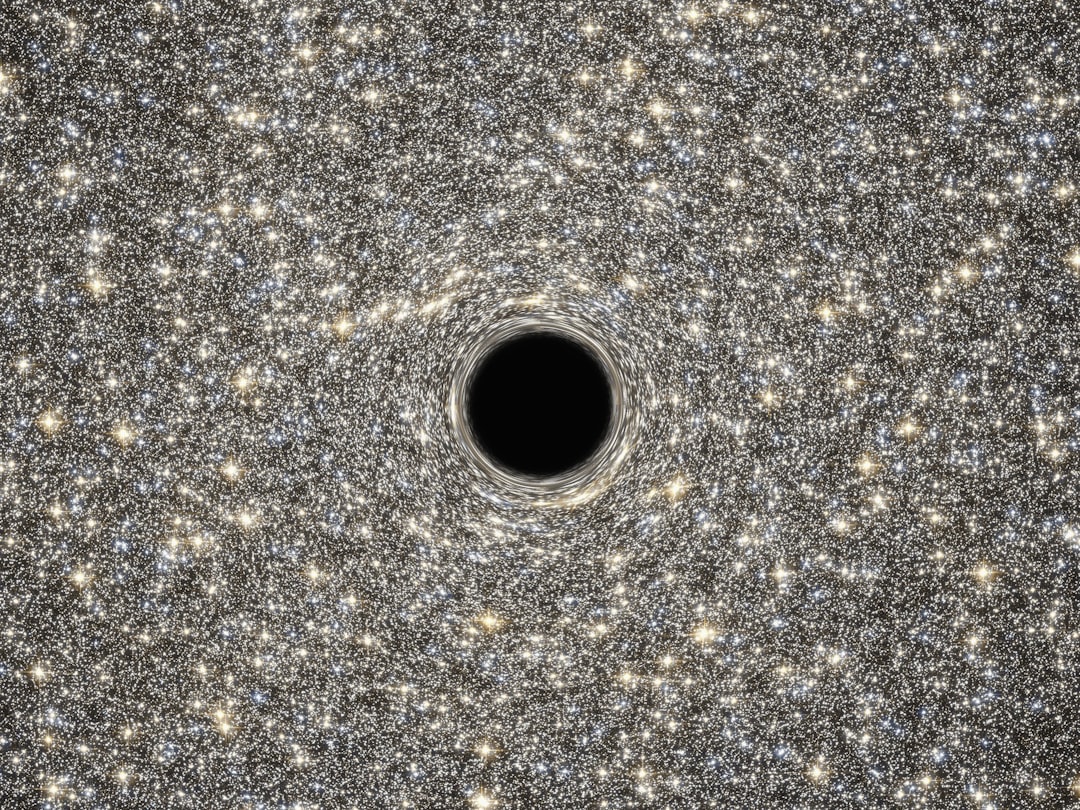
The enigma of black hole singularities has captivated the minds of scientists and enthusiasts alike for decades. These cosmic phenomena, where the laws of physics as currently understood seem to break down, present a unique challenge to the field of astrophysics. The singularity problem is not merely an academic curiosity; it raises profound questions about the nature of space, time, and the fundamental structure of the universe.
As researchers delve deeper into the mysteries surrounding black holes, they confront a paradox that intertwines theoretical physics with philosophical inquiry, making the study of singularities a pivotal area of exploration in modern science. The allure of black holes lies not only in their exotic nature but also in their implications for our understanding of reality. The singularity at the center of a black hole represents a point where gravitational forces compress matter to an infinite density, leading to a breakdown of the known laws of physics.
This paradoxical state challenges scientists to reconcile general relativity, which describes gravity on a cosmic scale, with quantum mechanics, which governs the behavior of particles at the smallest scales. As researchers continue to investigate these phenomena, they are not only seeking answers but also redefining the boundaries of human knowledge.
Key Takeaways
- The black hole singularity problem is a key challenge in astrophysics and cosmology, with implications for our understanding of the universe.
- A black hole singularity is a point of infinite density and zero volume at the center of a black hole, where the laws of physics as we know them break down.
- Theoretical understanding of black hole singularities is based on general relativity, but the extreme conditions make it difficult to reconcile with quantum mechanics.
- Observational evidence of black hole singularities comes from the effects of black holes on nearby matter and light, as well as gravitational wave detections.
- The information paradox arises from the conflict between the loss of information in a black hole and the principles of quantum mechanics, posing a major challenge to our understanding of singularities.
What is a Black Hole Singularity?
A black hole singularity is defined as a point in space where gravitational forces are so intense that spacetime curves infinitely, resulting in an infinitely dense concentration of mass. This concept arises from the solutions to Einstein’s equations of general relativity, which predict that when a massive star exhausts its nuclear fuel, it can collapse under its own gravity, leading to the formation of a black hole. At the core of this black hole lies the singularity, where traditional concepts of space and time cease to function as expected.
The nature of a singularity is shrouded in mystery. It is often described as a point of no return, surrounded by an event horizon—the boundary beyond which nothing can escape the gravitational pull of the black hole.
This leads to intriguing questions about what happens to matter and information that crosses the event horizon. The singularity represents not just a physical phenomenon but also a conceptual challenge that pushes the limits of human understanding.
Theoretical Understanding of Black Hole Singularities
The theoretical framework surrounding black hole singularities is primarily rooted in general relativity, which provides a mathematical description of how mass and energy influence the curvature of spacetime. According to this theory, when a massive star collapses, it creates a gravitational field so strong that it warps spacetime to an extreme degree. The singularity itself is often thought of as a point where density becomes infinite and gravitational forces become infinitely strong, leading to a breakdown in our understanding of physics.
However, this theoretical understanding is complicated by the fact that general relativity does not incorporate quantum mechanics, which governs the behavior of particles at microscopic scales. As such, physicists have long sought a more comprehensive theory that can unify these two realms. Various models have been proposed, including string theory and loop quantum gravity, which attempt to reconcile the discrepancies between general relativity and quantum mechanics.
These theories suggest that singularities may not be points of infinite density but rather regions where new physics could emerge, potentially offering insights into the fundamental nature of reality.
Observational Evidence of Black Hole Singularities
| Observational Evidence | Black Hole Singularities |
|---|---|
| X-ray emissions from accretion disks | Strongly supports the existence of black hole singularities |
| Gravitational lensing effects | Indirect evidence for the presence of black hole singularities |
| High velocity of stars near galactic centers | Indicates the presence of supermassive black hole singularities |
While black holes themselves cannot be observed directly due to their nature, indirect evidence for their existence and properties has been gathered through various astronomical observations. One significant breakthrough came with the detection of gravitational waves—ripples in spacetime caused by the collision and merger of black holes. These observations provide compelling evidence for the existence of black holes and suggest that they can indeed form singularities at their cores.
Additionally, astronomers have utilized advanced imaging techniques to capture images of black holes’ event horizons. The Event Horizon Telescope (EHT) collaboration made headlines in 2019 when it released the first-ever image of a black hole’s shadow in the galaxy M87. This groundbreaking achievement not only confirmed predictions made by general relativity but also provided further support for the existence of singularities at the centers of these massive cosmic entities.
Such observational evidence continues to fuel scientific inquiry into the nature and implications of black hole singularities.
The Information Paradox and Black Hole Singularities
One of the most perplexing issues surrounding black hole singularities is known as the information paradox. This paradox arises from the apparent conflict between quantum mechanics and general relativity regarding what happens to information when it falls into a black hole. According to quantum theory, information cannot be destroyed; however, if matter and information are swallowed by a black hole and subsequently lost beyond the event horizon, it raises profound questions about the conservation of information in the universe.
The implications of this paradox have led to intense debates among physicists. Some propose that information may be preserved in some form at the event horizon or could be released back into the universe through processes such as Hawking radiation—a theoretical prediction made by physicist Stephen Hawking that suggests black holes can emit radiation due to quantum effects near their event horizons. Others argue for radical revisions to our understanding of spacetime and gravity itself.
The resolution of this paradox remains one of the most significant challenges in theoretical physics today.
The Role of Quantum Mechanics in Understanding Black Hole Singularities
Quantum mechanics plays a crucial role in shaping our understanding of black hole singularities and their associated phenomena. While general relativity provides a macroscopic view of gravity and spacetime, quantum mechanics introduces principles that govern subatomic particles and their interactions. The intersection between these two frameworks is where much of the current research on black holes is focused.
One area where quantum mechanics intersects with black hole physics is in the study of Hawking radiation. This phenomenon suggests that black holes are not entirely black but can emit radiation due to quantum fluctuations near their event horizons. This radiation implies that black holes can lose mass over time and potentially evaporate completely, raising further questions about what happens to information during this process.
Understanding how quantum effects influence black hole behavior could lead to breakthroughs in resolving issues related to singularities and information conservation.
The Search for a Unified Theory of Black Hole Singularities
The quest for a unified theory that reconciles general relativity with quantum mechanics is one of the most ambitious goals in modern physics. Researchers are exploring various theoretical frameworks, including string theory and loop quantum gravity, which aim to provide a comprehensive understanding of fundamental forces and particles while addressing phenomena like black hole singularities. String theory posits that fundamental particles are not point-like objects but rather one-dimensional strings vibrating at different frequencies.
This framework offers potential insights into how gravity operates at quantum scales and may provide mechanisms for resolving singularities by suggesting that they are not points but rather extended objects with complex structures. Loop quantum gravity, on the other hand, attempts to quantize spacetime itself, proposing that spacetime is composed of discrete units rather than being continuous. Both approaches represent significant strides toward developing a unified theory capable of addressing the complexities surrounding black hole singularities.
The Impact of Black Hole Singularities on Astrophysics and Cosmology
Black hole singularities have far-reaching implications for astrophysics and cosmology, influencing our understanding of stellar evolution, galaxy formation, and the overall structure of the universe. The existence of supermassive black holes at the centers of galaxies suggests that these entities play a crucial role in galactic dynamics and evolution. Their gravitational influence can affect star formation rates and drive energetic phenomena such as active galactic nuclei.
Moreover, studying black hole singularities provides insights into extreme conditions that cannot be replicated on Earth. By examining how matter behaves under such intense gravitational forces, scientists can test fundamental theories about matter and energy in ways that are impossible through terrestrial experiments. This research not only enhances our understanding of cosmic phenomena but also informs broader questions about the origins and fate of the universe itself.
The Future of Research on Black Hole Singularities
As technology advances and observational techniques improve, the future of research on black hole singularities looks promising. Upcoming missions such as gravitational wave observatories and next-generation telescopes will enable scientists to gather more data on these enigmatic objects and their properties. Enhanced observational capabilities will likely lead to new discoveries that could reshape current theories about singularities and their role in cosmic evolution.
Furthermore, interdisciplinary collaboration between physicists, astronomers, and mathematicians will be essential in tackling the complexities associated with black hole research. By integrating insights from various fields, researchers can develop more comprehensive models that account for both gravitational effects and quantum phenomena. The ongoing exploration into black hole singularities promises to yield profound insights into fundamental questions about reality itself.
The Philosophical Implications of Black Hole Singularities
The study of black hole singularities extends beyond scientific inquiry; it delves into philosophical realms that challenge our understanding of existence and reality. The concept that information can be lost within a black hole raises questions about determinism and the nature of knowledge itself. If information is irretrievably lost, what does this imply about our ability to understand and predict future events?
Moreover, black holes challenge traditional notions of causality and time. The extreme warping of spacetime around these entities suggests that our conventional understanding may be inadequate when applied to such extreme conditions. Philosophers have long pondered questions about existence, knowledge, and reality; black holes serve as a tangible manifestation of these abstract concepts, prompting deeper reflection on humanity’s place within the cosmos.
The Continuing Mystery of Black Hole Singularities
The mystery surrounding black hole singularities remains one of the most profound challenges in contemporary science. As researchers continue to explore these enigmatic phenomena through both theoretical frameworks and observational evidence, they confront fundamental questions about space, time, and reality itself. The interplay between general relativity and quantum mechanics offers tantalizing possibilities for new discoveries that could reshape our understanding of the universe.
While significant progress has been made in unraveling some aspects of black hole singularities, many questions remain unanswered.
As humanity ventures further into this cosmic frontier, it becomes increasingly clear that black hole singularities are not just scientific curiosities; they are gateways to deeper truths about our universe and our place within it.
The black hole singularity problem has long puzzled scientists, as it challenges our understanding of physics by presenting a point where gravitational forces compress matter to infinite density. This enigmatic phenomenon raises questions about the nature of space and time, and whether our current theories can fully explain such extreme conditions. For those interested in delving deeper into this topic, an insightful article on the subject can be found on My Cosmic Ventures. You can read more about the complexities and theories surrounding black hole singularities by visiting this page.
WATCH THIS! 🌌The Biggest Black Hole Is A LIE
FAQs
What is the black hole singularity problem?
The black hole singularity problem refers to the theoretical point of infinite density and zero volume at the center of a black hole, where the laws of physics as we currently understand them break down.
Why is the black hole singularity problem significant?
The black hole singularity problem is significant because it highlights the limitations of our current understanding of physics, particularly in the extreme conditions found within black holes. Resolving this problem could lead to a better understanding of the fundamental laws of the universe.
What are some proposed solutions to the black hole singularity problem?
Some proposed solutions to the black hole singularity problem include the development of a theory of quantum gravity, which would unify the theories of general relativity and quantum mechanics, and the concept of a “firewall” at the event horizon of a black hole.
Can the black hole singularity problem be observed or tested?
Currently, the black hole singularity problem cannot be directly observed or tested, as the extreme conditions within a black hole are beyond the reach of our current technology. However, scientists continue to study black holes and develop theoretical models to better understand this problem.
What are the implications of resolving the black hole singularity problem?
Resolving the black hole singularity problem could have profound implications for our understanding of the universe, including the nature of space, time, and the fundamental forces of nature. It could also lead to new technologies and advancements in our understanding of the cosmos.