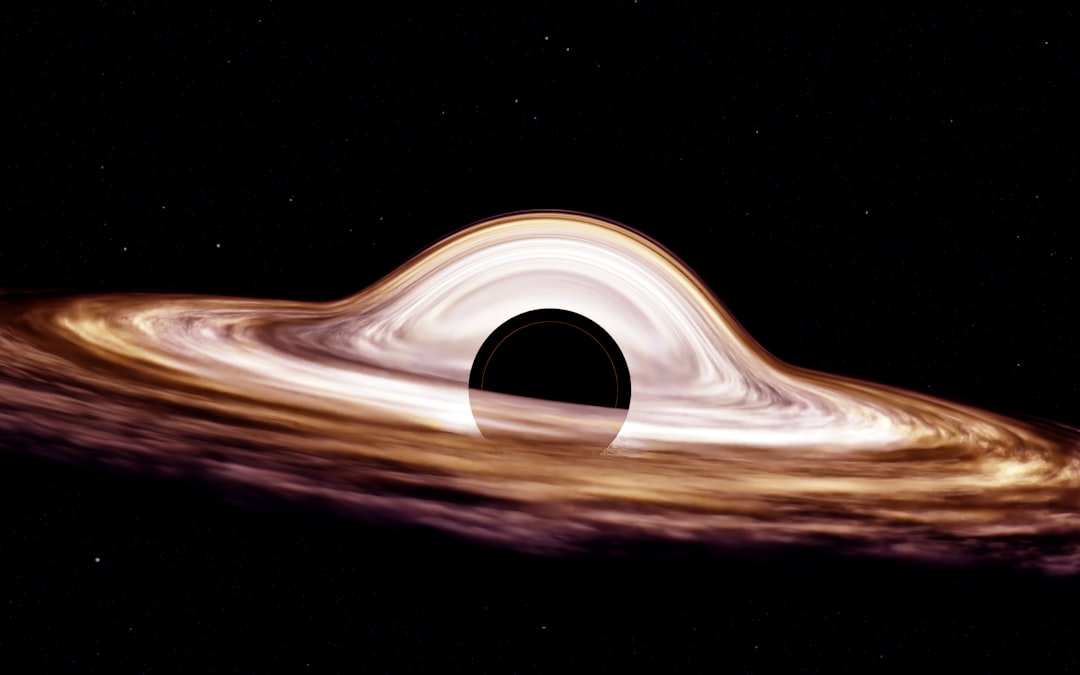
The concept of black holes has long fascinated scientists and the general public alike, serving as a gateway into the enigmatic realms of astrophysics and quantum mechanics. Among the many intriguing aspects of black holes, the Page Curve stands out as a pivotal element in understanding the nature of information in the universe. This theoretical construct, named after physicist Don Page, provides insights into how information behaves when it encounters a black hole.
The Page Curve suggests that information is not lost when it falls into a black hole, but rather that it is preserved in a manner that challenges traditional notions of physics. This article delves into the intricacies of the Page Curve, exploring its implications for our understanding of black holes and the fundamental laws governing the universe. As researchers continue to grapple with the mysteries surrounding black holes, the Page Curve has emerged as a crucial piece of the puzzle.
It offers a framework for reconciling the apparent contradictions between quantum mechanics and general relativity, particularly concerning the fate of information swallowed by these cosmic giants. By examining the theoretical underpinnings of the Page Curve and its implications for the information loss paradox, one can appreciate its significance in contemporary physics. The journey through this complex landscape reveals not only the challenges faced by scientists but also the potential for groundbreaking discoveries that could reshape our understanding of reality itself.
Key Takeaways
- The Black Hole Page Curve addresses the paradox of information loss in black holes, challenging classical physics.
- Stephen Hawking’s work initially suggested information is lost in black holes, sparking decades of debate.
- The Page Curve illustrates how information might be preserved and released during black hole evaporation.
- Quantum entanglement plays a crucial role in understanding how information escapes black holes.
- Recent theoretical and experimental advances are reshaping our understanding of space, time, and black hole dynamics.
Theoretical Background: Information Loss Paradox
The information loss paradox is a central issue in theoretical physics that arises from the interplay between quantum mechanics and general relativity. At its core, this paradox questions whether information that falls into a black hole is irretrievably lost or if it can be recovered in some form. According to classical physics, once an object crosses the event horizon of a black hole, it is doomed to disappear from the observable universe, taking with it any information it contained.
This notion poses a significant challenge to quantum mechanics, which asserts that information cannot be destroyed. The implications of this paradox are profound, as they suggest a fundamental conflict between two pillars of modern physics. If information can indeed be lost, it would violate one of the core tenets of quantum theory, leading to a crisis in our understanding of reality.
Conversely, if information is preserved, it raises questions about how it can be retrieved and what mechanisms govern its storage within a black hole. The tension between these two perspectives has spurred extensive research and debate among physicists, leading to various proposed solutions and theories aimed at reconciling this apparent contradiction.
Stephen Hawking’s Contribution to the Information Loss Paradox
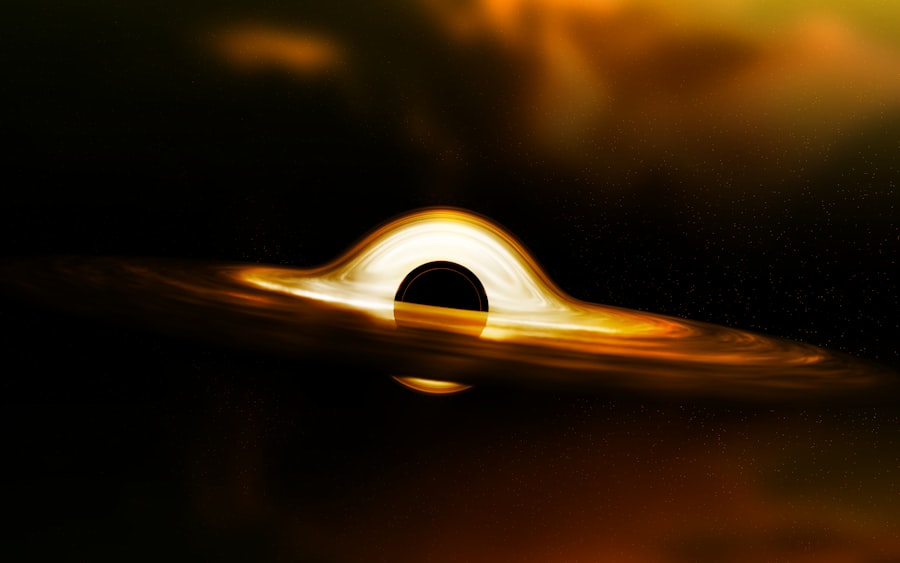
Stephen Hawking’s groundbreaking work on black holes has significantly shaped our understanding of the information loss paradox. In 1974, he proposed that black holes are not entirely black but emit radiation due to quantum effects near the event horizon. This phenomenon, now known as Hawking radiation, suggested that black holes could eventually evaporate over time, leading to the possibility that they might lose mass and energy.
However, this revelation also raised critical questions about what happens to the information contained within a black hole as it evaporates. Hawking’s initial stance was that information falling into a black hole is irretrievably lost when it evaporates. This assertion ignited a fierce debate within the scientific community, as many physicists argued that such a conclusion contradicted the principles of quantum mechanics.
In response to this criticism, Hawking later revised his position, acknowledging that information might not be lost after all. His evolving views on this topic have played a crucial role in advancing discussions surrounding the Page Curve and its implications for understanding black holes.
The Page Curve: What It Reveals about Black Holes
The Page Curve offers a compelling perspective on how information behaves in relation to black holes. Proposed by Don Page in 1993, this theoretical model illustrates how information is gradually released from a black hole over time as it emits Hawking radiation. According to the Page Curve, when an observer measures the radiation emitted by a black hole, they can recover some of the information that was initially thought to be lost.
This gradual recovery process is depicted as a curve that rises steeply at first and then flattens out as more information becomes accessible. The implications of the Page Curve are profound, suggesting that while information may be temporarily hidden within a black hole, it is not permanently lost. Instead, it becomes encoded in the radiation emitted during the black hole’s evaporation process.
This revelation has significant consequences for our understanding of quantum mechanics and general relativity, as it implies that these two frameworks can coexist without contradiction. The Page Curve thus serves as a bridge between these seemingly disparate realms of physics, offering hope for a more unified theory of the universe.
Recent Developments in Understanding the Page Curve
| Metric | Description | Typical Value / Behavior | Significance |
|---|---|---|---|
| Entanglement Entropy | Measure of quantum entanglement between black hole and radiation | Increases initially, then decreases after Page time | Indicates information release during black hole evaporation |
| Page Time | Time at which entanglement entropy reaches maximum | Approximately half of black hole evaporation time | Marks transition from information loss to information recovery |
| Black Hole Evaporation Time | Total time for black hole to evaporate via Hawking radiation | Proportional to mass³ (in natural units) | Determines lifespan and information release duration |
| Hawking Radiation Entropy | Entropy carried away by emitted radiation | Increases until Page time, then decreases | Tracks information content in radiation |
| Initial Black Hole Entropy | Entropy associated with black hole horizon area | Proportional to horizon area (A/4 in Planck units) | Represents initial information content |
In recent years, advancements in theoretical physics have shed new light on the Page Curve and its implications for black hole research. Researchers have explored various models and simulations to better understand how information is encoded in Hawking radiation and how it can be retrieved by observers outside the event horizon. These studies have led to new insights into the nature of entanglement and its role in preserving information within black holes.
Moreover, collaborations between physicists and mathematicians have resulted in innovative approaches to studying black holes and their associated phenomena. For instance, advancements in quantum field theory have provided tools for analyzing how information behaves in extreme gravitational environments. These developments have not only deepened our understanding of the Page Curve but have also opened up new avenues for research into other aspects of black hole physics.
Quantum Mechanics and the Page Curve
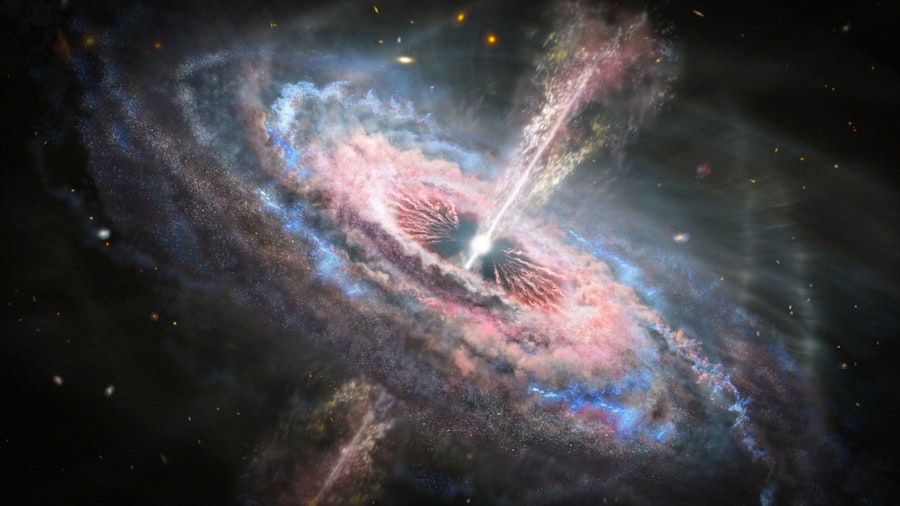
Quantum mechanics plays a pivotal role in shaping our understanding of the Page Curve and its implications for information loss in black holes. At its core, quantum mechanics posits that particles exist in superpositions of states until they are measured, leading to inherent uncertainties in their properties. This principle raises intriguing questions about how information is stored and retrieved from black holes.
The interplay between quantum mechanics and gravity becomes particularly relevant when considering how entangled particles behave near a black hole’s event horizon. The Page Curve suggests that entanglement may serve as a mechanism for preserving information even when it appears to be lost within a black hole. By examining how entangled particles interact with Hawking radiation, researchers are beginning to unravel the complexities surrounding information loss and recovery in these extreme environments.
The Role of Entanglement in Information Loss
Entanglement is a fundamental concept in quantum mechanics that describes how particles can become interconnected in such a way that the state of one particle instantaneously influences another, regardless of distance. This phenomenon has significant implications for understanding information loss in black holes and is intricately linked to the Page Curve.
The role of entanglement in preserving information challenges traditional notions of locality and causality in physics. As researchers delve deeper into this relationship, they are uncovering new insights into how entangled particles can encode information about their surroundings even when separated by vast distances. This understanding not only enhances our grasp of black holes but also has broader implications for quantum computing and communication technologies.
Challenges and Controversies in Unraveling the Mysteries of Information Loss
Despite significant progress in understanding the Page Curve and its implications for information loss, challenges and controversies persist within the scientific community. One major point of contention revolves around whether or not information can truly be recovered from a black hole after it has evaporated completely. Some physicists argue that once a black hole has fully evaporated, any associated information is irretrievably lost, while others maintain that it remains encoded in some form.
Additionally, debates continue regarding the nature of Hawking radiation itself and how it interacts with entangled particles near the event horizon. These discussions highlight the complexities inherent in reconciling quantum mechanics with general relativity and underscore the need for further research to clarify these issues. As scientists strive to unravel these mysteries, they are continually challenged to rethink established paradigms and explore new theoretical frameworks.
Implications for the Nature of Space and Time
The exploration of the Page Curve and its relationship with black holes carries profound implications for our understanding of space and time itself. If information is preserved within black holes and can be recovered through mechanisms such as entanglement, it suggests that space-time may not be as rigidly defined as previously thought. Instead, it opens up possibilities for reimagining how we perceive reality at both cosmic and quantum scales.
Furthermore, these insights challenge conventional notions of causality and locality, prompting physicists to reconsider fundamental principles governing our universe. The interplay between information preservation and gravitational phenomena may lead to new theories that bridge gaps between quantum mechanics and general relativity, ultimately reshaping our understanding of space-time itself.
Experimental Evidence for the Page Curve
While much of the discussion surrounding the Page Curve has been theoretical, recent advancements in experimental techniques have begun to provide empirical evidence supporting its predictions. Researchers have developed sophisticated methods for simulating black hole-like conditions in laboratory settings, allowing them to study how information behaves under extreme gravitational influences. These experiments have yielded promising results that align with predictions made by the Page Curve model.
For instance, studies involving entangled particles have demonstrated how information can be preserved even when subjected to conditions reminiscent of those near a black hole’s event horizon. As experimental techniques continue to evolve, they hold great potential for further validating theoretical models related to black holes and their associated phenomena.
Future Directions in Black Hole Research and the Page Curve
As scientists continue to explore the mysteries surrounding black holes and the Page Curve, future research will likely focus on several key areas. One promising avenue involves further investigating the role of entanglement in preserving information within black holes and its implications for quantum computing technologies. Understanding how entangled particles interact with Hawking radiation could lead to breakthroughs in harnessing quantum phenomena for practical applications.
Additionally, researchers will likely seek to develop more sophisticated models that integrate insights from both quantum mechanics and general relativity. By bridging these two frameworks, scientists hope to uncover deeper truths about the nature of reality itself and resolve lingering questions surrounding information loss in black holes. In conclusion, the exploration of the Page Curve represents a significant frontier in modern physics, offering profound insights into the nature of information, space-time, and reality itself.
As researchers continue to unravel these complexities, they stand on the brink of potentially groundbreaking discoveries that could reshape our understanding of the universe for generations to come.
Recent discussions surrounding the Page curve and its implications for black hole information have sparked significant interest in the field of theoretical physics. For a deeper understanding of these concepts, you can explore a related article that delves into the intricacies of black hole thermodynamics and information theory. Check it out here: My Cosmic Ventures.
FAQs
What is the black hole Page curve?
The black hole Page curve is a theoretical graph that describes the entropy of Hawking radiation emitted by a black hole over time. It predicts how the information content of the radiation changes as the black hole evaporates, initially increasing and then decreasing, suggesting that information is not lost.
Who proposed the concept of the Page curve?
The concept of the Page curve was proposed by physicist Don Page in the 1990s. He analyzed the entropy of black hole radiation and argued that if black hole evaporation is unitary, the entropy should follow a specific curve now known as the Page curve.
Why is the Page curve important in black hole physics?
The Page curve is important because it addresses the black hole information paradox. It provides a framework to understand how information might be preserved during black hole evaporation, reconciling quantum mechanics with general relativity.
What does the Page curve tell us about information loss in black holes?
The Page curve suggests that information is not lost in black holes. Initially, the entropy of emitted radiation increases, indicating growing entanglement, but after the Page time, the entropy decreases, implying that information is gradually released back into the radiation.
What is the “Page time” in the context of the Page curve?
The Page time is the moment during black hole evaporation when the entropy of the emitted radiation reaches its maximum and begins to decrease. It marks the transition point where information starts to be recovered from the radiation.
How does the Page curve relate to Hawking radiation?
The Page curve models the entropy of Hawking radiation over time. Hawking radiation is thermal and seemingly random, but the Page curve implies that the radiation eventually carries information about the black hole’s initial state.
Has the Page curve been confirmed experimentally?
No, the Page curve has not been directly confirmed experimentally because observing black hole evaporation and Hawking radiation is currently beyond our technological capabilities. However, theoretical and computational studies support its validity.
What recent developments have been made regarding the Page curve?
Recent theoretical advances, particularly involving quantum gravity and holography, have provided calculations that reproduce the Page curve, supporting the idea that black hole evaporation is unitary and information is preserved.
Does the Page curve solve the black hole information paradox?
The Page curve provides a strong theoretical framework suggesting that information is preserved, which is a key step toward resolving the black hole information paradox. However, a complete and universally accepted solution requires further research.
What role does quantum entanglement play in the Page curve?
Quantum entanglement is central to the Page curve. The entropy of Hawking radiation reflects the entanglement between the radiation and the remaining black hole. The Page curve tracks how this entanglement evolves during evaporation.