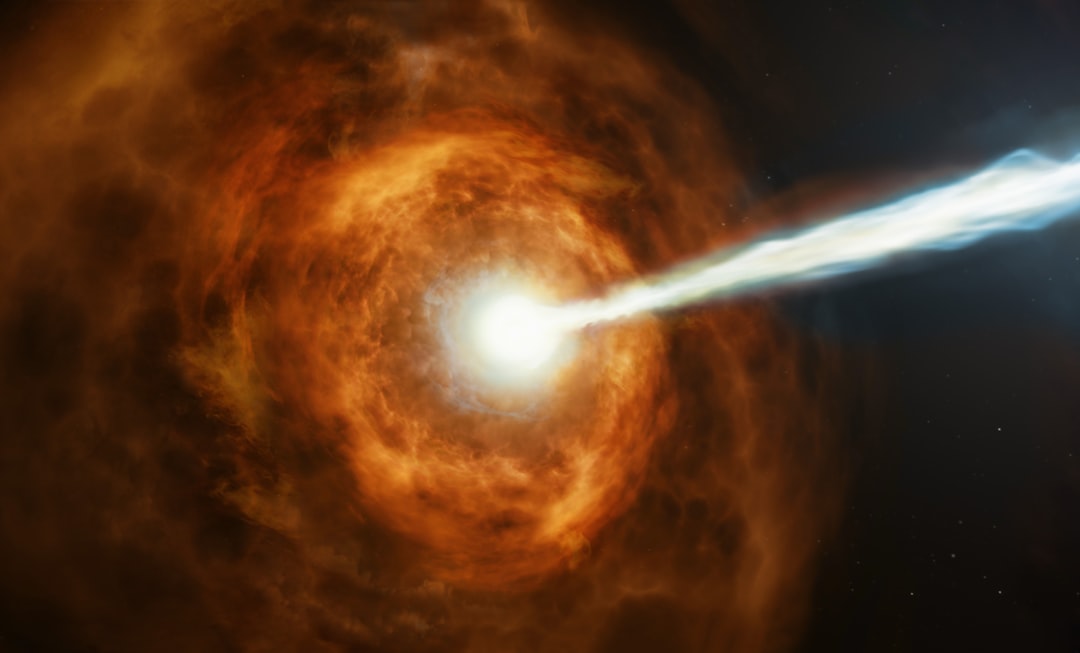
Comet storms are fascinating celestial phenomena that capture the imagination of astronomers and enthusiasts alike. These events occur when a significant number of comets are ejected from their parent bodies, often leading to a dramatic increase in the visibility of these icy wanderers in the night sky. The term “comet storm” typically refers to a period of heightened comet activity, where multiple comets can be observed over a relatively short time frame.
This surge in comet appearances can be attributed to various factors, including gravitational interactions, the influence of nearby celestial bodies, and the dynamics of the solar system itself. The study of comet storms not only enhances our understanding of these enigmatic objects but also sheds light on the broader mechanics of our solar system. Comets, often described as “dirty snowballs,” are composed of ice, dust, and rocky material, and their orbits can be significantly altered by gravitational forces.
As scientists delve deeper into the intricacies of comet storms, they uncover the complex interplay between comets, black holes, and other astronomical entities that shape their trajectories and behaviors.
Key Takeaways
- Comet storms are intense periods of increased comet activity in the solar system, often triggered by external forces such as black holes and nearby stars.
- Black holes are formed from the collapse of massive stars and have a significant impact on their surrounding environment, including comet storms.
- The gravitational pull of black holes can disrupt the orbits of comets, leading to increased activity and potential collisions with other celestial bodies.
- Solar winds play a crucial role in shaping comet storms, as they can interact with cometary material and influence their behavior in the solar system.
- Black holes can significantly alter the orbits of comets, leading to potential changes in their activity and trajectory within the solar system.
Formation of Black Holes
Black holes are among the most enigmatic and powerful objects in the universe, formed from the remnants of massive stars that have undergone gravitational collapse.
This process results in a dense core that compresses matter to such an extent that not even light can escape its gravitational pull, creating what is known as a black hole.
The formation of black holes is a critical aspect of stellar evolution and plays a significant role in the dynamics of galaxies. There are several types of black holes, including stellar black holes, which form from individual stars, and supermassive black holes, which reside at the centers of galaxies and can contain millions to billions of times the mass of the Sun. The formation processes for these two types differ significantly; while stellar black holes arise from single stars, supermassive black holes may form through the merging of smaller black holes or the direct collapse of massive gas clouds in the early universe.
Understanding how black holes form is essential for comprehending their influence on surrounding celestial bodies, including comets.
The Black Hole Effect on Comet Storms
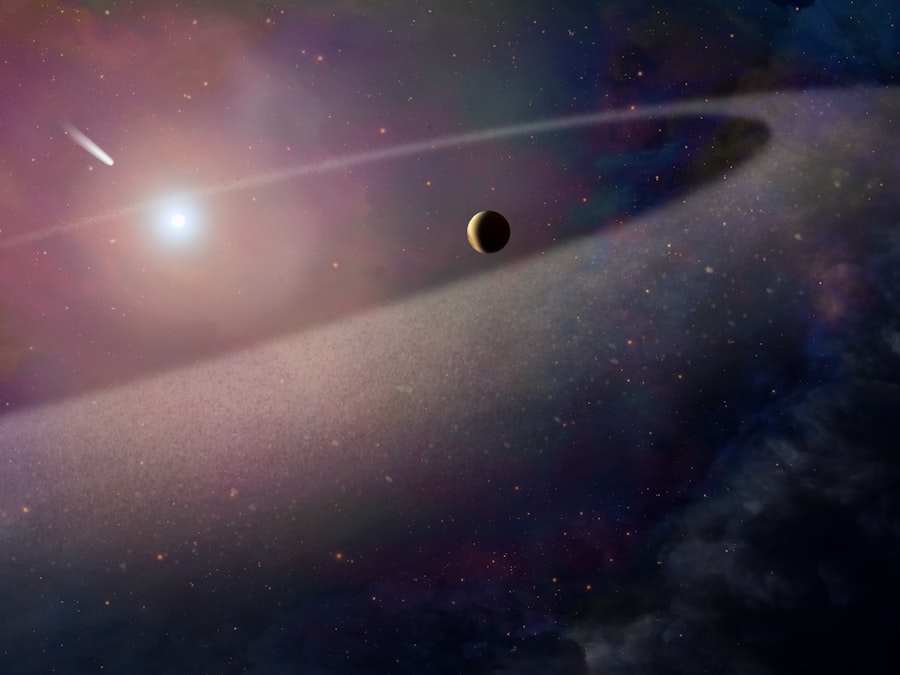
The presence of black holes can have profound effects on nearby celestial bodies, including comets. Their immense gravitational pull can alter the orbits of comets that venture too close, potentially leading to increased comet activity in certain regions of space. When comets are influenced by a black hole’s gravity, their trajectories can become erratic, resulting in unexpected encounters with other celestial objects or even ejections from their original orbits.
This gravitational interaction can trigger a cascade effect, leading to what is observed as a comet storm. Moreover, black holes can also affect the distribution of comets within a solar system. As they exert their gravitational influence on surrounding matter, they can create regions where comets are more likely to be perturbed from their stable orbits.
This perturbation can lead to an influx of comets entering the inner solar system, where they become visible from Earth. The relationship between black holes and comet storms highlights the interconnectedness of cosmic phenomena and emphasizes the need for further research into these complex interactions.
Gravitational Pull and Comet Storms
| Metrics | Gravitational Pull | Comet Storms |
|---|---|---|
| Definition | The force of attraction between two objects due to their mass | A sudden increase in the number of comets entering a specific region of space |
| Effect | Causes objects to be pulled towards each other | Can result in increased meteor showers and potential impact events |
| Related to | Planetary motion, tides, and orbits | Outer space phenomena and celestial events |
Gravitational pull is a fundamental force that governs the motion of celestial bodies throughout the universe. In the context of comet storms, gravitational interactions play a crucial role in determining the trajectories and behaviors of comets as they traverse space. The gravitational influence exerted by massive objects such as planets, stars, and black holes can significantly alter a comet’s path, leading to increased activity and visibility.
When comets pass near massive celestial bodies, they experience gravitational slingshots that can accelerate or redirect them into new orbits. This phenomenon can result in a sudden influx of comets entering the inner solar system, creating what is known as a comet storm. Additionally, gravitational interactions can lead to fragmentation events where larger comets break apart into smaller pieces, further contributing to the observed increase in comet activity.
Understanding these gravitational dynamics is essential for predicting when and where comet storms may occur.
The Role of Solar Winds in Comet Storms
Solar winds, streams of charged particles emitted by the Sun, play a significant role in shaping the behavior and visibility of comets as they approach the inner solar system. When comets enter this region, they interact with solar winds, which can enhance their activity by causing sublimation—the process where solid ice transforms directly into gas. This interaction creates a glowing coma around the comet and often results in spectacular tails that stretch across the night sky.
The intensity of solar winds can vary based on solar activity cycles, which means that during periods of heightened solar activity, comets may exhibit more pronounced features and increased visibility. This relationship between solar winds and comet activity underscores the importance of understanding solar dynamics when studying comet storms. As scientists continue to monitor solar activity and its effects on comets, they gain valuable insights into how these interactions contribute to the overall behavior of comet storms.
Impact of Black Holes on Comet Orbits
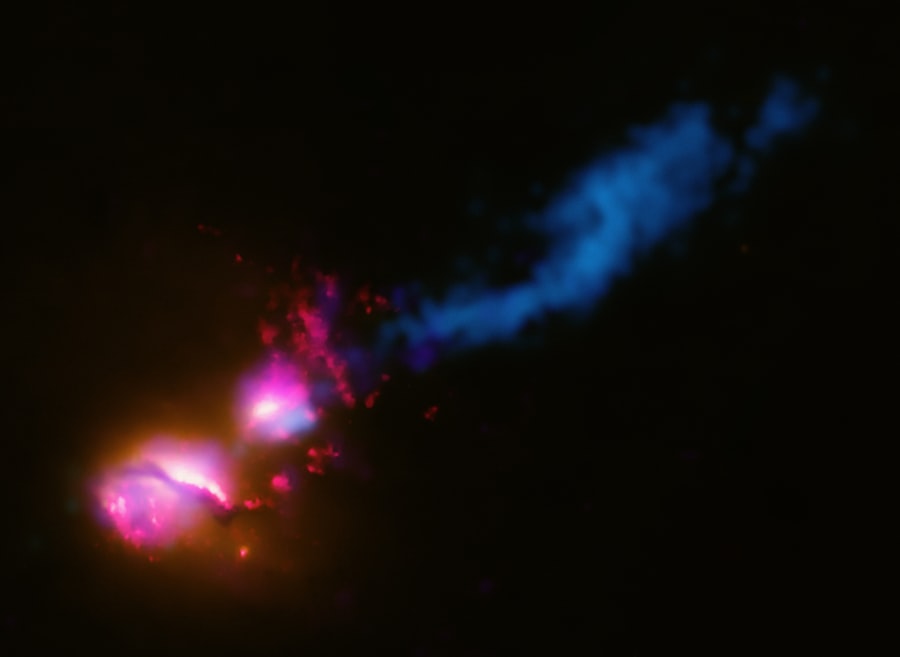
The influence of black holes extends beyond mere gravitational pull; they can also significantly impact the orbits of comets within their vicinity. When comets pass near a black hole, their trajectories can be altered dramatically due to intense gravitational forces. This alteration may result in some comets being drawn into the black hole itself while others are flung out into distant regions of space.
Such interactions can lead to an increase in comet activity as more comets are perturbed from their stable orbits. The resulting chaos can create conditions ripe for comet storms as multiple comets are sent hurtling toward the inner solar system simultaneously. Understanding how black holes affect comet orbits is crucial for predicting potential comet storms and assessing their implications for Earth and other celestial bodies.
The Influence of Nearby Stars on Comet Storms
Nearby stars also play a pivotal role in shaping comet storms through their gravitational influence and radiation output. As stars move through space, their gravitational fields can perturb nearby comets, altering their orbits and potentially leading to increased activity. This interaction is particularly significant in regions where stars are densely packed, such as star clusters.
In addition to gravitational effects, nearby stars emit radiation that can impact the physical state of comets as they approach them. The heat generated by stellar radiation can cause sublimation in comets, leading to increased outgassing and enhanced visibility. This combination of gravitational perturbations and radiation effects creates an environment conducive to comet storms, highlighting the interconnectedness of stellar dynamics and cometary behavior.
The Connection Between Black Holes and Comet Activity
The connection between black holes and comet activity is an area ripe for exploration within astrophysics. As researchers investigate how black holes influence nearby celestial bodies, they uncover intricate relationships that govern comet behavior. The gravitational pull exerted by black holes can lead to increased comet activity through perturbations in orbits and interactions with other celestial objects.
Moreover, as scientists study regions around supermassive black holes at the centers of galaxies, they find evidence suggesting that these environments may be hotspots for comet formation and activity. The chaotic dynamics surrounding supermassive black holes could create conditions favorable for generating new comets or triggering existing ones into active states. Understanding this connection not only enhances knowledge about comets but also provides insights into broader cosmic processes.
Observations and Studies of Comet Storms
Observations and studies of comet storms have advanced significantly with technological advancements in astronomy. Telescopes equipped with sophisticated imaging capabilities allow astronomers to monitor comet activity in real-time, providing valuable data on their trajectories and behaviors during storm events. These observations help researchers identify patterns in comet activity and understand the underlying mechanisms driving these phenomena.
In addition to ground-based observations, space missions have played a crucial role in studying comets up close. Missions like Rosetta have provided unprecedented insights into comet composition and behavior during close encounters with the Sun. Such studies contribute to a more comprehensive understanding of how various factors—ranging from gravitational interactions with black holes to solar wind influences—affect comet storms.
Potential Implications of Comet Storms on Earth
The implications of comet storms extend beyond mere astronomical curiosity; they hold potential consequences for Earth and its inhabitants. Increased comet activity could lead to heightened risks associated with impacts from larger fragments breaking off during storm events. While most comets burn up upon entering Earth’s atmosphere, larger fragments could pose significant threats if they were to collide with our planet.
Furthermore, studying comet storms provides insights into the early solar system’s conditions and processes that shaped planetary formation. Understanding these events could help scientists assess potential risks associated with future comet encounters while also offering clues about Earth’s own history and evolution within the cosmos.
Conclusion and Future Research
In conclusion, comet storms represent a captivating intersection between various astronomical phenomena, including black holes, gravitational interactions, solar winds, and nearby stars. As researchers continue to explore these connections, they uncover new insights into how cosmic forces shape our understanding of comets and their behavior within our solar system. Future research will undoubtedly focus on refining models that predict comet storm occurrences while also investigating how these events may impact Earth and other celestial bodies.
By deepening our understanding of these complex interactions, scientists hope to unravel more mysteries surrounding both comets and black holes—two enigmatic components that continue to intrigue astronomers across generations.
Recent studies have suggested that the gravitational influence of black holes can trigger comet storms, leading to an increase in the number of comets entering the inner solar system. This phenomenon is explored in greater detail in the article found at Understanding these interactions not only sheds light on the dynamics of our solar system but also on the broader implications for galactic evolution. WATCH THIS! The Invisible Threat: A Rogue Black Hole Headed for Our Solar System? A black hole is a region in space where the gravitational pull is so strong that nothing, not even light, can escape from it. It is formed when a massive star collapses under its own gravity. When a black hole passes through a cloud of comets, its strong gravitational pull can disrupt the orbits of the comets, causing them to be flung out of their original paths and into the inner solar system. This can result in a comet storm as the comets enter the vicinity of planets. Comet storms are events where a large number of comets enter the inner solar system at the same time, often leading to an increase in the number of visible comets in the night sky. While black holes are extremely powerful and can have a significant impact on the surrounding space, the likelihood of a black hole directly affecting Earth is extremely low due to the vast distances involved. Comet storms can potentially pose a threat to Earth if a comet were to collide with our planet. However, the likelihood of such an event is very low, and scientists closely monitor the paths of known comets to assess any potential risks.FAQs
What is a black hole?
How does a black hole cause comet storms?
What are comet storms?
Can black holes directly affect Earth?
Are comet storms dangerous to Earth?