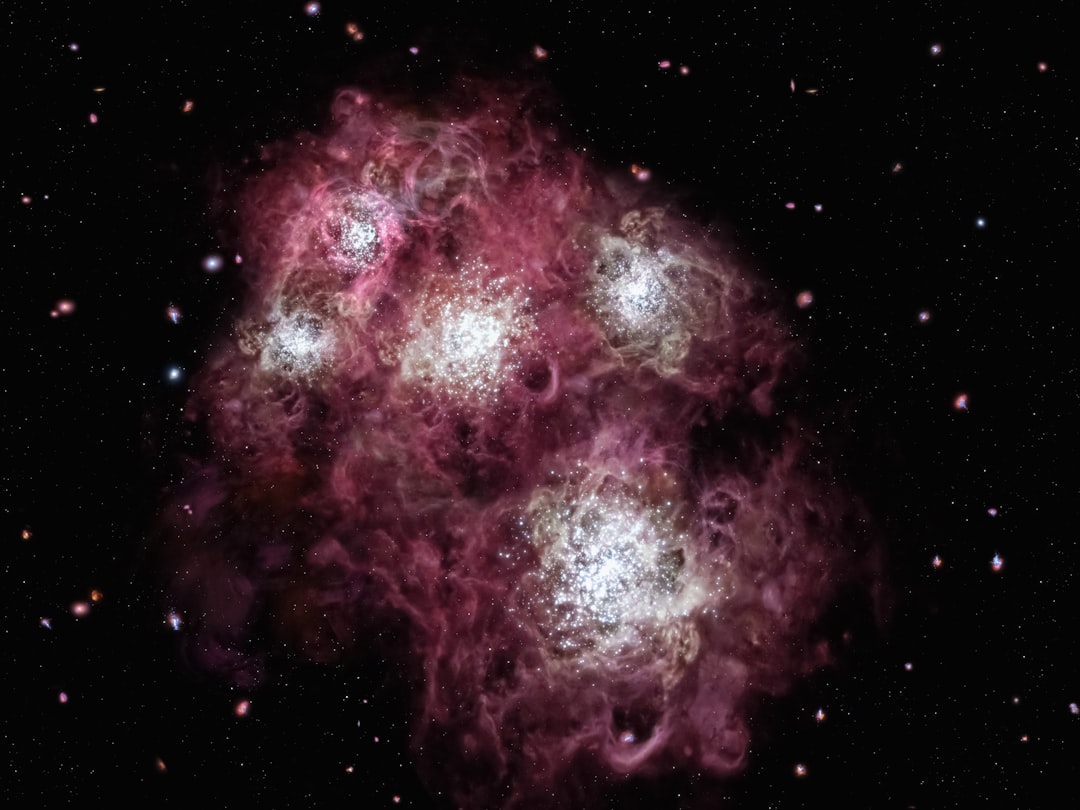
The Big Bang Theory stands as one of the most significant scientific frameworks for understanding the origins of the universe. It posits that approximately 13.8 billion years ago, the universe began as an infinitely small, hot, and dense point, which subsequently expanded and cooled, leading to the formation of galaxies, stars, and planets. This theory is supported by a wealth of observational evidence, including the redshift of distant galaxies and the cosmic microwave background radiation (CMBR), which serves as a remnant echo of the early universe.
The Big Bang Theory has revolutionized cosmology, providing a coherent narrative that explains not only the birth of the universe but also its ongoing evolution. However, despite its widespread acceptance, the Big Bang Theory is not without its challenges. As scientists delve deeper into the cosmos, they encounter various inconsistencies and unanswered questions that challenge the completeness of this model.
These issues have sparked debates and discussions within the scientific community, prompting researchers to explore alternative theories and explanations. The journey to understand the universe’s origins is far from over, as new discoveries continue to reshape our understanding of cosmic phenomena.
Key Takeaways
- The Big Bang Theory is the prevailing cosmological model for the observable universe’s earliest known periods.
- Inconsistencies in the Cosmic Microwave Background Radiation challenge the uniformity of the universe and raise questions about its early evolution.
- The Horizon Problem questions the uniformity of the universe, suggesting that regions of space that have never been in contact with each other appear to have the same temperature and other properties.
- The Missing Antimatter Problem raises questions about why the universe is made up almost entirely of matter, with very little antimatter.
- The Flatness Problem and the Fine-Tuning of the Universe point to the precise balance of initial conditions required for the universe to exist as it does today.
Inconsistencies in the Cosmic Microwave Background Radiation
The cosmic microwave background radiation is often heralded as one of the strongest pieces of evidence supporting the Big Bang Theory. This faint glow permeates the universe and is thought to be the afterglow of the hot, dense state from which the universe emerged. However, recent observations have revealed inconsistencies in the CMBR that raise questions about its interpretation.
For instance, anomalies in temperature fluctuations have been detected, suggesting that certain regions of the universe exhibit unexpected patterns that do not align with predictions made by standard cosmological models. These discrepancies have led scientists to reconsider their understanding of the CMBR and its implications for the Big Bang Theory. Some researchers propose that these anomalies could indicate the presence of new physics beyond the current model, while others suggest that they may be artifacts of observational techniques or data processing methods.
Regardless of their origin, these inconsistencies highlight the complexities inherent in studying the early universe and underscore the need for continued investigation into the nature of cosmic radiation.
The Horizon Problem and the Uniformity of the Universe
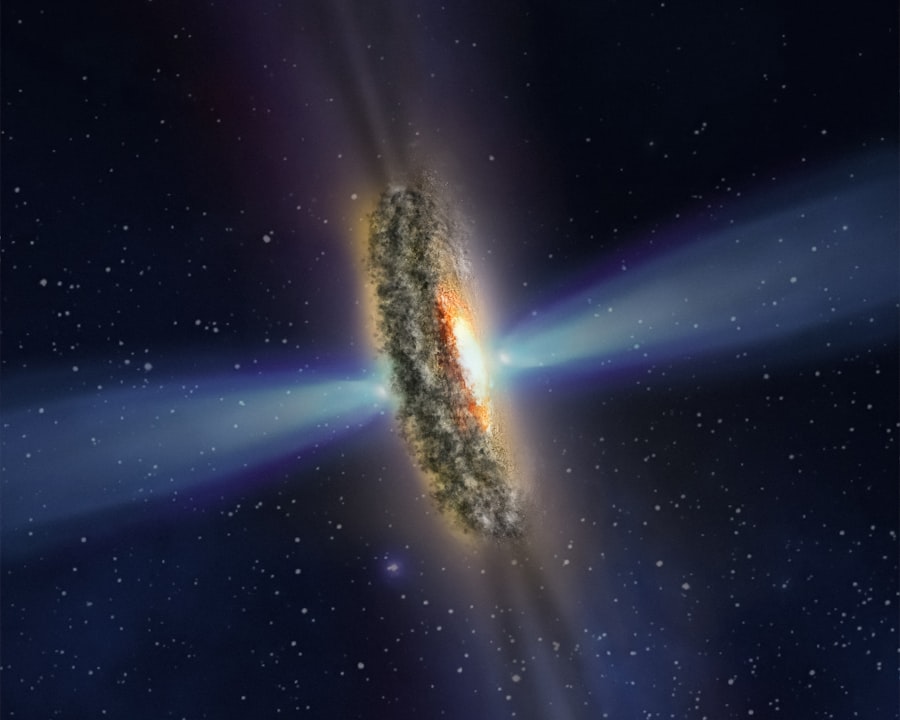
One of the most perplexing challenges associated with the Big Bang Theory is known as the horizon problem. This issue arises from the observation that regions of the universe that are vastly separated from one another exhibit remarkably similar properties, such as temperature and density. According to standard cosmological models, these regions should not have been in causal contact with each other since they are beyond each other’s observable horizons.
This raises a fundamental question: how can such uniformity exist in a universe that has expanded so rapidly? To address this conundrum, scientists have proposed various solutions, including the concept of cosmic inflation. This theory suggests that a brief period of exponential expansion occurred shortly after the Big Bang, allowing distant regions to come into contact before being pushed apart.
While inflation offers a compelling explanation for the observed uniformity, it also introduces new questions about its underlying mechanisms and how it fits within the broader framework of cosmology.
The Missing Antimatter Problem
| Aspect | Details |
|---|---|
| Issue | The Missing Antimatter Problem |
| Description | Antimatter is the counterpart to matter, but there is a significant imbalance in the universe with very little antimatter compared to matter. |
| Consequences | It is a major unsolved problem in physics and cosmology, as it challenges our understanding of the fundamental laws of nature. |
| Research | Scientists are conducting experiments and observations to understand the reasons behind this imbalance and to potentially find sources of antimatter. |
Another intriguing issue related to the Big Bang Theory is the missing antimatter problem. According to theoretical predictions, equal amounts of matter and antimatter should have been produced during the early moments of the universe’s existence. However, observations reveal a striking asymmetry: our universe is predominantly composed of matter, with very little antimatter present.
This discrepancy poses a significant challenge to our understanding of fundamental physics and cosmology. Researchers have proposed several hypotheses to explain this imbalance. Some suggest that certain processes during the early universe favored the production of matter over antimatter, while others explore mechanisms that could lead to the annihilation of antimatter in specific conditions.
Despite these efforts, a definitive resolution to the missing antimatter problem remains elusive, prompting scientists to continue their quest for answers in both theoretical and experimental domains.
The Flatness Problem and the Fine-Tuning of the Universe
The flatness problem is another critical issue that arises from observations of cosmic geometry. Measurements indicate that the universe is remarkably flat on large scales, meaning that its overall density is very close to a critical value. This fine-tuning raises questions about why such a delicate balance exists; if the density were even slightly higher or lower, it could lead to a dramatically different fate for the universe—either collapsing back in on itself or expanding too rapidly for galaxies to form.
To explain this fine-tuning, some cosmologists turn to inflationary theory once again.
However, this explanation also invites further inquiry into why inflation occurred in the first place and what mechanisms govern its dynamics.
The flatness problem thus serves as a reminder of how interconnected various aspects of cosmology are and how much remains to be understood.
The Problem of Dark Matter and Dark Energy

Dark matter and dark energy represent two of the most significant enigmas in contemporary cosmology. Observations indicate that visible matter—stars, planets, and galaxies—comprises only a small fraction of the total mass-energy content of the universe. The majority appears to be made up of dark matter, which interacts gravitationally but does not emit or absorb light, making it invisible to traditional observational techniques.
Similarly, dark energy is thought to drive the accelerated expansion of the universe but remains poorly understood. The existence of dark matter was first inferred from gravitational effects on visible matter in galaxies and galaxy clusters. Despite extensive searches for direct detection, no conclusive evidence has yet emerged for its particle nature.
Dark energy poses an even greater challenge; its properties and origins are still largely speculative. Various theories have been proposed, ranging from modifications to general relativity to exotic forms of energy fields. The quest to unravel these mysteries continues to be a driving force in modern astrophysics.
The Origin of Time and Space
The Big Bang Theory also raises profound questions about the nature of time and space themselves. If time began with the Big Bang, what does this imply about causality and existence prior to this event? Traditional notions of time as a linear progression become problematic when considering a singularity where both time and space cease to function as we understand them.
This philosophical dilemma invites contemplation about whether time is an intrinsic feature of reality or merely a construct arising from physical processes. Some physicists propose that time may be an emergent property rather than a fundamental aspect of reality. In this view, time could arise from more basic elements or interactions within quantum mechanics or spacetime itself.
Such ideas challenge conventional wisdom and encourage deeper exploration into how time is intertwined with our understanding of the universe’s structure.
The Role of Inflation and the Multiverse Theory
Inflation theory has emerged as a pivotal concept in addressing several challenges posed by the Big Bang Theory, including the horizon problem and flatness problem. By proposing a rapid expansion phase shortly after the Big Bang, inflation provides a mechanism for explaining uniformity across vast distances in space. However, inflation also leads to intriguing implications regarding the multiverse—a hypothetical collection of multiple universes with varying physical laws and constants.
The multiverse theory suggests that our observable universe may be just one bubble within a vast sea of other universes, each with its own unique properties. This idea raises profound questions about existence itself: if multiple universes exist, what does it mean for our understanding of reality? While some physicists embrace this notion as a natural extension of inflationary theory, others remain skeptical due to its speculative nature and lack of direct empirical evidence.
Alternative Theories and Explanations
As scientists grapple with unresolved issues surrounding the Big Bang Theory, alternative theories have emerged that seek to provide different perspectives on cosmic origins. One such theory is cyclic cosmology, which posits that the universe undergoes infinite cycles of expansion and contraction rather than having a singular beginning point. This model offers an intriguing alternative by suggesting that each cycle resets conditions for subsequent expansions.
Another alternative is loop quantum gravity, which attempts to reconcile general relativity with quantum mechanics by proposing that spacetime itself is quantized at extremely small scales. This approach challenges traditional notions of singularities associated with black holes and the Big Bang by suggesting that spacetime may behave differently under extreme conditions.
The Philosophical and Theological Implications
The exploration of cosmic origins inevitably intersects with philosophical and theological inquiries about existence itself. Questions surrounding why there is something rather than nothing resonate deeply within both scientific and philosophical discourse. The implications of various cosmological models extend beyond empirical observations; they invite contemplation about humanity’s place in an expansive universe.
The intersection between science and spirituality has long been a topic of debate among scholars and theologians alike. Some argue that scientific discoveries enhance spiritual understanding by revealing intricate patterns within creation, while others contend that empirical inquiry cannot address existential questions about purpose or meaning. As cosmology continues to evolve, it challenges individuals to reconcile their beliefs with emerging scientific paradigms.
Conclusion and Future Perspectives
In conclusion, while the Big Bang Theory has provided a robust framework for understanding cosmic origins, it remains an incomplete narrative riddled with unanswered questions and inconsistencies. The challenges posed by phenomena such as dark matter, dark energy, missing antimatter, and cosmic uniformity highlight both the complexity of our universe and humanity’s quest for knowledge. As researchers continue to explore these enigmas through observation and theoretical development, new insights may emerge that reshape our understanding of reality itself.
The future promises exciting possibilities as advancements in technology enable deeper exploration into cosmic phenomena previously thought unreachable. Ultimately, humanity’s pursuit of knowledge will persist as it seeks answers not only about how the universe began but also about its ultimate fate and our place within it.
In recent discussions challenging the Big Bang theory, a compelling article has emerged that delves into alternative cosmological models. This article, found on My Cosmic Ventures, presents evidence and arguments that question the traditional understanding of the universe’s origins. It explores various anomalies and observations that do not align with the Big Bang model, suggesting the need for a broader perspective in cosmology. For those interested in exploring these ideas further, you can read the full article by visiting My Cosmic Ventures.
WATCH THIS! Did JWST DISPROVE The BIG BANG?!?!
FAQs
What is the Big Bang theory?
The Big Bang theory is the prevailing cosmological model for the observable universe from the earliest known periods through its subsequent large-scale evolution. It suggests that the universe was once extremely hot and dense before expanding and cooling over time.
What evidence is there against the Big Bang theory?
Some scientists have proposed alternative theories to the Big Bang, citing discrepancies in the cosmic microwave background radiation, the distribution of galaxies, and the abundance of certain elements as evidence against the theory. However, the majority of the scientific community still supports the Big Bang theory as the most comprehensive explanation for the origin and evolution of the universe.
What are some alternative theories to the Big Bang?
Some alternative theories to the Big Bang include the steady state theory, the oscillating universe theory, and the plasma cosmology model. These theories propose different mechanisms for the origin and evolution of the universe, but they have not gained widespread acceptance within the scientific community.
How does the scientific community respond to evidence against the Big Bang theory?
The scientific community responds to evidence against the Big Bang theory by conducting further research, testing alternative hypotheses, and refining existing models. While some scientists may challenge aspects of the Big Bang theory, the majority continue to support it based on the preponderance of evidence from various fields of study, including astronomy, physics, and cosmology.