The universe, in its current observable form, represents a vast tapestry of galaxies, stars, and planets, all operating under precise physical laws. Understanding its origin has captivated human thought for millennia. Among the various cosmological models proposed, the Big Bang theory stands as the prevailing scientific explanation for the universe’s initial conditions and subsequent evolution. This theory describes the universe as expanding from an extremely hot, dense state, a state that existed approximately 13.8 billion years ago. It is not an explosion in space, but rather an expansion of space itself.
The development of the Big Bang theory was not a singular eureka moment but a culmination of various independent scientific observations and theoretical advancements. Early conjectures about a dynamic universe challenged the then-dominant static models.
Hubble’s Expanding Universe
A pivotal moment arrived in the 1920s with the work of Edwin Hubble. By observing distant galaxies, Hubble noted a phenomenon known as redshift, where light from these galaxies appeared stretched towards the red end of the electromagnetic spectrum. This redshift, according to the Doppler effect, signifies that these galaxies are moving away from Earth. Furthermore, Hubble discovered a direct correlation: the farther a galaxy was, the faster it appeared to recede. This relationship, now known as Hubble’s Law, provided the first observational evidence for an expanding universe. Imagine, if you will, the universe as a raisin cake baking in an oven. As the cake expands, the individual raisins move further apart from each other, with more distant raisins appearing to move faster from any given raisin. This analogy, though imperfect, illustrates the fundamental concept of an expanding space rather than objects moving through a static space.
Einstein’s General Relativity
Preceding Hubble’s observations, Albert Einstein’s theory of General Relativity, published in 1915, provided the theoretical framework for a dynamic universe. While Einstein himself initially introduced a cosmological constant to force a static universe into his equations – a move he later famously called his “biggest blunder” – his equations inherently supported a universe that could either expand or contract. George Lemaître, a Belgian priest and physicist, was among the first to explore the cosmological implications of General Relativity, independently proposing a similar theory to Hubble’s, which he called the “hypothesis of the primeval atom” – an early conceptualization of the Big Bang. Lemaître’s work, often overlooked in popular accounts, highlights the intertwined nature of scientific observation and theoretical insight.
The Problem of the Initial Singularity
A core element of the Big Bang theory is the concept of a singularity – an infinitely dense and hot point from which the universe expanded. While mathematically convenient, the idea of an initial singularity presents significant challenges for current physics. At such extreme conditions, the known laws of physics, particularly those regarding gravity and quantum mechanics, break down. This poses a fundamental question: what was before the Big Bang? Or more accurately, what initiated this expansion? The current scientific understanding generally avoids positing a “before” in a temporal sense, as time itself is understood to have emerged with the Big Bang.
The first minimal record of the universe provides a fascinating glimpse into the origins of cosmic evolution, shedding light on the conditions that led to the formation of galaxies and stars. For those interested in exploring this topic further, a related article can be found at My Cosmic Ventures, which delves into the implications of these early cosmic events and how they shape our understanding of the universe today.
The Early Universe: A Cascade of Events
The moments immediately following the Big Bang were a period of extreme energy and rapid transformation, shaping the fundamental constituents and forces of the universe.
The Planck Epoch
The very earliest conceivable moment after the Big Bang, approximately from 0 to 10^-43 seconds, is known as the Planck Epoch. During this unimaginably brief interval, all four fundamental forces of nature – gravity, the strong nuclear force, the weak nuclear force, and electromagnetism – are believed to have been unified into a single colossal force. Our understanding of physics at this scale is largely speculative, as current theories lack a unified theory of quantum gravity. Researchers are actively pursuing theories like string theory and loop quantum gravity to bridge this gap. Imagine trying to describe the intricate machinery of a complex clock when all its gears and springs are melted into a single, undifferentiated blob. That is effectively the challenge of the Planck Epoch.
Inflationary Epoch
Following the Planck Epoch, the universe underwent an incredibly rapid and exponential expansion known as cosmic inflation, lasting from approximately 10^-36 to 10^-32 seconds. This period saw the universe expand by a factor of at least 10^26, effectively smoothing out any initial irregularities and creating the vast, relatively flat universe we observe today. Inflation also addresses several key cosmological problems, such as the horizon problem (why widely separated regions of the universe have surprisingly similar temperatures) and the flatness problem (why the universe’s geometry appears to be flat). Without inflation, the universe would likely be far more chaotic and inconsistent than it is.
Formation of Fundamental Particles
As the universe continued to expand and cool, energy transformed into matter and antimatter in accordance with Einstein’s famous equation E=mc². In the Quark Epoch (approximately 10^-12 to 10^-6 seconds), quarks and gluons, the fundamental particles that make up protons and neutrons, were able to form. The subsequent Hadron Epoch saw these quarks combine to form hadrons, such as protons and neutrons. A crucial asymmetry between matter and antimatter (approximately one extra matter particle for every billion pairs of matter-antimatter) led to the dominance of matter, allowing the universe to eventually form stars, planets, and life. Without this subtle imbalance, matter and antimatter would have annihilated each other, leaving behind a universe filled only with radiation.
Observational Pillars of the Big Bang
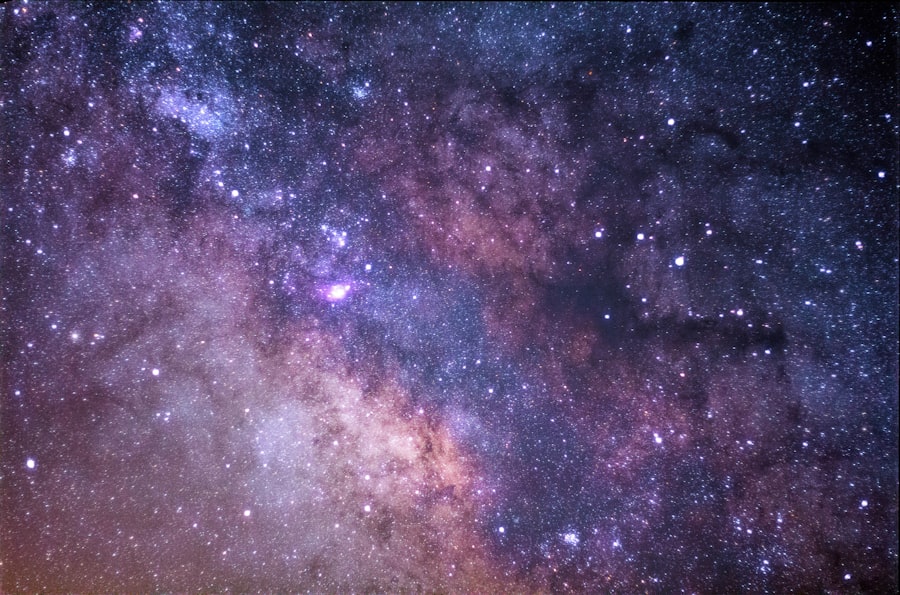
The Big Bang theory is not merely a theoretical construct; it is supported by a wealth of observational evidence that has been meticulously gathered and verified over decades.
Cosmic Microwave Background Radiation (CMB)
Perhaps the most compelling evidence for the Big Bang is the discovery of the Cosmic Microwave Background (CMB) radiation. In 1964, Arno Penzias and Robert Wilson, while working on a new horn antenna for Bell Labs, detected a persistent, uniform background noise that they could not explain as earthly interference. This noise was later identified as the afterglow of the Big Bang – the faded radiation from the early, hot universe. The CMB is a nearly perfect blackbody spectrum, with a temperature of approximately 2.7 Kelvin, precisely what is predicted by the Big Bang model. It acts as a direct snapshot of the universe when it was only about 380,000 years old, a time after electrons combined with nuclei to form neutral atoms, allowing photons to travel freely for the first time. Imagine the universe at that time as a dense fog, and the CMB as the light that finally broke free as the fog cleared.
Abundance of Light Elements
Another strong piece of evidence is the observed cosmic abundance of light elements, particularly hydrogen, helium, and lithium. The Big Bang nucleosynthesis (BBN) theory predicts the precise ratios of these elements that would have formed in the first few minutes after the Big Bang, during a period when the universe was hot enough for nuclear fusion to occur. The observed proportions in distant, pristine gas clouds remarkably match these theoretical predictions, providing a powerful independent check on the Big Bang model. If the universe had a different origin or history, these elemental abundances would likely be significantly different.
Large-Scale Structure of the Universe
The Big Bang theory, combined with our understanding of gravity, also explains the observed large-scale structure of the universe – the filamentary networks of galaxies, clusters, and superclusters separated by vast empty voids. Initial quantum fluctuations in the early universe, amplified by inflation, served as the “seeds” for these structures. Over billions of years, gravity then drew matter together in these slightly denser regions, leading to the formation of the cosmic web we see today. Observations from cosmological surveys, such as the Sloan Digital Sky Survey, map these structures and show remarkable consistency with the predictions of the Big Bang model and our understanding of gravitational collapse.
Unanswered Questions and Future Directions

While the Big Bang theory provides a robust framework, it is not without its limitations and areas of active research. Science is a continuous process of inquiry and refinement.
Dark Matter and Dark Energy
Two of the most significant mysteries in modern cosmology are the existence of dark matter and dark energy. Dark matter, an invisible and exotic form of matter, accounts for approximately 27% of the universe’s mass-energy content. Its gravitational influence is evident in the rotation of galaxies and the clustering of galaxy clusters, yet it does not interact with light, making it incredibly difficult to detect directly. Dark energy, even more mysterious, is believed to be responsible for the accelerating expansion of the universe and constitutes about 68% of its mass-energy. Its nature remains one of the greatest puzzles in physics, challenging our understanding of fundamental forces and the very fabric of spacetime. Explaining these phenomena fully is crucial for a complete picture of the universe’s evolution.
The Multiverse Hypothesis
One speculative but actively discussed concept aiming to address certain aspects of the Big Bang, particularly the initial conditions and the fine-tuning of fundamental constants, is the multiverse hypothesis. This idea proposes that our universe is just one among an infinite or finite number of other universes, each with potentially different physical laws and constants. While currently untestable, the multiverse hypothesis offers a potential explanation for why our universe seems so exquisitely tuned for life. It suggests that if countless universes exist, it is not improbable that at least one would have the conditions necessary for complexity and observers.
Quantum Gravity and the Big Bang Singularity
As previously mentioned, the singularity at the heart of the Big Bang presents a theoretical impasse. A complete theory of quantum gravity, one that successfully merges general relativity with quantum mechanics, is necessary to fully understand the earliest moments of the universe. Such a theory might replace the singularity with a more nuanced description, perhaps involving a “bounce” from a previous cosmic era or a different initial state entirely. This quest for a unified theory represents the frontier of theoretical physics, promising profound insights into the very nature of reality. Imagine trying to explain the Big Bang while one-quarter of your foundational knowledge is missing; that is the challenge without a complete theory of quantum gravity.
The first minimal record of the universe has captivated scientists and enthusiasts alike, shedding light on the origins of cosmic structures. This groundbreaking discovery is explored in greater detail in a related article that delves into the implications of early cosmic events. For those interested in understanding the complexities of the universe’s formation, you can read more about it in this insightful piece found here.
The Big Bang and Humanity’s Place
| Metric | Value | Unit | Description |
|---|---|---|---|
| Age of the Universe | 13.8 | billion years | Time elapsed since the Big Bang |
| Temperature at First Minimal Record | 3000 | Kelvin | Approximate temperature when the universe became transparent |
| Redshift (z) | 1100 | Dimensionless | Redshift corresponding to the surface of last scattering |
| Time after Big Bang | 380,000 | years | Epoch of recombination, when photons decoupled from matter |
| Density of Universe | ~10^-18 | kg/m³ | Estimated average density at recombination |
| Cosmic Microwave Background (CMB) Intensity | ~2.725 | Kelvin | Current temperature of the CMB radiation |
The Big Bang theory transcends mere scientific explanation; it offers a profound cosmological narrative that shapes humanity’s understanding of its place in the grand scheme of existence. From the initial burst of energy to the formation of stars, galaxies, and eventually, life on Earth, the Big Bang describes an unfolding universe driven by fundamental physical laws. It empowers humanity to reconstruct a history vastly preceding its own existence, placing our planet and ourselves within a cosmic lineage spanning billions of years. It highlights a continuous process of evolution and self-organization, reminding us that despite our relatively small scale, our existence is a culmination of universal processes. As a species, our ability to investigate and comprehend such an immense and ancient history is a testament to the power of scientific inquiry and intellectual curiosity. The narrative of the Big Bang invites us to marvel at the intricate dance of forces and particles that, from the simplest beginnings, gave rise to the breathtaking complexity we observe and inhabit.
WATCH NOW ▶️ STOP: Your Senses Are Just Compression Artifacts
FAQs
What is meant by the “first minimal record of the universe”?
The “first minimal record of the universe” refers to the earliest detectable evidence or imprint left by the universe shortly after the Big Bang. This can include primordial radiation, such as the Cosmic Microwave Background (CMB), or the earliest formation of matter and structures that provide clues about the universe’s initial conditions.
How do scientists detect the first minimal record of the universe?
Scientists detect the first minimal record of the universe primarily through observations of the Cosmic Microwave Background radiation using space telescopes and ground-based observatories. They also study the distribution of galaxies, elemental abundances, and other astrophysical data to infer conditions from the universe’s earliest moments.
Why is the first minimal record important for understanding the universe?
The first minimal record is crucial because it offers direct insight into the universe’s origin, composition, and evolution. It helps scientists test cosmological models, understand the Big Bang, and explore fundamental physics such as the nature of dark matter and dark energy.
What role does the Cosmic Microwave Background play in the first minimal record?
The Cosmic Microwave Background (CMB) is the oldest light in the universe, emitted about 380,000 years after the Big Bang. It serves as a snapshot of the early universe, providing a minimal record of temperature fluctuations and density variations that eventually led to the formation of galaxies and large-scale structures.
Can the first minimal record of the universe change with new discoveries?
Yes, the understanding of the first minimal record can evolve with new observations and technological advancements. Improved instruments and theoretical models may reveal more detailed or previously unknown aspects of the early universe, refining or expanding our knowledge of its initial conditions.