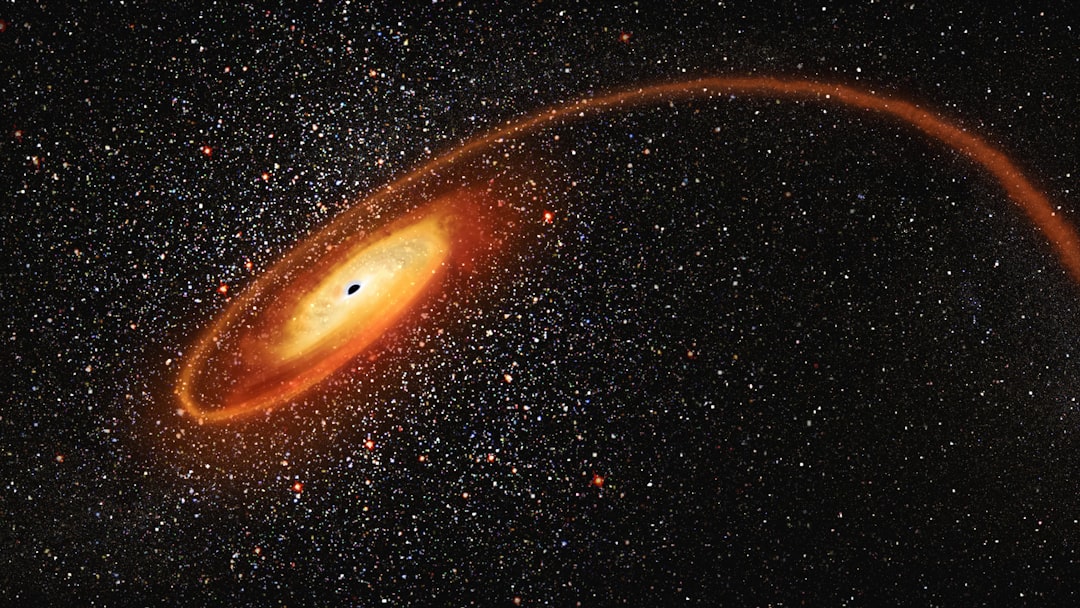
The Cosmic Microwave Background (CMB) radiation serves as a relic from the early universe, providing a snapshot of the cosmos approximately 380,000 years after the Big Bang. This faint glow permeates the universe and carries with it invaluable information about the conditions that prevailed during the formative years of cosmic history. However, recent observations have revealed an intriguing phenomenon known as CMB power suppression, particularly at low multipole moments.
This suppression refers to a notable decrease in the power spectrum of the CMB at large angular scales, which has sparked considerable interest and debate within the scientific community. CMB power suppression raises fundamental questions about the structure and evolution of the universe. The standard model of cosmology, known as Lambda Cold Dark Matter (ΛCDM), predicts a specific power spectrum that should be observed in the CMHowever, discrepancies between these predictions and actual observations have led researchers to explore various explanations for this anomaly.
Among these explanations, the role of low multipole black holes has emerged as a compelling area of investigation, suggesting that these cosmic structures may significantly influence the observed characteristics of the CMB.
Key Takeaways
- Low multipole black holes may contribute to the suppression of power observed in the Cosmic Microwave Background (CMB).
- Observational data supports the existence of anomalies in CMB power at large angular scales.
- Theoretical models suggest that early universe phenomena involving low multipole black holes can explain CMB power suppression.
- Understanding CMB power suppression has significant implications for cosmology, including insights into the early universe’s structure.
- Ongoing research and advanced experimental methods aim to further clarify the role of low multipole black holes in CMB anomalies.
Understanding Low Multipole Black Holes
Low multipole black holes are theoretical constructs that arise from the study of gravitational waves and black hole physics. Unlike their more massive counterparts, which are typically associated with high-energy astrophysical events, low multipole black holes are characterized by their relatively small mass and unique gravitational signatures. These black holes are thought to exist in a variety of forms, including primordial black holes formed in the early universe and those resulting from specific astrophysical processes.
The significance of low multipole black holes lies in their potential to affect the large-scale structure of the universe. Their gravitational influence can alter the distribution of matter and energy, leading to variations in the cosmic microwave background radiation. By understanding the properties and behaviors of these black holes, researchers can gain insights into their role in shaping the universe’s evolution and its observable characteristics, including CMB power suppression.
The Impact of Low Multipole Black Holes on CMB Power
The presence of low multipole black holes in the universe could have profound implications for the observed CMB power spectrum. These black holes may act as gravitational lenses, distorting the path of photons emitted from distant sources and thereby affecting the observed intensity and distribution of CMB radiation. This lensing effect can lead to a suppression of power at low multipole moments, as certain regions of the sky may appear dimmer than expected due to the gravitational influence of these black holes.
Moreover, low multipole black holes could contribute to the overall energy density of the universe, impacting the dynamics of cosmic expansion. As they interact with surrounding matter and radiation, they may create fluctuations in the CMB that deviate from standard cosmological predictions. This interaction could manifest as a suppression of power at large angular scales, providing a potential explanation for the discrepancies observed in current CMB data.
Observational Evidence for CMB Power Suppression
| Observation | Metric | Value | Significance | Reference |
|---|---|---|---|---|
| Large-scale CMB Temperature Anisotropy | Power Spectrum Amplitude (l < 30) | ~20-30% lower than ΛCDM prediction | 2-3σ deviation | Planck 2018 Results |
| Quadrupole Moment (l=2) | Power | ~200 μK² | Lower than expected (~1200 μK² predicted) | WMAP and Planck |
| Octopole Moment (l=3) | Power | ~500 μK² | Lower than ΛCDM expectation (~1300 μK²) | Planck 2018 |
| Angular Correlation Function (θ > 60°) | S(1/2) Statistic | Close to zero | Unusually low correlation at large angles | Copi et al. (2015) |
| Polarization Power Spectrum | Low-l E-mode Power | Consistent with temperature suppression | Supports suppression hypothesis | Planck Collaboration (2018) |
Observational evidence for CMB power suppression has emerged from various studies utilizing data from advanced telescopes and satellite missions. Notably, measurements from the Wilkinson Microwave Anisotropy Probe (WMAP) and the Planck satellite have provided detailed maps of the CMB, revealing patterns that suggest a significant drop in power at low multipole moments. These findings have been corroborated by independent analyses, reinforcing the notion that CMB power suppression is a genuine phenomenon rather than an artifact of measurement.
The implications of this observational evidence are profound. If confirmed, CMB power suppression could challenge existing cosmological models and necessitate revisions to our understanding of cosmic evolution. Researchers are actively investigating these anomalies to determine their origins and implications for fundamental physics, including theories related to dark matter, dark energy, and the overall geometry of the universe.
Theoretical Explanations for CMB Power Suppression
Several theoretical frameworks have been proposed to explain CMB power suppression. One prominent hypothesis suggests that modifications to gravity at cosmological scales could account for the observed anomalies. Alternative theories such as modified gravity or extra dimensions may provide insights into how gravitational interactions differ from those predicted by general relativity, potentially leading to observable effects on the CMB.
Another avenue of exploration involves examining the role of inflationary models in shaping the early universe. Some researchers propose that specific inflationary scenarios could lead to variations in the density fluctuations that ultimately influence CMB power. By refining these models and incorporating factors such as low multipole black holes, scientists aim to develop a more comprehensive understanding of how these phenomena interact and contribute to CMB power suppression.
Implications for Cosmology and Astrophysics
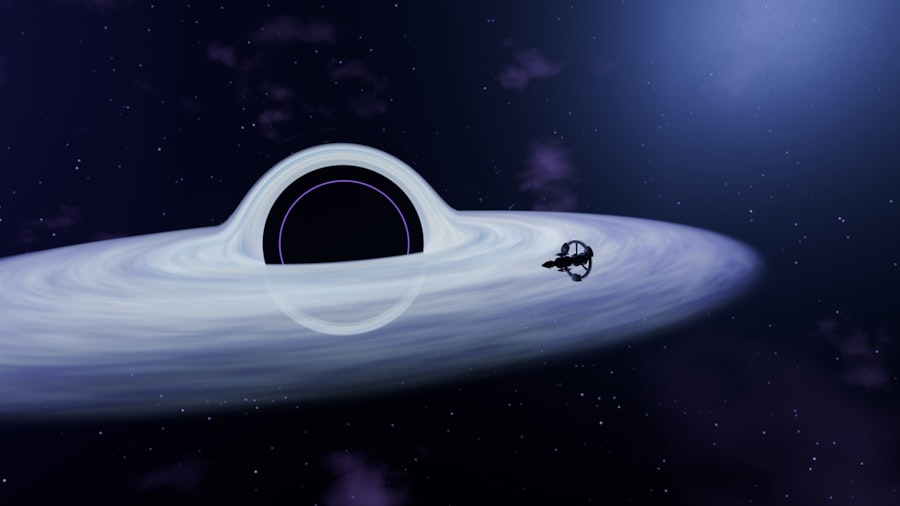
The implications of CMB power suppression extend far beyond mere observational anomalies; they challenge fundamental assumptions within cosmology and astrophysics. If low multipole black holes play a significant role in shaping the CMB, it could necessitate a reevaluation of our understanding of dark matter and dark energy. These components are critical to current cosmological models, and any modifications to their properties or interactions could have cascading effects on our comprehension of cosmic evolution.
Furthermore, understanding CMB power suppression may provide insights into the nature of gravity itself. If alternative theories or modifications to general relativity are required to explain these observations, it could lead to groundbreaking advancements in theoretical physics. The quest to unravel these mysteries may ultimately reshape our understanding of fundamental forces and their interplay within the universe.
Current Research and Future Directions
Current research into CMB power suppression is vibrant and multifaceted, with scientists employing a range of methodologies to investigate this phenomenon. Ongoing observational campaigns utilizing advanced telescopes aim to gather more precise data on the CMB’s power spectrum, while theoretical physicists are developing models that incorporate low multipole black holes and other potential contributors to power suppression. Future directions in this field may involve collaborative efforts between observational astronomers and theoretical physicists to create a unified framework that accounts for both empirical data and theoretical predictions.
Additionally, advancements in technology may enable more detailed observations of cosmic structures, allowing researchers to probe deeper into the origins and implications of CMB power suppression.
Experimental Methods for Studying CMB Power Suppression
Studying CMB power suppression requires sophisticated experimental methods that can accurately measure minute fluctuations in microwave radiation across vast distances. Ground-based observatories equipped with high-resolution detectors are essential for capturing detailed maps of the CMB, while space-based missions like Planck provide unparalleled sensitivity and coverage. Researchers also employ statistical techniques to analyze CMB data, extracting meaningful patterns from noise and ensuring that observed anomalies are not merely artifacts of measurement errors.
By combining observational data with simulations and theoretical models, scientists can develop a more nuanced understanding of how low multipole black holes may influence CMB power suppression.
The Role of Low Multipole Black Holes in the Early Universe
The existence of low multipole black holes may be intricately linked to events occurring in the early universe. Primordial black holes could have formed during phase transitions or density fluctuations shortly after the Big Bang, potentially leaving an imprint on cosmic structures that persists to this day. Their gravitational influence might have shaped not only the distribution of matter but also the characteristics of radiation emitted during this formative period.
Understanding how these black holes interacted with other cosmic elements during their formation is crucial for unraveling their role in shaping both large-scale structures and phenomena like CMB power suppression. By studying their formation mechanisms and subsequent evolution, researchers can gain insights into how these enigmatic objects fit into the broader narrative of cosmic history.
Potential Applications of CMB Power Suppression
The study of CMB power suppression holds promise for various applications beyond theoretical cosmology. Insights gained from understanding this phenomenon could inform future research into dark matter candidates or alternative theories of gravity. Additionally, advancements in observational techniques developed for studying CMB anomalies may find applications in other areas of astrophysics or even in fields such as particle physics.
Moreover, understanding how low multipole black holes influence cosmic structures could lead to new technologies or methodologies for detecting gravitational waves or other astrophysical signals. As researchers continue to explore these connections, they may uncover novel applications that extend far beyond traditional cosmological inquiries.
Conclusion and Summary of Key Findings
In summary, CMB power suppression represents a fascinating area of research that challenges existing paradigms within cosmology and astrophysics. The potential role of low multipole black holes in shaping this phenomenon opens new avenues for exploration and understanding.
As researchers continue to delve into this complex interplay between cosmic structures and radiation, they stand on the brink of potentially transformative discoveries that could reshape our understanding of the universe’s evolution. The journey toward unraveling these mysteries promises not only to enhance our knowledge but also to inspire future generations of scientists exploring the cosmos’s deepest secrets.
In exploring the intriguing phenomenon of CMB power suppression at low multipoles in black hole scenarios, one can gain further insights by examining related discussions on cosmic structures. A relevant article that delves into various aspects of cosmic ventures can be found at