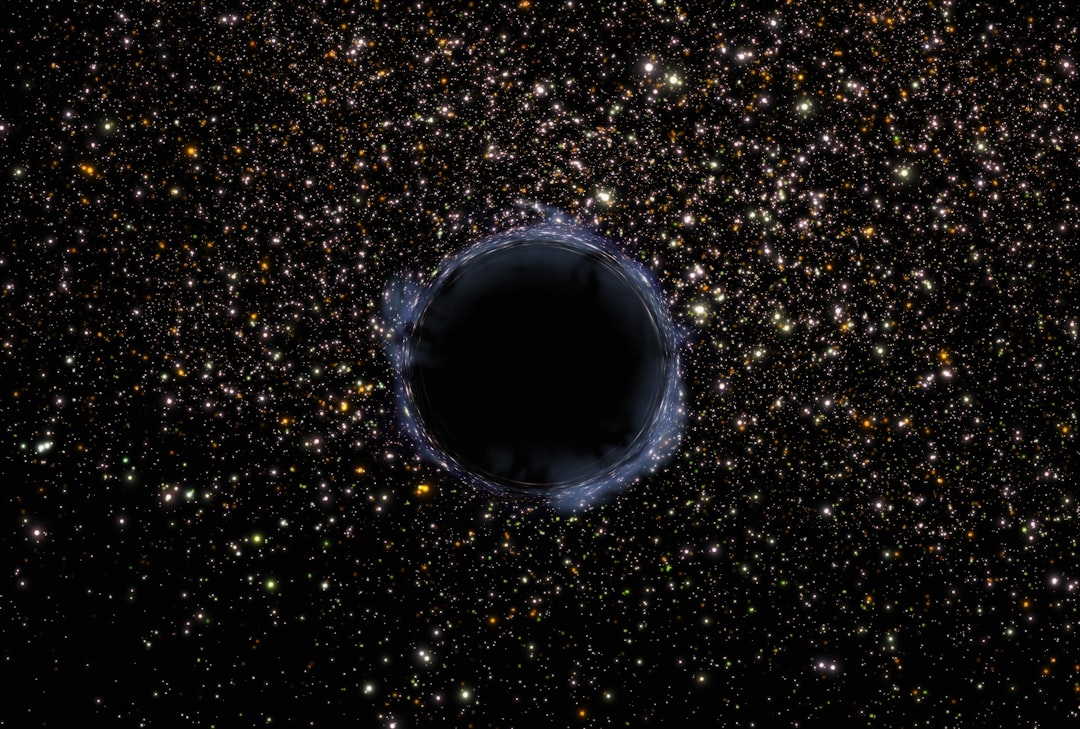
Supermassive black holes (SMBHs) are astronomical objects with masses between one million and ten billion times that of the Sun, located at the centers of most galaxies, including the Milky Way. These objects form through accretion of matter and mergers with smaller black holes over cosmic time. When galaxies undergo gravitational interactions and eventual mergers, their central supermassive black holes can form binary systems that eventually coalesce through the emission of gravitational waves.
Recent observational capabilities, including space-based telescopes and gravitational wave detectors, have enhanced the study of supermassive black hole mergers. Theoretical simulations using numerical relativity have provided detailed models of the merger process. These events produce measurable effects on their host galaxies, including the redistribution of stellar populations, changes in gas dynamics, and potential impacts on star formation efficiency.
Key Takeaways
- Supermassive black hole mergers are critical events influencing galaxy evolution and cosmic structure formation.
- Theoretical models predict merger dynamics and gravitational wave signatures essential for detection.
- Observational evidence, including electromagnetic signals and gravitational waves, supports the occurrence of these mergers.
- Gravitational wave astronomy offers a new window to study supermassive black hole mergers and their role in the early universe.
- Understanding these mergers presents challenges but promises insights into black hole growth and cosmological evolution.
Theoretical Framework for Supermassive Black Hole Mergers
The theoretical framework surrounding supermassive black hole mergers is rooted in general relativity and astrophysical dynamics. According to general relativity, massive objects warp spacetime, creating gravitational wells that influence the motion of nearby bodies. When two galaxies approach each other, their respective gravitational fields interact, leading to complex orbital dynamics.
Theoretical models suggest that as galaxies merge, their central black holes will eventually spiral towards one another due to the loss of energy through gravitational radiation and dynamical friction. The process of merging can be divided into several stages: initial approach, inspiral, merger, and ringdown. During the initial approach, the two galaxies experience tidal interactions that can strip away gas and stars, redistributing them throughout the merging system.
As the black holes draw closer, they enter the inspiral phase, where they orbit each other while losing energy. This phase can last for millions to billions of years, depending on various factors such as the mass ratio of the black holes and the presence of surrounding matter. The final merger stage is characterized by a rapid coalescence, resulting in a single, more massive black hole.
The ringdown phase follows, where the newly formed black hole settles into a stable state, emitting gravitational waves in the process.
Observational Evidence for Supermassive Black Hole Mergers
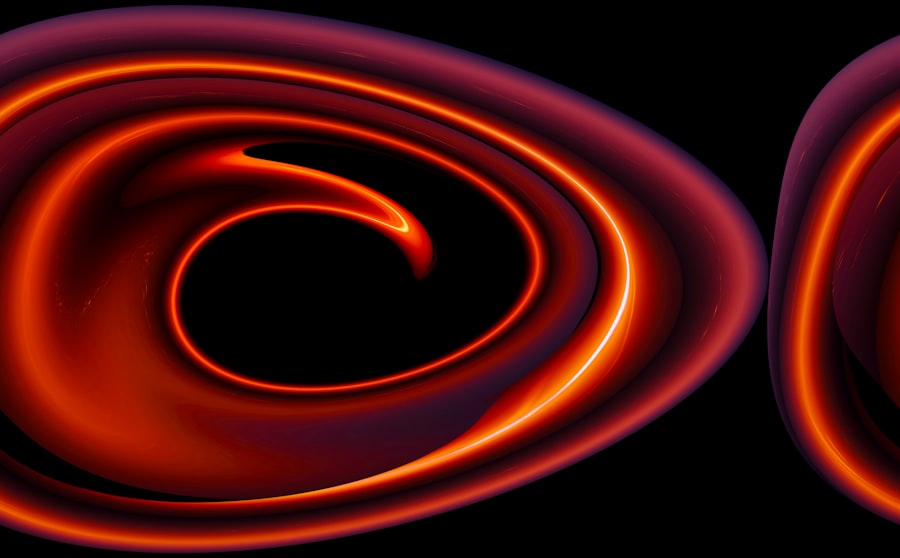
Observational evidence for supermassive black hole mergers has been accumulating over the past few decades, primarily through advancements in imaging technology and spectroscopic analysis. Astronomers have identified several candidate systems that exhibit characteristics consistent with ongoing or recent mergers. For instance, observations of active galactic nuclei (AGN) often reveal double-peaked emission lines in their spectra, suggesting the presence of two supermassive black holes in close proximity.
These spectral signatures provide compelling evidence for mergers occurring in real time. In addition to spectral observations, imaging techniques such as high-resolution radio and infrared observations have revealed structures indicative of merging black holes. For example, some galaxies display elongated or distorted morphologies that suggest gravitational interactions between two central black holes.
Furthermore, recent surveys using powerful telescopes like the Hubble Space Telescope and the Atacama Large Millimeter/submillimeter Array (ALMA) have uncovered numerous binary black hole candidates across various cosmic epochs. These findings bolster the theoretical predictions regarding the frequency and nature of supermassive black hole mergers.
Gravitational Wave Detection of Supermassive Black Hole Mergers
The detection of gravitational waves has revolutionized astrophysics, providing a new means to observe cosmic events that were previously hidden from view. The merger of supermassive black holes is expected to produce gravitational waves detectable by future observatories such as the Laser Interferometer Space Antenna (LISA). LISA aims to measure low-frequency gravitational waves emitted during the inspiral and merger phases of supermassive black holes, offering unprecedented insights into their dynamics.
Gravitational wave signals from supermassive black hole mergers are anticipated to carry information about their masses, spins, and orbital parameters. By analyzing these signals, scientists can refine their models of black hole formation and evolution. Moreover, gravitational wave astronomy opens up new avenues for studying the population of supermassive black holes across cosmic time.
As LISA and similar missions come online in the coming years, they are expected to detect numerous events, providing a wealth of data that will enhance our understanding of these enigmatic objects.
Cosmological Implications of Supermassive Black Hole Mergers
| Metric | Value / Range | Unit | Description |
|---|---|---|---|
| Mass Range of SMBHs | 106 – 1010 | Solar Masses | Typical mass range of supermassive black holes involved in mergers |
| Merger Rate | 0.01 – 1 | Events per Gpc3 per year | Estimated cosmological rate of SMBH mergers |
| Redshift Range | 0 – 10 | z | Cosmological redshift range where SMBH mergers are expected |
| Gravitational Wave Frequency | 10-4 – 10-1 | Hz | Frequency band of gravitational waves emitted during SMBH mergers |
| Typical Merger Timescale | 106 – 109 | Years | Time from galaxy merger to SMBH coalescence |
| Spin Parameter (Dimensionless) | 0 – 0.99 | Unitless | Range of dimensionless spin parameters of SMBHs before merger |
| Energy Released in GW | ~0.1 | Fraction of total mass-energy | Fraction of rest mass energy converted to gravitational waves during merger |
The cosmological implications of supermassive black hole mergers extend far beyond individual galaxies; they touch upon fundamental questions regarding the evolution of structure in the universe. The energy released during these mergers can influence star formation rates in host galaxies, potentially triggering bursts of star formation or quenching existing activity. This interplay between black hole activity and star formation is crucial for understanding galaxy evolution on a cosmic scale.
Furthermore, supermassive black hole mergers may play a role in shaping the large-scale structure of the universe. The gravitational waves emitted during these events can propagate through spacetime, potentially leaving imprints on the cosmic microwave background radiation or influencing the distribution of dark matter. As researchers continue to explore these connections, they may uncover new insights into how supermassive black holes contribute to the overall dynamics of cosmic evolution.
Impact on Galaxy Evolution
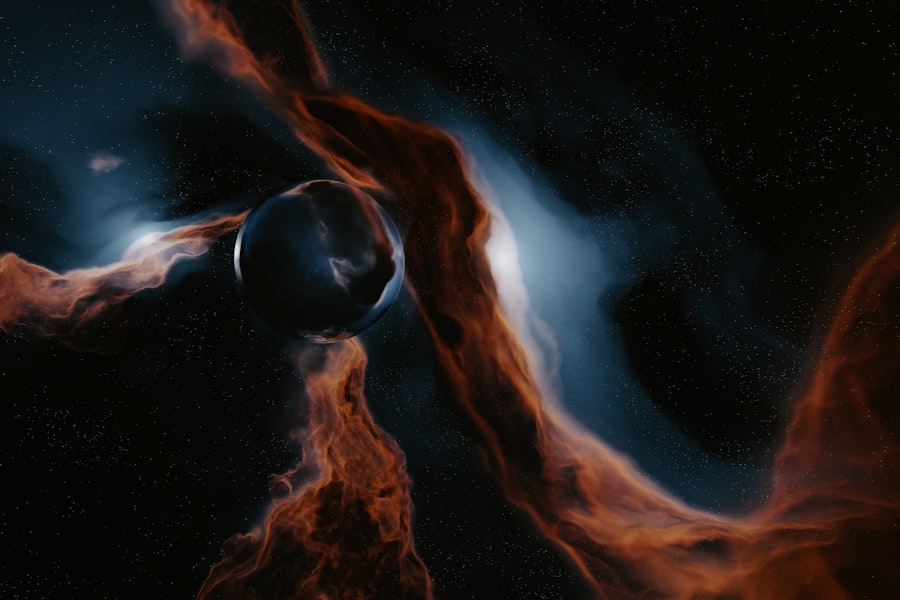
The impact of supermassive black hole mergers on galaxy evolution is profound and multifaceted. When two galaxies merge, their central black holes interact gravitationally, leading to significant changes in their surroundings. One notable effect is the redistribution of gas and stars within the merging galaxies.
The intense gravitational forces can trigger inflows of gas toward the central regions, fueling star formation or leading to active galactic nucleus activity. Moreover, supermassive black hole mergers can influence the morphology and dynamics of galaxies themselves. The merger process can result in elliptical galaxies forming from previously spiral structures due to violent relaxation processes.
This transformation alters not only the appearance but also the kinematic properties of galaxies, affecting their rotation curves and overall stability. Understanding these processes is essential for constructing a comprehensive picture of galaxy evolution throughout cosmic history.
Formation and Growth of Supermassive Black Holes
The formation and growth mechanisms of supermassive black holes remain active areas of research within astrophysics. Several theories have been proposed to explain how these massive entities come into existence. One leading hypothesis suggests that they form from the direct collapse of massive gas clouds in the early universe, leading to rapid accretion and growth over time.
Another possibility involves hierarchical merging processes where smaller black holes coalesce to form larger ones. As supermassive black holes grow through accretion and mergers, they can significantly influence their host galaxies’ evolution. The energy released during accretion processes can drive powerful outflows and jets that affect star formation rates and gas dynamics within galaxies.
Additionally, feedback mechanisms associated with supermassive black holes can regulate galaxy growth by heating or expelling gas from their surroundings. Understanding these growth mechanisms is crucial for unraveling the complex interplay between supermassive black holes and their host galaxies.
Supermassive Black Hole Mergers and the Early Universe
Supermassive black hole mergers are particularly intriguing when considered in the context of the early universe. The formation of these massive entities likely occurred during a time when conditions were vastly different from those observed today. In the first billion years after the Big Bang, dense regions of gas collapsed under gravity to form stars and galaxies rapidly.
It is during this epoch that some of the earliest supermassive black holes may have formed. The study of supermassive black hole mergers in this early cosmic era provides valuable insights into galaxy formation processes and the evolution of structure in the universe. Observations suggest that many quasars—extremely luminous active galactic nuclei powered by accreting supermassive black holes—existed when the universe was less than a billion years old.
Understanding how these early black holes grew so rapidly raises important questions about their formation mechanisms and their role in shaping subsequent cosmic evolution.
Future Prospects for Studying Supermassive Black Hole Mergers
The future prospects for studying supermassive black hole mergers are promising, with several upcoming missions poised to enhance our understanding significantly. The Laser Interferometer Space Antenna (LISA), set to launch in the coming years, will provide a unique opportunity to detect gravitational waves from supermassive black hole mergers across vast distances. This mission will enable scientists to probe previously inaccessible regions of parameter space and gather data on a population of merging black holes.
In addition to LISA, advancements in ground-based observatories such as the Square Kilometre Array (SKA) will facilitate radio observations that could reveal more about binary black hole systems and their environments. As technology continues to evolve, researchers anticipate discovering new phenomena associated with supermassive black hole mergers that could reshape current theoretical frameworks.
Challenges in Understanding Supermassive Black Hole Mergers
Despite significant progress in understanding supermassive black hole mergers, several challenges remain that complicate this field of study.
The interplay between gravitational forces, gas dynamics, and stellar interactions creates a highly intricate environment that is difficult to simulate comprehensively.
Additionally, observational limitations pose challenges for identifying and characterizing merging systems effectively. While advancements in technology have improved detection capabilities, many potential merger candidates remain elusive due to distance or obscuration by dust and gas within galaxies. Overcoming these challenges requires innovative approaches combining theoretical modeling with cutting-edge observational techniques.
Conclusion and Summary of Key Findings
In conclusion, supermassive black hole mergers represent a captivating area of research within astrophysics that holds significant implications for our understanding of galaxy evolution and cosmology. Theoretical frameworks provide insights into the dynamics governing these events while observational evidence continues to accumulate through advanced imaging techniques and spectral analysis. Gravitational wave detection promises to revolutionize our understanding further by offering direct measurements of merging systems.
The impact of supermassive black hole mergers extends beyond individual galaxies; they play a crucial role in shaping large-scale structures within the universe and influencing star formation rates across cosmic time. As researchers continue to explore this dynamic field, they face challenges related to modeling complexities and observational limitations but remain optimistic about future discoveries that will deepen our understanding of these enigmatic cosmic phenomena.
Recent studies in cosmology have shed light on the fascinating phenomenon of supermassive black hole mergers, which play a crucial role in the evolution of galaxies. For a deeper understanding of this topic, you can explore the article available at My Cosmic Ventures, where researchers discuss the implications of these mergers on the structure of the universe and the formation of cosmic structures.
FAQs
What is a supermassive black hole merger?
A supermassive black hole merger occurs when two supermassive black holes, typically found at the centers of galaxies, come close enough to each other to eventually combine into a single, larger black hole. This process releases enormous amounts of energy, primarily in the form of gravitational waves.
Why are supermassive black hole mergers important in cosmology?
Supermassive black hole mergers provide critical insights into galaxy formation and evolution, the growth of black holes over cosmic time, and the behavior of gravity under extreme conditions. They also serve as powerful sources of gravitational waves, which help scientists test theories of gravity and the structure of the universe.
How do supermassive black hole mergers occur?
These mergers typically happen when two galaxies collide and their central black holes are drawn together by gravitational forces. Over time, the black holes lose energy through interactions with stars, gas, and gravitational wave emission, eventually merging into a single black hole.
What role do gravitational waves play in studying supermassive black hole mergers?
Gravitational waves are ripples in spacetime produced by accelerating massive objects like merging black holes. Detecting these waves allows astronomers to observe supermassive black hole mergers directly, providing information about their masses, spins, and the dynamics of the merger process.
How are supermassive black hole mergers detected?
Currently, supermassive black hole mergers are primarily detected through indirect electromagnetic signals, such as changes in quasar activity or galaxy dynamics. Future space-based gravitational wave observatories, like the Laser Interferometer Space Antenna (LISA), aim to detect the low-frequency gravitational waves emitted by these mergers directly.
What impact do supermassive black hole mergers have on their host galaxies?
Mergers can influence the structure and evolution of their host galaxies by triggering star formation, altering galactic dynamics, and affecting the distribution of gas and stars. The merged black hole can also recoil due to asymmetric gravitational wave emission, potentially displacing it from the galactic center.
Can supermassive black hole mergers help us understand the expansion of the universe?
Yes, by measuring the gravitational waves from these mergers and their electromagnetic counterparts, scientists can use them as “standard sirens” to estimate cosmic distances. This helps refine measurements of the universe’s expansion rate and contributes to our understanding of cosmology.
What challenges exist in studying supermassive black hole mergers?
Challenges include the difficulty of detecting low-frequency gravitational waves from these massive mergers, distinguishing merger signals from other astrophysical phenomena, and modeling the complex physics involved in the merger process and its effects on galaxies.
How do supermassive black hole mergers relate to galaxy evolution?
Since supermassive black holes reside at galaxy centers, their mergers often coincide with galaxy mergers. These events can drive significant changes in galaxy morphology, star formation rates, and central black hole growth, making them key processes in the hierarchical formation of galaxies.
What future advancements are expected in the study of supermassive black hole mergers?
Upcoming gravitational wave observatories like LISA, improved electromagnetic telescopes, and advanced simulations will enhance detection capabilities and theoretical understanding. These advancements will provide more detailed observations of mergers, helping to answer fundamental questions about black holes and cosmology.