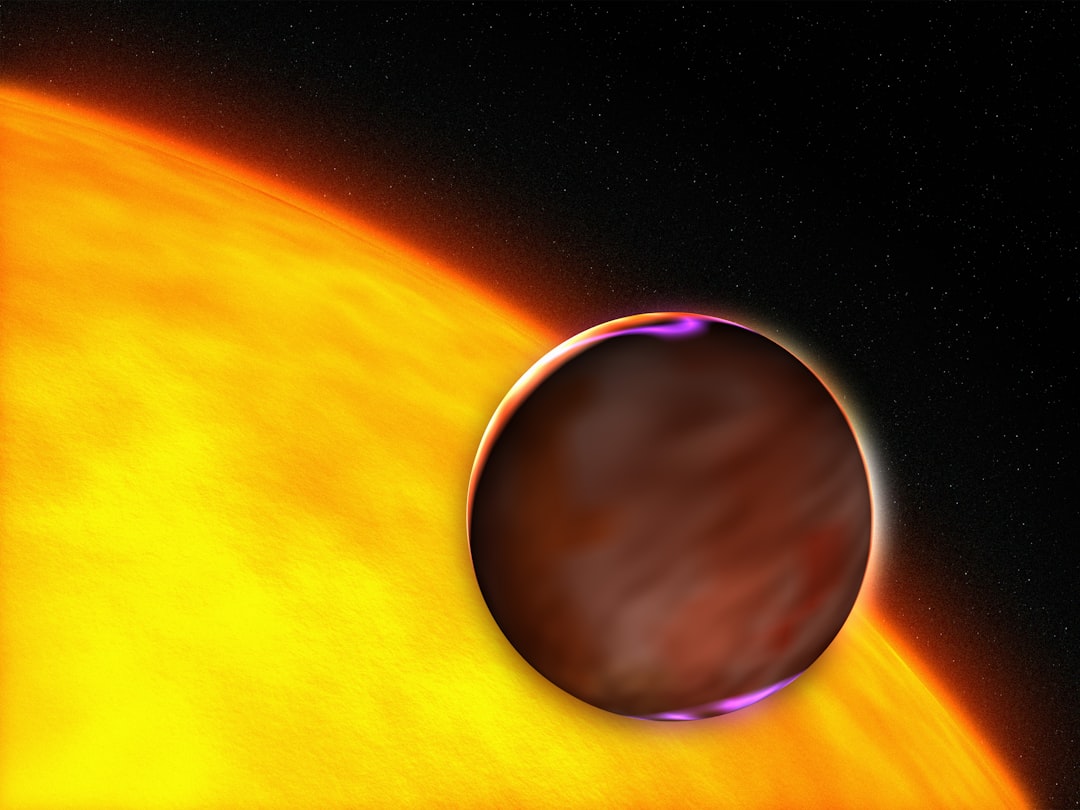
The search for exoplanets—planets orbiting stars outside our solar system—represents a major area of contemporary astronomical research. The High Accuracy Radial velocity Planet Searcher (HARPS) is a significant instrument developed at the La Silla Observatory in Chile for this purpose. HARPS operates by detecting the subtle shifts in a star’s position caused by the gravitational influence of orbiting planets, allowing astronomers to identify exoplanets with high precision.
HARPS has substantially increased the number of confirmed exoplanets and contributed valuable data about their physical characteristics and potential habitability. The instrument measures radial velocity—the motion of stars along the line of sight—which enables the detection of planetary companions. This technological advancement has enhanced scientific understanding of planetary system formation and diversity across the galaxy.
The holographic principle is a fascinating concept in theoretical physics that suggests our universe can be described as a two-dimensional information structure.
Key Takeaways
- HARPS is a highly stable spectrograph crucial for detecting exoplanets through precise radial velocity measurements.
- Stability in detection technology is essential to accurately identify and confirm exoplanetary signals.
- HARPS has contributed significantly to discovering numerous exoplanets, enhancing our understanding of planetary systems.
- Data analysis plays a vital role in interpreting HARPS measurements and distinguishing true exoplanet signals from noise.
- The search for habitable exoplanets with HARPS raises important ethical and societal questions about our place in the universe.
The Importance of Stable Exoplanet Detection
Stable exoplanet detection is crucial for several reasons, particularly when it comes to understanding the dynamics of planetary systems. When you consider that even the slightest variations in a star’s motion can indicate the presence of a planet, it becomes clear that precision is paramount. HARPS excels in this regard, offering stability that allows astronomers to detect even the faintest signals from distant worlds.
This stability is essential not only for confirming the existence of exoplanets but also for studying their orbits and masses. Moreover, stable detection methods enable researchers to differentiate between genuine planetary signals and noise caused by stellar activity or other factors. As you engage with this topic, you will appreciate how HARPS has set a benchmark for reliability in exoplanet detection.
The ability to consistently identify and confirm exoplanets paves the way for deeper investigations into their atmospheres, compositions, and potential for supporting life. In essence, stable detection is not just about finding new worlds; it is about understanding them in a meaningful way.
The Technology Behind HARPS
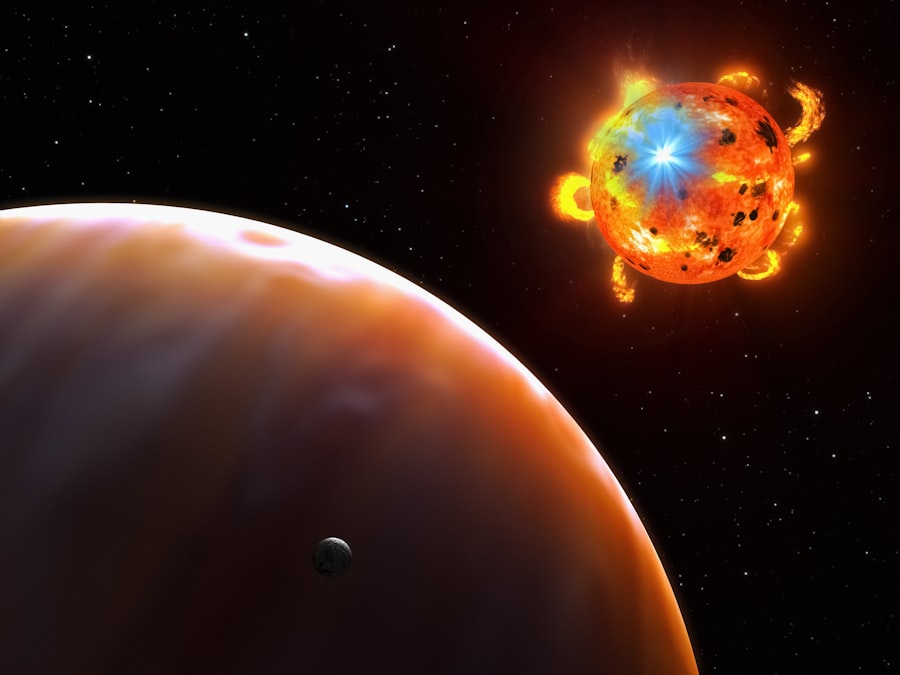
The technology that powers HARPS is a marvel of modern engineering and scientific ingenuity. At its core, HARPS employs a technique known as radial velocity measurement, which involves observing the Doppler effect—the change in frequency or wavelength of light from a moving source. When a planet orbits a star, its gravitational influence causes the star to move slightly in response.
This movement results in shifts in the star’s spectral lines, which HARPS can detect with remarkable accuracy. As you explore the intricacies of HARPS, you will find that its design incorporates advanced spectrography techniques that allow it to measure these shifts with an accuracy of up to 1 meter per second. This level of precision is critical for identifying Earth-sized planets in habitable zones around stars similar to our Sun.
Additionally, HARPS is equipped with a fiber optic system that minimizes noise and enhances signal quality, further improving its detection capabilities. The combination of these technologies makes HARPS an indispensable tool in the ongoing quest to uncover the mysteries of exoplanets.
The Discovery of Exoplanets Using HARPS
Since its inception, HARPS has played a pivotal role in the discovery of numerous exoplanets, significantly enriching our understanding of planetary systems.
These discoveries have sparked excitement within the scientific community and beyond, as they suggest that conditions suitable for life may exist elsewhere in the universe.
The process of discovering exoplanets using HARPS involves meticulous observation and data analysis. Astronomers spend countless hours monitoring stars for any signs of movement that could indicate an orbiting planet. Each confirmed exoplanet adds another piece to the puzzle of our cosmic neighborhood, allowing you to appreciate the diversity and complexity of planetary systems.
As you reflect on these discoveries, consider how they challenge our understanding of planetary formation and evolution, opening new avenues for research and exploration.
The Impact of Stable Exoplanet Detection on Astronomy
| Metric | Value | Unit | Description |
|---|---|---|---|
| Radial Velocity Precision | 0.8 | m/s | Typical measurement precision of HARPS for stable stars |
| Long-term Stability | 1.0 | m/s | Instrument stability over several years |
| Wavelength Calibration Accuracy | 0.1 | m/s | Accuracy of wavelength calibration using Th-Ar lamps or laser frequency combs |
| Temperature Stability | 0.01 | °C | Temperature control precision inside the spectrograph enclosure |
| Pressure Stability | 0.01 | mbar | Pressure control precision inside the spectrograph enclosure |
| Exposure Time | 900 | seconds | Typical exposure time for high precision radial velocity measurements |
| Signal-to-Noise Ratio (SNR) | 150 | at 550 nm | Typical SNR for stable star observations |
The impact of stable exoplanet detection extends far beyond individual discoveries; it has fundamentally altered the landscape of astronomy itself. With HARPS leading the way, astronomers have been able to establish new methodologies for studying distant worlds, leading to a paradigm shift in how we approach astrophysical research. You will find that this shift has encouraged collaboration across disciplines, as scientists from various fields come together to analyze data and share insights.
Furthermore, stable detection methods have enhanced our ability to study planetary atmospheres and compositions. By confirming the presence of exoplanets with high precision, researchers can now focus on characterizing these worlds in greater detail. This newfound capability has implications for understanding planetary habitability and the potential for life beyond Earth.
As you engage with this topic, consider how stable detection not only enriches our knowledge but also inspires future generations of astronomers to continue exploring the cosmos.
Challenges and Limitations of HARPS Exoplanet Detection
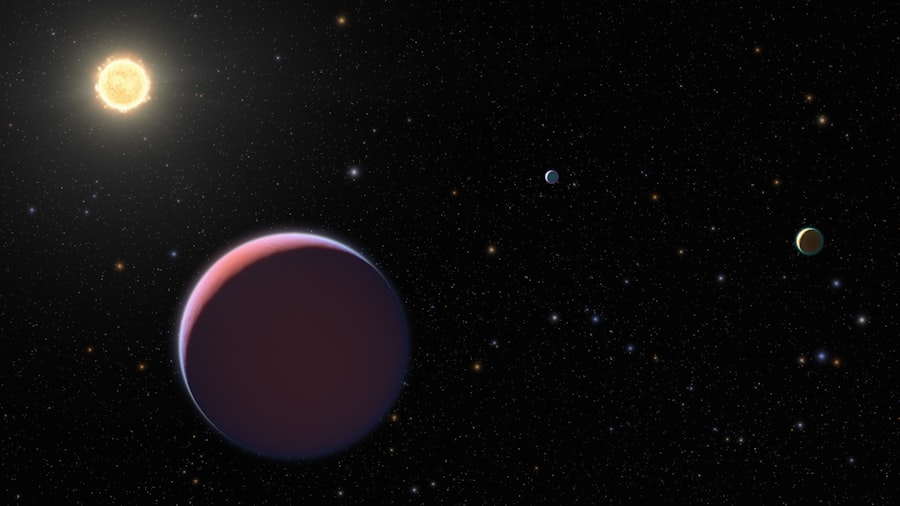
Despite its remarkable capabilities, HARPS is not without its challenges and limitations. One significant hurdle lies in its reliance on radial velocity measurements, which can be influenced by various factors such as stellar activity or noise from other celestial bodies. As you delve into this aspect, you will recognize that distinguishing between genuine planetary signals and these confounding factors requires careful analysis and interpretation.
Additionally, while HARPS excels at detecting larger planets or those close to their host stars, it faces difficulties when it comes to identifying smaller, more distant planets. The sensitivity required to detect Earth-sized planets in distant orbits is much greater than what HARPS can currently achieve. This limitation highlights the need for continued advancements in technology and methodology within the field of exoplanet detection.
The Future of Exoplanet Detection with HARPS
Looking ahead, the future of exoplanet detection with HARPS appears promising yet challenging. As technology continues to evolve, there are opportunities for enhancing HARPS’s capabilities and expanding its reach. You may find it fascinating that ongoing upgrades aim to improve its sensitivity and precision further, allowing astronomers to detect even smaller planets and those located at greater distances from their stars.
Moreover, as new telescopes and instruments are developed—such as space-based observatories designed specifically for exoplanet research—HARPS will likely play a complementary role in validating findings from these advanced technologies. The synergy between ground-based and space-based observations will enhance our understanding of planetary systems and their potential for hosting life. As you contemplate these advancements, consider how they will shape our exploration of the cosmos and deepen our understanding of our place within it.
Collaborations and Partnerships in Exoplanet Detection
The quest for exoplanets is inherently collaborative, involving partnerships between institutions, researchers, and observatories worldwide. You will discover that such collaborations are essential for sharing data, resources, and expertise in order to maximize the impact of discoveries made using HARPS and other instruments. These partnerships often lead to groundbreaking research that transcends geographical boundaries and fosters innovation.
For instance, international collaborations have enabled astronomers to pool their resources for large-scale surveys aimed at identifying new exoplanets. By working together, researchers can analyze vast amounts of data more efficiently and effectively than they could individually. As you explore this aspect of exoplanet detection, consider how collaboration not only accelerates scientific progress but also cultivates a sense of community among scientists dedicated to unraveling the mysteries of the universe.
The Role of Data Analysis in HARPS Exoplanet Detection
Data analysis plays a critical role in the success of HARPS exoplanet detection efforts. With each observation generating vast amounts of data, astronomers must employ sophisticated algorithms and statistical methods to extract meaningful information from these datasets. You may find it intriguing that machine learning techniques are increasingly being utilized to enhance data analysis processes, allowing researchers to identify patterns and signals that may otherwise go unnoticed.
As you engage with this topic, consider how advancements in data analysis are transforming our approach to exoplanet research. The ability to process large datasets quickly and accurately enables astronomers to make timely discoveries and refine their understanding of planetary systems. Furthermore, as data analysis techniques continue to evolve, they will likely unlock new insights into the nature of exoplanets and their potential for supporting life.
The Search for Habitable Exoplanets Using HARPS
One of the most compelling aspects of exoplanet research is the search for habitable worlds—planets that possess conditions suitable for life as we know it. With HARPS at your disposal, you will find that astronomers have made significant strides in identifying potentially habitable exoplanets located within their stars’ habitable zones. These zones are regions where temperatures allow for liquid water to exist on a planet’s surface—a key ingredient for life.
As you explore this search for habitable exoplanets, consider how each discovery raises profound questions about life’s existence beyond Earth. The implications are vast: if we find planets with conditions similar to our own, what does that mean for our understanding of life’s origins? With HARPS providing critical data on these distant worlds, you will appreciate how this research not only expands our knowledge but also ignites curiosity about what lies beyond our solar system.
Ethical and Societal Implications of Exoplanet Detection
The detection of exoplanets carries with it ethical and societal implications that warrant careful consideration. As you reflect on these discoveries, think about how they challenge our perceptions of humanity’s place in the universe. The possibility of finding habitable worlds raises questions about stewardship—what responsibilities do we have toward other potential forms of life?
Furthermore, as we expand our search for extraterrestrial life, ethical considerations regarding exploration and potential colonization come into play. Additionally, public interest in exoplanet research has surged in recent years, leading to discussions about funding priorities and resource allocation within scientific communities. As you engage with these topics, consider how society’s fascination with space exploration can influence policy decisions and shape future research agendas.
Ultimately, the ethical dimensions surrounding exoplanet detection remind us that our quest for knowledge must be accompanied by thoughtful reflection on its broader implications for humanity and our place within the cosmos.
Recent advancements in exoplanet detection have highlighted the stability of the HARPS (High Accuracy Radial velocity Planet Searcher) instrument, which has significantly improved our ability to identify distant worlds. For a deeper understanding of the implications of these findings, you can read more in this related article on cosmic exploration: My Cosmic Ventures. This resource provides insights into the latest developments in the field and the impact of HARPS on our understanding of planetary systems.
⚡WATCH NOW: Discover why physicists think the laws of physics might be changing!
FAQs
What is HARPS?
HARPS stands for High Accuracy Radial velocity Planet Searcher. It is a high-precision echelle spectrograph installed on the ESO 3.6-meter telescope at La Silla Observatory in Chile, designed specifically for detecting exoplanets by measuring stellar radial velocities.
How does HARPS detect exoplanets?
HARPS detects exoplanets by measuring tiny variations in the velocity of a star caused by the gravitational pull of orbiting planets. These variations induce Doppler shifts in the star’s spectral lines, which HARPS can measure with very high precision.
What is meant by HARPS exoplanet detection stability?
HARPS exoplanet detection stability refers to the instrument’s ability to consistently measure radial velocities with minimal noise and systematic errors over long periods. This stability is crucial for detecting small signals from Earth-like exoplanets and confirming their existence.
Why is stability important for exoplanet detection?
Stability is important because detecting exoplanets, especially those with low masses or in long-period orbits, requires measuring extremely small changes in stellar velocity. Any instrumental instability can mimic or obscure these signals, leading to false detections or missed planets.
What factors contribute to HARPS’s detection stability?
Several factors contribute, including its temperature-controlled environment, vacuum-sealed spectrograph to avoid air turbulence, precise calibration using reference lamps, and advanced data reduction techniques to minimize instrumental noise.
How precise is HARPS in measuring radial velocities?
HARPS can achieve a radial velocity precision of about 1 meter per second or better, which allows it to detect planets with masses as low as a few Earth masses orbiting nearby stars.
Has HARPS contributed to the discovery of exoplanets?
Yes, HARPS has been instrumental in discovering hundreds of exoplanets, including some of the smallest and most Earth-like planets known, thanks to its high stability and precision.
Can HARPS detect Earth-like planets in habitable zones?
HARPS’s precision allows it to detect Earth-mass planets in the habitable zones of some nearby stars, particularly low-mass stars where the radial velocity signals are stronger.
Is HARPS still in use for exoplanet detection?
Yes, HARPS remains one of the leading instruments for radial velocity exoplanet searches and continues to provide valuable data for the astronomical community.
Are there any successors or upgrades to HARPS?
Yes, instruments like HARPS-North on the Telescopio Nazionale Galileo and ESPRESSO on the Very Large Telescope have been developed to build upon HARPS’s success, offering improved precision and stability for exoplanet detection.