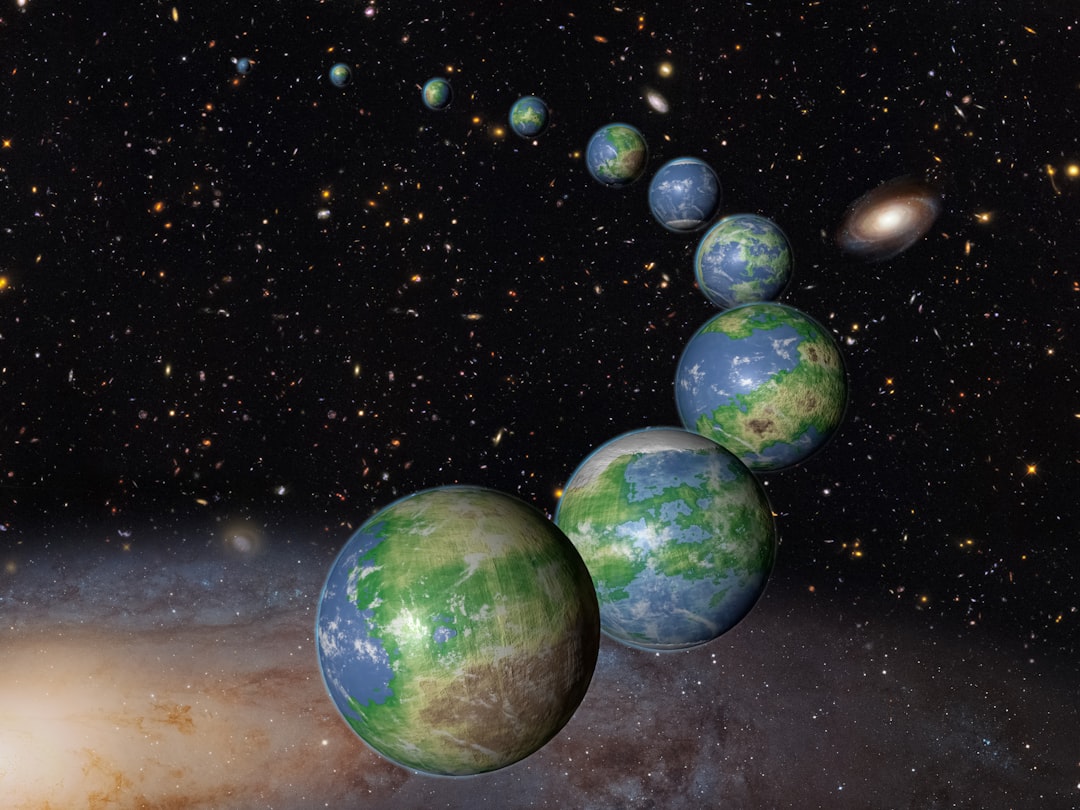
The concept of spacetime emergence has captivated the minds of physicists and philosophers alike, presenting a profound challenge to traditional notions of reality. At its core, spacetime emergence posits that the fabric of the universe, which combines the three dimensions of space with the dimension of time, is not a fundamental entity but rather a construct that arises from more basic underlying phenomena. This idea invites a reevaluation of how one perceives the universe, suggesting that what we experience as the continuum of spacetime may be a macroscopic manifestation of deeper, more intricate processes at play.
As researchers delve into this intriguing concept, they uncover a rich tapestry of implications that could reshape our understanding of the cosmos. Emerging from the intersection of theoretical physics and cosmology, the notion of spacetime emergence challenges established paradigms. It raises essential questions about the nature of reality itself: Is spacetime an inherent feature of the universe, or is it a byproduct of more fundamental interactions?
This inquiry not only stimulates scientific debate but also encourages interdisciplinary collaboration, as insights from quantum mechanics, general relativity, and even philosophy converge to explore the essence of existence. As humanity stands on the brink of new discoveries, the exploration of spacetime emergence promises to illuminate the mysteries of the universe in ways previously thought impossible.
Key Takeaways
- Spacetime emergence is a fundamental concept in modern physics, describing the dynamic nature of the fabric of the universe.
- General relativity and quantum mechanics form the theoretical framework for understanding spacetime emergence, providing complementary perspectives on the nature of spacetime.
- Spacetime is a four-dimensional continuum that combines the three dimensions of space with the dimension of time, shaping the structure of the universe and governing the motion of objects within it.
- The nature of spacetime is explored through the study of gravitational waves, cosmic microwave background radiation, and the behavior of matter and energy at cosmic scales.
- Spacetime emergence has profound implications for our understanding of the origin and evolution of the universe, shedding light on the fundamental processes that have shaped cosmic history.
Theoretical Framework: General Relativity and Quantum Mechanics
To understand spacetime emergence, one must first grapple with the two pillars of modern physics: general relativity and quantum mechanics. General relativity, formulated by Albert Einstein in the early 20th century, revolutionized the understanding of gravity by describing it as the curvature of spacetime caused by mass and energy. This framework has been instrumental in explaining large-scale cosmic phenomena, such as the behavior of planets, stars, and galaxies.
However, it operates under classical assumptions that do not account for the peculiarities observed at the quantum level. On the other hand, quantum mechanics governs the behavior of particles at infinitesimal scales, revealing a world characterized by uncertainty and probabilistic outcomes. While quantum mechanics has proven remarkably successful in explaining atomic and subatomic phenomena, it remains fundamentally incompatible with general relativity.
In this context, spacetime emergence emerges as a compelling candidate for bridging the gap between these seemingly disparate domains.
Understanding Spacetime: What is it and how does it work?
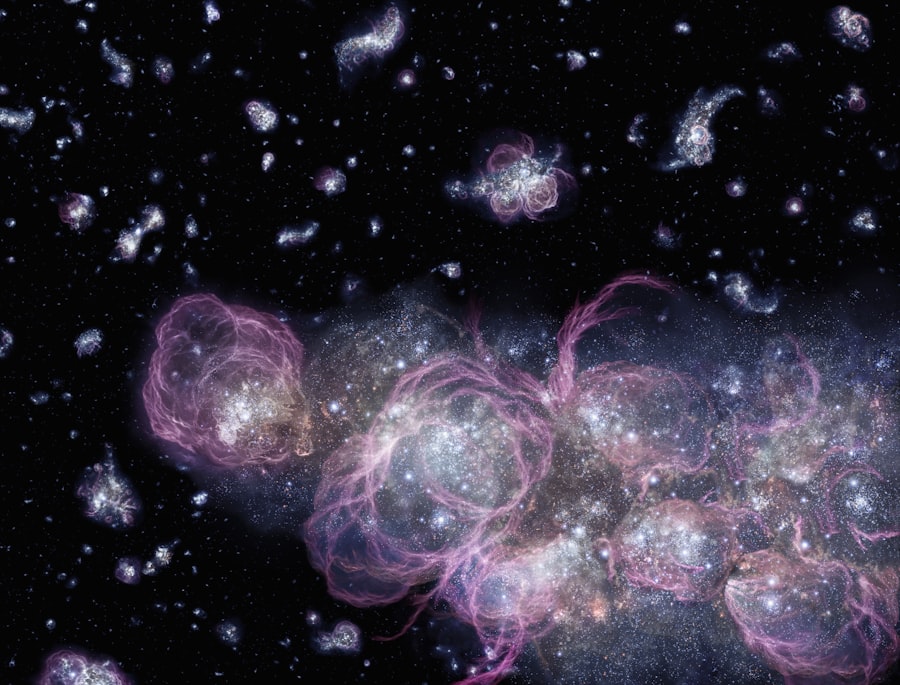
Spacetime can be understood as a four-dimensional continuum that combines three spatial dimensions with time as the fourth dimension. This framework allows for a unified description of events in the universe, where each event is characterized by its position in space and its moment in time. However, the traditional view of spacetime as a static stage upon which events unfold is increasingly being challenged by emerging theories that suggest it may be more dynamic and fluid than previously thought.
In this emergent view, spacetime is not merely a backdrop but rather a complex interplay of relationships and interactions among fundamental entities. These entities could be quantum bits of information or other abstract constructs that give rise to the familiar experience of space and time. This perspective invites a reexamination of how one perceives causality and locality, suggesting that these concepts may not be as straightforward as they appear.
As researchers continue to explore these ideas, they uncover new insights into the nature of reality itself.
The Fabric of the Universe: Exploring the nature of spacetime
| Topic | Metrics |
|---|---|
| Spacetime curvature | General theory of relativity |
| Black holes | Event horizon, singularity |
| Gravitational waves | Detection, sources |
| Quantum gravity | Unification of general relativity and quantum mechanics |
The fabric of spacetime is often likened to a vast tapestry woven from the threads of energy and matter. This metaphor captures the intricate relationships that define how objects interact within the universe. In this view, spacetime is not merely an empty void but rather a dynamic medium that influences and is influenced by the entities it contains.
The curvature of this fabric, as described by general relativity, illustrates how mass and energy shape the geometry of spacetime, leading to phenomena such as gravitational waves and black holes. Exploring the nature of spacetime also involves delving into its potential granular structure at the quantum level. Some theories propose that spacetime may be composed of discrete units or “quanta,” akin to pixels in a digital image.
This idea suggests that at extremely small scales, spacetime may exhibit properties that differ significantly from our macroscopic experiences. Such insights could revolutionize our understanding of fundamental forces and interactions, paving the way for new theories that integrate quantum mechanics with gravitational phenomena.
Spacetime Emergence in Cosmology: Implications for the origin and evolution of the universe
The implications of spacetime emergence extend far beyond theoretical musings; they have profound consequences for cosmology and our understanding of the universe’s origin and evolution. If spacetime is indeed an emergent phenomenon, it raises critical questions about the conditions present during the Big Bang and how the universe transitioned from a singularity to its current state. This perspective suggests that spacetime itself may have emerged from a primordial state characterized by different physical laws or structures.
Furthermore, understanding spacetime emergence could shed light on cosmic inflation—a rapid expansion that occurred shortly after the Big Bang. If spacetime is emergent, then inflationary models may need to be reexamined to account for how this process interacts with underlying structures. Such insights could lead to a more comprehensive understanding of cosmic evolution, including galaxy formation and large-scale structure development.
Experimental Evidence: Observations and measurements supporting the concept of spacetime emergence
While much of the discourse surrounding spacetime emergence remains theoretical, there are experimental observations that lend credence to this concept. One significant area of research involves gravitational waves—ripples in spacetime caused by accelerating masses, such as merging black holes or neutron stars. The detection of these waves by observatories like LIGO has provided empirical evidence supporting general relativity’s predictions while simultaneously raising questions about the nature of spacetime itself.
Additionally, experiments probing quantum entanglement have revealed phenomena that challenge classical intuitions about locality and separability. These findings suggest that information may be transmitted across distances in ways that defy conventional understandings of space and time. Such observations hint at an underlying interconnectedness that could be indicative of an emergent structure beneath what we perceive as spacetime.
Quantum Gravity and Spacetime Emergence: Bridging the gap between quantum mechanics and general relativity
The quest for a theory of quantum gravity represents one of the most significant challenges in modern physics. As researchers strive to reconcile general relativity with quantum mechanics, concepts like spacetime emergence become increasingly relevant. Various approaches to quantum gravity—such as loop quantum gravity and string theory—propose frameworks where spacetime is not fundamental but emerges from more basic entities or interactions.
In loop quantum gravity, for instance, spacetime is envisioned as a network of interconnected loops or “spin networks.” These structures give rise to a discrete version of spacetime at extremely small scales, suggesting that classical notions may break down under such conditions. Similarly, string theory posits that fundamental particles are not point-like but rather one-dimensional strings vibrating at different frequencies. In this context, spacetime emerges from the interactions and configurations of these strings.
The Role of Black Holes: Insights into spacetime emergence from the study of black holes
Black holes serve as natural laboratories for exploring concepts related to spacetime emergence. These enigmatic objects challenge conventional understandings of gravity and spacetime due to their extreme conditions. The event horizon—the boundary beyond which nothing can escape—raises questions about what happens to information and matter when they cross this threshold.
The study of black holes has led to intriguing insights regarding entropy and information theory in relation to spacetime. The holographic principle suggests that all information contained within a volume can be represented on its boundary, implying that our three-dimensional experience may emerge from two-dimensional information encoded at a cosmic scale. This perspective aligns with ideas surrounding emergent spacetime and invites further exploration into how black holes might inform our understanding of fundamental physics.
Applications of Spacetime Emergence: Potential technological and scientific advancements
The exploration of spacetime emergence holds promise not only for theoretical advancements but also for practical applications across various fields. Insights gained from understanding emergent phenomena could lead to breakthroughs in quantum computing, where harnessing quantum entanglement may enable unprecedented computational power. By leveraging principles derived from emergent spacetime theories, researchers could develop algorithms that exploit these unique properties for enhanced processing capabilities.
Moreover, advancements in gravitational wave detection technology could pave the way for new observational techniques in astrophysics. By studying gravitational waves emitted during cosmic events, scientists may glean insights into fundamental physics while simultaneously probing questions related to spacetime structure. Such advancements could revolutionize our understanding of black holes, neutron stars, and other celestial phenomena.
Challenges and Controversies: Debates and unresolved questions in the study of spacetime emergence
Despite its promise, the study of spacetime emergence is fraught with challenges and controversies. One significant hurdle lies in developing testable predictions that can distinguish between competing theories. As researchers propose various models for emergent spacetime, establishing empirical criteria for validation becomes paramount.
The lack of consensus on foundational principles complicates efforts to unify disparate approaches within theoretical physics. Additionally, philosophical implications arise when considering what it means for spacetime to be emergent rather than fundamental. Questions about causality, determinism, and the nature of reality itself come into play as scholars grapple with these profound concepts.
Engaging with these debates requires interdisciplinary collaboration between physicists, philosophers, and cosmologists to navigate uncharted territory.
Future Directions: Promising avenues for further research and exploration in understanding the fabric of the universe
As humanity continues its quest for knowledge about the universe’s fabric, promising avenues for future research emerge within the realm of spacetime emergence. Ongoing investigations into quantum gravity will likely yield new insights into how fundamental forces interact at microscopic scales while informing broader cosmological models. Furthermore, advancements in observational technology will enable scientists to probe deeper into cosmic phenomena previously thought inaccessible.
By combining theoretical frameworks with cutting-edge experimental techniques, researchers can explore uncharted territories within both quantum mechanics and general relativity. In conclusion, while challenges remain in fully grasping the implications surrounding spacetime emergence, its exploration promises to reshape our understanding not only of physics but also our place within an ever-evolving cosmos. As researchers continue their inquiries into this captivating subject matter, they stand poised on the brink of groundbreaking discoveries that could redefine humanity’s relationship with reality itself.
A related article that delves into this fascinating topic can be found on My Cosmic Ventures. This article explores the intricate theories and discussions surrounding the emergence of spacetime, providing a comprehensive overview of current research and perspectives. For those interested in further exploring this captivating subject, you can read more about it by visiting the article on My Cosmic Ventures.
WATCH THIS! How a Quantum Loophole Sparked Everything: The Universe Born From Nothing, Explained
FAQs
What is spacetime emergence?
Spacetime emergence refers to the idea that the fabric of spacetime, which is the combination of three dimensions of space and one dimension of time, may not be fundamental but instead may arise from a more fundamental level of reality.
What are the current theories about spacetime emergence?
There are various theories in physics and cosmology that suggest spacetime may emerge from more fundamental entities or processes, such as quantum entanglement, quantum gravity, or the holographic principle.
How does spacetime emergence relate to quantum mechanics and general relativity?
Spacetime emergence is a topic of interest in theoretical physics because it seeks to reconcile the principles of quantum mechanics, which govern the behavior of particles at the smallest scales, with the principles of general relativity, which describe the behavior of gravity and spacetime at larger scales.
What are the implications of spacetime emergence for our understanding of the universe?
If spacetime is found to emerge from more fundamental processes, it could revolutionize our understanding of the nature of reality and lead to new insights into the fundamental laws of physics. It could also have implications for our understanding of black holes, the Big Bang, and the nature of space and time.
Are there any experimental or observational evidence for spacetime emergence?
As of now, there is no direct experimental or observational evidence for spacetime emergence. It remains a topic of theoretical research and speculation, and scientists are actively exploring ways to test and validate the various theories and models related to spacetime emergence.