Neural networks, a subset of artificial intelligence, have revolutionized the way complex data is processed and analyzed. Inspired by the human brain’s architecture, these computational models consist of interconnected nodes or “neurons” that work together to recognize patterns and make predictions. Their ability to learn from vast amounts of data has made them invaluable across various fields, from finance to healthcare, and now, increasingly, in the realm of astrophysics.
The rise of neural networks has coincided with the exponential growth of data in astrophysics. Telescopes and satellites are now capable of capturing an unprecedented amount of information about celestial bodies and phenomena.
However, this deluge of data presents a significant challenge: how to extract meaningful insights from it. Neural networks provide a solution by enabling scientists to analyze and interpret this information efficiently. By mimicking the brain’s learning processes, these models can identify patterns that may elude traditional analytical methods, paving the way for groundbreaking discoveries in our understanding of the cosmos.
Key Takeaways
- Neural networks are transforming astrophysics by enabling complex simulations of cosmic phenomena.
- They help model the formation of galaxies, behavior of black holes, and evolution of stars with greater accuracy.
- Simulations powered by neural networks provide new insights into dark matter and the structure of the universe.
- Despite advancements, challenges remain in the accuracy and interpretability of neural network-based simulations.
- The future of astrophysics is closely tied to the continued development and application of neural network technologies.
Understanding the Cosmos
The cosmos is a vast and enigmatic expanse that has captivated humanity for centuries. It encompasses everything from the smallest subatomic particles to the largest galaxies, each governed by fundamental laws of physics. Understanding the universe requires not only a grasp of these laws but also an appreciation for the intricate relationships between various cosmic entities.
Astrophysicists strive to unravel these complexities, seeking answers to profound questions about the origins of the universe, the nature of dark matter, and the fate of celestial bodies. At its core, cosmology is the scientific study of the universe’s origin, evolution, and eventual fate. It combines observational data with theoretical frameworks to create models that explain cosmic phenomena.
The interplay between theory and observation is crucial; while theories provide a framework for understanding, observations offer the empirical evidence needed to validate or refute these ideas. As technology advances, so too does humanity’s ability to observe the universe, leading to new insights and a deeper understanding of its fundamental workings.
The Power of Simulations
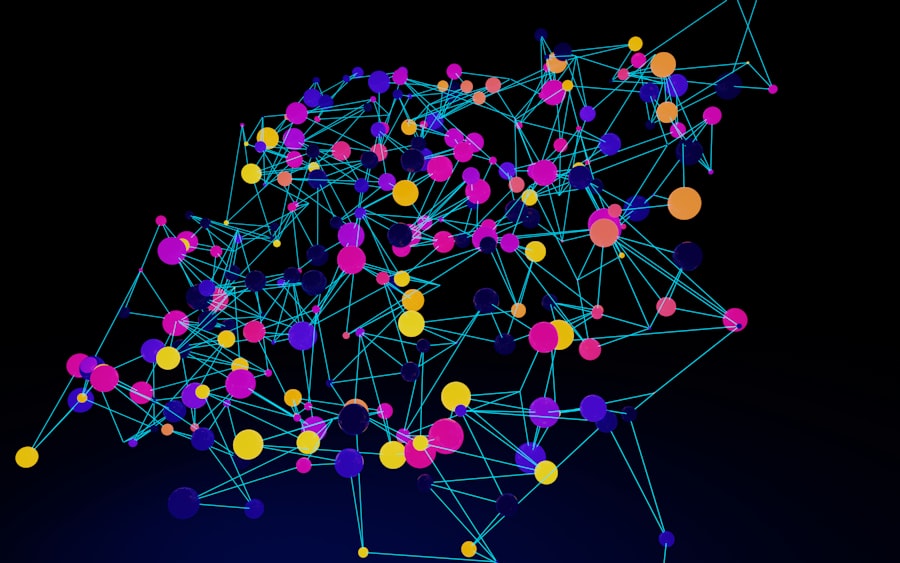
Simulations have become an essential tool in astrophysics, allowing researchers to model complex systems that would be impossible to study through direct observation alone. By creating virtual environments that replicate cosmic conditions, scientists can explore scenarios ranging from galaxy formation to stellar evolution. These simulations enable researchers to test hypotheses, visualize processes that occur over vast timescales, and gain insights into phenomena that are otherwise hidden from view.
The power of simulations lies in their ability to incorporate various physical laws and parameters into a cohesive model. For instance, simulations can account for gravitational forces, electromagnetic interactions, and thermodynamic processes simultaneously. This multifaceted approach allows researchers to investigate how different factors influence cosmic events and to predict outcomes based on varying initial conditions.
As computational power continues to grow, so too does the complexity and accuracy of these simulations, providing an increasingly detailed picture of the universe.
Neural Networks in Astrophysics
| Application | Metric | Value | Description |
|---|---|---|---|
| Galaxy Classification | Accuracy | 95% | Percentage of correctly classified galaxy types using CNNs |
| Exoplanet Detection | True Positive Rate | 92% | Rate of correctly identified exoplanet signals in light curves |
| Gravitational Wave Signal Identification | False Positive Rate | 3% | Percentage of noise events incorrectly classified as signals |
| Star Formation Rate Estimation | Mean Squared Error | 0.02 | Average squared difference between predicted and actual rates |
| Cosmic Microwave Background Analysis | Signal-to-Noise Ratio Improvement | 1.5x | Improvement in SNR after applying neural network denoising |
The integration of neural networks into astrophysics marks a significant advancement in how researchers analyze and interpret data. These models excel at recognizing patterns within large datasets, making them particularly well-suited for tasks such as classifying celestial objects or predicting cosmic events. By training neural networks on existing astronomical data, scientists can develop algorithms that enhance their ability to process new information quickly and accurately.
One notable application of neural networks in astrophysics is in the classification of galaxies. Traditional methods often rely on manual categorization based on visual inspection, which can be time-consuming and subjective. Neural networks streamline this process by automatically identifying features within images that correspond to different galaxy types.
This not only accelerates research but also reduces human error, leading to more reliable classifications and a deeper understanding of galaxy formation and evolution.
Simulating the Formation of Galaxies
The formation of galaxies is one of the most fascinating topics in astrophysics, as it involves a complex interplay of gravitational forces, gas dynamics, and star formation processes. Simulations play a crucial role in unraveling this intricate process by allowing researchers to model how matter coalesces under gravity to form galaxies over billions of years. These simulations can incorporate various physical phenomena, such as dark matter interactions and feedback from supernovae, providing a comprehensive view of galaxy evolution.
Neural networks enhance these simulations by enabling more efficient data analysis and pattern recognition. For instance, they can identify specific features within simulated galaxies that correspond to observed structures in the universe. By comparing simulated data with real observations, researchers can refine their models and improve their understanding of how galaxies form and evolve over time.
This synergy between simulations and neural networks represents a powerful approach to addressing some of cosmology’s most pressing questions.
Exploring the Behavior of Black Holes
Black holes are among the most enigmatic objects in the universe, characterized by their immense gravitational pull that prevents anything, even light, from escaping their grasp. Understanding their behavior is crucial for comprehending fundamental aspects of physics, including general relativity and quantum mechanics. Simulations have become indispensable tools for studying black holes, allowing researchers to explore their formation, growth, and interactions with surrounding matter.
Neural networks contribute significantly to this field by analyzing data from gravitational wave detections and electromagnetic observations. For example, when two black holes collide, they produce ripples in spacetime known as gravitational waves. Neural networks can be trained to identify these signals amidst noise, enabling scientists to detect black hole mergers with greater accuracy.
Additionally, simulations can model how black holes accrete matter from their surroundings, providing insights into their growth rates and the impact they have on galaxy evolution.
Predicting the Evolution of Stars
Stars are fundamental building blocks of the universe, playing a crucial role in chemical enrichment and energy production. Understanding their life cycles—from formation to death—requires sophisticated modeling techniques that account for various physical processes such as nuclear fusion, radiation pressure, and stellar winds. Simulations are essential for predicting how stars evolve over time and how they influence their environments.
Neural networks enhance these predictions by analyzing vast datasets generated from stellar evolution models. By training on historical data regarding star formation rates and lifetimes, neural networks can identify patterns that inform predictions about future stellar behavior.
As researchers continue to refine their models using neural networks, they gain deeper insights into the life cycles of stars and their impact on galactic ecosystems.
Unraveling the Mysteries of Dark Matter
Dark matter remains one of the most significant mysteries in modern astrophysics. Comprising approximately 27% of the universe’s total mass-energy content, it does not emit or absorb light, making it invisible to traditional observational techniques. Its presence is inferred through gravitational effects on visible matter and radiation.
Understanding dark matter’s nature is crucial for developing a comprehensive model of cosmic evolution. Simulations play a vital role in studying dark matter by modeling its distribution within galaxies and clusters. These simulations help researchers understand how dark matter influences galaxy formation and structure.
Neural networks enhance this process by analyzing large datasets from simulations and observations to identify potential signatures of dark matter interactions. By improving detection methods and refining theoretical models, neural networks contribute significantly to unraveling the mysteries surrounding dark matter.
Advancements in Cosmological Research
The integration of neural networks into cosmological research has led to significant advancements in understanding the universe’s structure and evolution. As computational techniques continue to evolve, researchers are better equipped to analyze complex datasets generated by modern telescopes and observatories. This synergy between technology and astrophysics has resulted in groundbreaking discoveries that challenge existing theories and expand our knowledge of cosmic phenomena.
One notable advancement is the ability to map large-scale structures in the universe with unprecedented precision. Neural networks can process vast amounts of data from surveys like the Sloan Digital Sky Survey (SDSS) or the Dark Energy Survey (DES), identifying patterns that reveal insights into cosmic web structures and galaxy clustering. These advancements not only enhance our understanding of dark energy but also provide critical information about the universe’s expansion history.
Challenges and Limitations of Neural Network Simulations
Despite their potential, neural network simulations are not without challenges and limitations. One significant hurdle is the need for high-quality training data; if the data used to train neural networks is biased or incomplete, it can lead to inaccurate predictions or misinterpretations of cosmic phenomena. Additionally, neural networks often operate as “black boxes,” making it difficult for researchers to understand how they arrive at specific conclusions or predictions.
Another challenge lies in computational resources; while neural networks can process large datasets efficiently, they require significant computational power for training and inference. As datasets continue to grow in size and complexity, ensuring that researchers have access to adequate resources becomes increasingly important. Addressing these challenges will be crucial for maximizing the potential benefits of neural networks in astrophysics.
The Future of Astrophysics with Neural Networks
The future of astrophysics is poised for transformation as neural networks continue to evolve and integrate into research methodologies. As computational power increases and algorithms become more sophisticated, researchers will be able to tackle increasingly complex problems within cosmology. The potential applications are vast—from improving our understanding of galaxy formation to enhancing predictions about cosmic events.
Moreover, as collaborations between astrophysicists and computer scientists deepen, innovative approaches will emerge that leverage machine learning techniques alongside traditional methods. This interdisciplinary synergy will likely lead to new discoveries that challenge existing paradigms and expand humanity’s understanding of the universe. The future holds great promise for harnessing neural networks’ capabilities in unraveling cosmic mysteries and advancing our knowledge of the cosmos beyond what was previously thought possible.
Recent advancements in cosmological simulations have increasingly incorporated neural networks to enhance the accuracy and efficiency of modeling complex cosmic structures. A related article that delves into this intersection of artificial intelligence and astrophysics can be found at this link. This article explores how neural networks can be utilized to analyze vast datasets generated by simulations, ultimately leading to deeper insights into the formation and evolution of the universe.
WATCH THIS! The 27-Order-of-Magnitude Secret That Connects Your Brain to the Cosmos
FAQs
What are cosmological simulations?
Cosmological simulations are computational models that replicate the formation and evolution of structures in the universe, such as galaxies, dark matter, and cosmic web, based on physical laws and cosmological parameters.
How are neural networks used in cosmological simulations?
Neural networks are employed to analyze large datasets from simulations, accelerate computations, predict complex patterns, and improve the accuracy of modeling cosmic phenomena by learning from existing simulation data.
Why combine neural networks with cosmological simulations?
Combining neural networks with cosmological simulations helps reduce computational costs, enables faster data analysis, enhances the interpretation of simulation results, and allows for the generation of high-resolution predictions from lower-resolution inputs.
What types of neural networks are commonly used in this field?
Convolutional neural networks (CNNs), generative adversarial networks (GANs), and recurrent neural networks (RNNs) are commonly used due to their ability to process spatial and temporal data relevant to cosmological structures.
What challenges exist when applying neural networks to cosmological simulations?
Challenges include the need for large, high-quality training datasets, ensuring physical interpretability of neural network outputs, avoiding overfitting, and integrating neural network predictions with established physical models.
Can neural networks replace traditional cosmological simulations?
Neural networks are generally used to complement rather than replace traditional simulations. They can speed up certain tasks or provide approximations but do not yet fully replicate the detailed physics captured by traditional methods.
What are the benefits of using neural networks in cosmology research?
Benefits include faster data processing, improved pattern recognition, enhanced predictive capabilities, and the ability to handle complex, high-dimensional data that are typical in cosmological studies.
Are there any notable projects or studies involving neural networks and cosmological simulations?
Yes, several research groups have developed neural network frameworks to generate mock galaxy catalogs, predict dark matter distributions, and analyze cosmic microwave background data, demonstrating the growing integration of AI in cosmology.
How do neural networks handle the vast scale and complexity of cosmological data?
Neural networks manage complexity by learning hierarchical features from data, enabling them to capture multi-scale structures and relationships within large cosmological datasets efficiently.
What future developments are expected in the use of neural networks for cosmological simulations?
Future developments may include more sophisticated hybrid models combining physics-based simulations with AI, improved interpretability of neural network models, and broader application to observational data analysis and real-time simulation adjustments.