
Interstellar travel, the concept of journeying beyond the confines of our solar system to explore the vast expanse of the Milky Way and beyond, has long captivated the human imagination. From the pages of science fiction novels to the ambitious plans of modern scientists, the idea of traversing the stars evokes a sense of wonder and possibility. Humanity’s innate curiosity drives the quest to understand not only our own planet but also the cosmos that surrounds it.
As technology advances and our understanding of physics deepens, the dream of interstellar travel shifts from mere fantasy to a potential reality. The allure of interstellar travel lies not only in the exploration of distant worlds but also in the search for extraterrestrial life and the potential for colonization. The vastness of space presents both challenges and opportunities, igniting discussions about humanity’s place in the universe.
As researchers and engineers work tirelessly to overcome the obstacles that stand in the way of interstellar journeys, they are also laying the groundwork for a future where humanity may one day become a multi-planetary species. This article will delve into the current limitations and challenges of interstellar travel, explore advanced technologies that hold promise for future missions, and examine the implications of humanity’s quest to reach the stars.
Key Takeaways
- Interstellar travel presents the exciting possibility of exploring distant star systems and potentially finding habitable planets beyond our solar system.
- Current limitations and challenges in interstellar travel include the vast distances involved, the need for advanced propulsion systems, and the potential health risks for astronauts due to cosmic radiation exposure.
- Advanced technology, such as nuclear propulsion and antimatter engines, holds promise for overcoming the limitations of current propulsion systems and enabling faster interstellar travel.
- Propulsion systems for interstellar travel may include advanced concepts such as solar sails, ion propulsion, and nuclear thermal propulsion, which could significantly reduce travel time to distant star systems.
- Advanced materials, such as carbon nanotubes and graphene, are being developed for spacecraft construction to withstand the harsh conditions of deep space and reduce the weight of spacecraft for more efficient interstellar travel.
Current Limitations and Challenges
Despite the excitement surrounding interstellar travel, significant limitations and challenges remain. One of the most pressing issues is the vast distances involved. The nearest star system, Alpha Centauri, is approximately 4.37 light-years away, a distance that would take current spacecraft thousands of years to traverse.
This immense scale poses a fundamental challenge to any mission aimed at reaching other star systems within a human lifetime. The limitations of current propulsion technologies mean that even with the most optimistic projections, interstellar travel remains a distant goal. In addition to distance, there are numerous technical challenges that must be addressed.
The harsh environment of space presents risks such as cosmic radiation, microgravity effects on human physiology, and the need for sustainable life support systems over extended periods.
Furthermore, the financial and logistical aspects of interstellar missions pose significant hurdles, as funding such ambitious projects often competes with more immediate concerns on Earth.
The Promise of Advanced Technology
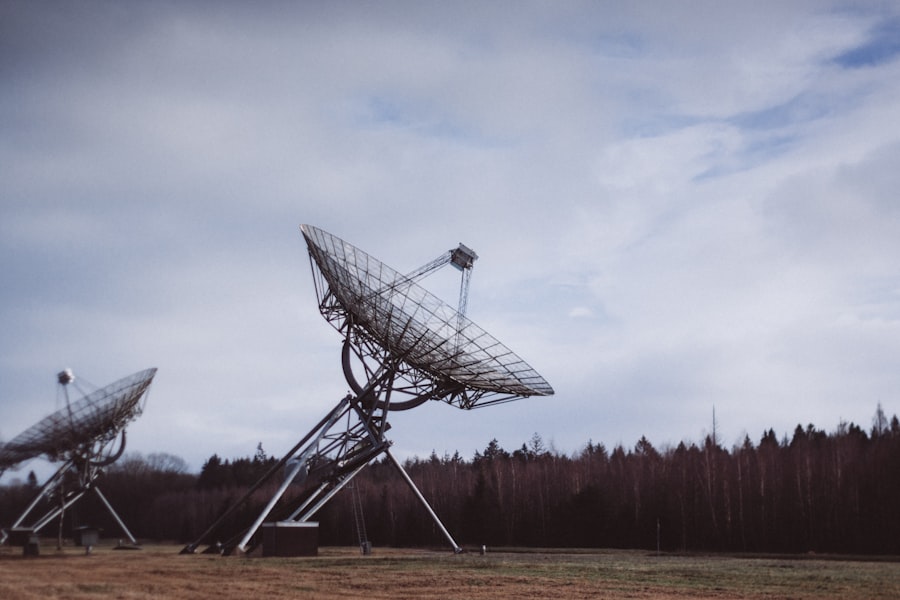
As humanity stands on the brink of a new era in space exploration, advanced technology offers hope for overcoming the challenges of interstellar travel. Innovations in propulsion systems, materials science, and artificial intelligence are paving the way for more feasible missions beyond our solar system. Researchers are exploring concepts such as nuclear propulsion, antimatter engines, and solar sails, each promising to significantly reduce travel time to distant stars.
These technologies could transform interstellar travel from a theoretical possibility into a practical endeavor. Moreover, advancements in robotics and automation are set to play a crucial role in future missions. Autonomous spacecraft equipped with sophisticated AI could conduct preliminary explorations of distant celestial bodies, gathering data and sending it back to Earth before human crews embark on their journeys.
This approach not only enhances safety but also allows for more efficient use of resources and time. As technology continues to evolve, it holds the potential to unlock new pathways for humanity’s exploration of the cosmos.
Propulsion Systems for Interstellar Travel
| Propulsion System | Speed | Fuel Source |
|---|---|---|
| Ion Propulsion | 10-50 km/s | Xenon gas |
| Nuclear Thermal Propulsion | 10-30 km/s | Nuclear fission or fusion |
| Antimatter Propulsion | 100,000,000 m/s | Antimatter |
| Solar Sail | Depends on sunlight | Sunlight |
The development of effective propulsion systems is central to making interstellar travel a reality. Traditional chemical rockets, while effective for missions within our solar system, are inadequate for reaching other star systems within a reasonable timeframe. Researchers are investigating several advanced propulsion concepts that could revolutionize space travel.
One promising avenue is nuclear thermal propulsion, which utilizes nuclear reactions to heat propellant and produce thrust. This method could significantly increase spacecraft speed compared to conventional rockets. Another exciting prospect is the concept of antimatter propulsion.
Antimatter, when it comes into contact with matter, releases an enormous amount of energy, potentially providing a highly efficient means of propulsion for interstellar missions. While producing and storing antimatter remains a significant challenge, breakthroughs in this field could lead to propulsion systems capable of achieving a significant fraction of the speed of light. Additionally, solar sails harnessing the power of sunlight could provide a continuous thrust over long distances, making them an intriguing option for future exploration.
Advanced Materials for Spacecraft Construction
The construction of spacecraft capable of enduring the rigors of interstellar travel requires advanced materials that can withstand extreme conditions. Traditional materials may not suffice when faced with cosmic radiation, temperature fluctuations, and micrometeoroid impacts encountered in deep space. Researchers are exploring innovative materials such as carbon nanotubes and graphene, which offer exceptional strength-to-weight ratios and resistance to radiation.
In addition to structural integrity, thermal protection is crucial for spacecraft traveling at high speeds through space. Advanced thermal shielding materials are being developed to protect against intense heat generated during entry into planetary atmospheres or when exposed to solar radiation over extended periods. The integration of these advanced materials into spacecraft design will be essential for ensuring crew safety and mission success during long-duration interstellar journeys.
Navigation and Communication in Deep Space
Navigating through the vastness of space presents unique challenges that require innovative solutions. Traditional navigation methods used within our solar system may not be applicable when venturing into interstellar space. The absence of familiar celestial landmarks necessitates the development of advanced navigation systems capable of determining a spacecraft’s position relative to distant stars and galaxies.
Communication also poses significant challenges in deep space. The vast distances involved mean that signals take considerable time to travel between Earth and a spacecraft on an interstellar mission. This delay complicates real-time communication and necessitates autonomous decision-making capabilities onboard spacecraft.
Researchers are exploring advanced communication technologies such as laser-based systems that could transmit data more efficiently over long distances, potentially improving communication with distant missions.
Life Support Systems for Long-Duration Space Travel
Ensuring the survival and well-being of astronauts on long-duration interstellar missions is paramount. Life support systems must be capable of providing essential resources such as oxygen, water, and food over extended periods without resupply from Earth. Current technologies rely heavily on resupply missions or limited recycling capabilities, which would be inadequate for interstellar journeys lasting years or even decades.
Innovative approaches are being explored to create closed-loop life support systems that recycle waste products into usable resources.
Additionally, advancements in hydroponics and aquaponics may enable astronauts to grow food during their journeys, reducing reliance on pre-packaged supplies and enhancing crew morale.
Artificial Intelligence and Automation in Interstellar Travel
Artificial intelligence (AI) is poised to play a transformative role in interstellar travel by enhancing decision-making processes and automating various tasks aboard spacecraft. Given the vast distances involved and potential communication delays with Earth, AI can assist crews by analyzing data in real-time, optimizing resource management, and even diagnosing technical issues before they escalate into critical problems. Automation can also facilitate routine operations aboard spacecraft, allowing crew members to focus on more complex tasks or scientific research during their journey.
Robotic systems equipped with AI could perform maintenance tasks or conduct experiments autonomously, further enhancing mission efficiency. As AI technology continues to advance, its integration into interstellar missions will be crucial for ensuring successful outcomes in an environment where human oversight may be limited.
Protecting Spacecraft from Cosmic Radiation
One of the most significant hazards faced by spacecraft venturing into deep space is cosmic radiation. High-energy particles from supernovae and other cosmic events pose serious risks to both crew members and electronic systems aboard spacecraft. Prolonged exposure to this radiation can lead to health issues such as cancer or acute radiation sickness, making effective shielding essential for long-duration missions.
Researchers are investigating various shielding materials and designs that can mitigate radiation exposure during interstellar travel. Options include using water or polyethylene as effective barriers against radiation or developing advanced composite materials that incorporate hydrogen-rich substances known for their protective properties. Additionally, spacecraft design may incorporate specialized habitats or safe zones where crew members can seek refuge during periods of heightened radiation exposure.
Sustainable Energy Sources for Interstellar Travel
The energy requirements for interstellar travel are immense, necessitating sustainable energy sources that can support long-duration missions without reliance on resupply from Earth. Traditional fossil fuels are impractical for such journeys; therefore, researchers are exploring alternative energy sources that can provide continuous power throughout a mission. Solar power remains a viable option for spacecraft operating within our solar system; however, as they venture further into space, solar energy becomes less effective due to diminishing sunlight intensity.
Nuclear power offers a promising alternative; compact nuclear reactors could provide a reliable energy source capable of supporting life support systems and propulsion needs over extended periods. Additionally, harnessing energy from cosmic phenomena such as stellar winds or utilizing fusion technology could pave the way for sustainable energy solutions in future interstellar missions.
The Future of Interstellar Travel: Possibilities and Implications
The future of interstellar travel holds immense possibilities that extend beyond mere exploration; it encompasses profound implications for humanity as a whole. As technology continues to advance and researchers develop innovative solutions to overcome existing challenges, humanity may one day embark on journeys to distant star systems in search of new worlds or even extraterrestrial life. The implications of successful interstellar travel are far-reaching.
It could redefine humanity’s understanding of its place in the universe while fostering international collaboration in scientific endeavors. Moreover, establishing colonies on other planets may provide solutions to pressing issues on Earth such as overpopulation or resource depletion. However, these possibilities also raise ethical questions regarding our responsibilities toward other life forms we may encounter and the potential consequences of colonization efforts.
In conclusion, while interstellar travel remains an ambitious goal fraught with challenges, advancements in technology offer hope for overcoming these obstacles. As humanity continues its quest to explore the cosmos, it stands at the threshold of a new era—one where reaching distant stars may no longer be confined to dreams but become an achievable reality.
Interstellar travel technology has long been a subject of fascination and research, as scientists and engineers strive to overcome the immense challenges of traveling between stars. One promising avenue of exploration is the development of advanced propulsion systems that could significantly reduce travel time across vast cosmic distances. For those interested in delving deeper into the latest advancements and theoretical concepts in this field, a related article can be found on My Cosmic Ventures. This resource provides insights into the cutting-edge technologies and innovative ideas that are shaping the future of interstellar exploration.
WATCH THIS! 🚀NASA’s Biggest Alien Secret Exposed
FAQs
What is interstellar travel technology?
Interstellar travel technology refers to the theoretical and practical methods and technologies that could enable human beings to travel to other star systems beyond our solar system.
What are some proposed methods for interstellar travel?
Some proposed methods for interstellar travel include advanced propulsion systems such as nuclear propulsion, antimatter propulsion, and solar sails, as well as concepts like warp drives and wormholes.
What are the challenges of interstellar travel technology?
The challenges of interstellar travel technology include the vast distances involved, the need for advanced propulsion systems, protection from cosmic radiation, and the sustainability of life support systems for long-duration space travel.
Is interstellar travel technology currently possible?
As of now, interstellar travel technology is not yet possible with our current level of technological advancement. However, ongoing research and development in the field of space exploration and propulsion systems may eventually make it feasible in the future.
What are some potential benefits of interstellar travel technology?
Interstellar travel technology could open up new opportunities for scientific research, the exploration of exoplanets, and the potential colonization of other star systems. It could also lead to advancements in propulsion and energy technologies that could benefit humanity as a whole.