# Space Exploration: Recent Developments and Future Prospects
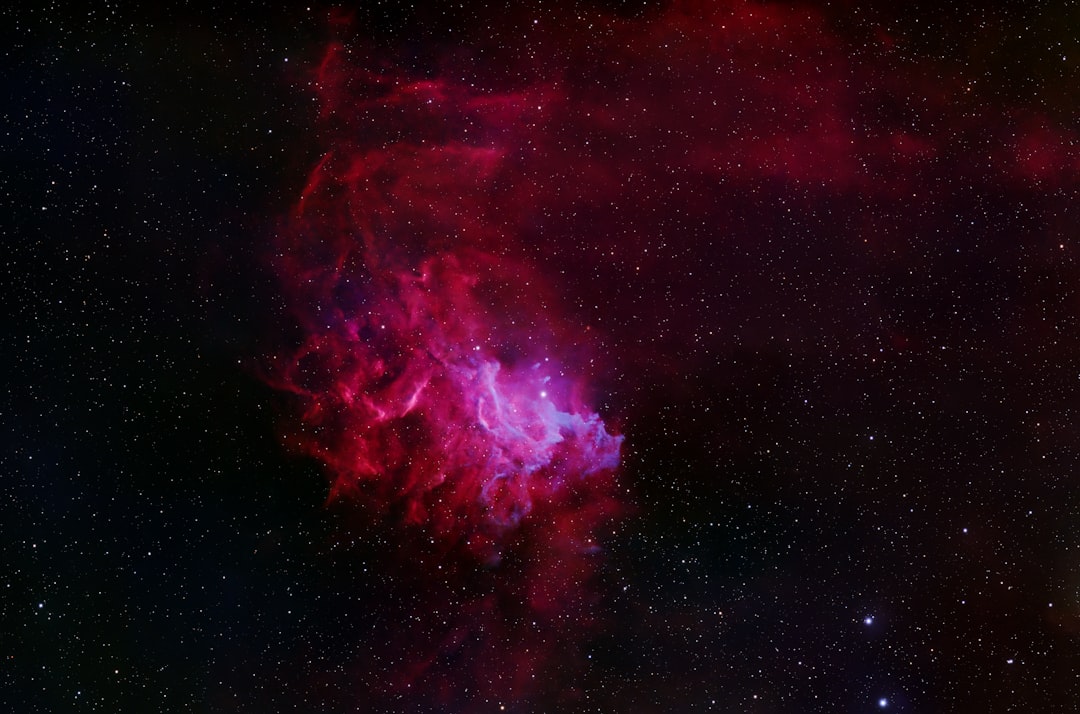
The night sky has long captivated human curiosity about the universe and its mysteries. Over the past several decades, space exploration has undergone significant transformation through technological innovation and expanded participation. The field has evolved from being exclusively managed by government space agencies to include private companies conducting independent missions and international partnerships pursuing collaborative objectives.
This diversification has accelerated progress and expanded the scope of space exploration activities. Recent developments in space exploration reflect substantial advances in technology and scientific understanding. Multiple organizations—including government agencies, private enterprises, and international consortiums—are actively engaged in space research and missions.
These efforts have translated theoretical possibilities into practical achievements, enabling exploration activities that were previously considered speculative. Technological improvements have made space missions more feasible and have expanded the range of objectives that can be pursued beyond Earth’s orbit. The expansion of space exploration capabilities continues to generate new discoveries and data about the cosmos.
Ongoing missions and research initiatives are systematically addressing fundamental questions about space, planetary science, and the potential for human presence beyond Earth. As space exploration technology continues to develop, additional opportunities for scientific advancement and exploration are becoming available.
Key Takeaways
- Significant progress in rocket technology and propulsion systems is enabling deeper space exploration.
- Sustainable space habitats are being developed to support long-term human presence beyond Earth.
- Artificial intelligence is playing a crucial role in enhancing space missions and data analysis.
- Innovations in space mining and resource utilization are paving the way for self-sufficient space operations.
- Advances in space medicine and communication technologies are critical for future manned missions to Mars and beyond.
Advancements in Rocket Technology
Rocket technology has undergone a seismic shift in recent years, and you are witnessing this evolution firsthand. The development of reusable rocket systems has revolutionized the economics of space travel. Companies like SpaceX have pioneered the Falcon 9 rocket, which can return to Earth and be refurbished for multiple flights.
You can imagine a future where space tourism becomes a reality, with everyday people having the opportunity to experience weightlessness and see Earth from above. Moreover, advancements in propulsion systems are pushing the boundaries of speed and efficiency.
Traditional chemical rockets are being complemented by new technologies such as ion propulsion and nuclear thermal propulsion. These systems promise to reduce travel time to distant destinations, allowing you to dream of visiting Mars or even the outer planets within your lifetime. As these technologies continue to develop, you can expect a new era of exploration where interplanetary travel becomes a feasible goal rather than a distant aspiration. Explore the future of space travel with laser sails technology.
Development of Sustainable Space Habitats

As humanity sets its sights on long-term missions beyond Earth, the need for sustainable space habitats has become increasingly critical. You may envision a future where astronauts live and work on Mars or in orbiting space stations for extended periods. To make this vision a reality, researchers are focusing on creating habitats that can support human life in harsh environments.
These habitats must provide essential resources such as water, food, and oxygen while also protecting inhabitants from radiation and extreme temperatures. Innovative designs are emerging that incorporate closed-loop life support systems, allowing for recycling of air and water. You might find it fascinating that experiments on the International Space Station (ISS) have already demonstrated the feasibility of growing plants in microgravity, paving the way for future agricultural practices in space.
As these sustainable habitats evolve, they will not only support human life but also serve as platforms for scientific research and exploration, enabling you to witness humanity’s expansion into the cosmos.
Breakthroughs in Propulsion Systems
The quest for faster and more efficient propulsion systems is at the forefront of space exploration advancements. You may be intrigued by concepts such as solar sails and plasma propulsion, which harness energy from the sun or utilize ionized gases to propel spacecraft. These innovative technologies promise to reduce travel times significantly, making interstellar missions more achievable.
Imagine a spacecraft powered by solar sails gliding through the cosmos, propelled by the very light of stars. Additionally, research into advanced nuclear propulsion systems is gaining momentum. These systems could potentially allow spacecraft to reach distant planets in a fraction of the time it currently takes.
As you consider the implications of these breakthroughs, you can envision a future where humanity not only explores our solar system but also ventures beyond it, unlocking the secrets of distant galaxies.
Exploration of Mars and Beyond
| Year | Breakthrough | Description | Impact on Space Exploration |
|---|---|---|---|
| 1957 | Launch of Sputnik 1 | First artificial Earth satellite launched by the USSR. | Initiated the space race and demonstrated feasibility of satellite technology. |
| 1969 | Apollo 11 Moon Landing | First human landing on the Moon by NASA astronauts. | Proved human capability to travel and work on another celestial body. |
| 1977 | Voyager Probes Launch | Sent probes to study outer planets and interstellar space. | Provided unprecedented data on outer planets and heliosphere. |
| 1997 | Mars Pathfinder Rover | First successful rover on Mars, demonstrating mobile exploration. | Enabled detailed surface analysis and paved way for future rovers. |
| 2012 | Curiosity Rover Landing | Advanced rover with sophisticated instruments for Mars geology and climate. | Enhanced understanding of Mars’ habitability and past water presence. |
| 2020 | Perseverance Rover & Ingenuity Helicopter | First helicopter flight on another planet and advanced sample collection. | Demonstrated powered flight on Mars and advanced astrobiology research. |
| 2021 | James Webb Space Telescope Launch | Next-generation space telescope for infrared astronomy. | Expected to revolutionize understanding of early universe and exoplanets. |
Mars has captured your imagination as one of the most promising destinations for human exploration. The Red Planet’s similarities to Earth make it an ideal candidate for colonization and scientific study. You may be aware that numerous missions have already been launched to study Mars’ surface, atmosphere, and potential for past or present life.
The Perseverance rover, equipped with advanced scientific instruments, is currently collecting samples that could one day be returned to Earth for analysis. As plans for crewed missions to Mars take shape, you can feel the excitement building within the scientific community. NASA’s Artemis program aims to return humans to the Moon as a stepping stone for future Mars missions.
You might find it inspiring that private companies are also joining the race, with ambitious plans to establish a human presence on Mars within the next decade. The exploration of Mars represents not just a scientific endeavor but also a testament to human ingenuity and determination.
Advancements in Space Telescopes and Observatories

The quest for knowledge about our universe has been greatly enhanced by advancements in space telescopes and observatories. You may have heard about the James Webb Space Telescope (JWST), which promises to revolutionize our understanding of cosmic phenomena. Launched in late 2021, JWST is designed to observe distant galaxies, stars, and exoplanets with unprecedented clarity.
Its ability to capture infrared light allows you to peer back in time, witnessing the formation of stars and galaxies billions of years ago. These advancements in observational technology are not limited to JWST alone. Other telescopes like Hubble continue to provide invaluable data about our universe.
As you explore these developments, you can appreciate how they contribute to our understanding of fundamental questions about existence, such as the origins of life and the nature of dark matter. The insights gained from these observations will shape your understanding of the cosmos for generations to come.
Utilization of Artificial Intelligence in Space Exploration
Artificial intelligence (AI) is playing an increasingly vital role in space exploration, enhancing our ability to analyze data and make informed decisions. You may be fascinated by how AI algorithms are being used to process vast amounts of information collected from space missions. For instance, AI can help identify patterns in data from telescopes or analyze images captured by rovers on other planets.
This capability allows scientists like you to focus on interpreting results rather than getting bogged down by data overload. Moreover, AI is being integrated into autonomous spacecraft systems, enabling them to navigate and make decisions without constant human intervention.
This level of autonomy not only enhances mission efficiency but also opens up new possibilities for exploration beyond our current capabilities.
Innovations in Space Mining and Resource Utilization
As humanity looks toward long-term space exploration, resource utilization becomes paramount. You may find it intriguing that asteroids and other celestial bodies hold vast amounts of valuable resources such as water, metals, and rare minerals. Innovations in space mining technology are being developed to extract these resources efficiently and sustainably.
The prospect of mining asteroids could provide essential materials for building spacecraft or supporting human colonies on other planets. Furthermore, water extracted from celestial bodies could be converted into fuel or used for life support systems in space habitats. This concept not only reduces reliance on Earth-based resources but also paves the way for self-sustaining missions beyond our planet’s atmosphere.
As you consider these innovations, you can envision a future where humanity thrives in space by harnessing resources from other worlds.
Advancements in Space Medicine and Human Health in Space
The health and well-being of astronauts are critical considerations as humanity embarks on longer missions into space. You may be aware that living in microgravity presents unique challenges for human physiology, including muscle atrophy and bone density loss. Researchers are actively studying these effects to develop countermeasures that ensure astronauts remain healthy during extended missions.
Advancements in space medicine are also focusing on mental health support for astronauts who may experience isolation during long-duration missions. You might find it reassuring that psychological well-being is being prioritized alongside physical health as we prepare for missions to Mars and beyond. As these advancements continue to evolve, they will play a crucial role in ensuring that humans can thrive in space environments.
Breakthroughs in Communication and Data Transmission in Space
Effective communication is essential for successful space exploration missions. You may appreciate how advancements in communication technology have improved data transmission between spacecraft and mission control on Earth. High-frequency radio waves and laser communication systems are being developed to enhance bandwidth and reduce latency, allowing for real-time data sharing.
These breakthroughs enable scientists like you to receive critical information from distant missions more quickly than ever before. Imagine receiving high-resolution images from Mars just minutes after they are captured! As communication technology continues to advance, it will facilitate collaboration among international teams working on complex space missions.
Future Possibilities and Challenges in Revolutionary Space Exploration
As you contemplate the future of space exploration, it becomes clear that while exciting possibilities lie ahead, challenges remain. The prospect of establishing human colonies on Mars or mining asteroids presents both technical hurdles and ethical considerations regarding planetary protection and resource management. You may wonder how society will navigate these challenges as we push further into space.
Public interest and investment will play crucial roles in shaping the future landscape of exploration. As you engage with these ideas, consider how your own perspective on space exploration might evolve as new discoveries unfold. In conclusion, revolutionary breakthroughs in space exploration are reshaping humanity’s relationship with the cosmos.
From advancements in rocket technology to sustainable habitats and AI integration, each development brings us closer to realizing our dreams of exploring distant worlds. As you look toward the future, remember that your curiosity and passion for discovery will continue to drive humanity’s journey into the stars.
Recent advancements in space exploration have opened new frontiers for scientific breakthroughs, particularly in our understanding of the universe. One notable article that delves into these developments is available at this link. It discusses the latest missions and technologies that are reshaping our approach to exploring distant planets and celestial phenomena, highlighting the potential for groundbreaking discoveries that could redefine our place in the cosmos.
WATCH THIS! 🚀✨ Can Laser Sails Take Us to Alpha Centauri in 20 Years?
FAQs
What are some recent scientific breakthroughs in space exploration?
Recent breakthroughs include the successful landing of rovers on Mars, advancements in telescope technology allowing deeper space observation, the discovery of exoplanets in habitable zones, and progress in reusable rocket technology.
How have these breakthroughs impacted our understanding of the universe?
These breakthroughs have expanded our knowledge of planetary systems, the potential for life beyond Earth, the origins of the universe, and the physical laws governing space, enabling more precise models and predictions.
What role do space telescopes play in scientific breakthroughs?
Space telescopes, like the Hubble and James Webb, provide clear, unobstructed views of distant celestial objects, allowing scientists to study the formation of stars, galaxies, and detect atmospheric conditions on exoplanets.
How has rover technology advanced space exploration?
Rovers have enabled direct surface exploration of planets like Mars, conducting experiments, collecting samples, and sending real-time data back to Earth, greatly enhancing our understanding of planetary geology and potential habitability.
What is the significance of discovering exoplanets in habitable zones?
Finding exoplanets in habitable zones is crucial because these planets may have conditions suitable for liquid water and potentially life, guiding future missions and research focused on finding extraterrestrial life.
How do reusable rockets contribute to space exploration breakthroughs?
Reusable rockets reduce the cost and increase the frequency of space missions, making space exploration more sustainable and enabling more ambitious projects such as satellite deployment, space station resupply, and interplanetary missions.
What future scientific breakthroughs are expected in space exploration?
Future breakthroughs may include manned missions to Mars, advanced propulsion systems, deeper space probes reaching outer planets and their moons, and enhanced detection of biosignatures indicating life beyond Earth.