
The black hole paradox represents one of the most intriguing conundrums in modern physics, challenging the very foundations of our understanding of the universe. At its core, this paradox arises from the intersection of general relativity and quantum mechanics, two pillars of contemporary physics that, while successful in their respective domains, seem to clash when it comes to black holes. The paradox primarily revolves around the fate of information that falls into a black hole, raising profound questions about the nature of reality itself.
As scientists delve deeper into the mysteries of black holes, they find themselves grappling with issues that not only challenge established theories but also provoke philosophical inquiries about the nature of existence and knowledge. The implications of the black hole paradox extend far beyond theoretical physics; they touch upon fundamental concepts such as determinism and the nature of information. If information is lost when it enters a black hole, it contradicts the principles of quantum mechanics, which assert that information cannot be destroyed.
This dilemma has sparked intense debate among physicists, leading to various interpretations and proposed solutions. As researchers continue to explore this paradox, they are not only seeking to resolve a scientific mystery but also to deepen humanity’s understanding of the universe and its underlying laws.
Key Takeaways
- The black hole paradox centers on the conflict between quantum mechanics and general relativity regarding information loss in black holes.
- Hawking radiation suggests black holes emit radiation, leading to gradual evaporation and raising questions about information preservation.
- The firewall paradox challenges the smooth event horizon concept, proposing a high-energy barrier that affects information retrieval.
- The holographic principle and black hole complementarity offer frameworks to reconcile information retention with black hole physics.
- Advances in string theory and quantum mechanics are key to developing potential solutions and guiding future black hole research.
The History of Black Hole Theory
The concept of black holes has evolved significantly since its inception in the 18th century. The term “black hole” itself was coined in 1967 by physicist John Archibald Wheeler, but the roots of the idea can be traced back to the work of early theorists like Isaac Newton and Albert Einstein. Newton’s law of universal gravitation laid the groundwork for understanding how massive objects could warp space-time, while Einstein’s theory of general relativity provided a more comprehensive framework for describing gravitational phenomena.
In 1916, Karl Schwarzschild discovered the first exact solution to Einstein’s equations, leading to the theoretical prediction of what would later be known as a black hole. As the 20th century progressed, advancements in observational technology allowed astronomers to gather evidence supporting the existence of black holes. The discovery of quasars in the 1960s and the subsequent identification of supermassive black holes at the centers of galaxies provided compelling evidence for their existence.
Theoretical developments continued alongside these observations, with physicists like Stephen Hawking introducing groundbreaking ideas about black hole thermodynamics and radiation. This rich history reflects a dynamic interplay between theory and observation, culminating in a deeper understanding of these enigmatic cosmic entities.
The Paradox of Information Loss
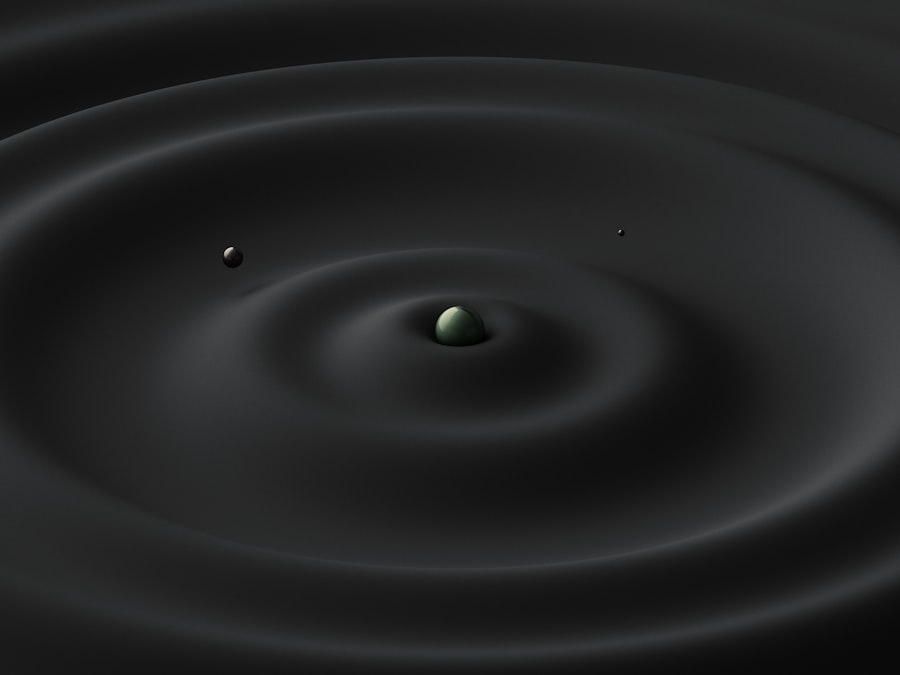
At the heart of the black hole paradox lies the issue of information loss, which poses a significant challenge to our understanding of quantum mechanics. According to quantum theory, information is preserved in physical systems, meaning that it cannot be completely erased or destroyed. However, when matter and information fall into a black hole, it appears that they are lost forever beyond the event horizon—the boundary beyond which nothing can escape.
This apparent loss contradicts the principles of quantum mechanics and raises profound questions about the nature of reality. The implications of this paradox are far-reaching. If information can indeed be lost in black holes, it would suggest that the universe operates under different rules than those described by quantum mechanics.
This notion has led to heated debates among physicists, with some arguing that information is irretrievably lost while others maintain that it must somehow be preserved. The quest to resolve this paradox has spurred a wealth of research and theoretical exploration, as scientists seek to reconcile these conflicting views and uncover a deeper understanding of black holes and their role in the cosmos.
Hawking Radiation and Black Hole Entropy
| Metric | Description | Formula / Value | Units |
|---|---|---|---|
| Hawking Temperature (T_H) | Temperature of black hole radiation due to quantum effects | T_H = (ħ c³) / (8 π G M k_B) | Kelvin (K) |
| Black Hole Mass (M) | Mass of the black hole | Variable | kilograms (kg) |
| Black Hole Entropy (S_BH) | Entropy proportional to the area of the event horizon | S_BH = (k_B c³ A) / (4 G ħ) | Joule per Kelvin (J/K) |
| Event Horizon Area (A) | Surface area of the black hole event horizon | A = 4 π (2 G M / c²)² = 16 π G² M² / c⁴ | square meters (m²) |
| Planck Constant (ħ) | Reduced Planck constant | 1.0545718 × 10⁻³⁴ | Joule seconds (J·s) |
| Speed of Light (c) | Speed of light in vacuum | 2.99792458 × 10⁸ | meters per second (m/s) |
| Gravitational Constant (G) | Newton’s gravitational constant | 6.67430 × 10⁻¹¹ | m³ kg⁻¹ s⁻² |
| Boltzmann Constant (k_B) | Relates temperature to energy | 1.380649 × 10⁻²³ | Joule per Kelvin (J/K) |
One of the most significant contributions to black hole theory came from Stephen Hawking in 1974 when he proposed that black holes are not entirely black but emit radiation due to quantum effects near the event horizon. This phenomenon, known as Hawking radiation, suggests that black holes can gradually lose mass and energy over time, ultimately leading to their evaporation. This groundbreaking idea not only challenged existing notions about black holes but also introduced new questions regarding their entropy and information content.
Hawking’s work also established a connection between black holes and thermodynamics, leading to the formulation of black hole entropy.
This relationship implies that black holes possess a form of information storage capacity, raising further questions about how information is encoded within them and what happens to it as they evaporate.
The interplay between Hawking radiation and entropy has become a focal point in discussions surrounding the black hole paradox, as researchers strive to understand how these concepts relate to the preservation or loss of information.
The Firewall Paradox
The firewall paradox emerged as a significant challenge in understanding black holes and their relationship with quantum mechanics. Proposed by physicists Almheiri, Marolf, Polchinski, and Sully in 2012, this paradox suggests that an observer falling into a black hole would encounter a searing wall of radiation at the event horizon—an idea that contradicts previous notions about the smooth passage through this boundary. The existence of such a firewall would imply that information is not preserved as it crosses into a black hole, further complicating the already contentious debate surrounding information loss.
This paradox raises critical questions about the nature of space-time and the behavior of particles near black holes. If firewalls exist, they would fundamentally alter our understanding of how gravity interacts with quantum mechanics. The implications extend beyond theoretical physics; they challenge long-held beliefs about causality and the continuity of space-time itself.
As researchers grapple with these ideas, they are forced to reconsider established theories and explore new avenues for reconciling these conflicting perspectives on black holes.
Proposed Solutions to the Black Hole Paradox

In response to the challenges posed by the black hole paradox, physicists have proposed various solutions aimed at reconciling quantum mechanics with general relativity. One prominent approach involves the idea that information is not lost but rather encoded on the event horizon itself—a concept known as “holographic encoding.” This theory suggests that all information entering a black hole is preserved in some form on its surface, allowing for eventual retrieval even after evaporation. Another proposed solution involves modifications to our understanding of space-time itself.
Some researchers suggest that space-time may not be as smooth as previously thought; instead, it could be subject to fluctuations at quantum scales that allow for information preservation without violating established principles. These ideas represent just a fraction of ongoing efforts to address the complexities surrounding black holes and their implications for our understanding of reality.
Quantum Mechanics and Black Hole Information
The relationship between quantum mechanics and black hole information remains one of the most contentious issues in theoretical physics. Quantum mechanics posits that information is fundamental to physical systems; thus, if it were lost in black holes, it would challenge core principles governing particle behavior and interactions. This dilemma has led physicists to explore various interpretations of quantum mechanics in an attempt to reconcile these conflicting views.
One approach involves considering entanglement—a phenomenon where particles become interconnected in such a way that the state of one particle instantly influences another, regardless of distance. Some theorists propose that entangled particles could provide a mechanism for preserving information even when it appears to be lost within a black hole. This perspective opens up new avenues for understanding how quantum mechanics operates within extreme gravitational environments and may ultimately lead to breakthroughs in resolving the black hole paradox.
The Role of String Theory in Resolving the Paradox
String theory has emerged as a promising framework for addressing some of the challenges posed by the black hole paradox. This theoretical framework posits that fundamental particles are not point-like objects but rather one-dimensional strings vibrating at different frequencies. String theory offers a unified description of gravity and quantum mechanics, potentially providing insights into how these two realms interact within black holes.
One significant aspect of string theory is its ability to incorporate additional dimensions beyond our familiar three-dimensional space. These extra dimensions may play a crucial role in understanding how information is preserved or lost within black holes. By exploring these higher-dimensional spaces, researchers hope to uncover new mechanisms for encoding information and resolving contradictions between general relativity and quantum mechanics.
Black Hole Complementarity
Black hole complementarity is another intriguing concept that seeks to reconcile conflicting views on information loss within black holes. Proposed by Leonard Susskind and others, this idea suggests that different observers may perceive different realities when it comes to information crossing the event horizon. For an outside observer, it appears that information is lost; however, for an infalling observer, it remains intact within the black hole.
This duality raises profound questions about the nature of reality and observation itself. If two observers can have fundamentally different experiences regarding information loss without contradiction, it challenges traditional notions of objectivity in physics. Black hole complementarity invites researchers to rethink how they approach fundamental questions about space-time and information while emphasizing the importance of perspective in understanding complex phenomena.
The Holographic Principle and Black Hole Information
The holographic principle is a revolutionary idea suggesting that all information contained within a volume of space can be represented as a two-dimensional surface surrounding that space. This principle has profound implications for understanding black holes and their relationship with information. According to this perspective, all information falling into a black hole may be encoded on its event horizon rather than being lost forever.
This concept aligns with ideas surrounding holographic encoding and offers potential solutions to longstanding questions about information preservation within black holes.
Future Directions in Black Hole Research
As scientists continue to grapple with the complexities surrounding black holes and their associated paradoxes, future research will likely focus on several key areas. One promising direction involves further exploration of quantum gravity theories—frameworks that aim to unify general relativity with quantum mechanics at fundamental levels. These theories may provide insights into how space-time behaves under extreme conditions and offer potential resolutions for issues related to information loss.
Additionally, advancements in observational technology will play a crucial role in shaping future research directions. As astronomers develop more sophisticated instruments capable of probing distant galaxies and observing phenomena near black holes, they may uncover new evidence supporting or challenging existing theories. The interplay between theoretical exploration and observational data will remain essential as researchers strive to deepen their understanding of these enigmatic cosmic entities.
In conclusion, the black hole paradox represents one of the most profound challenges facing modern physics today. As researchers continue to explore its implications for our understanding of reality, they are not only seeking answers but also redefining fundamental concepts about space-time, information, and existence itself. The journey toward resolving this paradox promises to yield exciting discoveries that could reshape humanity’s understanding of the universe for generations to come.
To delve deeper into the intriguing black hole paradox and explore potential solutions, you can refer to a related article on the topic. This article provides insights into the latest theories and research surrounding black holes and their mysteries. For more information, visit My Cosmic Ventures.
WATCH THIS! The Paradox That Broke Physics: Quantum vs. Black Holes
FAQs
What is the black hole paradox?
The black hole paradox, often referred to as the information paradox, arises from the conflict between quantum mechanics and general relativity. It questions what happens to information about matter that falls into a black hole, as classical theory suggests it is lost, which contradicts quantum theory that information must be conserved.
Why is the black hole paradox important in physics?
The paradox is important because it challenges our understanding of fundamental physical laws, particularly the principles of quantum mechanics and general relativity. Resolving it could lead to a unified theory of quantum gravity and deepen our understanding of the universe.
What are some proposed solutions to the black hole paradox?
Proposed solutions include the idea of black hole complementarity, the holographic principle, firewall hypotheses, and the concept that information is encoded on the event horizon or escapes via Hawking radiation. Each approach attempts to reconcile how information is preserved despite black hole evaporation.
What role does Hawking radiation play in the black hole paradox?
Hawking radiation is theoretical radiation emitted by black holes due to quantum effects near the event horizon. It suggests black holes can evaporate over time, raising the question of what happens to the information contained in the matter that formed the black hole, thus contributing to the paradox.
Has the black hole paradox been resolved?
As of now, the black hole paradox remains an open problem in theoretical physics. While significant progress has been made through various theories and models, a definitive, experimentally confirmed solution has yet to be found.
How does the holographic principle relate to solving the black hole paradox?
The holographic principle suggests that all the information contained within a volume of space can be represented as encoded data on the boundary of that space. Applied to black holes, it implies that information about infalling matter is stored on the event horizon, potentially resolving the paradox by preserving information.
Can black hole complementarity solve the paradox?
Black hole complementarity proposes that information is both reflected at the event horizon and passes through it, but no single observer can witness both processes simultaneously. This idea attempts to preserve information without violating the laws of physics, offering a potential resolution to the paradox.
What is the firewall hypothesis?
The firewall hypothesis suggests that an energetic “firewall” exists at the event horizon, destroying information and infalling matter. This controversial idea challenges the notion of a smooth event horizon and has sparked debate about the nature of black holes and information preservation.
Why is information conservation important in quantum mechanics?
Information conservation is a fundamental principle in quantum mechanics, stating that the complete description of a system’s state cannot be lost over time. Violating this principle would undermine the predictability and consistency of physical laws.
What future research might help solve the black hole paradox?
Future research includes advancements in quantum gravity theories, improved understanding of quantum entanglement and spacetime geometry, and potential observational data from black hole phenomena. Experiments in quantum information theory and gravitational wave astronomy may also provide insights.