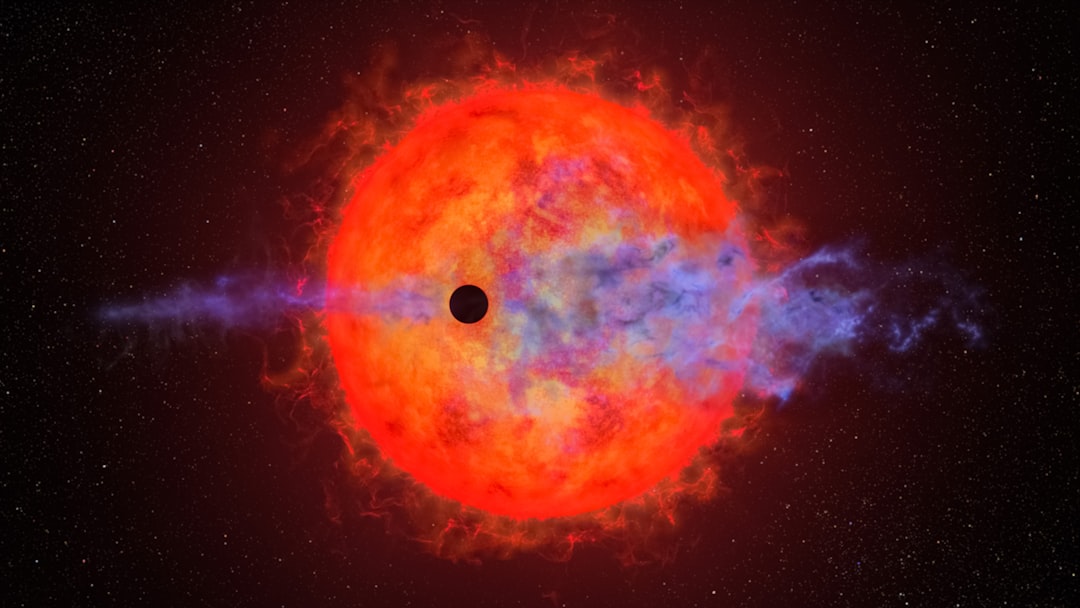
The study of astronomy began with ancient civilizations that observed the night sky. Early astronomers, including the Babylonians and Greeks, made foundational contributions to celestial science. They documented the movements of stars and planets and developed mathematical models to describe their behavior.
Using only naked-eye observation and basic instruments, these early astronomers attempted to explain the structure of the cosmos. Although their theories contained inaccuracies, they established the framework for future astronomical research. Astronomical understanding advanced significantly during the Renaissance and early modern period.
Copernicus proposed the heliocentric model, which placed the Sun at the center of the solar system rather than Earth.
These findings contradicted the previously accepted geocentric theory.
Each astronomical discovery contributed to a more accurate understanding of the solar system’s structure. Newton’s laws of motion and universal gravitation explained the physical mechanisms governing celestial bodies, establishing the mathematical principles that describe planetary orbits and gravitational interactions across the cosmos.
Key Takeaways
- Our understanding of the cosmos has evolved from an Earth-centered view to a vast, interconnected universe.
- Modern technology has revolutionized cosmic exploration, enabling deeper insights into space and our place within it.
- Astronomy and astrophysics play crucial roles in reshaping our perspective on humanity’s position in the universe.
- The search for extraterrestrial life challenges and expands our understanding of life’s uniqueness and cosmic significance.
- Cultural, philosophical, and ethical considerations influence how we interpret and engage with our cosmic environment.
The Impact of Modern Technology on Our Cosmic Exploration
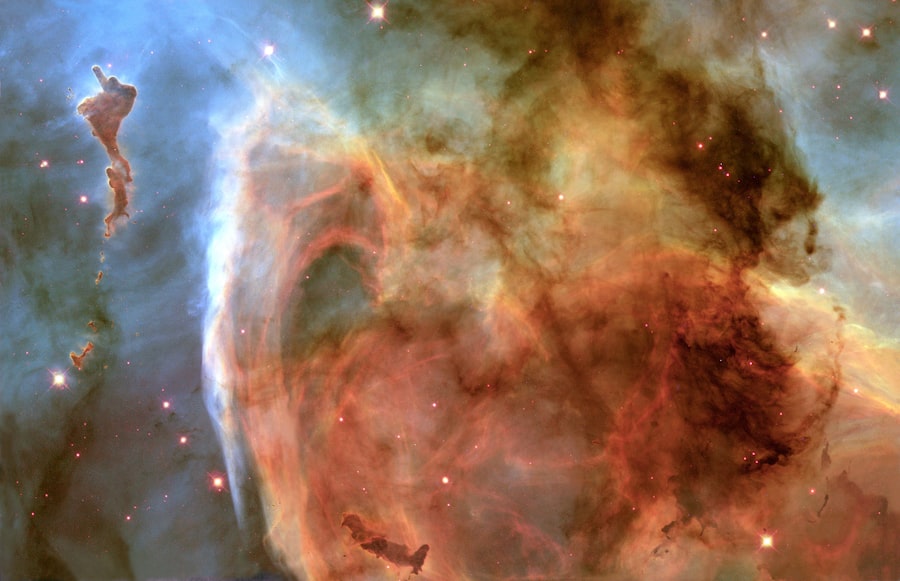
In your quest to understand the cosmos, modern technology has played a pivotal role in expanding your horizons. The invention of powerful telescopes has allowed you to peer deeper into space than ever before. Instruments like the Hubble Space Telescope have captured breathtaking images of distant galaxies, nebulae, and star clusters, revealing a universe teeming with complexity and beauty.
You can marvel at how these technological advancements have transformed your perception of space, providing insights into phenomena that were once beyond your reach. Moreover, space exploration missions have taken your understanding to new heights. Robotic spacecraft like Voyager and Mars rovers have ventured into the farthest corners of our solar system, sending back invaluable data about planetary atmospheres, surface conditions, and potential for life.
These missions not only enhance your knowledge but also ignite your imagination about what lies beyond your home planet. As you follow these explorations, you become part of a collective human endeavor to uncover the mysteries of the universe, fostering a sense of connection with both the cosmos and fellow explorers. Explore the future of space travel with laser sails technology.
Redefining Our Place in the Universe: From Earth-Centric to Cosmic Perspective

As you delve deeper into cosmic exploration, you begin to realize how your perspective has shifted from an Earth-centric view to a more expansive cosmic perspective. Historically, humanity viewed Earth as the center of existence, a belief that shaped cultures and philosophies for millennia. However, as you learn about the vastness of space and the multitude of celestial bodies that populate it, you start to appreciate your planet’s relative insignificance in the grand scheme of things.
This shift in perspective can be both humbling and liberating. Embracing a cosmic perspective encourages you to see yourself as part of a larger tapestry woven from the fabric of the universe. You are not merely an inhabitant of Earth; you are a participant in an intricate cosmic narrative that spans billions of years.
This realization can inspire a sense of responsibility toward your planet and its inhabitants. Understanding that Earth is just one small oasis in an expansive universe can motivate you to protect its delicate ecosystems and promote sustainability for future generations.
The Role of Astronomy and Astrophysics in Redefining Our Cosmic Place
Astronomy and astrophysics serve as essential tools in your quest to redefine humanity’s place in the cosmos. These scientific disciplines provide you with frameworks for understanding celestial phenomena and unraveling the mysteries of the universe. Through astronomy, you learn about the life cycles of stars, the formation of galaxies, and the nature of black holes.
Each discovery adds another layer to your understanding, allowing you to appreciate the complexity and interconnectedness of cosmic events. Astrophysics takes this knowledge further by applying the laws of physics to celestial phenomena. It helps you comprehend concepts such as dark matter and dark energy—mysterious forces that govern the universe’s expansion and structure.
As you engage with these ideas, you begin to see how they challenge traditional notions of existence and reality. The more you learn about these cosmic forces, the more you realize that your understanding of life and matter is constantly evolving, pushing you to reconsider what it means to be human in an ever-expanding universe.
The Search for Life Beyond Earth: Implications for Our Cosmic Place
| Metric | Value | Unit | Description |
|---|---|---|---|
| Observable Universe Diameter | 93 | Billion light years | Estimated size of the observable universe |
| Estimated Number of Galaxies | 2 | Trillion | Approximate count of galaxies in the observable universe |
| Age of the Universe | 13.8 | Billion years | Time since the Big Bang |
| Number of Stars in the Milky Way | 100-400 | Billion | Estimated stars in our galaxy |
| Distance to Nearest Star (Proxima Centauri) | 4.24 | Light years | Closest star to the Sun |
| Number of Exoplanets Discovered | 5,500+ | Planets | Confirmed planets outside our solar system |
| Percentage of Dark Matter in Universe | 27 | Percent | Estimated proportion of dark matter in total mass-energy |
| Percentage of Dark Energy in Universe | 68 | Percent | Estimated proportion of dark energy in total mass-energy |
| Human Spaceflight Duration (Longest Mission) | 437 | Days | Longest continuous human spaceflight (Valeri Polyakov) |
| Distance to Edge of Solar System (Heliopause) | 123 | Astronomical Units (AU) | Approximate distance to the boundary of the Sun’s influence |
The search for extraterrestrial life is one of the most profound questions that humanity grapples with today. As you ponder this quest, you can’t help but feel a sense of excitement mixed with trepidation. The discovery of microbial life on Mars or the detection of biosignatures in exoplanet atmospheres could fundamentally alter your understanding of life itself.
It raises questions about what it means to be alive and whether life is a unique phenomenon confined to Earth or a common occurrence throughout the cosmos. This search also has profound implications for your cosmic place. If life exists elsewhere, it challenges your perception of humanity’s significance in the universe.
You may find yourself contemplating philosophical questions about consciousness, intelligence, and what it means to be “human.” The potential discovery of intelligent extraterrestrial civilizations could lead to profound shifts in cultural narratives and ethical considerations regarding our responsibilities toward other forms of life.
Cosmic Connections: How Our Place in the Universe Affects Our Daily Lives
Your place in the universe is not just an abstract concept; it has tangible effects on your daily life. The rhythms of celestial bodies influence everything from tides to seasons, shaping agricultural practices and cultural traditions throughout history. As you navigate your daily routine, you may not always be aware of these cosmic connections, but they are ever-present.
The Sun’s energy fuels life on Earth, while lunar cycles have guided human behavior for millennia. Moreover, understanding your cosmic place can foster a sense of unity among people.
This awareness can inspire collective action toward global challenges such as climate change and social justice. When you see yourself as part of a larger cosmic community, it becomes easier to empathize with others and work together for a better future.
The Influence of Cultural and Philosophical Perspectives on Our Cosmic Place
Cultural narratives and philosophical perspectives play a significant role in shaping your understanding of humanity’s place in the cosmos. Different cultures have developed unique cosmologies that reflect their values, beliefs, and experiences. For instance, Indigenous cultures often view themselves as interconnected with nature and the cosmos, emphasizing stewardship over exploitation.
In contrast, Western perspectives have historically leaned toward domination over nature, leading to environmental degradation. As you explore these diverse viewpoints, you may find yourself questioning your own beliefs about humanity’s role in the universe. Engaging with various cultural narratives can enrich your understanding and inspire new ways of thinking about your relationship with the cosmos.
By embracing a more holistic perspective that values interconnectedness and sustainability, you can contribute to a more inclusive dialogue about our place in the universe.
The Future of Cosmic Exploration: New Horizons and Possibilities
The future of cosmic exploration holds exciting possibilities that could further redefine your understanding of humanity’s place in the universe. With advancements in technology and international collaboration, missions to Mars and beyond are becoming increasingly feasible. You can envision a future where humans set foot on other planets or establish colonies on celestial bodies like the Moon or Mars.
Such endeavors would not only expand your physical presence in space but also challenge your perceptions of home and belonging. Moreover, emerging technologies like artificial intelligence and machine learning are revolutionizing data analysis in astronomy. These tools enable scientists to process vast amounts of information from telescopes and space missions more efficiently than ever before.
As you witness these advancements unfold, you may feel a sense of optimism about humanity’s capacity for exploration and discovery. The potential for new discoveries—whether they be new planets, galaxies, or even signs of life—fuels your imagination about what lies ahead.
Redefining Our Cosmic Place in the Context of Climate Change and Environmental Sustainability
As you grapple with your place in the universe, it’s impossible to ignore the pressing challenges posed by climate change and environmental degradation. Your understanding of humanity’s role must now encompass not only exploration but also stewardship of Earth itself. The realization that our planet is a fragile oasis in an expansive universe compels you to take action to protect it for future generations.
This awareness can lead to a profound shift in how you approach sustainability and environmental responsibility. You may find yourself advocating for policies that prioritize renewable energy sources or supporting initiatives aimed at preserving biodiversity. By recognizing that your actions have consequences not just for humanity but for all life on Earth—and potentially beyond—you become part of a larger movement toward creating a sustainable future that honors both our cosmic heritage and our responsibility as caretakers of this planet.
The Interplay of Science, Religion, and Ethics in Shaping Our Cosmic Place
The interplay between science, religion, and ethics adds another layer to your understanding of humanity’s place in the cosmos. Throughout history, these domains have often been at odds as they seek answers to fundamental questions about existence and purpose. However, as you explore this interplay, you may find opportunities for dialogue rather than conflict.
Science provides empirical evidence about the universe’s workings while religion offers meaning and context for human existence within it. You might consider how ethical frameworks shape our responsibilities toward other beings—both terrestrial and extraterrestrial—as we continue our exploration efforts. Engaging with these perspectives can deepen your appreciation for life’s complexities while fostering a sense of humility about what remains unknown.
The Importance of Education and Public Engagement in Redefining Our Cosmic Place
Finally, education plays a crucial role in redefining humanity’s place in the cosmos. As you seek knowledge about astronomy and astrophysics, consider how sharing this information with others can inspire curiosity and wonder about the universe. Public engagement initiatives—such as planetarium shows or community stargazing events—can help demystify complex scientific concepts while fostering a sense of connection among participants.
By promoting education around cosmic exploration and its implications for our lives on Earth, you contribute to a broader cultural shift toward valuing science as an essential tool for understanding our place in the universe. Encouraging critical thinking skills empowers individuals to grapple with profound questions about existence while fostering empathy toward others who share this journey through space and time. In conclusion, as you navigate through these various dimensions—historical evolution, technological advancements, cultural influences—you come to appreciate that redefining humanity’s place in the cosmos is an ongoing journey filled with discovery and reflection.
Each step forward brings new insights that challenge preconceived notions while inspiring hope for what lies ahead in our shared quest for knowledge among the stars.
In the quest to redefine our place in the cosmos, it’s essential to explore various perspectives and insights that challenge our understanding of the universe. A thought-provoking article that delves into this theme can be found on My Cosmic Ventures, which discusses the implications of recent astronomical discoveries and their impact on our perception of humanity’s role in the vast expanse of space. You can read more about it in their article [here](https://www.mycosmicventures.com/).
WATCH THIS! 🚀✨ Can Laser Sails Take Us to Alpha Centauri in 20 Years?
FAQs
What is the main focus of “Redefining Our Place in the Cosmos”?
The article explores how recent scientific discoveries and advancements in astronomy and cosmology are changing our understanding of humanity’s position and significance in the universe.
Why is the concept of our place in the cosmos being redefined?
New data from space exploration, astrophysics, and cosmology have challenged previous assumptions about the universe’s size, structure, and the potential for life beyond Earth, prompting a reassessment of humanity’s role and significance.
What scientific fields contribute to redefining our place in the cosmos?
Key fields include astronomy, astrophysics, cosmology, planetary science, and astrobiology, all of which provide insights into the universe’s origins, composition, and the possibility of extraterrestrial life.
How have recent discoveries impacted our understanding of the universe?
Discoveries such as exoplanets in habitable zones, the accelerating expansion of the universe, and the detection of cosmic microwave background radiation have expanded our knowledge of the cosmos and our place within it.
Does the article discuss the possibility of extraterrestrial life?
Yes, it addresses how the search for life beyond Earth influences our perspective on humanity’s uniqueness and our place in the cosmic environment.
What role does technology play in redefining our cosmic perspective?
Advancements in telescopes, space probes, and data analysis technologies have enabled more detailed observations and measurements, leading to new insights about the universe.
How does redefining our place in the cosmos affect philosophical or cultural views?
It challenges traditional views about human centrality and significance, encouraging a broader, more interconnected understanding of our existence within the vast universe.
Is the article optimistic about humanity’s future in the cosmos?
While the article primarily focuses on scientific understanding, it often highlights the potential for future exploration and discovery, suggesting an evolving and expanding human role in the cosmos.
Where can I learn more about the topics discussed in the article?
Further information can be found in scientific journals, books on cosmology and astronomy, educational websites like NASA and ESA, and lectures by experts in astrophysics and related fields.