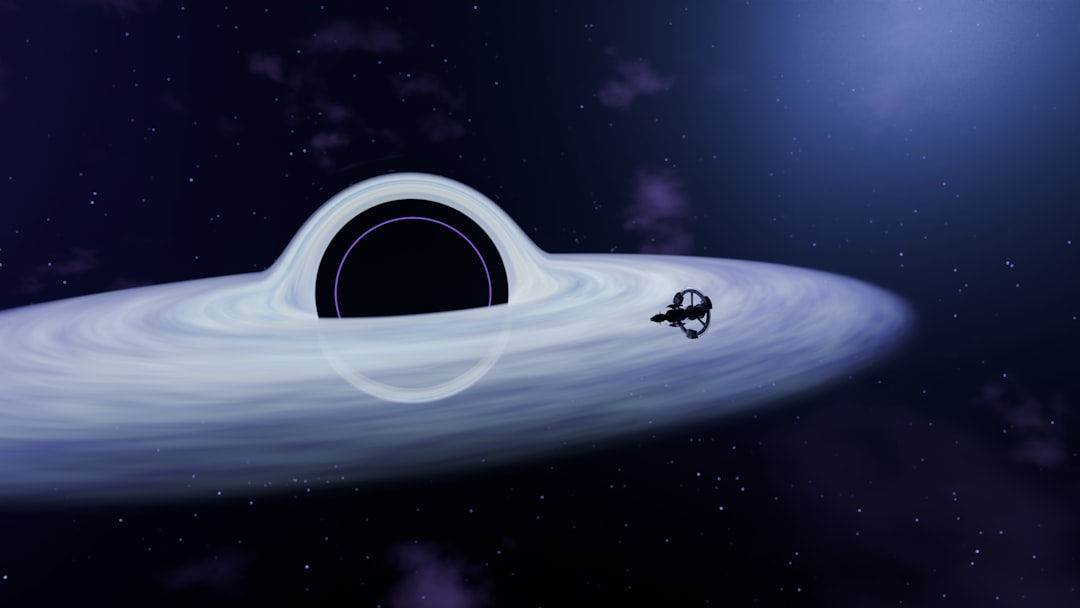
Primordial black holes (PBHs) are theoretical cosmic objects that may have formed during the earliest moments of the universe, shortly after the Big Bang. Unlike stellar black holes that result from collapsed massive stars, PBHs would have originated from extreme density fluctuations in the primordial plasma of the early universe. This distinct formation mechanism has led scientists to consider them as potential candidates for dark matter.
The investigation of PBHs has significant scientific importance beyond theoretical interest. Research into these hypothetical objects could provide crucial insights that impact fundamental physics and cosmology. The study of PBHs connects to broader scientific questions regarding universal structure formation, the composition of dark matter, and the properties of spacetime.
This field represents an important area where theoretical physics meets observational astronomy in the effort to resolve fundamental cosmic mysteries.
Key Takeaways
- Primordial black holes (PBHs) are ancient black holes formed shortly after the Big Bang, distinct from those formed by collapsing stars.
- LIGO’s detection of gravitational waves provided the first evidence supporting the existence of PBHs.
- Discovering PBHs has significant implications for understanding dark matter and the early universe’s conditions.
- Theoretical models suggest PBHs could explain various cosmological phenomena, but studying them presents substantial observational challenges.
- Ongoing and future research aims to clarify PBHs’ role in cosmology and explore their potential applications in astrophysics and fundamental physics.
The Discovery of Primordial Black Holes by LIGO
The Laser Interferometer Gravitational-Wave Observatory (LIGO) has revolutionized astrophysics since its first detection of gravitational waves in 2015. This groundbreaking achievement opened a new window into the universe, allowing scientists to observe cosmic events that were previously beyond reach. Among the many discoveries made possible by LIGO, the potential detection of primordial black holes has emerged as a particularly exciting development.
In recent years, researchers have speculated that some of the gravitational waves detected by LIGO could be attributed to the mergers of primordial black holes, rather than solely to those formed from collapsing stars. The implications of this possibility are profound. If LIGO’s observations indeed point to the existence of primordial black holes, it would provide compelling evidence for their formation in the early universe.
This would not only validate theoretical models predicting their existence but also offer a new avenue for understanding dark matter. The gravitational waves detected by LIGO serve as a cosmic messenger, carrying information about events that occurred billions of years ago. By analyzing these signals, scientists can glean insights into the properties and distribution of primordial black holes, potentially reshaping our understanding of cosmic evolution.
What are Primordial Black Holes?
Primordial black holes are hypothesized to be black holes that formed in the early universe, during a time when conditions were vastly different from those we observe today. Unlike stellar black holes, which form from the remnants of massive stars after they exhaust their nuclear fuel, primordial black holes could have originated from high-density regions in the rapidly expanding universe. These fluctuations in density could have been influenced by various factors, including quantum effects and phase transitions in the early universe.
The mass range of primordial black holes is particularly intriguing. They could theoretically span a wide spectrum, from very small black holes with masses less than that of an asteroid to supermassive black holes weighing millions or even billions of times that of our Sun. This diversity in mass raises important questions about their role in cosmic evolution and structure formation.
For instance, if a significant population of primordial black holes exists within a certain mass range, they could contribute to the elusive dark matter that permeates the universe. Understanding their characteristics and distribution is crucial for piecing together the puzzle of cosmic history.
The Significance of Detecting Primordial Black Holes
The detection of primordial black holes would mark a monumental milestone in astrophysics and cosmology. Their existence could provide answers to some of the most pressing questions regarding dark matter, a mysterious substance that constitutes approximately 27% of the universe’s total mass-energy content. Current models suggest that dark matter is composed of weakly interacting particles; however, primordial black holes could serve as an alternative explanation for this enigmatic component.
If a substantial fraction of dark matter is made up of primordial black holes, it would fundamentally alter our understanding of both dark matter and the formation of structures in the universe. Moreover, detecting primordial black holes would enhance our comprehension of the early universe’s conditions and dynamics. The processes that led to their formation could shed light on inflationary theories and other cosmological models that describe the universe’s evolution shortly after the Big Bang.
By studying these ancient relics, scientists could gain insights into the fundamental forces at play during a critical period in cosmic history. The significance of detecting primordial black holes extends beyond mere curiosity; it has profound implications for our understanding of fundamental physics and the nature of reality itself.
How LIGO Detected Primordial Black Holes
| Metric | Value | Unit | Description |
|---|---|---|---|
| Mass Range | 0.1 – 100 | Solar Masses | Estimated mass range of primordial black holes detectable by LIGO |
| Detection Frequency | 10 – 1000 | Hz | Frequency range of gravitational waves detected by LIGO from black hole mergers |
| Event Rate | 0.1 – 10 | Events per year | Estimated merger rate of primordial black holes detectable by LIGO |
| Spin Parameter | 0 – 0.7 | Dimensionless | Range of spin values expected for primordial black holes |
| Distance Range | 100 – 1000 | Megaparsecs | Typical distance to detected black hole mergers by LIGO |
| Signal-to-Noise Ratio (SNR) | 8 – 30 | Dimensionless | Typical SNR for confirmed black hole merger detections |
LIGO’s detection capabilities rely on its ability to measure minute changes in distance caused by passing gravitational waves. When two massive objects, such as black holes, merge, they create ripples in spacetime that propagate outward at the speed of light. These gravitational waves can be detected by LIGO’s highly sensitive instruments, which utilize laser interferometry to measure changes in length on the order of one-thousandth the diameter of a proton.
In recent analyses, researchers have scrutinized LIGO’s data for signals indicative of primordial black hole mergers. By examining gravitational wave events with specific characteristics—such as mass ratios and spins—scientists can differentiate between stellar and primordial black hole mergers. The challenge lies in distinguishing these signals from background noise and other astrophysical events.
As LIGO continues to collect data during its observing runs, researchers remain hopeful that they will uncover definitive evidence supporting the existence of primordial black holes.
The Implications of Primordial Black Holes for Cosmology
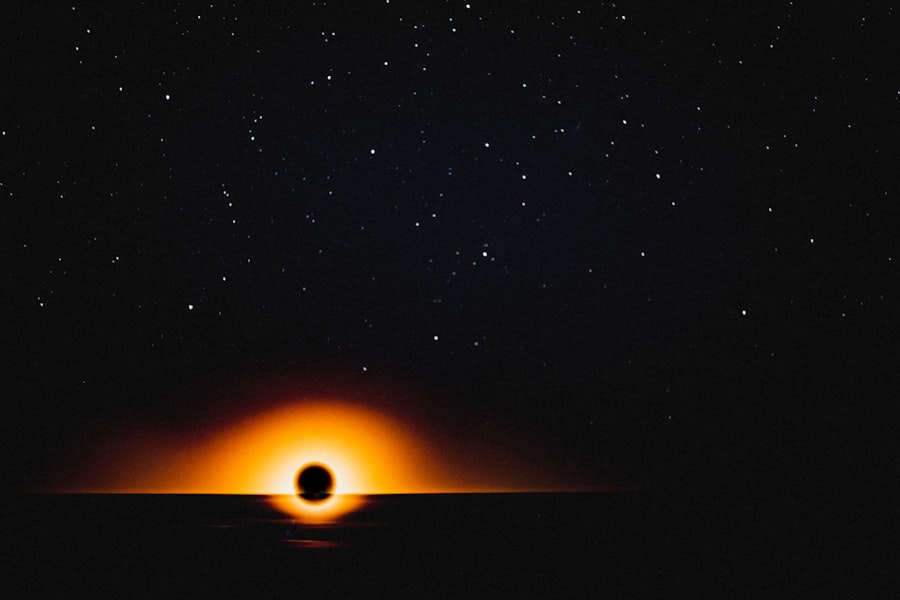
The existence of primordial black holes carries significant implications for cosmology and our understanding of the universe’s evolution. If these objects are confirmed to exist and constitute a portion of dark matter, it would necessitate a reevaluation of current cosmological models. The presence of primordial black holes could influence structure formation on both small and large scales, affecting galaxy formation and clustering patterns throughout cosmic history.
Furthermore, primordial black holes may provide insights into fundamental physics beyond the standard model. Their unique properties could offer clues about quantum gravity and other theories attempting to unify general relativity with quantum mechanics. As researchers explore these connections, they may uncover new avenues for understanding phenomena such as inflation and cosmic microwave background radiation.
The implications extend far beyond mere academic interest; they touch upon fundamental questions about the nature of reality and our place within it.
Theoretical Explanations for the Existence of Primordial Black Holes
Several theoretical frameworks have been proposed to explain how primordial black holes might form in the early universe.
During inflation, quantum fluctuations could have created regions with varying densities, leading to localized gravitational collapses that formed primordial black holes.
Another avenue of exploration involves phase transitions in the early universe, such as those associated with symmetry breaking in particle physics. These transitions could create regions where energy density fluctuates significantly, potentially leading to conditions conducive to black hole formation. Additionally, some theories suggest that interactions between different fields in particle physics could give rise to density perturbations capable of forming primordial black holes.
These theoretical explanations highlight the interplay between cosmology and particle physics in understanding primordial black holes’ origins. As researchers continue to refine these models and gather observational data, they may uncover new insights into how these enigmatic objects fit into the broader tapestry of cosmic evolution.
The Future of Research on Primordial Black Holes
The future of research on primordial black holes is poised for exciting developments as technology advances and observational techniques improve. With upcoming upgrades to LIGO and other gravitational wave observatories worldwide, scientists anticipate an increase in sensitivity and detection capabilities. This enhanced observational power may lead to more definitive evidence supporting or refuting the existence of primordial black holes.
In addition to gravitational wave observations, researchers are exploring complementary methods for studying primordial black holes. For instance, observations from space-based telescopes may provide insights into their potential effects on cosmic microwave background radiation or large-scale structure formation. Furthermore, advancements in particle physics experiments could shed light on how primordial black holes interact with other forms of matter and energy.
As interdisciplinary collaboration continues to flourish among astrophysicists, cosmologists, and particle physicists, researchers are optimistic about unraveling the mysteries surrounding primordial black holes. The convergence of theoretical models and empirical data promises to deepen our understanding of these enigmatic objects and their role in shaping the universe.
Potential Applications of Primordial Black Holes
While much focus has been placed on understanding primordial black holes from a theoretical perspective, there are intriguing potential applications that could arise from their study. One such application lies in their possible role as dark matter candidates. If a significant fraction of dark matter is composed of primordial black holes, it could lead to novel approaches for detecting dark matter interactions or even harnessing energy from these objects.
Additionally, primordial black holes may offer insights into high-energy astrophysical processes. Their interactions with surrounding matter could produce unique signatures detectable by current or future observatories. Understanding these processes could enhance our knowledge of cosmic ray production or gamma-ray bursts—phenomena that remain poorly understood despite their significance in astrophysics.
Moreover, if primordial black holes exist within certain mass ranges, they might influence gravitational lensing effects observed in distant galaxies or clusters. This could provide another avenue for probing their existence and properties while simultaneously enriching our understanding of gravitational lensing as a tool for studying cosmic structures.
Challenges in Studying Primordial Black Holes
Despite their intriguing potential, studying primordial black holes presents numerous challenges that researchers must navigate. One significant hurdle lies in distinguishing between signals produced by primordial black hole mergers and those generated by stellar black hole mergers or other astrophysical events. The overlapping characteristics can complicate data analysis and interpretation.
Furthermore, theoretical models predicting primordial black hole formation often involve complex physics that can be difficult to test empirically. As researchers strive to refine these models based on observational data, they must grapple with uncertainties inherent in both theoretical predictions and observational techniques. Additionally, there remains a lack of consensus regarding the mass distribution and abundance of primordial black holes within the universe.
Different models yield varying predictions about their characteristics, making it challenging to formulate definitive observational strategies.
Conclusion and Future Prospects for Primordial Black Hole Research
In conclusion, primordial black holes represent a captivating frontier in astrophysics and cosmology with profound implications for our understanding of the universe’s origins and evolution. As researchers continue to explore their potential existence through gravitational wave observations and theoretical modeling, they stand on the brink of potentially groundbreaking discoveries. The future prospects for research on primordial black holes are bright as advancements in technology and interdisciplinary collaboration pave new avenues for exploration.
Whether through enhanced gravitational wave detection capabilities or complementary observational methods from space-based telescopes, scientists remain optimistic about unraveling the mysteries surrounding these enigmatic objects. Ultimately, whether they serve as candidates for dark matter or provide insights into fundamental physics beyond current paradigms, primordial black holes hold promise for reshaping our understanding of reality itself—inviting humanity to ponder its place within an ever-expanding cosmos filled with wonders yet to be discovered.
Recent advancements in the detection of primordial black holes have sparked significant interest in the astrophysics community, particularly following the groundbreaking observations made by LIGO. These primordial black holes, theorized to have formed in the early universe, could provide insights into dark matter and the conditions of the cosmos shortly after the Big Bang. For a deeper understanding of this topic, you can explore a related article on the implications of LIGO’s findings at mycosmicventures.
com/’>My Cosmic Ventures.
FAQs
What are primordial black holes?
Primordial black holes are hypothetical black holes that are thought to have formed in the early universe, shortly after the Big Bang, due to high-density fluctuations. Unlike black holes formed from collapsing stars, primordial black holes could have a wide range of masses, including very small ones.
What is LIGO?
LIGO stands for the Laser Interferometer Gravitational-Wave Observatory. It is a large-scale physics experiment and observatory designed to detect gravitational waves—ripples in spacetime caused by massive accelerating objects such as merging black holes or neutron stars.
How can LIGO detect primordial black holes?
LIGO detects gravitational waves produced by the merger of compact objects like black holes. If primordial black holes exist and merge, they would produce gravitational waves with specific signatures that LIGO can potentially observe, helping to confirm their existence.
Have primordial black holes been detected by LIGO?
As of now, LIGO has detected gravitational waves from merging black holes, but it is not definitively confirmed that any of these black holes are primordial. Some detected events have characteristics that could be consistent with primordial black holes, but further analysis and data are needed.
Why is detecting primordial black holes important?
Detecting primordial black holes would provide insights into the conditions of the early universe, the nature of dark matter, and the formation of cosmic structures. They are also considered a possible candidate for dark matter, so confirming their existence could solve a major cosmological mystery.
What challenges exist in identifying primordial black holes with LIGO?
One challenge is distinguishing primordial black holes from black holes formed by stellar collapse, as their gravitational wave signals can be similar. Additionally, the mass range and merger rates of primordial black holes are uncertain, making it difficult to predict and identify their signals conclusively.
Can LIGO detect all sizes of primordial black holes?
LIGO is most sensitive to black holes with masses roughly between a few solar masses and a few hundred solar masses. Primordial black holes outside this mass range, especially very small ones, would produce gravitational waves at frequencies that LIGO cannot detect.
What future developments could improve the detection of primordial black holes?
Future upgrades to LIGO and other gravitational wave observatories, such as Virgo and KAGRA, as well as planned detectors like LISA, will improve sensitivity and frequency range. This will enhance the ability to detect and characterize primordial black hole mergers if they occur.