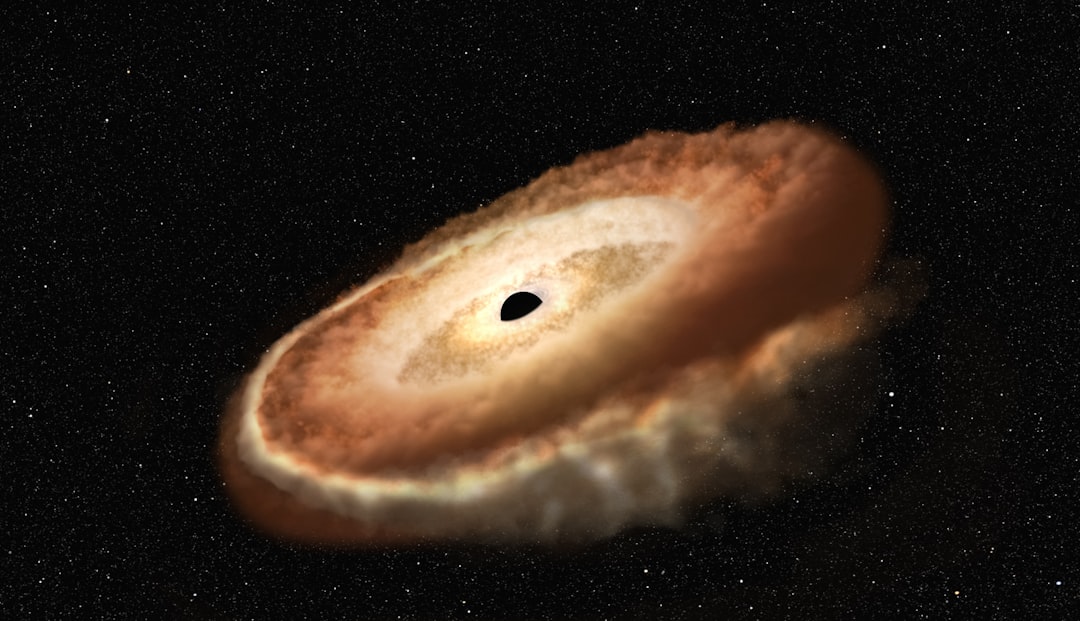
Primordial black holes (PBHs) are theoretical black holes that could have formed during the early universe, within the first few seconds after the Big Bang. Unlike stellar black holes that result from the collapse of massive stars at the end of their lifecycles, primordial black holes would have originated from extremely dense regions in the primordial universe where matter density exceeded critical thresholds necessary for gravitational collapse. The formation mechanism for PBHs involves density perturbations in the early universe’s hot, dense state.
When these fluctuations reached sufficient amplitude, they could overcome radiation pressure and collapse gravitationally to form black holes. This process could theoretically produce black holes across a broad mass spectrum, ranging from microscopic scales to stellar masses, depending on the conditions present during different epochs of the early universe. Primordial black holes represent a potential candidate for dark matter, which comprises approximately 27% of the universe’s total mass-energy content but has not been directly detected through electromagnetic radiation.
If PBHs exist in sufficient quantities, they could partially or entirely explain the observed gravitational effects attributed to dark matter in galactic and cosmological structures. Current observational constraints limit the abundance of PBHs across different mass ranges through various detection methods, including gravitational wave observations, microlensing surveys, and studies of cosmic microwave background radiation. Research into primordial black holes continues to provide insights into early universe physics, inflation theory, and the nature of dark matter, making them an active area of theoretical and observational investigation in modern cosmology.
Key Takeaways
- Primordial black holes are hypothetical black holes formed in the early universe, distinct from those formed by collapsing stars.
- Their formation is linked to density fluctuations shortly after the Big Bang, potentially influenced by asteroid-mass objects.
- Asteroid mass plays a significant role in understanding the size and characteristics of some primordial black holes.
- Observations and theoretical models explore how asteroid-mass scales relate to primordial black hole formation and properties.
- Studying primordial black holes and their connection to asteroid mass offers insights with broad implications for astrophysics and cosmology.
The Formation of Primordial Black Holes
The formation of primordial black holes is rooted in the conditions present in the early universe. Shortly after the Big Bang, the universe was a hot, dense soup of particles and radiation. As it expanded and cooled, quantum fluctuations could have led to variations in density across different regions of space.
In areas where density was particularly high, gravitational forces could have caused matter to collapse into black holes. This process is thought to have occurred within the first few moments after the Big Bang, making PBHs unique compared to their stellar counterparts. The mass range of primordial black holes is theorized to be vast, potentially spanning from very small masses—comparable to that of an asteroid—to much larger ones, possibly several times the mass of the sun.
The exact mechanisms behind their formation remain an area of active research, with various models proposed to explain how these early black holes could have emerged from the chaotic conditions of the nascent universe. Understanding these processes is crucial for piecing together the history of cosmic evolution and the role that PBHs may play in the current structure of the universe.
Characteristics of Primordial Black Holes
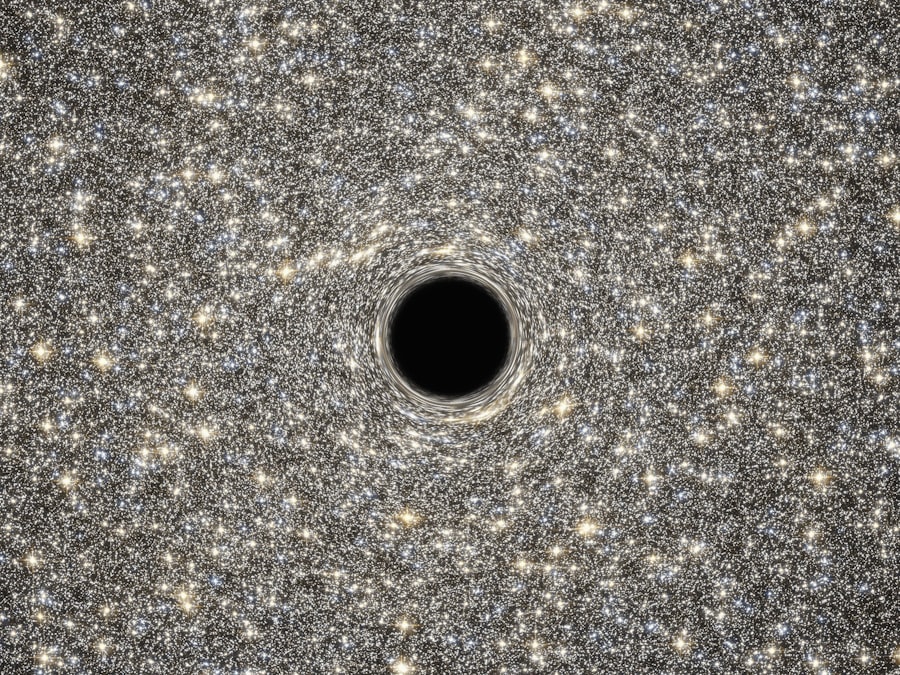
Primordial black holes exhibit several unique characteristics that distinguish them from other types of black holes. One notable feature is their potential mass range, which can vary dramatically. While stellar black holes typically form from collapsing stars and tend to have masses greater than a few solar masses, primordial black holes could theoretically be as small as a fraction of a gram or as massive as several solar masses.
This diversity in mass raises intriguing questions about their formation mechanisms and their potential contributions to cosmic phenomena. Another important characteristic of primordial black holes is their potential interaction with surrounding matter and radiation. Due to their small size and varying mass, PBHs may not emit significant amounts of radiation like larger black holes do.
Instead, they could interact with their environment primarily through gravitational effects. This subtlety makes them challenging to detect directly, leading researchers to explore indirect methods for identifying their presence and influence on cosmic structures.
The Connection to Asteroid Mass
The connection between primordial black holes and asteroid mass is an intriguing aspect of astrophysical research. Asteroids, which are remnants from the early solar system, can provide valuable insights into the conditions that existed during the formation of primordial black holes. The mass distribution of asteroids may offer clues about the density fluctuations that occurred in the early universe, potentially linking these small celestial bodies to the formation processes of PBHs.
Asteroids vary widely in size and mass, ranging from tiny boulders to larger bodies like Ceres, which is classified as a dwarf planet. By studying the mass distribution and characteristics of asteroids, scientists can gain a better understanding of how these objects might relate to primordial black holes. For instance, if certain asteroids exhibit mass distributions that align with theoretical models of PBH formation, it could suggest a deeper connection between these two seemingly disparate phenomena.
The Role of Asteroids in Primordial Black Hole Formation
| Parameter | Value | Units | Description |
|---|---|---|---|
| Mass Range | 10^15 to 10^21 | kg | Estimated mass range of primordial black holes comparable to asteroid masses |
| Typical Asteroid Mass | 10^12 to 10^21 | kg | Mass range of common asteroids in the solar system |
| Schwarzschild Radius | 1.5 x 10^-12 to 1.5 x 10^-6 | meters | Event horizon radius for primordial black holes in asteroid mass range |
| Density | ~10^18 | kg/m³ | Typical density of primordial black holes (much higher than asteroids) |
| Formation Epoch | 10^-23 to 1 | seconds after Big Bang | Time period when primordial black holes could have formed |
| Detection Methods | Microlensing, Gravitational Waves | N/A | Techniques used to detect primordial black holes of asteroid mass |
Asteroids may play a pivotal role in understanding primordial black hole formation by serving as analogs for the density fluctuations that occurred in the early universe. The processes that led to asteroid formation—such as accretion and collisional dynamics—could mirror some aspects of how primordial black holes emerged from density perturbations.
Moreover, asteroids can provide a tangible means for testing theoretical models related to primordial black holes. For example, if certain asteroid populations exhibit characteristics consistent with those predicted by PBH formation theories, it could lend credence to these models and enhance our understanding of cosmic evolution. This connection between asteroids and primordial black holes underscores the importance of interdisciplinary research in astrophysics, where insights from one field can illuminate questions in another.
Understanding the Mass of Asteroids
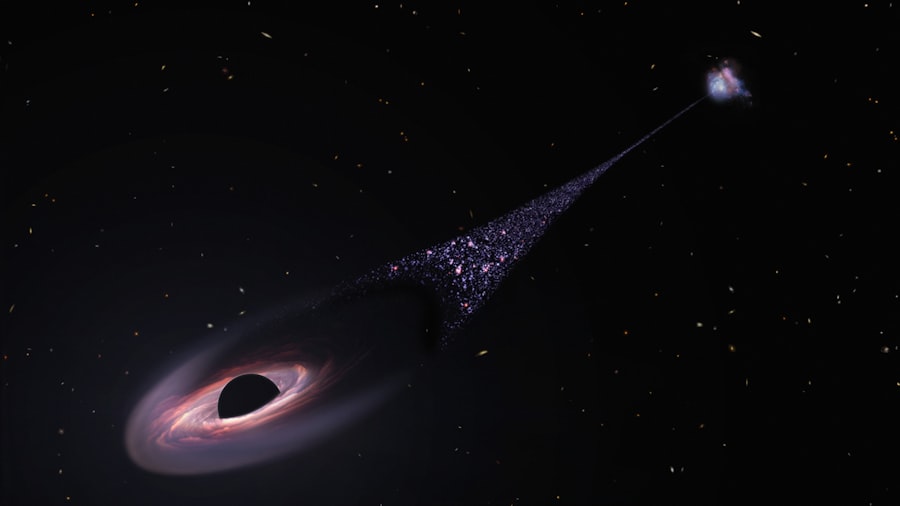
Understanding asteroid mass is crucial for establishing connections between these celestial bodies and primordial black holes. Asteroids come in various sizes and compositions, with their masses often determined through observations and calculations based on their gravitational influence on nearby objects or spacecraft. The mass distribution among asteroids can provide insights into their formation processes and evolutionary history within the solar system.
Asteroid mass is not only significant for understanding their individual characteristics but also for exploring broader implications regarding cosmic structures. For instance, studying how asteroid masses are distributed can reveal information about the conditions present during their formation and how they relate to other celestial phenomena, including primordial black holes. By analyzing asteroid mass data alongside theoretical models of PBH formation, researchers can develop a more comprehensive picture of how these two areas intersect.
Impact of Asteroid Mass on Primordial Black Holes
The impact of asteroid mass on primordial black holes is an area ripe for exploration within astrophysics. The mass distribution among asteroids may provide clues about the density fluctuations that led to PBH formation in the early universe. If certain asteroid populations exhibit mass distributions that align with theoretical predictions for PBH formation, it could suggest a deeper connection between these two phenomena.
Furthermore, understanding how asteroid mass influences gravitational interactions within a given region of space can shed light on how primordial black holes might behave in similar environments. For example, if larger asteroids exert significant gravitational influence on smaller bodies nearby, it raises questions about how primordial black holes might interact with surrounding matter in their vicinity. This interplay between asteroid mass and PBH dynamics could lead to new insights into cosmic evolution and structure formation.
Observing Asteroid Mass in Relation to Primordial Black Holes
Observing asteroid mass in relation to primordial black holes presents unique challenges and opportunities for researchers. While asteroids can be studied through telescopic observations and spacecraft missions, detecting primordial black holes remains more elusive due to their subtle interactions with surrounding matter. However, advancements in observational techniques may allow scientists to draw connections between asteroid characteristics and potential signatures left by primordial black holes.
For instance, gravitational lensing effects caused by massive objects—whether they be asteroids or primordial black holes—can provide indirect evidence for their presence. By analyzing how light from distant stars is bent around these objects, researchers can infer information about their mass and distribution. This approach could help bridge the gap between studying asteroids and understanding primordial black holes, offering new avenues for exploration within astrophysics.
Theoretical Models of Asteroid Mass and Primordial Black Holes
Theoretical models play a crucial role in connecting asteroid mass with primordial black hole formation. Researchers have developed various frameworks to explore how density fluctuations in the early universe could lead to PBH creation while considering factors such as asteroid mass distribution and gravitational interactions. These models often incorporate principles from cosmology, particle physics, and gravitational dynamics to create a comprehensive understanding of both phenomena.
By simulating different scenarios involving asteroid masses and density fluctuations, scientists can test hypotheses related to primordial black hole formation. For example, models may explore how varying asteroid masses influence gravitational collapse rates or how they interact with surrounding matter during critical phases of cosmic evolution. Such theoretical investigations not only enhance our understanding of PBHs but also contribute to broader discussions about the nature of dark matter and cosmic structure.
Future Research and Discoveries in Primordial Black Holes and Asteroid Mass
Future research into primordial black holes and asteroid mass holds great promise for advancing knowledge in astrophysics and cosmology. As observational techniques improve and computational models become more sophisticated, scientists will be better equipped to explore connections between these two areas. Upcoming missions aimed at studying asteroids may yield valuable data that can inform theories related to PBH formation and behavior.
Moreover, interdisciplinary collaboration among astrophysicists, cosmologists, and planetary scientists will be essential for unraveling the complexities surrounding primordial black holes and asteroid mass. By sharing insights across fields, researchers can develop more comprehensive models that account for various factors influencing both phenomena. This collaborative approach will likely lead to groundbreaking discoveries that deepen our understanding of the universe’s origins and evolution.
Implications of Primordial Black Holes and Asteroid Mass for Astrophysics and Cosmology
The implications of primordial black holes and asteroid mass extend far beyond individual research areas; they touch upon fundamental questions regarding the nature of dark matter, cosmic structure formation, and the evolution of galaxies. If primordial black holes are indeed a significant component of dark matter, understanding their properties could revolutionize current cosmological models and reshape our comprehension of how galaxies form and evolve over time. Additionally, insights gained from studying asteroid mass may inform theories related to planetary formation and evolution within solar systems beyond our own.
As researchers continue to explore these connections between primordial black holes and asteroids, they will likely uncover new pathways for understanding not only our own solar system but also the broader dynamics governing cosmic evolution across the universe. In conclusion, the interplay between primordial black holes and asteroid mass represents an exciting frontier in astrophysical research. As scientists delve deeper into these enigmatic entities’ properties and behaviors, they will undoubtedly uncover new insights that challenge existing paradigms while enriching our understanding of the cosmos’s intricate tapestry.
Recent studies have suggested that primordial black holes (PBHs) could play a significant role in the formation of asteroid-mass objects in the universe. These ancient black holes, formed shortly after the Big Bang, may have contributed to the gravitational dynamics that led to the creation of asteroids. For a deeper understanding of this fascinating topic, you can read more in the article available at mycosmicventures.
com/sample-page/’>this link.
FAQs
What are primordial black holes?
Primordial black holes are hypothetical black holes that are thought to have formed in the early universe, shortly after the Big Bang, due to high-density fluctuations. Unlike black holes formed from collapsing stars, primordial black holes could have a wide range of masses, including very small ones.
What does “asteroid mass” mean in the context of primordial black holes?
In this context, “asteroid mass” refers to primordial black holes that have masses comparable to those of asteroids, typically ranging from about 10^15 to 10^21 kilograms. These are much smaller than stellar-mass black holes and could potentially have unique astrophysical effects.
Why are primordial black holes with asteroid mass significant?
Primordial black holes with asteroid mass are significant because they could contribute to dark matter, influence cosmic structure formation, and provide insights into conditions in the early universe. Their detection or constraints on their abundance help refine cosmological models.
How could primordial black holes of asteroid mass be detected?
Detection methods include gravitational lensing effects on background stars, gravitational wave signals from black hole mergers, and potential impacts on cosmic microwave background radiation. However, detecting such small black holes is challenging due to their size and weak interactions.
Do primordial black holes of asteroid mass pose any threat to Earth?
No credible scientific evidence suggests that primordial black holes of asteroid mass pose any threat to Earth. Their small size and rarity make encounters extremely unlikely, and they would not behave like typical asteroids.
What role do primordial black holes of asteroid mass play in dark matter theories?
Some theories propose that primordial black holes of asteroid mass could make up a portion or all of the dark matter in the universe. However, observational constraints have limited the possible abundance of such black holes, and the question remains open in astrophysics.
How do primordial black holes differ from black holes formed by stellar collapse?
Primordial black holes formed in the early universe from density fluctuations, potentially having a wide range of masses, including very small ones. Stellar black holes form from the gravitational collapse of massive stars and typically have masses several times that of the Sun or more.
What challenges exist in studying primordial black holes of asteroid mass?
Challenges include their small size, weak interactions with normal matter, and the difficulty in distinguishing their effects from other astrophysical phenomena. Additionally, current observational technologies have limited sensitivity to detect or rule out their presence conclusively.