
Functional Magnetic Resonance Imaging (fMRI) has emerged as a groundbreaking tool in neuroscience, allowing researchers to visualize brain activity in real-time. This non-invasive imaging technique measures changes in blood flow, which correlate with neuronal activity, providing insights into the brain’s functioning during various tasks and stimuli. Since its inception in the early 1990s, fMRI has revolutionized the understanding of the human brain, enabling scientists to explore the intricate relationship between brain activity and behavior.
As a result, fMRI has become a cornerstone in cognitive neuroscience, psychology, and even clinical research, paving the way for new discoveries about how the brain influences actions and decisions. The significance of fMRI extends beyond mere observation; it offers a window into the complex interplay between neural mechanisms and behavioral outcomes. By examining how different regions of the brain activate in response to specific stimuli or tasks, researchers can begin to unravel the neural underpinnings of behavior.
This understanding is crucial not only for advancing scientific knowledge but also for developing interventions that can improve mental health and cognitive function. As fMRI technology continues to evolve, its applications in predicting behavior are becoming increasingly relevant, raising important questions about the implications of such predictions.
Key Takeaways
- fMRI technology enables the study of brain activity patterns linked to specific behaviors.
- Predictive models using fMRI data show promise in forecasting individual behavior.
- Ethical concerns arise regarding privacy and the use of brain-based behavior predictions.
- Current research highlights both the potential and limitations of fMRI in behavior prediction.
- Future advancements may enhance practical applications and deepen understanding of brain-behavior relationships.
Understanding the Relationship Between Brain Activity and Behavior
The relationship between brain activity and behavior is a fundamental area of inquiry in neuroscience. Every thought, emotion, and action is rooted in neural processes, making it essential to understand how these processes translate into observable behaviors. Researchers have long sought to map specific brain regions to particular functions, leading to the identification of areas responsible for language, memory, decision-making, and emotional regulation.
This mapping has provided a framework for understanding how variations in brain activity can influence behavior. For instance, studies have shown that heightened activity in the prefrontal cortex is often associated with complex decision-making and impulse control. Conversely, increased activity in the amygdala is linked to emotional responses such as fear and aggression.
By employing fMRI, scientists can observe these patterns in real-time, allowing for a more nuanced understanding of how different brain regions interact during various tasks. This knowledge not only enhances the comprehension of normal behavior but also sheds light on atypical behaviors observed in mental health disorders, thereby informing potential therapeutic approaches.
The Role of fMRI in Predicting Behavior
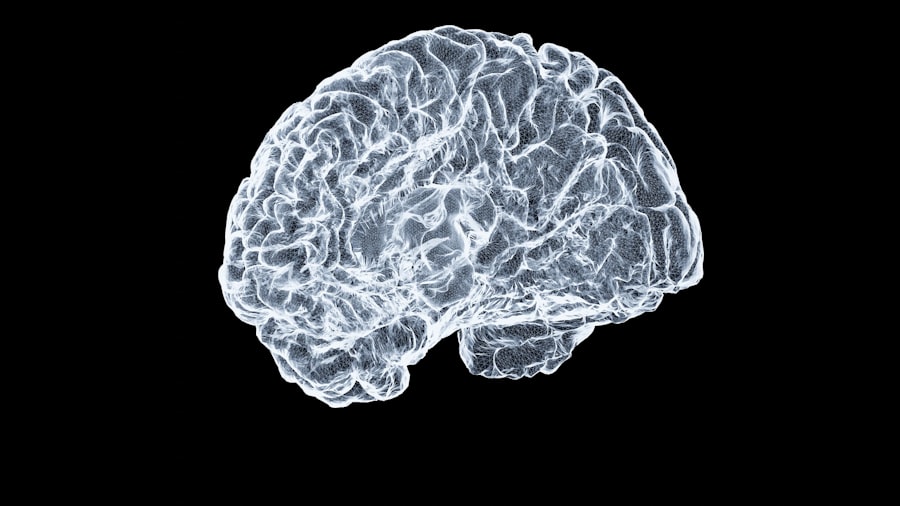
fMRI has gained prominence not only for its ability to visualize brain activity but also for its potential to predict behavior. By analyzing patterns of brain activation associated with specific tasks or stimuli, researchers can develop models that forecast how individuals are likely to respond in various situations. This predictive capability is particularly valuable in fields such as psychology, marketing, and even law enforcement, where understanding human behavior is crucial.
The predictive power of fMRI lies in its ability to capture subtle changes in brain activity that may precede conscious decision-making. For example, studies have demonstrated that certain neural patterns can indicate a person’s preference for one option over another before they are consciously aware of their choice. This insight opens up new avenues for understanding the subconscious influences on behavior and decision-making processes.
As researchers refine their methodologies and improve data analysis techniques, the accuracy of these predictions is expected to increase, further solidifying fMRI’s role as a vital tool in behavioral science.
Identifying Patterns of Brain Activity Associated with Specific Behaviors
One of the most compelling aspects of fMRI research is its capacity to identify distinct patterns of brain activity linked to specific behaviors. Through advanced statistical techniques and machine learning algorithms, researchers can analyze vast amounts of fMRI data to uncover correlations between neural activation and behavioral outcomes. This process often involves comparing brain scans from individuals engaged in various tasks or exposed to different stimuli, allowing scientists to pinpoint which areas of the brain are most active during particular behaviors.
For instance, research has shown that when individuals engage in social interactions or experience empathy, there is increased activation in regions such as the anterior insula and the medial prefrontal cortex. These findings suggest that certain neural circuits are consistently involved in social cognition and emotional processing. By establishing these connections, researchers can create a more comprehensive understanding of how specific behaviors arise from underlying neural mechanisms.
This knowledge not only enriches theoretical frameworks but also has practical implications for addressing social and emotional challenges faced by individuals.
The Potential for Predictive Models Based on fMRI Data
| Metric | Description | Value | Unit |
|---|---|---|---|
| Sample Size | Number of participants in the study | 50 | subjects |
| fMRI Resolution | Spatial resolution of the fMRI scans | 2 | mm isotropic |
| Prediction Accuracy | Accuracy of brain state prediction model | 85 | % |
| Cross-Validation Folds | Number of folds used in model validation | 5 | folds |
| Signal-to-Noise Ratio (SNR) | Quality measure of fMRI signal | 120 | unitless |
| TR (Repetition Time) | Time between successive fMRI scans | 2 | seconds |
| Number of Brain Regions Analyzed | Regions of interest (ROIs) used in prediction | 90 | regions |
| Model Type | Algorithm used for prediction | Support Vector Machine (SVM) | N/A |
The development of predictive models based on fMRI data represents a significant advancement in understanding human behavior. By leveraging machine learning techniques, researchers can train algorithms to recognize patterns within fMRI datasets that correlate with specific behavioral outcomes. These models can then be used to predict how individuals might behave in similar contexts based on their unique neural signatures.
Such predictive models hold immense potential across various domains. In clinical settings, they could assist in diagnosing mental health disorders by identifying characteristic patterns of brain activity associated with conditions like depression or anxiety. In marketing, companies could utilize these models to tailor advertisements based on predicted consumer responses, enhancing engagement and effectiveness.
As researchers continue to refine these models and validate their accuracy, the implications for both science and industry are profound.
Ethical Considerations in Predicting Behavior with fMRI
While the potential benefits of using fMRI to predict behavior are substantial, they also raise important ethical considerations. The ability to forecast human behavior based on neural data poses questions about privacy, consent, and the potential for misuse of information. For instance, if organizations were able to predict an individual’s behavior with high accuracy, it could lead to manipulative practices or discrimination based on perceived traits or tendencies.
Moreover, there is a concern regarding the interpretation of predictive models. Misunderstanding or over-reliance on these models could result in stigmatization or labeling individuals based on predicted behaviors rather than their actual actions. It is crucial for researchers and practitioners to navigate these ethical dilemmas carefully, ensuring that the use of fMRI data is grounded in respect for individual autonomy and dignity.
Establishing clear guidelines and ethical frameworks will be essential as this field continues to evolve.
Challenges and Limitations of Using fMRI to Predict Behavior
Despite its promise, using fMRI to predict behavior is not without challenges and limitations. One significant hurdle is the inherent variability in human brains; individual differences can lead to diverse patterns of activation that complicate the development of universal predictive models. Factors such as age, gender, cultural background, and even personal experiences can influence how one’s brain responds to stimuli, making it difficult to generalize findings across populations.
Additionally, the complexity of human behavior itself poses a challenge for prediction. Many behaviors are influenced by a multitude of factors beyond neural activity, including environmental context and social dynamics. As such, while fMRI can provide valuable insights into the neural correlates of behavior, it cannot account for every variable that contributes to decision-making processes.
Researchers must remain cautious about over-interpreting results and recognize that predictions based solely on neural data may not always align with actual behaviors.
Current Research and Findings in Predicting Behavior with fMRI
Current research utilizing fMRI to predict behavior is rapidly expanding, with numerous studies exploring various aspects of human cognition and decision-making. Recent findings have demonstrated that specific patterns of brain activity can reliably predict choices related to consumer preferences, moral judgments, and even social interactions. For example, studies have shown that neural responses in reward-related areas can forecast purchasing decisions before individuals consciously articulate their preferences.
Moreover, researchers are increasingly investigating how fMRI can be used to understand complex social behaviors such as cooperation and competition. By examining brain activity during social dilemmas or group interactions, scientists are uncovering the neural mechanisms that drive these behaviors. These insights not only enhance theoretical understanding but also have practical implications for improving interpersonal relationships and fostering collaboration in various settings.
Practical Applications of Predicting Behavior with fMRI
The practical applications of predicting behavior using fMRI are vast and varied. In clinical psychology, for instance, predictive models derived from fMRI data could aid in early diagnosis and intervention for mental health disorders. By identifying characteristic patterns associated with conditions like schizophrenia or bipolar disorder, clinicians could tailor treatment plans more effectively.
In marketing and advertising, companies are beginning to harness insights from fMRI studies to optimize their campaigns. By understanding how consumers’ brains respond to different messages or visuals, marketers can create more compelling content that resonates with target audiences. Additionally, industries such as education could benefit from fMRI research by developing strategies that align teaching methods with students’ cognitive processes.
Future Directions in fMRI Brain Study for Behavior Prediction
As technology advances and research methodologies improve, the future directions for fMRI studies focused on predicting behavior appear promising. One area ripe for exploration is the integration of fMRI with other neuroimaging techniques such as electroencephalography (EEG) or magnetoencephalography (MEG). Combining these modalities could provide a more comprehensive view of brain activity across different time scales and spatial resolutions.
Furthermore, advancements in machine learning algorithms will likely enhance the accuracy and reliability of predictive models derived from fMRI data. As researchers continue to refine their approaches and validate findings across diverse populations, the potential for real-world applications will expand significantly. Future studies may also delve deeper into understanding how contextual factors influence neural predictions, ultimately leading to more nuanced insights into human behavior.
The Implications and Impact of Predicting Behavior with fMRI
The ability to predict behavior using fMRI represents a significant leap forward in neuroscience and psychology. By uncovering the intricate relationships between brain activity and behavioral outcomes, researchers are paving the way for innovative applications across various fields. However, this progress comes with ethical responsibilities that must be addressed thoughtfully.
As society grapples with the implications of such predictive capabilities—ranging from clinical interventions to marketing strategies—it is essential to approach this knowledge with caution and respect for individual autonomy. The future of fMRI research holds great promise for enhancing our understanding of human behavior while also challenging us to consider the ethical dimensions of our discoveries. Ultimately, as scientists continue to explore this fascinating intersection between neuroscience and behavior prediction, they will shape not only academic discourse but also practical applications that could profoundly impact lives around the world.
In recent studies exploring the potential of fMRI in predicting brain activity, researchers have made significant strides in understanding how neural patterns correlate with cognitive functions. A related article that delves deeper into the implications of these findings can be found at My Cosmic Ventures, where the intersection of neuroscience and technology is examined in detail. This resource provides valuable insights into the future of brain prediction studies and their applications in various fields.
FAQs
What is an fMRI brain prediction study?
An fMRI brain prediction study uses functional Magnetic Resonance Imaging (fMRI) to observe brain activity and develop models that predict cognitive states, behaviors, or responses based on neural patterns.
How does fMRI work in brain prediction studies?
fMRI measures brain activity by detecting changes in blood flow, specifically the Blood Oxygen Level Dependent (BOLD) signal, which correlates with neural activity. Researchers analyze these signals to identify patterns linked to specific mental processes.
What are common applications of fMRI brain prediction studies?
Applications include predicting decision-making, emotional responses, disease progression, treatment outcomes, and understanding neural mechanisms underlying cognition and behavior.
What are the limitations of fMRI in brain prediction?
Limitations include relatively low temporal resolution, indirect measurement of neural activity, susceptibility to motion artifacts, and challenges in generalizing predictive models across individuals.
How accurate are predictions made using fMRI data?
Prediction accuracy varies depending on the study design, data quality, and algorithms used. While some models achieve high accuracy within controlled settings, generalizability to broader populations can be limited.
Is fMRI brain prediction research ethical?
Ethical considerations include informed consent, privacy of neural data, potential misuse of predictive information, and ensuring that findings are not overinterpreted or misapplied.
What types of machine learning techniques are used in fMRI brain prediction studies?
Common techniques include support vector machines, neural networks, random forests, and deep learning methods, which help identify complex patterns in high-dimensional fMRI data.
Can fMRI brain prediction studies be used in clinical practice?
While promising, most fMRI prediction models are still in research stages and require further validation before routine clinical application for diagnosis or treatment planning.
How is data collected in an fMRI brain prediction study?
Participants perform tasks or rest inside an MRI scanner while brain activity is recorded. The resulting data undergo preprocessing and analysis to extract meaningful features for prediction.
What is the future outlook for fMRI brain prediction studies?
Advances in imaging technology, computational methods, and larger datasets are expected to improve prediction accuracy and expand applications in neuroscience, psychology, and medicine.