
Perception compression is a cognitive process that enables individuals to process the large volume of sensory information encountered daily. The human brain uses filtering mechanisms to organize and reduce this information, which facilitates decision-making and allows people to concentrate on relevant stimuli. By compressing perception, the brain eliminates unnecessary details and enables individuals to interact with their environment more effectively.
Perception compression involves several cognitive processes, including attention, memory, and emotional processing. It represents an interaction between external stimuli and internal cognitive systems that determines how individuals interpret their surroundings. This process is important for understanding human environmental interaction and how various factors shape perception.
Research into perception compression has applications in psychology, neuroscience, and artificial intelligence development.
Key Takeaways
- Perception compression involves the brain efficiently filtering and simplifying sensory information to manage cognitive load.
- Attention plays a crucial role in selecting which sensory inputs are prioritized during perception compression.
- Memory and pattern recognition help the brain interpret compressed information based on past experiences.
- Emotions, culture, and environment significantly influence how perception compression occurs and what information is emphasized.
- Advances in technology and understanding perception compression have important implications for addressing cognitive disorders.
The Role of the Brain in Processing Information
The brain serves as the central hub for processing information, orchestrating a complex network of neural pathways that facilitate perception. Different regions of the brain are specialized for various functions, such as visual processing in the occipital lobe and auditory processing in the temporal lobe. This specialization allows for efficient handling of sensory input, enabling the brain to quickly interpret and respond to stimuli.
The intricate architecture of the brain ensures that it can manage vast amounts of information simultaneously, yet it also necessitates a system for prioritizing certain inputs over others. Neuroscientific research has revealed that the brain employs both bottom-up and top-down processing to make sense of sensory information. Bottom-up processing refers to the way sensory data is gathered and analyzed from the environment, while top-down processing involves using prior knowledge and expectations to interpret that data.
This dual approach allows the brain to create a cohesive understanding of experiences, effectively compressing perception by focusing on salient features while disregarding less relevant details. The interplay between these two processing methods highlights the brain’s remarkable ability to adapt and respond to an ever-changing world.
Sensory Input and Filtering
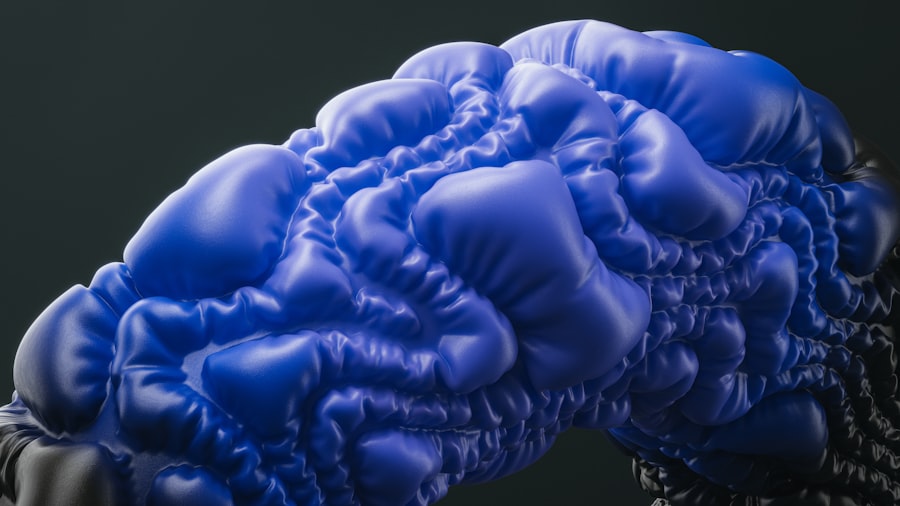
Sensory input is the raw data that the brain receives from the environment through various channels, including sight, sound, touch, taste, and smell. However, not all sensory information is equally important or relevant at any given moment. The brain employs filtering mechanisms to sift through this input, determining which stimuli warrant attention and which can be ignored.
This filtering process is essential for maintaining cognitive efficiency and preventing sensory overload. One of the key mechanisms involved in filtering sensory input is selective attention. This cognitive process allows individuals to focus on specific aspects of their environment while tuning out distractions.
For instance, when engaged in a conversation at a crowded café, a person may concentrate on their companion’s voice while filtering out background noise. This ability to selectively attend to certain stimuli is crucial for effective communication and interaction with the world. Additionally, the brain’s capacity for habituation—where repeated exposure to a stimulus leads to decreased responsiveness—further aids in filtering out irrelevant information, allowing individuals to focus on new or changing stimuli.
The Role of Attention in Perception Compression
Attention plays a pivotal role in perception compression by determining which sensory inputs are prioritized for processing. It acts as a spotlight, illuminating specific aspects of an experience while casting others into shadow. This selective focus enables individuals to navigate complex environments without becoming overwhelmed by the sheer volume of information available.
The ability to direct attention strategically is essential for effective learning, problem-solving, and decision-making. Research has shown that attention can be influenced by various factors, including motivation, emotional state, and environmental context.
Conversely, distractions or competing demands can divert attention away from important information, leading to potential misinterpretations or missed opportunities. Understanding how attention shapes perception compression can provide valuable insights into enhancing cognitive performance and improving learning outcomes.
Memory and Pattern Recognition
| Metric | Description | Typical Value/Range | Relevance to Perception Compression |
|---|---|---|---|
| Neural Firing Rate | Frequency at which neurons fire action potentials | 1-200 Hz | Higher rates can indicate more information being processed; compression may reduce redundant firing |
| Information Entropy | Measure of uncertainty or information content in neural signals | 1-10 bits per spike | Lower entropy after compression indicates efficient encoding of perception |
| Sparse Coding Ratio | Proportion of active neurons during perception | 5-20% | Sparse coding is a form of compression reducing overlap in neural representation |
| Compression Ratio | Ratio of original to compressed neural data size | 2:1 to 10:1 | Indicates efficiency of brain’s perceptual data compression |
| Latency Reduction | Decrease in processing time due to compression | 10-50 ms | Faster perception through compressed neural representations |
| Energy Consumption | Metabolic cost of neural activity during perception | ~20% of brain energy | Compression reduces redundant activity, lowering energy use |
Memory plays an integral role in perception compression by allowing individuals to draw upon past experiences when interpreting new information. The brain’s ability to recognize patterns enables it to make quick judgments based on familiar cues, facilitating efficient decision-making. When encountering a new situation, individuals often rely on their memories to identify similarities with previous experiences, allowing them to compress complex information into manageable chunks.
Pattern recognition is a fundamental cognitive skill that underlies many aspects of perception compression. It enables individuals to categorize stimuli based on shared characteristics, facilitating quicker responses and reducing cognitive load. For instance, when seeing a new type of fruit for the first time, an individual may recognize its color and shape as similar to other fruits they have encountered before, allowing them to infer its taste or texture without needing extensive exploration.
This ability to generalize from past experiences not only streamlines perception but also enhances learning by enabling individuals to build upon existing knowledge.
The Influence of Emotions on Perception Compression

Emotions significantly influence perception compression by shaping how individuals interpret sensory information.
For example, when someone feels anxious or fearful, they may become hyper-aware of potential threats in their environment, leading to heightened sensitivity toward negative stimuli.
Conversely, positive emotions can broaden attention and promote a more holistic view of experiences. The interplay between emotions and perception compression is evident in various contexts, including decision-making and social interactions. When emotions are involved, individuals may prioritize emotional cues over neutral information, impacting their judgments and responses.
This phenomenon underscores the importance of considering emotional factors when examining perception compression, as emotions can serve as both facilitators and barriers to effective information processing.
The Impact of Culture and Environment on Perception Compression
Culture and environment play crucial roles in shaping perception compression by influencing how individuals interpret sensory information. Cultural norms and values dictate what is considered relevant or important in a given context, guiding attention toward specific stimuli while downplaying others. For instance, individuals from collectivist cultures may prioritize social cues and group dynamics over individualistic pursuits, leading them to compress perceptions differently than those from individualistic cultures.
Environmental factors also contribute significantly to perception compression. The physical setting in which an individual finds themselves can affect their sensory experiences and attentional focus. For example, a bustling urban environment may lead individuals to develop heightened awareness of social interactions and potential dangers, while a serene natural setting may promote relaxation and a broader perspective on experiences.
Understanding how culture and environment shape perception compression can provide valuable insights into cross-cultural communication and interaction.
The Limits of Perception Compression
Despite its many advantages, perception compression has inherent limits that can lead to misinterpretations or oversights. The brain’s reliance on heuristics—mental shortcuts used for problem-solving—can sometimes result in cognitive biases that distort perceptions. For instance, confirmation bias may lead individuals to favor information that aligns with their preexisting beliefs while disregarding contradictory evidence.
Such biases can hinder critical thinking and lead to flawed decision-making. Additionally, the limitations of perception compression become evident in situations where rapid judgments are required under uncertainty. In high-stress environments or emergencies, individuals may rely heavily on instinctual responses rather than thorough analysis, potentially leading to errors in judgment.
Recognizing these limits is essential for developing strategies that enhance cognitive flexibility and improve decision-making processes in complex situations.
The Role of Technology in Perception Compression
In today’s digital age, technology plays an increasingly significant role in shaping perception compression. The proliferation of smartphones and social media platforms has transformed how individuals consume information and interact with their environments. While technology offers unprecedented access to information, it also presents challenges related to attention management and sensory overload.
The constant barrage of notifications and updates can lead to fragmented attention and diminished capacity for deep processing of information. As individuals navigate multiple streams of content simultaneously, they may struggle to compress perceptions effectively, resulting in superficial understanding rather than meaningful engagement with material. However, technology also offers tools that can enhance perception compression through personalized content delivery and adaptive learning systems that cater to individual preferences and needs.
Implications for Cognitive Disorders
Understanding perception compression has significant implications for cognitive disorders such as ADHD, autism spectrum disorder (ASD), and anxiety disorders. Individuals with these conditions often experience challenges related to attention regulation and sensory processing, which can impact their ability to compress perceptions effectively. For instance, those with ADHD may struggle with selective attention, leading to difficulties in filtering out distractions and focusing on relevant stimuli.
Research into perception compression can inform therapeutic approaches aimed at improving cognitive functioning in individuals with these disorders. By developing strategies that enhance attention regulation and sensory integration, practitioners can help individuals better navigate their environments and improve their overall quality of life. Additionally, insights gained from studying perception compression may contribute to the development of assistive technologies designed to support individuals with cognitive challenges.
Conclusion and Future Directions in Understanding Perception Compression
In conclusion, perception compression is a multifaceted cognitive process that plays a vital role in how individuals interpret their environments. By filtering sensory input through mechanisms such as attention, memory, and emotional responses, the brain effectively streamlines information processing while navigating complex stimuli. However, this process is not without its limitations; biases and external influences can distort perceptions and impact decision-making.
As research continues to explore the intricacies of perception compression, future directions may include investigating its implications for mental health interventions and educational practices. Understanding how cultural contexts shape perception will also be crucial for fostering effective communication across diverse populations. Ultimately, advancing knowledge in this area holds promise for enhancing cognitive functioning and improving overall well-being in an increasingly complex world.
Recent research into perception compression in the brain has shed light on how our minds process and filter sensory information, allowing us to navigate complex environments efficiently. For a deeper understanding of this fascinating topic, you can explore the related article on the subject at this link. This article delves into the mechanisms behind perception compression and its implications for cognitive science.
FAQs
What is perception compression in the brain?
Perception compression in the brain refers to the process by which the brain reduces the amount of sensory information it processes by filtering, summarizing, or prioritizing inputs. This allows for efficient interpretation and response to the environment without being overwhelmed by excessive data.
How does the brain achieve perception compression?
The brain achieves perception compression through mechanisms such as selective attention, sensory adaptation, and predictive coding. These processes help focus on relevant stimuli, ignore redundant information, and anticipate incoming sensory data based on prior experience.
Why is perception compression important for brain function?
Perception compression is important because it enables the brain to process information quickly and efficiently, conserving cognitive resources. It helps in making rapid decisions, maintaining focus, and avoiding sensory overload, which is crucial for survival and effective interaction with the environment.
What role does perception compression play in sensory processing?
In sensory processing, perception compression helps the brain prioritize significant stimuli over irrelevant background noise. This selective filtering ensures that important sensory inputs are enhanced while less critical information is suppressed, facilitating clearer perception and better behavioral responses.
Can perception compression affect how we experience reality?
Yes, perception compression can influence our subjective experience of reality by shaping which sensory inputs are emphasized or diminished. This means that our perception is not a direct reflection of the external world but a compressed and interpreted version constructed by the brain.
Is perception compression related to any neurological conditions?
Alterations in perception compression mechanisms have been linked to certain neurological and psychiatric conditions, such as autism spectrum disorder, schizophrenia, and sensory processing disorders. These conditions may involve difficulties in filtering or prioritizing sensory information effectively.
How is perception compression studied in neuroscience?
Perception compression is studied using various methods including neuroimaging techniques (fMRI, EEG), behavioral experiments, computational modeling, and electrophysiological recordings. These approaches help researchers understand how the brain processes and compresses sensory information.
Can perception compression be improved or trained?
Certain cognitive training and mindfulness practices may enhance aspects of perception compression by improving attention control and sensory discrimination. However, the extent to which perception compression can be consciously modified varies among individuals and depends on the specific neural mechanisms involved.