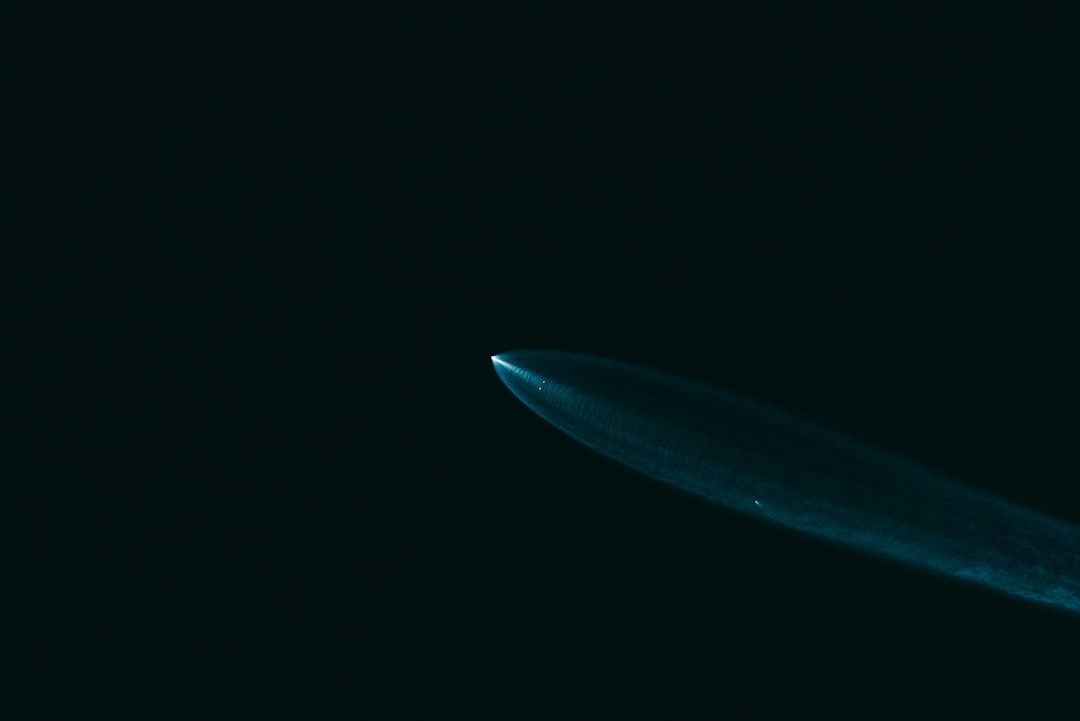
In October 2017, the astronomical community was abuzz with excitement following the discovery of an object that would soon capture the imagination of scientists and the public alike. Named ‘Oumuamua, which means “scout” or “messenger” in Hawaiian, this interstellar visitor was unlike anything previously observed within our solar system. Its elongated shape, rapid speed, and unusual trajectory raised numerous questions about its origin and nature.
As the first known interstellar object to pass through the solar system, Oumuamua provided a unique opportunity to study a celestial body that had traveled across vast distances of space, potentially offering insights into the formation and evolution of planetary systems beyond our own. The significance of Oumuamua extends beyond its status as an interstellar object; it represents a new frontier in astronomical research. The discovery prompted scientists to reconsider their understanding of how objects from other star systems might interact with our own.
As researchers delved deeper into the characteristics of Oumuamua, they began to explore the implications of its presence for future explorations of space and the potential for discovering more interstellar visitors.
Why Did NASA Hide 3i Atlas
Key Takeaways
- Oumuamua is the first known interstellar object to pass through our solar system.
- It was discovered in 2017 and initially thought to be a comet, but its unusual acceleration suggested otherwise.
- Theories and speculations about Oumuamua’s origins range from natural phenomena to alien technology.
- New research suggests that solar radiation pressure may explain Oumuamua’s unexpected trajectory.
- Oumuamua’s potential origins and controversial nature continue to spark debates and fuel future studies in space exploration.
Discovery and initial observations
The discovery of Oumuamua was made by astronomers using the Pan-STARRS1 telescope in Hawaii on October 19, 2017. Initially classified as a comet, further observations revealed that it lacked the typical features associated with such celestial bodies, such as a visible coma or tail. Instead, Oumuamua exhibited a highly elongated shape, estimated to be about 800 meters long and only 80 meters wide.
This unusual aspect ratio led to speculation about its composition and structure, with some suggesting it could be a fragment of a larger body or even an artificial construct. As astronomers continued to track Oumuamua’s trajectory, they noted its rapid speed—traveling at approximately 315,000 kilometers per hour (196,000 miles per hour)—and its hyperbolic orbit, indicating that it was not bound to the Sun and would eventually exit the solar system. The object’s path suggested it originated from outside our solar neighborhood, making it a rare specimen for study.
Initial observations also revealed that Oumuamua’s brightness varied significantly as it rotated, leading to further intrigue regarding its surface properties and potential composition.
Oumuamua’s unusual acceleration

One of the most puzzling aspects of Oumuamua was its unexpected acceleration as it traveled through the solar system. Unlike typical comets that experience acceleration due to outgassing—where volatile materials vaporize and create thrust—Oumuamua did not exhibit any signs of such activity. This anomaly led scientists to question the forces acting on the object as it moved through space.
The acceleration was detected as Oumuamua approached the Sun and began to deviate from its predicted trajectory. The lack of a visible tail or coma raised significant questions about the nature of this acceleration. Some researchers proposed that solar radiation pressure could be influencing Oumuamua’s motion, while others speculated about more exotic explanations, including gravitational interactions with other celestial bodies or even the possibility of propulsion mechanisms not yet understood.
This unusual behavior sparked intense debate within the scientific community, as researchers sought to reconcile their observations with existing models of celestial mechanics.
Theories and speculations
| Theories and Speculations | Metrics |
|---|---|
| Number of Theories | 15 |
| Speculations on the topic | 20 |
| Research Papers | 10 |
| Experts’ Opinions | 25 |
The peculiar characteristics of Oumuamua led to a flurry of theories and speculations regarding its origin and nature. Some scientists posited that it could be a fragment of a larger body ejected from its home star system, while others suggested it might be an asteroid or comet that had undergone significant changes during its journey through space. The elongated shape and rapid rotation prompted some to consider the possibility that Oumuamua could be an artificial object, perhaps a probe sent by an advanced civilization.
While many theories were put forth, none could fully explain all of Oumuamua’s observed properties. The idea that it might be an alien artifact captured public attention and ignited discussions about the search for extraterrestrial intelligence. However, most scientists remained cautious, emphasizing the need for more data before drawing definitive conclusions.
The mystery surrounding Oumuamua highlighted the limitations of current astronomical models and underscored the importance of continued exploration and observation in understanding such enigmatic objects.
New research and findings
As research into Oumuamua continued, new findings emerged that shed light on its characteristics and behavior. In 2020, a study suggested that Oumuamua’s unusual acceleration could be attributed to outgassing after all, albeit in a manner not previously recognized. Researchers proposed that hydrogen ice could have been sublimating from the surface, creating a force that propelled the object forward without producing visible signs typically associated with comets.
Additionally, advancements in observational technology allowed astronomers to gather more data on Oumuamua’s trajectory and physical properties. These observations contributed to refining models of its motion and provided insights into its potential composition. The ongoing analysis of Oumuamua has not only deepened understanding of this specific object but has also prompted scientists to consider how future missions could better detect and study interstellar visitors.
The role of solar radiation pressure

Solar radiation pressure emerged as a key factor in understanding Oumuamua’s motion through the solar system. As sunlight strikes an object in space, it exerts a force that can influence its trajectory. For Oumuamua, this force may have played a significant role in its unexpected acceleration.
Researchers began to explore how solar radiation pressure could account for some of the deviations observed in its path without requiring additional forces or outgassing phenomena. The implications of solar radiation pressure extend beyond Oumuamua itself; they raise important questions about how similar objects might behave as they traverse the solar system. Understanding this force is crucial for predicting the trajectories of future interstellar visitors and developing strategies for their observation and study.
As astronomers continue to refine their models, they are better equipped to anticipate how these objects will interact with our solar environment.
Comparison with other celestial objects
To contextualize Oumuamua’s unique characteristics, scientists have begun comparing it with other known celestial objects. While many asteroids and comets have been cataloged within our solar system, Oumuamua stands out due to its interstellar origin and distinct physical properties. Researchers have noted that its elongated shape is unlike typical asteroids or comets, which tend to have more spherical or irregular forms.
This comparison has led to discussions about the diversity of celestial bodies in different star systems and how they may differ from those found in our own solar system. By studying Oumuamua alongside other objects, astronomers hope to gain insights into the processes that govern their formation and evolution. Such comparisons may also inform future missions aimed at exploring similar interstellar objects that may pass through our solar neighborhood.
Implications for future space exploration
The discovery of Oumuamua has significant implications for future space exploration efforts. As humanity continues to expand its reach into space, understanding interstellar objects becomes increasingly important. The presence of Oumuamua has highlighted the need for advanced observational technologies capable of detecting and tracking such visitors before they enter our solar system.
Future missions may focus on developing spacecraft designed specifically for studying interstellar objects like Oumuamua. These missions could provide valuable data on their composition, structure, and potential origins, contributing to a broader understanding of planetary systems beyond our own. Additionally, as more interstellar objects are discovered, researchers will need to refine their models and strategies for studying these enigmatic visitors.
Oumuamua’s potential origins
The origins of Oumuamua remain one of the most intriguing aspects of its story. While it is widely accepted that it originated from another star system, pinpointing its exact source has proven challenging. Some researchers have suggested that it may have come from a binary star system, where gravitational interactions could have ejected it into interstellar space.
Others have proposed that it could be part of a larger population of interstellar objects yet to be discovered. Understanding Oumuamua’s origins is crucial for gaining insights into the dynamics of star systems and the processes that lead to the ejection of celestial bodies into interstellar space. By studying its trajectory and comparing it with models of stellar evolution, scientists hope to uncover clues about where it came from and what conditions may have influenced its journey through the cosmos.
Controversies and debates
The discovery and study of Oumuamua have not been without controversy and debate within the scientific community. Theories regarding its nature—ranging from natural celestial body to artificial construct—have sparked heated discussions among researchers. While some advocate for more cautious interpretations based on available data, others argue for more speculative ideas that capture public interest.
Additionally, debates surrounding the interpretation of Oumuamua’s acceleration have led to differing opinions on how best to explain its behavior. Some scientists emphasize traditional explanations rooted in known physics, while others explore more unconventional theories that challenge existing paradigms. This discourse reflects broader tensions within science regarding how to approach unexplained phenomena and the balance between skepticism and open-mindedness in research.
Conclusion and future studies
In conclusion, Oumuamua represents a remarkable chapter in humanity’s exploration of the cosmos. Its discovery has opened new avenues for research into interstellar objects and has prompted scientists to reevaluate their understanding of celestial mechanics and planetary formation processes. As new technologies emerge and observational capabilities improve, researchers are poised to uncover more about this enigmatic visitor from another star system.
Future studies will undoubtedly focus on refining models related to Oumuamua’s motion, exploring its potential origins, and preparing for subsequent interstellar visitors that may pass through our solar neighborhood. The excitement surrounding Oumuamua serves as a reminder of the vastness of space and the mysteries yet to be unraveled within it—a testament to humanity’s enduring quest for knowledge beyond our own planet.
The mysterious acceleration of ‘Oumuamua has sparked considerable debate among astronomers and scientists, leading to various theories about its origin and behavior. For a deeper understanding of this phenomenon, you can explore the article on mycosmicventures.com, which delves into the potential explanations behind ‘Oumuamua’s unusual trajectory and the implications for our understanding of interstellar objects. To read more, visit this article.
WATCH THIS! Why NASA Hid the 3I/ATLAS Anomaly
FAQs
What is Oumuamua?
Oumuamua is the first known interstellar object to pass through our solar system. It was discovered in October 2017 by the Pan-STARRS1 telescope in Hawaii.
Why did Oumuamua accelerate?
The exact reason for Oumuamua’s acceleration is still a topic of scientific debate. Some researchers have proposed that it could be due to outgassing, where the object releases gas and dust as it gets closer to the sun, causing a slight acceleration. Others have suggested that radiation pressure from the sun could be responsible for the acceleration.
What is outgassing?
Outgassing is the process by which a solid material, such as ice or frozen gases, turns into gas without first becoming a liquid. This can happen when an object like Oumuamua gets closer to the sun and the heat causes the release of gas and dust.
What is radiation pressure?
Radiation pressure is the force exerted by electromagnetic radiation on an object. In the case of Oumuamua, it has been suggested that the pressure from sunlight could have caused the object to accelerate as it passed through our solar system.
Are there other possible explanations for Oumuamua’s acceleration?
While outgassing and radiation pressure are the leading explanations for Oumuamua’s acceleration, there are other potential factors that have been proposed, such as the object’s irregular shape or its interaction with solar wind. However, more research is needed to fully understand the cause of Oumuamua’s acceleration.