
In the vast expanse of the cosmos, celestial objects often capture the imagination of scientists and enthusiasts alike. Among these, Oumuamua stands out as a remarkable interstellar visitor that sparked intense debate and curiosity upon its discovery in 2017. This elongated, cigar-shaped object was the first known interstellar object to pass through our solar system, prompting questions about its origin and composition.
In contrast, 3i Atlas, a more recent discovery, has also garnered attention for its unique characteristics and potential implications for our understanding of celestial phenomena. Both Oumuamua and 3i Atlas represent significant milestones in the study of space, offering insights into the nature of objects that traverse the vast distances between stars. The intrigue surrounding these two objects lies not only in their physical properties but also in their trajectories and origins.
As astronomers continue to study Oumuamua and 3i Atlas, they uncover layers of complexity that challenge existing theories about the formation and behavior of celestial bodies. The exploration of these objects opens new avenues for research, pushing the boundaries of human knowledge about the universe. This article delves into the origins, characteristics, trajectories, and scientific interest surrounding Oumuamua and 3i Atlas, highlighting their significance in contemporary astronomy. Why Did NASA Hide 3i Atlas
Key Takeaways
- Oumuamua is the first known interstellar object to pass through our solar system, while 3i Atlas is a recently discovered interstellar object.
- Oumuamua was discovered in 2017 by the Pan-STARRS1 telescope in Hawaii, while 3i Atlas was discovered in 2021 by the Asteroid Terrestrial-impact Last Alert System (ATLAS) in Hawaii.
- Oumuamua is a long, cigar-shaped object with a reddish color, while 3i Atlas is a small, rocky object with a highly elongated shape.
- Oumuamua’s trajectory showed that it was not bound by the sun’s gravity, while 3i Atlas is also on a hyperbolic trajectory, indicating it is not bound to the solar system.
- Scientists are still debating the potential origins of Oumuamua, with some suggesting it could be a fragment of a larger body, while 3i Atlas’s origin is still under investigation, with researchers considering various possibilities such as it being a fragment of a larger object or a disrupted comet.
Origin and Discovery of Oumuamua
Oumuamua was first detected on October 19, 2017, by astronomers using the Pan-STARRS1 telescope in Hawaii. Its name, derived from the Hawaiian word for “scout” or “messenger,” reflects its status as the first known interstellar object to enter our solar system. Initial observations revealed that Oumuamua was moving at an extraordinary speed, suggesting it originated from outside the solar system.
The object’s hyperbolic trajectory indicated that it was not bound by the sun’s gravity, further confirming its interstellar nature. The discovery of Oumuamua was met with excitement and skepticism within the scientific community. As researchers analyzed its trajectory and brightness, they noted its unusual elongated shape and rapid rotation.
These characteristics led to various hypotheses regarding its composition and origin. Some scientists proposed that Oumuamua could be a fragment of a larger body ejected from its home star system, while others speculated about more exotic possibilities, including artificial origins. The debate surrounding Oumuamua’s nature continues to fuel research and discussion among astronomers.
Origin and Discovery of 3i Atlas
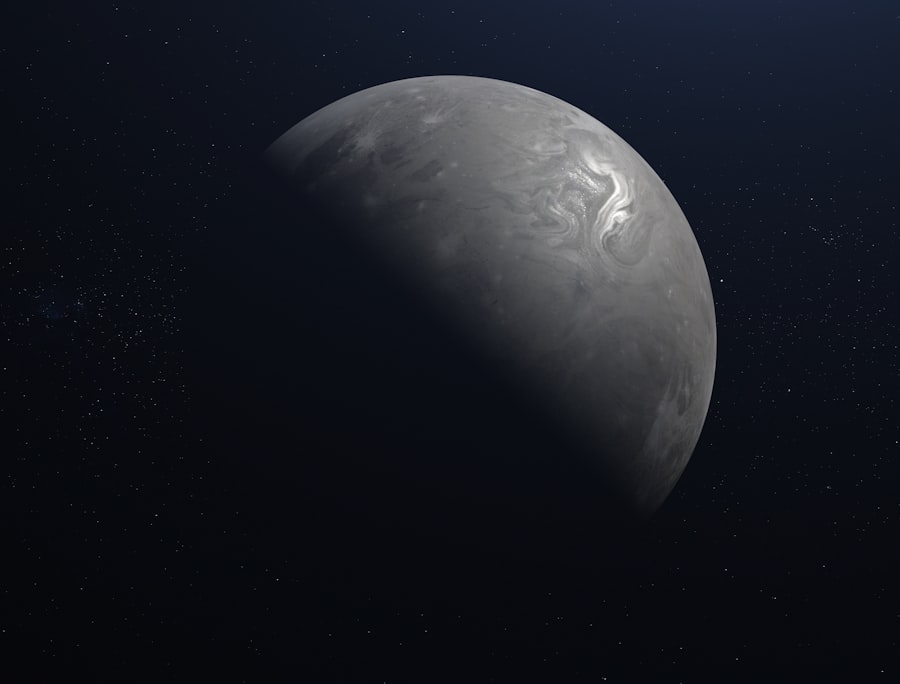
In contrast to Oumuamua’s groundbreaking discovery in 2017, 3i Atlas emerged on the astronomical scene more recently. Detected in early 2023 by the Asteroid Terrestrial-impact Last Alert System (ATLAS), this object quickly captured the attention of researchers due to its unique characteristics and trajectory. The name “3i Atlas” reflects its classification as an interstellar object, with “3i” denoting its identification number within the ATLAS system.
The discovery of 3i Atlas marked another significant moment in the study of interstellar objects. As astronomers began to gather data on its trajectory and physical properties, they noted similarities to Oumuamua while also recognizing distinct differences. The rapid advancements in observational technology have allowed scientists to identify and analyze such objects with greater precision than ever before.
As a result, 3i Atlas has become a focal point for ongoing research into the nature of interstellar visitors and their implications for our understanding of the universe.
Physical Characteristics of Oumuamua
| Physical Characteristic | Measurement |
|---|---|
| Length | 400 meters |
| Width | 40 meters |
| Rotation Period | 7.3 hours |
| Color | Reddish |
Oumuamua’s physical characteristics have been a subject of intense scrutiny since its discovery. The object is estimated to be approximately 800 meters long and only about 80 meters wide, giving it an elongated, cigar-like shape that is unlike any known asteroid or comet in our solar system. Its surface appears to be highly reflective, suggesting a metallic or icy composition.
Observations indicated that Oumuamua exhibited variations in brightness as it rotated, leading scientists to conclude that it has a highly irregular shape. The object’s unusual characteristics have led to various theories regarding its composition. Some researchers propose that Oumuamua may be composed of a dense material such as metal or rock, while others suggest it could be a fragment of a larger icy body that has undergone significant processing during its journey through space.
The lack of a visible coma or tail—typical features of comets—further complicates efforts to classify Oumuamua definitively. As scientists continue to analyze data from telescopes and space missions, they hope to gain deeper insights into the physical properties of this enigmatic interstellar traveler.
Physical Characteristics of 3i Atlas
In comparison to Oumuamua, 3i Atlas presents a different set of physical characteristics that intrigue astronomers. Initial observations suggest that this interstellar object is smaller than Oumuamua, with estimates placing its size at around 300 meters in length. Its shape appears more spherical than elongated, which raises questions about its formation and history.
The surface composition of 3i Atlas remains largely unknown; however, preliminary data indicate that it may possess a rocky or icy exterior similar to other small bodies found within our solar system. The differences in physical characteristics between Oumuamua and 3i Atlas highlight the diversity of interstellar objects that traverse our solar system. While Oumuamua’s elongated form has led to various hypotheses about its origins, 3i Atlas’s more compact shape may suggest a different evolutionary path.
As researchers continue to gather data on both objects, they aim to understand how their physical properties relate to their origins and trajectories through space.
Trajectory and Speed of Oumuamua

Oumuamua’s trajectory through our solar system was nothing short of extraordinary. After entering the solar system from the direction of the constellation Lyra, it reached its closest approach to the sun on September 9, 2017. During this close encounter, Oumuamua reached speeds exceeding 315,000 kilometers per hour (196,000 miles per hour), making it one of the fastest-moving objects ever observed within our solar system.
The speed and trajectory of Oumuamua raised questions about its origin and the forces acting upon it during its journey. Some scientists noted that its acceleration could not be entirely explained by gravitational interactions with celestial bodies alone; this led to speculation about possible outgassing or other phenomena affecting its motion.
The unique trajectory of Oumuamua has made it a focal point for studies on how interstellar objects interact with our solar system and what this means for future encounters with similar bodies.
Trajectory and Speed of 3i Atlas
In contrast to Oumuamua’s remarkable speed and trajectory, 3i Atlas has exhibited a different path through space since its discovery in early 2023. Initial observations indicate that 3i Atlas is traveling at a relatively moderate speed compared to Oumuamua, with estimates placing its velocity at around 100,000 kilometers per hour (62,000 miles per hour). This slower pace allows astronomers more time to study its characteristics as it approaches our solar system.
The trajectory of 3i Atlas is also noteworthy; it is expected to make a close approach to Earth within the next few years.
The study of 3i Atlas’s trajectory will contribute valuable insights into how interstellar objects navigate through our solar system and how their paths may be influenced by various factors.
Potential Origins of Oumuamua and 3i Atlas
The origins of Oumuamua have been a topic of intense debate among scientists since its discovery. Some researchers propose that it originated from a distant star system, possibly ejected due to gravitational interactions with other celestial bodies. Others suggest that it could be a fragment from a larger body that underwent significant processing during its journey through space.
The lack of definitive evidence regarding its composition complicates efforts to pinpoint its exact origin. In contrast, the potential origins of 3i Atlas remain largely speculative at this stage due to its recent discovery. However, initial analyses suggest that it may share similarities with other small bodies found within our solar system, such as asteroids or comets originating from the Kuiper Belt or Oort Cloud.
As researchers continue to study both objects, they hope to uncover clues about their origins that could shed light on the processes that govern the formation and evolution of celestial bodies in different star systems.
Scientific Interest and Research on Oumuamua
Oumuamua’s discovery ignited a wave of scientific interest that continues to resonate within the astronomical community today. Researchers have conducted numerous studies aimed at understanding its physical properties, trajectory, and potential origins. The object has become a focal point for discussions about interstellar objects and their implications for our understanding of cosmic phenomena.
The scientific interest surrounding Oumuamua extends beyond mere curiosity; it raises fundamental questions about the nature of celestial bodies that traverse our solar system from distant star systems. As astronomers analyze data collected from telescopes and space missions, they seek to unravel the mysteries surrounding this enigmatic object. The ongoing research into Oumuamua serves as a catalyst for broader investigations into interstellar objects and their role in shaping our understanding of the universe.
Scientific Interest and Research on 3i Atlas
Similar to Oumuamua, 3i Atlas has generated significant scientific interest since its detection in early 2023. Researchers are eager to explore its physical characteristics, trajectory, and potential origins as they seek to understand how this interstellar object fits into the broader context of celestial phenomena. The advancements in observational technology have enabled scientists to gather data on 3i Atlas with unprecedented precision.
As studies on 3i Atlas progress, researchers are particularly interested in comparing it with other known interstellar objects like Oumuamua. By examining similarities and differences between these two bodies, scientists hope to gain insights into the diversity of interstellar visitors and what they can reveal about their home star systems. The ongoing research into 3i Atlas represents an exciting chapter in the exploration of interstellar objects and their implications for our understanding of cosmic evolution.
Implications and Future Studies of Oumuamua and 3i Atlas
The discoveries of Oumuamua and 3i Atlas carry profound implications for our understanding of the universe and our place within it. These interstellar visitors challenge existing theories about celestial bodies and prompt researchers to reconsider how we classify and study such objects. As astronomers continue to investigate their origins, trajectories, and physical properties, they are likely to uncover new insights that reshape our understanding of cosmic phenomena.
Looking ahead, future studies on both Oumuamua and 3i Atlas will play a crucial role in advancing our knowledge of interstellar objects. As technology continues to improve, researchers will have access to more sophisticated tools for observing these enigmatic bodies. The ongoing exploration of Oumuamua and 3i Atlas not only enhances our understanding of individual objects but also contributes to broader discussions about the formation and evolution of celestial bodies across different star systems.
Ultimately, these studies will deepen humanity’s connection to the cosmos and inspire future generations to explore the mysteries that lie beyond our planet.
In the ongoing debate about the origins and characteristics of interstellar objects, a fascinating comparison between ‘Oumuamua and 3I/ATLAS has emerged. For a deeper understanding of these celestial visitors and their implications for our knowledge of the universe, you can read more in this related article: Interstellar Objects: A Comparative Analysis of ‘Oumuamua and 3I/ATLAS. This article delves into the unique features of each object and explores the theories surrounding their formation and trajectory.
WATCH THIS! Why NASA Hid the 3I/ATLAS Anomaly
FAQs
What is Oumuamua?
Oumuamua is the first known interstellar object to pass through our solar system. It was discovered in 2017 and is believed to have originated from outside our solar system.
What is 3i Atlas?
3i Atlas is a potentially hazardous asteroid that was discovered in 2019. It has been closely monitored due to its close approach to Earth.
How do Oumuamua and 3i Atlas compare in terms of origin?
Oumuamua is believed to have originated from outside our solar system, while 3i Atlas is a near-Earth asteroid that orbits within our solar system.
What are the differences in size and shape between Oumuamua and 3i Atlas?
Oumuamua is estimated to be about 800 meters long and is elongated in shape, while 3i Atlas is smaller, with a diameter of about 30 meters.
What are the potential impacts of Oumuamua and 3i Atlas on Earth?
Oumuamua’s trajectory took it safely past Earth, posing no threat of impact. 3i Atlas, on the other hand, has been classified as a potentially hazardous asteroid due to its close approach to Earth, but the current trajectory does not pose an immediate threat.