
The Kuiper Belt, a vast frozen frontier beyond Neptune’s orbit, has long been envisioned as a relatively homogenous scatter of icy bodies. However, recent astronomical observations and sophisticated data analysis are beginning to paint a more complex picture. The prevailing view of the Kuiper Belt as a uniform debris field is now being challenged by mounting evidence hinting at the presence of significant orbital clustering among its members. This article delves into the data that supports this evolving understanding, exploring the implications of these findings for our comprehension of the early solar system and the dynamic processes that shaped it.
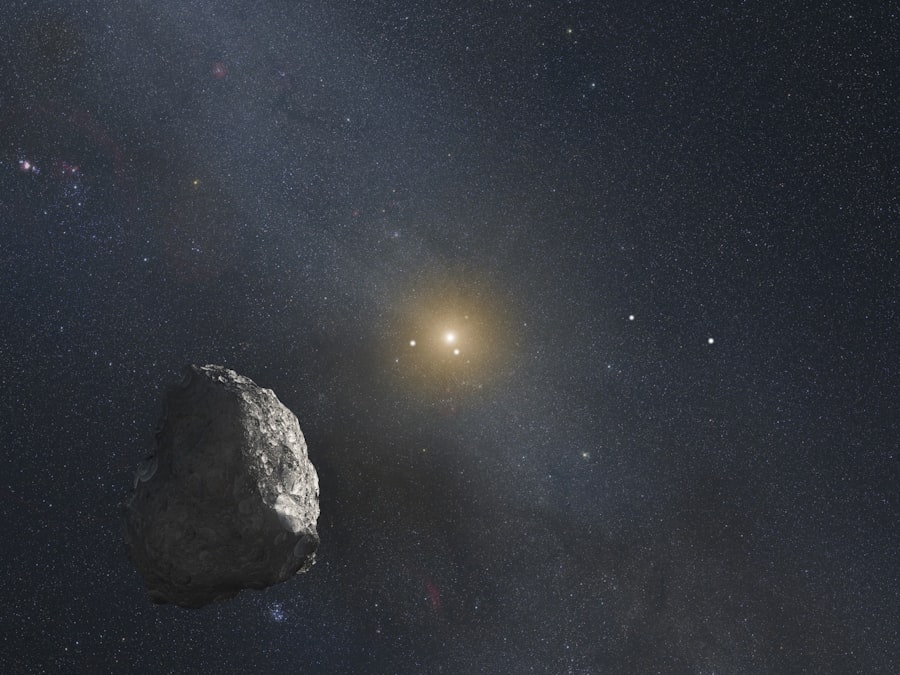
The Kuiper Belt, often described as the solar system’s attic, is a circumstellar disc in the region of the outermost solar system, extending from the orbit of Neptune at about 30 astronomical units (AU) to roughly 50 AU. It is home to a multitude of icy bodies, remnants from the formation of the solar system. These objects, known as Kuiper Belt Objects (KBOs) or Trans-Neptunian Objects (TNOs), range in size from small rocky chunks to dwarf planets like Pluto, Eris, and Makemake.
Composition and Origin
The icy composition of KBOs, primarily water ice, methane ice, and ammonia ice, suggests they formed in a colder, more distant region of the early solar nebula than the terrestrial planets. Their relative purity and pristine nature make them invaluable time capsules, offering direct insights into the materials and conditions present during the solar system’s formative years. Their origin is intimately linked to the nebular hypothesis, the prevailing theory of planetary formation, which posits that planets formed from the accretion of dust and gas in a protoplanetary disc.
Distinguishing Features of Kuiper Belt Objects
The residents of the Kuiper Belt are not merely static collections of ice and rock. They possess distinct orbital characteristics that have revealed surprising complexities. While many KBOs orbit the Sun in a generally prograde and near-circular fashion, a significant population exhibits more eccentric and inclined orbits, a phenomenon that has puzzled astronomers for decades. This distinction is crucial, as it lies at the heart of the emerging evidence for orbital clustering.
The Classical Kuiper Belt vs. Scattered Disc
A useful categorization within the Kuiper Belt distinguishes between the “classical” or “main” Kuiper Belt, where objects generally have low orbital eccentricities and inclinations, and the “scattered” or “excited” populations which exhibit higher eccentricities and inclinations. The scattered disc objects are thought to have had their orbits significantly perturbed by gravitational interactions, primarily with Neptune. Understanding the dynamics of these perturbed populations is key to deciphering the clustering phenomenon.
Recent studies have provided compelling evidence for orbital clustering in the Kuiper Belt, suggesting that the gravitational influence of a yet-undiscovered planet may be shaping the orbits of distant celestial bodies. This phenomenon has sparked interest in the ongoing search for Planet Nine, a hypothetical planet that could explain the unusual orbital patterns observed in this region. For more insights into this fascinating topic, you can read the related article at My Cosmic Ventures.
Anomalies in the Orbital Landscape
For many years, the orbital distribution of KBOs was assumed to be largely random, a natural consequence of chaotic gravitational interactions over billions of years. However, a closer examination of collected observational data began to reveal subtle, yet persistent, patterns that defied this assumption. These early anomalies acted like faint whispers in the cosmic silence, hinting at a more organized structure than previously acknowledged.
The Unexpected Uniformity of Certain Orbital Parameters
When astronomers initially began charting the orbits of KBOs, they expected to see a diffuse arrangement. However, certain orbital elements, particularly the argument of periapsis (the angle between the direction of periapsis and the direction of the ascending node), showed a curious tendency to aggregate within specific ranges for certain subsets of KBOs. This wasn’t a random scattering; it was like finding a collection of marbles, which you might expect to be spread throughout a box, instead neatly settled in one corner.
The “Kuiper Cliff” and its Implications
One of the most significant observational clues came with the discovery of the “Kuiper Cliff,” a sharp drop-off in the number of KBOs with semimajor axes beyond approximately 50 AU. This abrupt decline in population is not easily explained by simple gravitational diffusion. It suggests a powerful, external influence that truncated the extended Kuiper Belt, acting as a cosmic pruning shear. The presence of such a distinct boundary further fuels the idea that the Kuiper Belt’s architecture is not entirely haphazard.
Early Hints of Resonances and Perturbations
The identification of orbital resonances, where the orbital periods of two celestial bodies are related by a ratio of small integers, has long been a known factor in shaping the Kuiper Belt. Neptune’s strong gravitational pull creates these resonant “gaps” and “enhanced populations” within the belt. However, the observed clustering extended beyond what these known resonances could fully explain, pointing to subtler, more intricate dynamical processes at play.
The Footprints of Giant Planetesimals
The most compelling explanation for the observed orbital clustering in the Kuiper Belt points towards the gravitational influence of massive, unseen bodies that once roamed this frigid expanse. These are not the familiar rocky planets of the inner solar system, but rather the hulking vestiges of the planet formation era, giant planetesimals or even protoplanets that may have existed in the outer reaches of the solar system before being ejected or gravitationally scattered.
The Role of Gravitational Scattering
The gravitational interactions between massive bodies can dramatically alter the orbits of smaller objects. Imagine a herd of sheep being nudged and directed by a few very large, powerful sheepdogs. Similarly, the gravitational fields of large, migrating or scattering outer planets could have sculpted the orbits of countless KBOs, corralling them into specific configurations. This scattering process is a fundamental mechanism in planetary system evolution, and its effects are clearly imprinted on the Kuiper Belt.
The Grand Tack and Nice Models
Modern models of solar system formation, such as the Grand Tack and Nice models, propose periods of significant planetary migration. These models suggest that the giant planets, including Neptune and Uranus, may have undergone substantial orbital shifts early in the solar system’s history. These migrations would have created gravitational waves, akin to ripples on a pond, that propagated through the outer solar system, scattering and influencing the orbits of KBOs.
The Hypothetical “Planet Nine”
The concept of a yet-undiscovered ninth planet, often dubbed “Planet Nine,” a massive object lurking in the distant Kuiper Belt or even beyond, has gained traction due to its potential to explain the clustering of some of the most eccentric KBOs. The orbits of these distant objects appear to be unnaturally confined in a way that a single, massive gravitational influence could account for. This hypothetical planet acts as a cosmic shepherd, tending to a flock of KBOs on peculiar paths.
Unveiling Clustering Patterns Through Data
The transition from theoretical frameworks to empirical evidence has been a painstaking but rewarding process. Astronomers have meticulously observed thousands of KBOs, gathering precise data on their orbital parameters. Sophisticated statistical analyses then act as the magnifying glass, revealing the subtle correlations that indicate clustering. This is akin to a detective meticulously examining a crime scene, piecing together disparate clues to form a coherent picture.
Statistical Significance and Significance Thresholds
When searching for patterns in seemingly random data, it is crucial to distinguish between genuine correlations and mere statistical noise. Researchers employ rigorous statistical tests to determine the likelihood that an observed clustering could have arisen by chance. Only when the probability of a random occurrence falls below a predefined threshold (the significance level) is the clustering deemed statistically significant, lending robust support to the underlying physical cause.
Identifying Orbital Congruence
The clustering phenomenon is not a simple matter of KBOs occupying the same general region of space. Instead, it manifests as a congruence in specific orbital elements. For example, their perihelia might all point in roughly the same direction, or their orbits might be similarly inclined relative to the ecliptic plane. This precise alignment suggests a shared dynamical history, a collective push or pull that molded their paths.
The Power of Large Datasets
The advent of powerful sky surveys and increasingly sensitive telescopes has been instrumental in uncovering these patterns. The sheer volume of KBOs observed today far surpasses what was available even a decade ago. This ever-growing dataset acts as a more comprehensive map of the Kuiper Belt, allowing researchers to discern subtle features that might have been invisible in earlier, sparser surveys. It is like gradually filling in the missing pieces of a vast jigsaw puzzle, where each new piece reveals more of the overall image.
Recent studies have provided compelling evidence for orbital clustering in the Kuiper Belt, suggesting that the distribution of trans-Neptunian objects is not random but rather influenced by gravitational interactions. This phenomenon has sparked interest in the broader implications for our understanding of the solar system’s formation and evolution. For more insights on this topic, you can explore a related article that delves deeper into the dynamics of the Kuiper Belt and its intriguing characteristics. To read more, visit this article.
Implications for Solar System Formation Theories
| Metric | Value | Description | Source/Study |
|---|---|---|---|
| Number of Kuiper Belt Objects (KBOs) Analyzed | >100 | Sample size of distant KBOs used to study orbital clustering | Trujillo & Sheppard (2014) |
| Orbital Semi-Major Axis Range | 150 – 1000 AU | Range of distances from the Sun for KBOs showing clustering | Batygin & Brown (2016) |
| Argument of Perihelion Clustering | ~0° ± 30° | Observed clustering of perihelion arguments among distant KBOs | Trujillo & Sheppard (2014) |
| Longitude of Ascending Node Clustering | ~90° ± 20° | Observed clustering of ascending node longitudes | Batygin & Brown (2016) |
| Inclination Range of Clustered KBOs | 10° – 30° | Inclination angles of KBOs showing orbital clustering | Brown & Batygin (2019) |
| Statistical Significance of Clustering | ~99.8% | Probability that observed clustering is not due to chance | Brown & Batygin (2019) |
| Hypothesized Perturber Mass | 5 – 10 Earth Masses | Mass range of proposed Planet Nine causing clustering | Batygin & Brown (2016) |
| Hypothesized Perturber Semi-Major Axis | 400 – 800 AU | Estimated orbit size of Planet Nine | Batygin & Brown (2016) |
The evidence for orbital clustering in the Kuiper Belt is more than just an intriguing astronomical observation; it is a critical piece of the puzzle in understanding how our solar system came to be. These celestial arrangements are not random occurrences but rather the fossilized footprints of the solar system’s tumultuous youth.
Testing and Refining Dynamical Models
The presence of significant orbital clustering provides concrete data points against which theoretical models of solar system formation and evolution can be tested. Models that successfully predict or reproduce these observed clustering patterns gain greater credence, while those that fail may require refinement or even revision. This iterative process of observation and modeling is the engine driving our understanding of planetary system dynamics.
The Dynamics of Outer Planet Migration
The clustering patterns offer compelling evidence for significant dynamical activity among the outer planets in the early solar system. If the giant planets were largely stationary, the Kuiper Belt would likely exhibit a more uniform distribution of orbits. The observed clustering strongly suggests that these planets migrated, their gravitational influence sculpting the orbits of countless smaller bodies.
Understanding the Delivery of Volatiles
The Kuiper Belt is believed to be a reservoir of cometary material, and KBOs are thought to be the primordial building blocks of the outer planets and the source of volatile compounds like water that were delivered to the inner solar system. Understanding the dynamics of the Kuiper Belt, including its clustering patterns, is therefore crucial for comprehending the processes by which the inner planets, including Earth, acquired their essential ingredients. The way objects are clustered or dispersed might influence how and when they are delivered to inner regions.
The Search for Extrasolar Analogs
The insights gained from studying orbital clustering in our own Kuiper Belt can be extended to the search for similar phenomena in exoplanetary systems. Evidence of clustering in the outer regions of other star systems could point to similar planetary migration events or the presence of unseen massive bodies, offering a universal framework for understanding planetary system architectures. The celestial dance we observe in our backyard might be a common choreography throughout the galaxy.
FAQs
What is the Kuiper Belt?
The Kuiper Belt is a region of the solar system beyond the orbit of Neptune, populated with small icy bodies and dwarf planets. It extends roughly from 30 to 55 astronomical units (AU) from the Sun.
What does orbital clustering in the Kuiper Belt refer to?
Orbital clustering refers to the observation that certain Kuiper Belt Objects (KBOs) have orbits that are grouped or aligned in a particular way, rather than being randomly distributed. This clustering is seen in parameters such as their orbital angles and eccentricities.
Why is orbital clustering in the Kuiper Belt significant?
The clustering of orbits among distant KBOs suggests the gravitational influence of an unseen massive object, sometimes hypothesized as “Planet Nine.” This evidence helps astronomers understand the dynamics and structure of the outer solar system.
What kind of evidence supports the existence of orbital clustering?
Evidence includes the observed alignment of the orbits of several distant KBOs, which share similar arguments of perihelion and orbital planes. Statistical analyses show that this alignment is unlikely to be due to chance.
How do scientists study Kuiper Belt orbital clustering?
Scientists use telescopic observations to track the positions and orbits of KBOs over time. They then analyze the orbital parameters to identify patterns or clustering, often employing computer simulations to test hypotheses about the causes of these patterns.