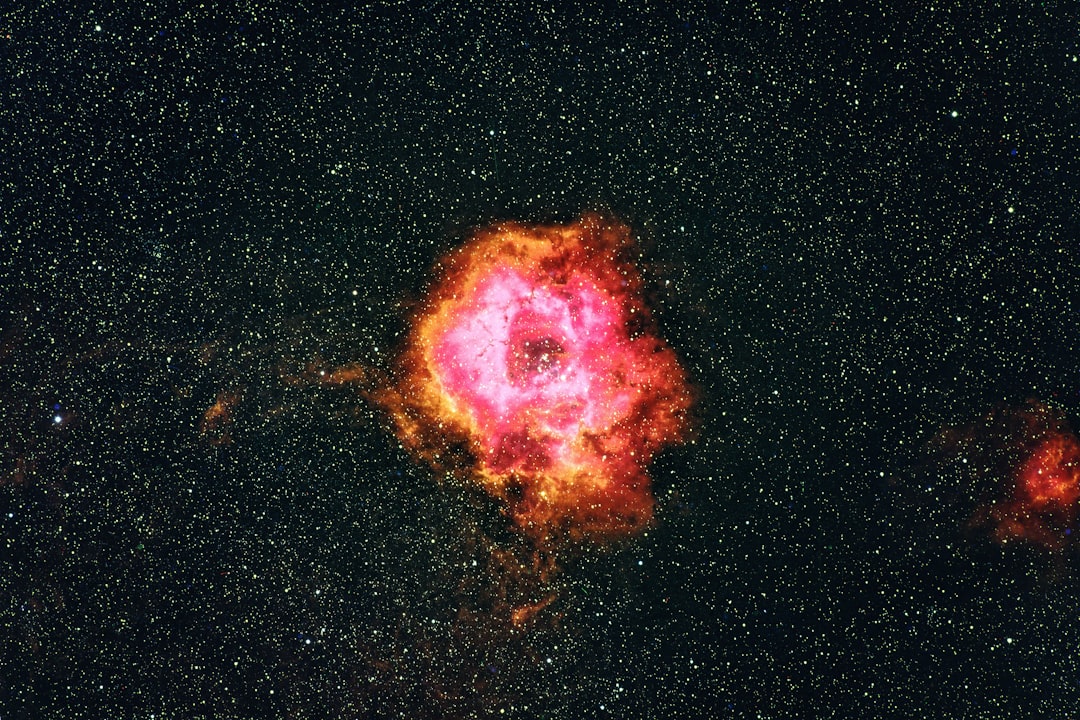
The universe, an unfathomably vast expanse, holds within it remnants of its earliest epochs. Among these cosmic relics, certain celestial bodies stand out not only for their immense distances but for the profound questions they pose about the universe’s origins and evolution. One such object is HD 140283, often referred to as the “Methuselah star” due to its astonishingly ancient nature. This star, a mere speck in our night sky to the naked eye, has become a focal point for astronomers seeking to understand the very first generations of stars to ignite after the Big Bang. Its existence challenges certain prevailing cosmological models, prompting a closer examination of stellar evolution, dating techniques, and the intricacies of cosmic history.
HD 140283 is a subgiant star located approximately 190 to 200 light-years away from Earth, in the constellation Libra. Its designation, HD 140283, indicates its entry in the Henry Draper Catalogue, a comprehensive astronomical catalog of stellar spectra. While its apparent faintness might suggest obscurity, its spectral characteristics reveal it to be one of the oldest known stars in our galaxy. It is a Population II star, a classification that typically denotes stars with a low abundance of heavy elements, a hallmark of stars formed in the early universe when heavy elements had not yet been synthesized in significant quantities.
The Significance of its Classification: Population II Stars
The universe’s history can be broadly divided into epochs marked by the dominant types of stars. The very first stars, often called Population III stars, are theorized to have been composed almost entirely of hydrogen and helium, forged in the Big Bang. These primordial giants are believed to have been massive and short-lived, their explosive deaths seeding the universe with the first heavy elements. Subsequent generations of stars, like our Sun (a Population I star), are enriched with these heavier elements. Population II stars, such as HD 140283, represent an intermediate stage, formed from material enriched by the supernovae of the first stars but still relatively poor in heavy elements compared to younger stars. Studying these stars provides a crucial link between the universe’s initial state and its current composition.
A Glimpse into Cosmic Dawn: What Makes HD 140283 Special
What sets HD 140283 apart is its inferred age, which has consistently placed it at the very edge of, or even slightly beyond, the currently accepted age of the universe. This apparent discrepancy has fueled extensive research and debate, compelling astronomers to scrutinize the methods used to date such ancient objects and the cosmological models themselves. Its metal-poor nature, meaning it contains very few elements heavier than helium, is a key indicator of its ancient origin. Early stars formed when the universe was a much simpler chemical soup, and HD 140283 carries that signature.
The discovery of HD 140283, also known as the “Methuselah star,” has captivated astronomers due to its age, estimated to be around 13.7 billion years, which raises intriguing questions about the formation of the universe. For a deeper understanding of this ancient star and its significance in the study of cosmic history, you can read a related article at My Cosmic Ventures. This article explores the implications of HD 140283’s age and what it reveals about the early universe.
The Challenge of Age Determination: Methods and Uncertainties
Determining the precise age of a star is a complex undertaking, particularly for objects as distant and ancient as HD 140283. Astronomers rely on a variety of astrophysical techniques, each with its own inherent assumptions and potential sources of error. The age of a star is fundamentally linked to its mass, composition, and evolutionary stage. By observing these properties and comparing them to theoretical models of stellar evolution, scientists can estimate how long the star has been burning its nuclear fuel.
Stellar Evolution Models: The Theoretical Framework
The lifecycle of a star is governed by the principles of nuclear physics and gravity. As a star ages, it consumes its hydrogen fuel in its core, gradually transforming into helium. This process leads to changes in the star’s luminosity, temperature, and size. Stellar evolution models are sophisticated computer simulations that map out these predicted changes based on a star’s initial mass and chemical composition. Astronomers use these models as a benchmark to interpret their observations of stars like HD 140283.
Main Sequence and Beyond: Tracing the Star’s Journey
Stars spend the majority of their lives on the “main sequence,” a phase where they fuse hydrogen into helium in their cores. When a star exhausts its core hydrogen, it evolves off the main sequence, transitioning into stages like a subgiant, red giant, or white dwarf, depending on its mass. HD 140283 is currently in the subgiant phase. Its position on the Hertzsprung-Russell (H-R) diagram, a plot of stellar luminosity versus temperature, provides crucial clues about its age.
Analyzing Spectral Signatures: The Role of Chemical Composition
The light emitted by a star carries information about its chemical makeup. By analyzing the star’s spectrum—the rainbow of light separated into its constituent wavelengths—astronomers can identify the presence and abundance of various elements. For HD 140283, its exceptionally low metallicity (the astronomical term for the abundance of elements heavier than hydrogen and helium) is a strong indicator of its antiquity. Elements heavier than lithium were forged in stars, and the early universe had very little of them.
Metallicity as a Cosmic Clock: Decoding Ancient Stars
The abundance of elements like oxygen, iron, and calcium in a star’s atmosphere serves as a proxy for its age. Stars formed earlier in the universe’s history inherited a less enriched interstellar medium, and therefore have fewer heavy elements. HD 140283 exhibits significantly lower abundances of these metals compared to stars like our Sun, suggesting it formed when the universe was chemically nascent.
Measuring Stellar Properties: Distance and Luminosity
Accurate measurements of a star’s distance and luminosity are essential for age determination. Distance is typically determined through parallax, a method that measures the apparent shift in a star’s position as the Earth orbits the Sun. Luminosity, the total amount of energy a star emits, is then calculated using its apparent brightness and distance. Precision in these measurements is paramount, as even small errors can translate to significant uncertainties in age estimates.
The Gaia Mission: Revolutionizing Astrometry
The European Space Agency’s Gaia mission has been a game-changer in providing highly precise measurements of stellar positions, distances, and motions. Gaia’s data has enabled astronomers to refine the distances to many stars, including HD 140283, leading to more accurate calculations of their luminosities and, consequently, their ages.
The Methuselah Star’s Age: A Source of Cosmological Puzzles
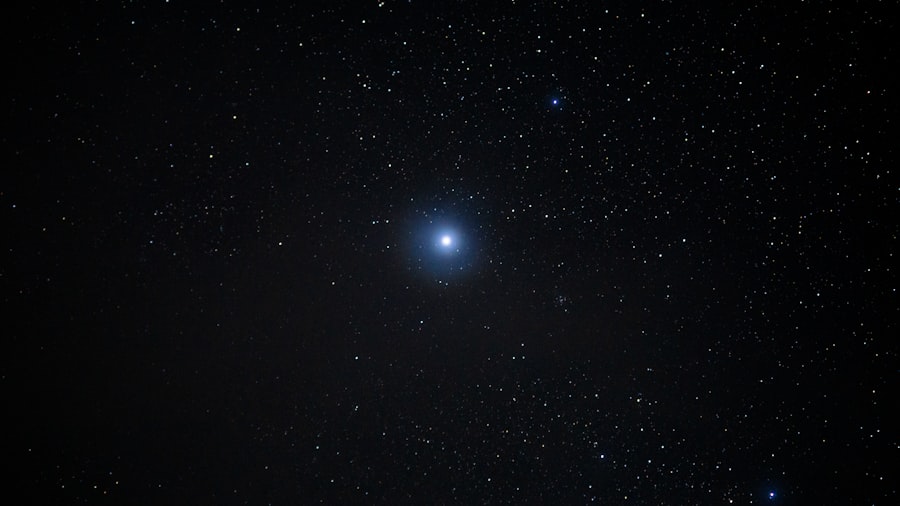
The initial estimates of HD 140283’s age presented a perplexing puzzle. Some calculations suggested an age that exceeded the accepted age of the universe, which is currently estimated to be around 13.8 billion years. This apparent paradox has spurred intense scientific investigation, with researchers refining their observational data and theoretical models to resolve the discrepancy.
Early Age Estimates: Surprising and Contradictory
When HD 140283 was first studied in detail, its estimated age hovered around 14 to 15 billion years. This was problematic because it implied the star existed before the Big Bang, the event that marked the beginning of the observable universe. This led to considerable scientific debate and a re-evaluation of the dating methodologies.
Implications for the Age of the Universe: A Tightening Constraint
If an individual star is demonstrably older than the universe itself, it points to a fundamental flaw in either our understanding of stellar evolution or the cosmological timeline. The age of HD 140283 thus serves as a critical constraint on cosmological models, pushing for increasingly precise age determinations of both stars and the universe.
Refining the Age: The Ongoing Scientific Process
Subsequent analyses, incorporating more precise data from instruments like Gaia and improved stellar evolution models, have gradually refined the age estimates for HD 140283. While the exact number continues to be debated and revised, the consensus suggests an age that, while still incredibly ancient, is now more comfortably within the bounds of the universe’s age, albeit at the very upper limit.
Sources of Uncertainty: From Observational Errors to Model Assumptions
The uncertainties in age determination arise from several factors. Observational errors in measuring stellar brightness, temperature, and metallicity can propagate into age estimates. Furthermore, stellar evolution models rely on assumptions about internal stellar processes, such as convection and nuclear reaction rates, which may not perfectly represent reality.
HD 140283 and the Early Universe: A Window into Reionization
The existence of ancient stars like HD 140283 provides invaluable insights into the early universe, a period characterized by dramatic transformations. This era, often referred to as the “Cosmic Dark Ages” and the subsequent “Epoch of Reionization,” witnessed the formation of the first galaxies and the ignition of the first stars, which bathed the universe in ultraviolet radiation.
The Cosmic Dark Ages: A Universe Without Light
Following the Big Bang, the universe was a hot, dense plasma. As it expanded and cooled, electrons and protons combined to form neutral atoms, primarily hydrogen and helium. This period, from a few hundred thousand years after the Big Bang until the formation of the first luminous objects, is known as the Cosmic Dark Ages. During this time, the universe was largely devoid of light.
The First Stars and Galaxies: Lighting Up the Cosmos
The formation of the first stars and galaxies marked the end of the Cosmic Dark Ages. These early stellar populations, likely massive and short-lived, began to emit light and radiation, gradually ionizing the neutral hydrogen that filled the universe.
The Epoch of Reionization: A Universe Transformed
The ultraviolet radiation emitted by these early stars played a crucial role in reionizing the universe. This process stripped electrons from neutral atoms, turning the universe transparent to light once again. The study of stars like HD 140283, which formed during or shortly after this epoch, helps us understand the conditions and processes at play during this transformative period.
Understanding the Ionization Process: The Role of Early Stars
The chemical composition of HD 140283, particularly its low metallicity, is consistent with stars formed from the pristine material of the early universe. Studying the light from such stars allows astronomers to infer the properties of the interstellar medium at that time and to better understand the sources responsible for reionization.
The discovery of HD 140283, often referred to as the “Methuselah star,” has captivated astronomers due to its age, estimated to be around 13.7 billion years, which challenges our understanding of stellar evolution. This ancient star provides valuable insights into the early universe and the formation of elements. For those interested in exploring more about the implications of such discoveries, a related article can be found here, which delves into the significance of HD 140283 and its role in unraveling the mysteries of cosmic history.
Future Prospects and Remaining Questions
| Property | Value |
|---|---|
| Star Name | HD 140283 |
| Age | Approximately 14.46 billion years |
| Distance from Earth | 190.1 light years |
| Composition | Primarily made of hydrogen and helium |
| Discovery Year | 1912 |
Despite significant advancements, HD 140283 continues to present intriguing avenues for future research. Ongoing observations and refinements in theoretical models promise to shed further light on its true age and its implications for our understanding of cosmology and stellar evolution.
Next-Generation Telescopes and Observational Techniques
The development of advanced telescopes, both ground-based and space-based, will undoubtedly enhance our ability to study ancient stars like HD 140283. Instruments with greater sensitivity and spectral resolution will allow for more precise measurements of stellar properties, reducing the uncertainties associated with age determination.
The James Webb Space Telescope (JWST): A New Era of Discovery
The James Webb Space Telescope (JWST), with its unparalleled infrared capabilities, is poised to revolutionize our understanding of the early universe. Its ability to penetrate dust and observe faint, distant objects makes it an ideal tool for studying the first stars and galaxies, and for refining the age estimates of objects like HD 140283.
Revisiting Stellar Models: Refining Our Understanding of Stellar Life Cycles
The persistent challenges posed by the age of HD 140283 necessitate a continuous re-evaluation of our stellar evolution models. Astronomers are actively working to incorporate more sophisticated physics into these simulations, aiming to better replicate the complex processes that govern stellar lifecycles, particularly for metal-poor stars.
The Nuances of Stellar Physics: Unraveling Complex Processes
Understanding the precise details of nuclear fusion rates, convection within stars, and the effects of rotation and magnetic fields is crucial for accurate age dating. Subtle inaccuracies in these areas can lead to significant deviations in predicted stellar ages.
The Stellar Population Puzzle: HD 140283 in Context
HD 140283 is not an isolated enigma. The study of other ancient, metal-poor stars within our galaxy is crucial for building a comprehensive picture of the early stellar populations. By comparing their properties, astronomers can identify trends, test hypotheses, and solidify our understanding of how stars formed and evolved in the nascent universe.
Searching for More Methuselahs: Expanding the Sample
The ongoing discovery and study of other stars with similar characteristics to HD 140283 will be vital. A larger sample size allows for more robust statistical analyses and a more complete understanding of the variations within early stellar populations. Each additional ancient star studied refines the broader cosmic narrative.
In conclusion, HD 140283, despite its modest appearance, has proven to be a cosmic beacon, illuminating the profound challenges and ongoing advancements in our quest to understand the universe’s origins. Its ancient nature, once a perplexing anomaly, now serves as a critical benchmark, pushing the boundaries of our scientific knowledge and reminding us of the vast and still largely unexplored depths of cosmic history. The ongoing study of this venerable star promises to continue shaping our understanding of the universe for years to come.
FAQs
What is the oldest known star in the universe, HD 140283?
HD 140283, also known as the Methuselah star, is considered to be the oldest known star in the universe. It is estimated to be about 14.46 billion years old, which is only a few hundred million years younger than the estimated age of the universe itself.
How was the age of HD 140283 determined?
The age of HD 140283 was determined using a combination of observations from the Hubble Space Telescope and ground-based telescopes. By measuring the star’s distance from Earth, its luminosity, and its chemical composition, astronomers were able to calculate its age with a high degree of accuracy.
What makes HD 140283 significant in the study of the universe?
HD 140283 is significant because it provides valuable insights into the early stages of the universe. Studying the oldest known star can help astronomers better understand the processes of star formation, the evolution of galaxies, and the chemical composition of the early universe.
Where is HD 140283 located?
HD 140283 is located in the constellation Libra, approximately 190.1 light-years away from Earth. It is a subgiant star, meaning that it has exhausted the hydrogen fuel in its core and is in the process of evolving into a red giant.
What can the study of HD 140283 tell us about the future of the universe?
Studying the oldest known star can provide valuable insights into the future of the universe. By understanding the processes that have shaped HD 140283 over its long lifespan, astronomers can make predictions about the fate of other stars and galaxies in the distant future.