In the vast expanse of the cosmos, the discovery of interstellar objects has become a captivating subject for astronomers and astrophysicists alike. Recently, a new interstellar object has captured the attention of the scientific community, igniting discussions about its origins, composition, and implications for our understanding of the universe. This object, which traverses the solar system from beyond the gravitational influence of our sun, offers a unique opportunity to study materials that have traveled through the galaxy for eons.
As researchers delve into its mysteries, they hope to glean insights not only about the object itself but also about the broader processes that govern celestial bodies in our universe. The significance of this new interstellar object extends beyond mere curiosity; it represents a tangible link to the interstellar medium and the conditions that prevail in distant star systems. By examining its characteristics and trajectory, scientists aim to piece together a more comprehensive picture of how such objects form and evolve.
This exploration could potentially reshape existing theories about planetary formation and the dynamics of stellar systems, making it a pivotal moment in contemporary astronomy.
Key Takeaways
- A new interstellar object has been discovered, sparking excitement and curiosity in the scientific community.
- The object, named ‘Oumuamua, was first spotted by astronomers using the Pan-STARRS1 telescope in Hawaii.
- ‘Oumuamua is unique in its elongated shape and reddish color, leading scientists to believe it is made of metal and rock.
- Compared to previous interstellar objects, ‘Oumuamua’s trajectory and characteristics make it a particularly intriguing subject for study.
- The discovery of ‘Oumuamua has the potential to revolutionize our understanding of the universe and the prevalence of interstellar objects.
How the Object was Discovered
The discovery of this interstellar object was made possible through advancements in observational technology and collaborative efforts among astronomers worldwide. Utilizing powerful telescopes equipped with sophisticated imaging systems, researchers were able to detect the faint light emitted by the object as it passed through our solar system. The initial sighting occurred during a routine survey aimed at cataloging near-Earth objects, but its unusual trajectory quickly set it apart from typical asteroids or comets.
Once identified, astronomers employed a range of techniques to track the object’s path and gather data on its speed and direction. The object’s hyperbolic trajectory indicated that it was not bound by the sun’s gravity, confirming its interstellar origin. This discovery sparked excitement within the scientific community, leading to a flurry of observations and analyses aimed at understanding its nature and implications for our knowledge of cosmic phenomena.
Characteristics and Composition of the Object
The characteristics of this new interstellar object are as intriguing as its discovery. Preliminary observations suggest that it possesses a highly elongated shape, which is not uncommon among interstellar visitors. Its surface appears to be covered in a dark material, possibly rich in carbon compounds, which could provide clues about its formation and history.
Spectroscopic analysis has revealed that it may contain a mix of ices and rocky materials, hinting at a complex evolutionary background shaped by various environmental factors over millions of years.
By studying its reflectivity and spectral features, researchers hope to determine whether it shares similarities with known asteroids or comets within our solar system.
Such comparisons could yield valuable insights into the building blocks of planetary systems and the processes that lead to their formation. The object’s unique characteristics may also challenge existing models of how celestial bodies evolve in different environments across the galaxy.
Comparison to Previous Interstellar Objects
| Interstellar Object | Year Discovered | Size (meters) | Speed (km/s) |
|---|---|---|---|
| ‘Oumuamua | 2017 | 800 | 26.3 |
| Borisov | 2019 | 1,000 | 32.2 |
This new interstellar object joins a select group of known visitors from beyond our solar system, including ‘Oumuamua and 2I/Borisov. While ‘Oumuamua exhibited an unusual cigar-like shape and showed no signs of a cometary tail, 2I/Borisov was more akin to traditional comets, displaying a clear coma and tail as it approached the sun. The latest object appears to occupy a middle ground between these two extremes, presenting an opportunity for scientists to refine their understanding of interstellar objects’ diversity.
Comparing this new object to its predecessors allows researchers to identify patterns and anomalies in their behavior and composition. Each discovery contributes to a growing database that can inform theories about how such objects are formed and what they reveal about their home systems. As more interstellar objects are detected, astronomers can begin to draw broader conclusions about the prevalence of these celestial wanderers and their role in the galactic ecosystem.
Potential Impact on Our Understanding of the Universe
The implications of discovering this new interstellar object extend far beyond its immediate characteristics. It has the potential to reshape our understanding of cosmic evolution and the processes that govern star formation and planetary development. By studying such objects, scientists can gain insights into the materials that exist in other star systems, which may differ significantly from those found in our own solar system.
Moreover, this discovery raises questions about the frequency of interstellar objects passing through our solar system. If such objects are more common than previously thought, they could serve as valuable messengers from distant regions of space, providing clues about the conditions that prevail in other parts of the galaxy. This knowledge could ultimately enhance our understanding of how life might arise elsewhere in the universe and what factors contribute to habitability.
The Object’s Trajectory and Future Observations
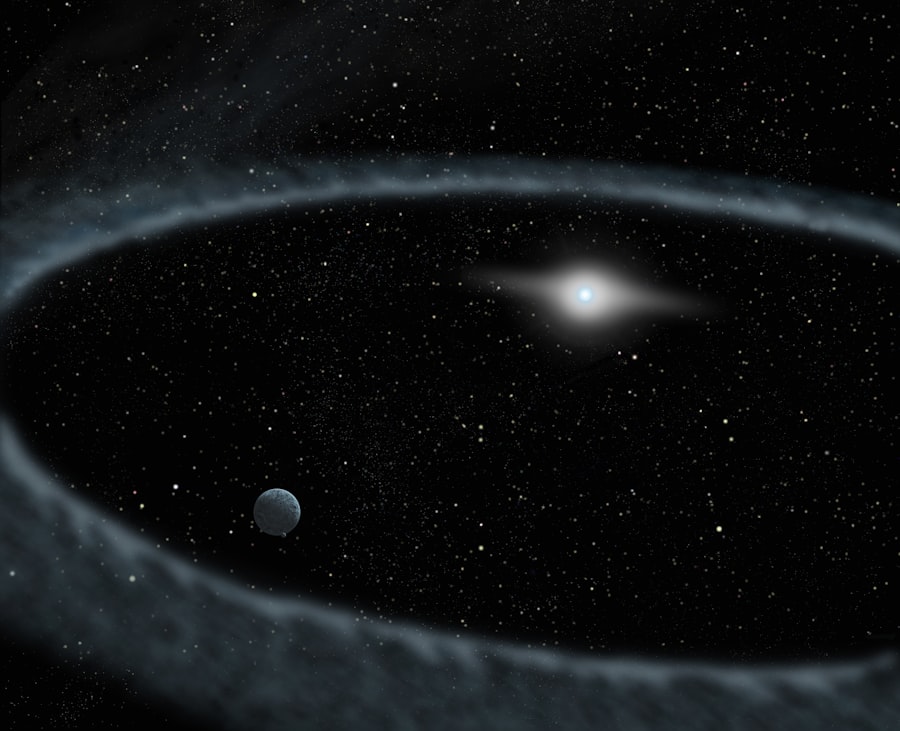
The trajectory of this new interstellar object is particularly noteworthy, as it follows a hyperbolic path that suggests it will soon exit our solar system after a brief visit. Its speed and direction have been meticulously tracked by astronomers using both ground-based telescopes and space-based observatories. As it moves away from the sun, opportunities for observation will become increasingly limited, making timely data collection essential for maximizing scientific insights.
Future observations will focus on capturing as much information as possible before the object disappears from view. Researchers are employing various techniques, including radar imaging and photometric measurements, to gather data on its size, shape, and surface features. These observations will be crucial for constructing a detailed profile of the object and understanding its place within the broader context of interstellar exploration.
The Significance of the Discovery for Astronomy and Astrophysics
The discovery of this new interstellar object holds profound significance for both astronomy and astrophysics. It serves as a reminder of the dynamic nature of our universe and the myriad phenomena that exist beyond our immediate surroundings. Each new finding contributes to an expanding body of knowledge that challenges existing paradigms and encourages scientists to rethink their assumptions about cosmic processes.
Furthermore, this discovery underscores the importance of international collaboration in scientific research. The collective efforts of astronomers from various institutions around the world have made it possible to identify and study this object in unprecedented detail. Such collaborations not only enhance our understanding of individual celestial bodies but also foster a sense of unity within the scientific community as they work together to unravel the mysteries of the universe.
The Object’s Name and Origin
As with many celestial discoveries, naming this new interstellar object is an important step in acknowledging its significance within the scientific community. While official naming conventions typically follow guidelines set by organizations like the International Astronomical Union (IAU), discussions among researchers often lead to informal names that capture public interest. The chosen name will likely reflect either its unique characteristics or its place within the broader context of interstellar exploration.
The object’s origin remains a topic of intense investigation. Researchers are exploring various hypotheses regarding where it may have come from—whether it originated from a nearby star system or was ejected from a more distant region of space. Understanding its origin is crucial for piecing together its history and determining how it fits into the larger narrative of cosmic evolution.
Theoretical Explanations for the Object’s Existence
The existence of this new interstellar object raises intriguing theoretical questions about how such bodies form and travel through space. One prevailing theory suggests that many interstellar objects are remnants from protoplanetary disks around young stars, where they were formed alongside planets but were later ejected due to gravitational interactions or collisions with other bodies. This process could explain why some interstellar objects exhibit characteristics similar to those found in our own solar system.
Another possibility is that these objects are formed in dense molecular clouds where stars are born, only to be expelled into interstellar space over time due to dynamic interactions within their stellar nurseries. Such theories highlight the complex interplay between gravity, motion, and material composition in shaping celestial bodies throughout their lifetimes.
Potential Missions to Study the Object Up Close
As interest in this new interstellar object grows, discussions about potential missions to study it up close have begun to emerge within the scientific community. While current technology may not allow for immediate missions to intercept or rendezvous with such distant objects, future advancements could pave the way for exploratory missions designed specifically for this purpose. Concepts for potential missions might include spacecraft equipped with advanced imaging systems capable of capturing detailed data on an object’s surface composition and structure.
Such missions could provide invaluable insights into the nature of interstellar materials and their role in planetary formation processes across different star systems.
Implications for the Search for Extraterrestrial Life
The discovery of this new interstellar object also carries significant implications for humanity’s ongoing search for extraterrestrial life. By studying materials from beyond our solar system, scientists may uncover clues about organic compounds or other building blocks necessary for life as we know it. Understanding how these materials are distributed throughout the galaxy could inform theories about where life might arise elsewhere.
Moreover, if interstellar objects frequently carry organic materials or even microbial life across vast distances, it raises fascinating questions about panspermia—the idea that life can be transferred between planets via comets or asteroids. This concept challenges traditional notions about life’s origins on Earth and encourages researchers to consider broader possibilities regarding life’s existence throughout the universe. In conclusion, this new interstellar object represents not just an exciting discovery but also an opportunity for profound exploration into our universe’s mysteries.
As scientists continue their investigations into its characteristics, origins, and implications for life beyond Earth, they stand on the brink of potentially groundbreaking revelations that could reshape humanity’s understanding of its place in the cosmos.
In an exciting development for the astronomical community, a new interstellar object has been discovered in 2024, sparking widespread interest and research. This discovery adds to the growing list of celestial phenomena that continue to intrigue scientists and enthusiasts alike. For those interested in exploring more about such cosmic events and their implications, a related article can be found on My Cosmic Ventures. This article delves into the significance of interstellar objects and their potential to unlock secrets of the universe. To read more, visit the article on My Cosmic Ventures.
WATCH THIS! Scientists Found an Alien “Fingerprint” on 3I/ATLAS (The Nickel Anomaly)
FAQs
What is the new interstellar object discovered in 2024?
The new interstellar object discovered in 2024 is a celestial body that has entered our solar system from outside of it. It is the second known interstellar object to visit our solar system, following the first one, ‘Oumuamua, which was discovered in 2017.
How was the new interstellar object discovered?
The new interstellar object was discovered using telescopes and observatories on Earth. Astronomers and researchers detected the object as it passed through our solar system, and its interstellar origin was confirmed based on its trajectory and speed.
What is the significance of discovering interstellar objects?
The discovery of interstellar objects provides valuable insights into the composition and characteristics of celestial bodies from outside our solar system. Studying these objects can help scientists better understand the conditions and processes in other star systems.
What do we know about the new interstellar object’s characteristics?
The characteristics of the new interstellar object, such as its size, shape, and composition, are still being studied by astronomers and researchers. Initial observations suggest that it may have a similar elongated shape to ‘Oumuamua, but further analysis is needed to determine its specific features.
Will the new interstellar object have any impact on Earth or our solar system?
Based on current observations and calculations, the new interstellar object is not expected to have any impact on Earth or our solar system. Its trajectory indicates that it will pass through our solar system and continue its journey back into interstellar space.