As humanity stands on the brink of a new era in understanding the universe, cosmology in 2025 has emerged as a vibrant field of study, rich with discoveries and theories that challenge the very fabric of reality. The quest to comprehend the cosmos has captivated scientists and philosophers alike for centuries, and recent advancements in technology and observational techniques have propelled this discipline into uncharted territories. With telescopes that can peer deeper into space than ever before and computational models that simulate cosmic phenomena with unprecedented accuracy, the landscape of cosmology is evolving rapidly.
In this dynamic environment, researchers are not only revisiting established theories but are also forging new paths in their exploration of the universe. The interplay between theoretical physics and empirical data has never been more pronounced, leading to a renaissance in cosmological thought. As we delve into the intricacies of the cosmos, the questions that once seemed insurmountable are now within reach, inviting a deeper understanding of the universe’s origins, structure, and ultimate fate.
Key Takeaways
- Cosmology in 2025 is poised for groundbreaking discoveries and new insights into the nature of the universe.
- New research on the expansion of the universe is providing fresh perspectives on its acceleration and the role of dark energy.
- Dark matter and dark energy continue to be enigmatic forces in the cosmos, but ongoing studies are shedding light on their properties and effects.
- The search for exoplanets and signs of alien life is advancing with new technologies and methods, offering hope for exciting discoveries in the near future.
- Gravitational waves are opening up a new frontier in cosmology, providing a unique way to study the universe and its most extreme phenomena.
The Expansion of the Universe: New Insights
The expansion of the universe remains one of the most profound revelations in modern cosmology. Initially proposed by Edwin Hubble in the early 20th century, this concept has undergone significant refinement over the decades. In 2025, new insights have emerged that challenge previous assumptions about the rate and nature of this expansion.
Recent observations from advanced space telescopes have provided clearer data on distant galaxies, revealing that the universe is not only expanding but doing so at an accelerating rate. This acceleration has led to a reevaluation of the forces at play, particularly the enigmatic role of dark energy.
The implications of these findings are profound, suggesting that our understanding of gravity and cosmic evolution may need to be fundamentally rethought. As scientists continue to gather data from supernovae and cosmic microwave background radiation, they are piecing together a more comprehensive picture of how the universe has evolved since the Big Bang.
Dark Matter and Dark Energy: Shedding Light on the Unknown
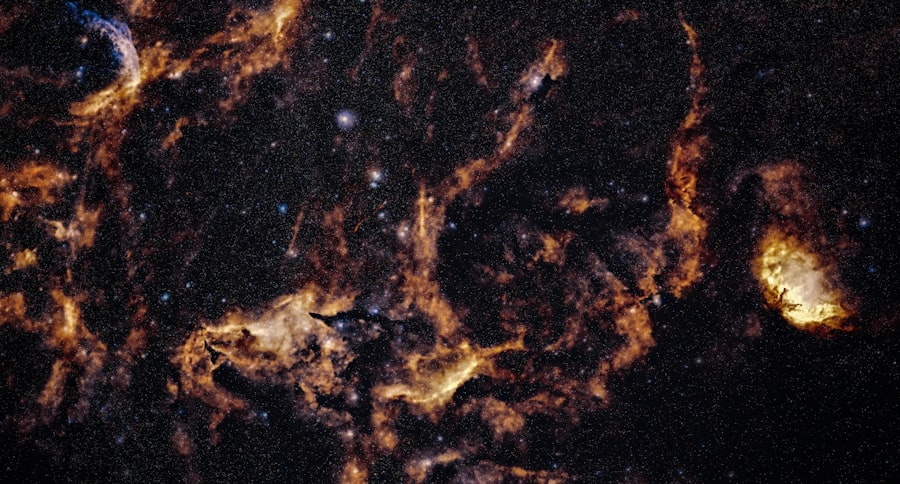
Dark matter and dark energy are two of the most perplexing components of the universe, constituting approximately 95% of its total mass-energy content yet remaining largely invisible to direct observation. In 2025, researchers have made significant strides in understanding these elusive entities. Dark matter, which is believed to exert gravitational influence on visible matter, has been studied through its effects on galaxy rotation curves and gravitational lensing.
New experiments utilizing particle colliders and underground detectors aim to identify potential dark matter candidates, such as weakly interacting massive particles (WIMPs) or axions. On the other hand, dark energy continues to baffle scientists as it drives the accelerated expansion of the universe. Theories surrounding dark energy range from a cosmological constant to dynamic fields that evolve over time.
In recent years, observational data from large-scale galaxy surveys have provided insights into how dark energy interacts with matter and influences cosmic structure formation. As researchers refine their models and gather more data, they inch closer to unraveling the mysteries surrounding these fundamental components of the universe.
The Search for Exoplanets and Alien Life
| Exoplanet Name | Distance from Earth (light years) | Discovery Year | Potential for Alien Life |
|---|---|---|---|
| Proxima Centauri b | 4.24 | 2016 | Yes |
| TRAPPIST-1e | 39 | 2017 | Yes |
| Kepler-186f | 500 | 2014 | Possibly |
The search for exoplanets has transformed from a niche area of astronomy into a central focus of cosmological research. By 2025, thousands of exoplanets have been discovered, many located within their star’s habitable zone where conditions may be suitable for life. The advent of powerful space telescopes like the James Webb Space Telescope has allowed astronomers to analyze the atmospheres of these distant worlds for signs of habitability or even biosignatures—chemical indicators of life.
The implications of finding life beyond Earth are staggering, prompting scientists to consider not only microbial life but also advanced civilizations. Missions aimed at studying potentially habitable moons in our solar system, such as Europa and Enceladus, complement the search for exoplanets by exploring environments where life might exist in subsurface oceans. As technology advances and our understanding deepens, humanity stands poised on the threshold of potentially discovering that we are not alone in the universe.
Gravitational Waves: A New Window into the Cosmos
The detection of gravitational waves has opened an entirely new avenue for exploring the cosmos. First observed in 2015 by LIGO (Laser Interferometer Gravitational-Wave Observatory), these ripples in spacetime have since provided invaluable insights into some of the universe’s most violent events, such as black hole mergers and neutron star collisions. By 2025, advancements in gravitational wave astronomy have enabled scientists to detect waves from more distant sources with greater sensitivity.
This burgeoning field allows researchers to study phenomena that were previously inaccessible through traditional electromagnetic observations. Gravitational waves carry information about their origins that can reveal details about the nature of black holes, neutron stars, and even aspects of cosmic inflation. As detectors become more sophisticated and networks expand globally, gravitational wave astronomy promises to revolutionize our understanding of fundamental physics and cosmology.
The Nature of Black Holes: Unraveling their Secrets
Black holes have long fascinated scientists and laypeople alike due to their mysterious nature and extreme properties. In 2025, research into black holes has progressed significantly, particularly following the groundbreaking imaging of a black hole’s event horizon by the Event Horizon Telescope collaboration. This achievement has provided a visual confirmation of theoretical predictions regarding black hole behavior and has sparked further inquiry into their formation and evolution.
The study of black holes extends beyond mere observation; it delves into questions about their role in galaxy formation and their relationship with dark matter. Researchers are investigating how supermassive black holes at galactic centers influence star formation rates and galactic dynamics. Additionally, theoretical physicists are exploring concepts such as Hawking radiation and information paradoxes, which challenge our understanding of quantum mechanics and gravity.
As knowledge expands, black holes continue to serve as a focal point for some of the most profound questions in cosmology.
The Birth and Evolution of Galaxies
Galaxies are fundamental building blocks of the universe, each containing billions or even trillions of stars along with gas, dust, and dark matter. By 2025, astronomers have made significant strides in understanding how galaxies form and evolve over cosmic time. Observations from deep-field surveys have revealed a rich tapestry of galaxy types and structures, providing clues about their formation processes.
The prevailing theory suggests that galaxies formed from small fluctuations in density shortly after the Big Bang, gradually merging and evolving into larger structures over billions of years. Researchers are now able to trace back the history of individual galaxies through advanced simulations and observations across different wavelengths. This work not only sheds light on galaxy formation but also helps scientists understand how galaxies interact with their environments and each other through processes like mergers and tidal interactions.
The Multiverse Theory: Exploring Parallel Universes
The multiverse theory posits that our universe is just one of many universes that exist simultaneously, each with its own distinct physical laws and constants. While this idea may seem far-fetched, it has gained traction among some cosmologists as they grapple with questions about fine-tuning and cosmic inflation. By 2025, discussions surrounding the multiverse have become more nuanced as researchers explore various models that could support its existence.
One approach involves string theory, which suggests that multiple dimensions beyond our familiar three-dimensional space could give rise to different universes with varying properties. Other theories propose that quantum mechanics allows for branching realities based on different outcomes at a subatomic level. While empirical evidence for the multiverse remains elusive, theoretical advancements continue to stimulate debate about its implications for our understanding of reality itself.
The Role of Quantum Mechanics in Cosmology
Quantum mechanics plays a crucial role in shaping our understanding of cosmology, particularly when it comes to phenomena at extremely small scales or high energies. In 2025, researchers are increasingly recognizing that quantum effects may have influenced the early universe’s evolution during cosmic inflation—a period when rapid expansion occurred just after the Big Bang. This intersection between quantum mechanics and cosmology raises profound questions about causality and determinism.
The exploration of quantum gravity seeks to unify general relativity with quantum mechanics, potentially leading to a more comprehensive theory that describes all fundamental forces in nature. As scientists develop new frameworks such as loop quantum gravity or string theory, they aim to bridge gaps in our understanding of spacetime itself. This ongoing dialogue between quantum mechanics and cosmology promises to reshape fundamental concepts about reality.
The Cosmic Microwave Background: Clues from the Early Universe
The cosmic microwave background (CMB) radiation serves as a relic from the early universe, providing invaluable insights into its origins and evolution. Discovered in 1965 by Arno Penzias and Robert Wilson, this faint glow permeates all of space and carries information about conditions just after the Big Bang. By 2025, advancements in CMB observations have allowed scientists to refine their measurements with unprecedented precision.
Detailed analysis of CMB fluctuations reveals critical information about the universe’s composition, geometry, and expansion rate. These measurements have helped confirm key predictions from inflationary theory while also raising new questions about dark matter and dark energy’s roles in shaping cosmic structure. As researchers continue to analyze CMB data from missions like Planck and future observatories, they are piecing together a clearer picture of how our universe came into being.
The Future of Cosmology: Breakthroughs on the Horizon
As cosmology enters an exciting phase marked by rapid advancements in technology and theoretical understanding, researchers anticipate groundbreaking discoveries on the horizon. The next decade promises to unveil new insights into fundamental questions about the universe’s origins, structure, and fate. Upcoming missions aimed at studying gravitational waves, exoplanets, and cosmic phenomena will likely yield transformative results that challenge existing paradigms.
Moreover, interdisciplinary collaborations between physicists, astronomers, and computer scientists will foster innovative approaches to tackling complex problems in cosmology. As humanity continues its quest for knowledge about the cosmos, it stands poised to unlock secrets that could redefine our place within it—ushering in an era where understanding the universe becomes not just an aspiration but a tangible reality.
In a groundbreaking development in cosmology, scientists have recently unveiled new insights into the nature of dark matter, potentially reshaping our understanding of the universe. This discovery, made possible through advanced simulations and observations from cutting-edge telescopes, suggests that dark matter may interact with regular matter in ways previously unimagined. For those interested in exploring more about the implications of this discovery and how it fits into the broader context of cosmic research, a related article can be found on My Cosmic Ventures. You can read more about these exciting developments by visiting this article.
WATCH THIS!🚀 The DESI Shockwave: Dark Energy is NOT Constant🚀🚀
FAQs
What is cosmology?
Cosmology is the scientific study of the origin, evolution, and eventual fate of the universe. It seeks to understand the large-scale structure and dynamics of the universe as a whole.
What are some recent developments in cosmology in 2025?
Recent developments in cosmology in 2025 include advancements in our understanding of dark matter and dark energy, the discovery of new exoplanets, and progress in the study of the cosmic microwave background radiation.
What is dark matter and dark energy?
Dark matter is a form of matter that does not emit, absorb, or reflect light, and its presence is inferred from its gravitational effects on visible matter. Dark energy is a mysterious force that is thought to be responsible for the accelerating expansion of the universe.
What is the cosmic microwave background radiation?
The cosmic microwave background radiation is the afterglow of the Big Bang, and it is the oldest light in the universe. It provides important clues about the early universe and the formation of cosmic structures.
How do cosmologists study the universe?
Cosmologists study the universe using a combination of theoretical models, observational data from telescopes and satellites, and experiments in particle physics and astrophysics. They also use computer simulations to model the behavior of the universe.