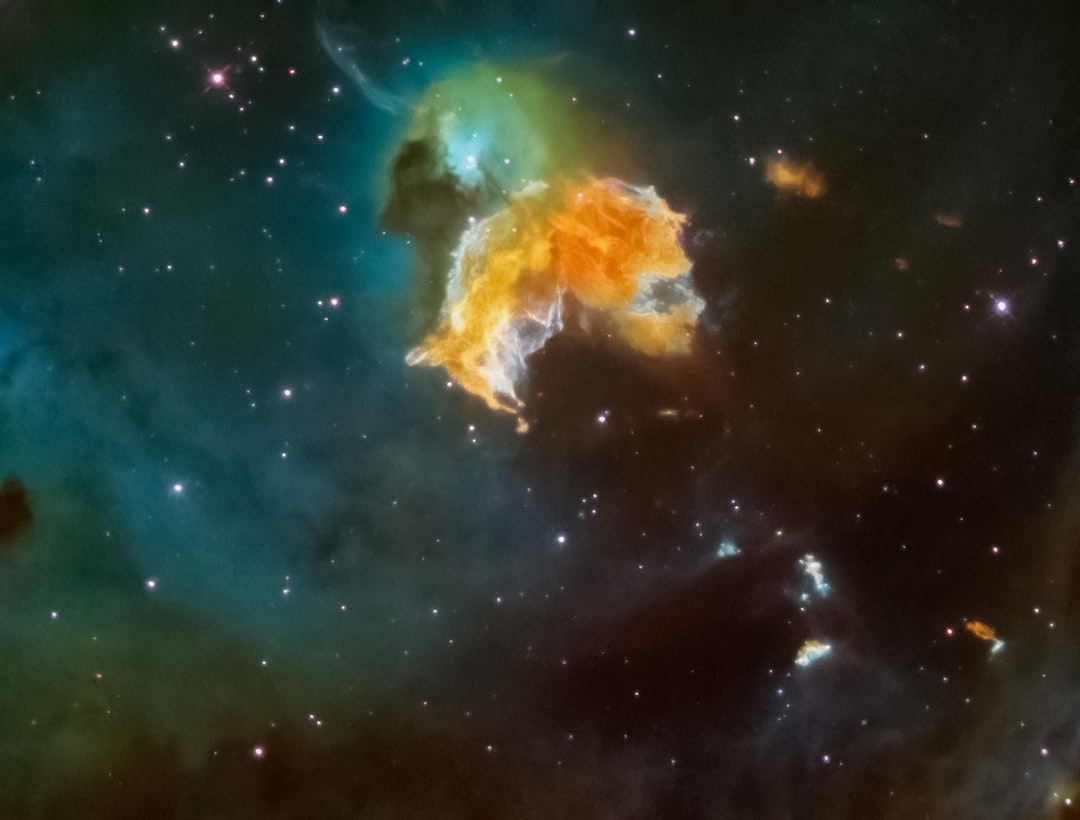
Neutron stars are among the most extreme objects in the universe, formed when massive stars with initial masses between 8 and 25 times that of the Sun reach the end of their lives. When these stars exhaust their nuclear fuel, they can no longer maintain the outward pressure needed to counteract gravitational collapse. The star’s core undergoes catastrophic compression during a supernova explosion, where the intense gravitational forces overcome electron degeneracy pressure and force protons and electrons to combine, forming neutrons through inverse beta decay.
The resulting neutron star typically contains 1.4 times the mass of the Sun compressed into a sphere with a radius of approximately 10-15 kilometers. This extreme compression produces matter densities of 10^14 to 10^15 grams per cubic centimeter—comparable to the density of atomic nuclei. At these densities, a teaspoon of neutron star material would have a mass of approximately one billion tons.
Neutron stars possess several distinctive physical characteristics. They rotate rapidly, with periods ranging from milliseconds to several seconds, due to conservation of angular momentum during the collapse process. Their magnetic fields are extraordinarily strong, typically 10^8 to 10^15 times stronger than Earth’s magnetic field.
These intense magnetic fields, combined with rapid rotation, can accelerate charged particles and produce beams of electromagnetic radiation that sweep across space like lighthouse beams, creating observable pulsars. The extreme conditions within neutron stars provide unique opportunities to study matter under circumstances impossible to replicate on Earth. The equation of state of nuclear matter at supranuclear densities, the behavior of matter in ultra-strong magnetic fields, and the effects of general relativity in strong gravitational fields can all be investigated through neutron star observations.
Recent gravitational wave detections from neutron star mergers have provided additional insights into their internal structure and the synthesis of heavy elements in the universe.
Key Takeaways
- Neutron stars have a maximum mass limit, beyond which they collapse into black holes.
- Precise observations and measurements help determine neutron star masses and test theoretical models.
- Studying neutron stars provides insights into extreme states of matter and fundamental nuclear physics.
- Neutron star mergers produce gravitational waves, linking mass studies to astrophysical phenomena.
- Ongoing and future research aims to refine mass limits and understand neutron star formation and evolution.
The Mass Ceiling of Neutron Stars
One of the most intriguing aspects of neutron stars is the concept of their mass ceiling, often referred to as the Tolman-Oppenheimer-Volkoff (TOV) limit. This theoretical upper limit suggests that there is a maximum mass a neutron star can possess before it succumbs to gravitational collapse, potentially transforming into a black hole. Current estimates place this limit between 2 to 3 solar masses, although precise values remain a topic of active research and debate within the astrophysical community.
The implications of this mass ceiling are profound. If a neutron star exceeds this limit, it cannot support itself against gravitational forces, leading to its collapse into a black hole. This transition raises questions about the nature of matter at such extreme densities and the behavior of fundamental forces under these conditions.
Understanding the mass ceiling not only informs theories about neutron stars but also has broader implications for our comprehension of stellar evolution and the lifecycle of massive stars.
Observations and Measurements
Observational astronomy has played a pivotal role in advancing knowledge about neutron stars. Various methods, including X-ray observations and radio pulsar studies, have provided valuable data on their mass, rotation rates, and magnetic fields.
These measurements have led to insights into the masses of neutron stars through techniques such as timing observations. Recent advancements in gravitational wave astronomy have further enhanced the ability to study neutron stars. The detection of gravitational waves from neutron star mergers has opened a new window into understanding their properties, including mass and equation of state.
By analyzing the signals produced during these cataclysmic events, scientists can infer critical information about the masses involved and the dynamics of the merger process, providing a more comprehensive picture of neutron star characteristics.
Theoretical Models and Calculations
Theoretical models play a crucial role in interpreting observational data and predicting the behavior of neutron stars under various conditions. Researchers employ sophisticated simulations and calculations to explore the equation of state (EOS) for neutron-rich matter, which describes how matter behaves at extreme densities and pressures. Different models yield varying predictions for the maximum mass and radius of neutron stars, leading to ongoing debates within the scientific community.
One significant challenge in developing accurate theoretical models lies in the uncertainty surrounding nuclear interactions at high densities.
The interplay between theory and observation is essential for refining models and ensuring they align with empirical data, ultimately enhancing our understanding of these enigmatic celestial objects.
Exploring Extreme Conditions
| Parameter | Value | Units | Notes |
|---|---|---|---|
| Typical Neutron Star Mass | 1.4 | Solar Masses | Average mass of observed neutron stars |
| Observed Maximum Neutron Star Mass | 2.14 | Solar Masses | Mass of the heaviest confirmed neutron star (PSR J0740+6620) |
| Theoretical Mass Ceiling | 2.0 – 3.0 | Solar Masses | Range depends on equation of state assumptions |
| Chandrasekhar Limit | 1.44 | Solar Masses | Maximum mass of a white dwarf, precursor to neutron stars |
| Typical Radius | 10 – 12 | km | Radius range for neutron stars near mass ceiling |
| Equation of State (EoS) | Varies | N/A | Strongly influences mass ceiling estimates |
Neutron stars serve as natural laboratories for exploring extreme physical conditions that cannot be replicated on Earth. The immense gravitational forces present in these stars create environments where matter behaves in ways that challenge conventional physics. For example, the densities found in neutron stars are so high that they can exceed those found in atomic nuclei, leading to exotic states of matter such as superfluidity and superconductivity.
Researchers are particularly interested in understanding how matter behaves at these extreme densities because it can provide insights into fundamental questions about the universe. The study of neutron stars may reveal new phases of matter or even shed light on phenomena such as dark matter and dark energy. By pushing the boundaries of known physics, scientists hope to uncover new principles that govern the universe’s behavior at its most fundamental level.
Implications for Astrophysics
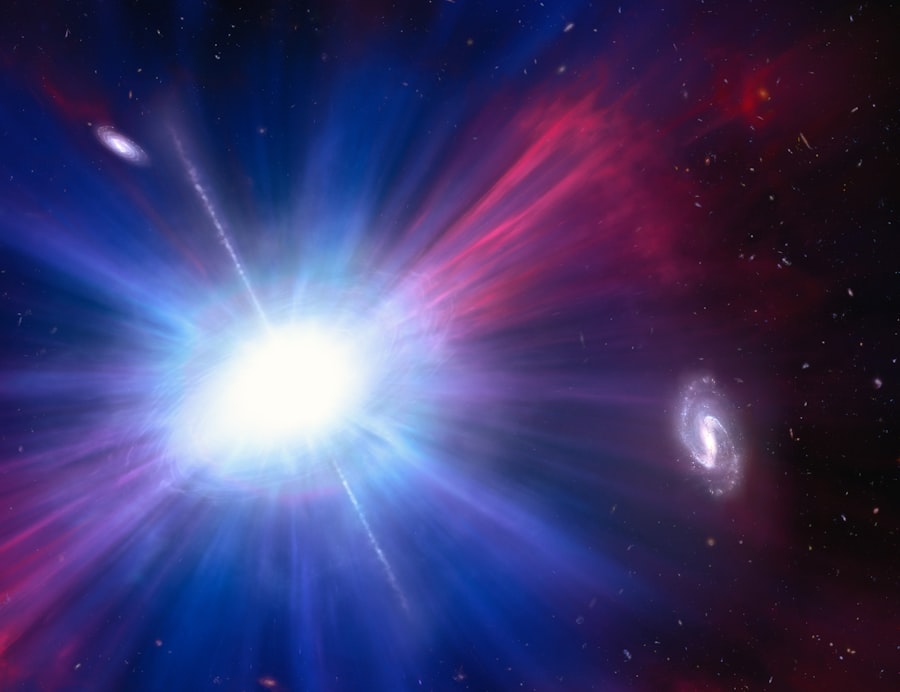
The study of neutron stars has far-reaching implications for various fields within astrophysics. For instance, understanding their mass limits and internal structure can inform theories about supernova explosions and the formation of black holes. Additionally, neutron stars are key players in the cosmic landscape, influencing the dynamics of galaxies and contributing to phenomena such as gamma-ray bursts.
Moreover, neutron stars are essential for testing theories of gravity, particularly general relativity. Their strong gravitational fields provide an opportunity to observe relativistic effects in action, allowing scientists to validate or challenge existing theories. As researchers continue to gather data from observations and experiments, they refine their understanding of fundamental forces and the nature of spacetime itself.
Formation and Evolution of Neutron Stars
The formation and evolution of neutron stars are intricately linked to the life cycles of massive stars. When a massive star exhausts its nuclear fuel, it undergoes a supernova explosion that expels its outer layers while leaving behind a dense core. If this core’s mass is sufficient, it collapses into a neutron star.
The evolutionary path leading to this endpoint is influenced by factors such as initial mass, metallicity, and rotation rate. Once formed, neutron stars can undergo various evolutionary processes that affect their observable properties. For example, they may experience changes in rotation speed due to interactions with surrounding material or magnetic field evolution over time.
Understanding these processes is crucial for constructing accurate models of stellar evolution and predicting the characteristics of newly formed neutron stars.
Neutron Star Mass and Gravitational Waves
The relationship between neutron star mass and gravitational waves has emerged as a groundbreaking area of research in astrophysics. The detection of gravitational waves from binary neutron star mergers has provided unprecedented opportunities to study these objects’ masses and properties directly. The waves produced during such mergers carry information about the masses involved, allowing scientists to refine their estimates for the mass distribution of neutron stars.
Gravitational wave observations have also revealed insights into the equation of state for neutron-rich matter. By analyzing the waveforms generated during mergers, researchers can infer details about how matter behaves at extreme densities, contributing to our understanding of fundamental physics. This intersection between gravitational wave astronomy and neutron star studies represents a significant advancement in astrophysics, enabling researchers to probe previously inaccessible realms.
Neutron Star Mass and Nuclear Physics
The study of neutron star mass is closely intertwined with nuclear physics, particularly regarding the behavior of matter at high densities. As neutrons are packed closely together under extreme gravitational forces, their interactions become complex and poorly understood within traditional nuclear models. This complexity raises questions about the nature of nuclear forces and how they operate under such conditions.
Research into neutron star masses can provide valuable insights into nuclear interactions and help refine theoretical models in nuclear physics. By examining how mass correlates with observable properties such as radius and rotation rate, scientists can gain a deeper understanding of the underlying physics governing these extreme states of matter. This interplay between astrophysics and nuclear physics highlights the interconnectedness of different scientific disciplines in unraveling the mysteries surrounding neutron stars.
Future Research and Observations
As technology advances, future research on neutron stars promises to yield even more profound insights into their nature and properties. Upcoming observatories equipped with advanced instruments will enhance observational capabilities across various wavelengths, allowing for more detailed studies of neutron stars’ electromagnetic emissions and gravitational waves. These observations will enable researchers to refine existing models and explore new theoretical frameworks.
Additionally, collaborations between astrophysicists and nuclear physicists will be crucial for advancing knowledge in this field. By combining expertise from both disciplines, scientists can develop more comprehensive models that account for complex interactions within neutron stars. Future research endeavors will likely focus on addressing unresolved questions regarding mass limits, equation states, and the implications for fundamental physics.
Pushing the Boundaries of Neutron Star Mass
In conclusion, the study of neutron stars represents a frontier in astrophysics that challenges existing paradigms while pushing the boundaries of knowledge regarding mass limits and fundamental physics. As researchers continue to explore these enigmatic celestial objects through observations and theoretical models, they uncover insights that reshape our understanding of stellar evolution, nuclear interactions, and gravitational phenomena. The quest to understand neutron star masses not only informs theories about these compact objects but also has broader implications for our comprehension of the universe’s fundamental laws.
As technology advances and collaborative efforts between disciplines grow stronger, future research promises to unveil new mysteries surrounding neutron stars while deepening humanity’s understanding of the cosmos at its most extreme scales.
Recent studies have delved into the intriguing concept of the neutron star mass ceiling, which suggests that there is a maximum mass limit for these incredibly dense celestial objects. This topic is further explored in a related article that discusses the implications of neutron star mergers and their role in understanding gravitational waves. For more insights, you can read the full article [here](https://www.mycosmicventures.com/sample-page/).
FAQs
What is a neutron star?
A neutron star is the collapsed core of a massive star that has undergone a supernova explosion. It is an extremely dense object primarily composed of neutrons, with a radius of about 10-15 kilometers and a mass typically between 1.1 and 2.3 times that of the Sun.
What does the term “neutron star mass ceiling” mean?
The neutron star mass ceiling refers to the maximum mass that a neutron star can have before it collapses into a black hole. This limit is determined by the balance between gravity and the neutron degeneracy pressure that supports the star against collapse.
What is the approximate value of the neutron star mass ceiling?
The neutron star mass ceiling is generally estimated to be around 2 to 3 times the mass of the Sun. The exact value depends on the equation of state of ultra-dense matter inside the neutron star, which is still an area of active research.
Why is the neutron star mass ceiling important?
Understanding the neutron star mass ceiling helps astrophysicists determine the fate of massive stars after supernova explosions, the properties of dense matter, and the formation of black holes. It also aids in interpreting observations from gravitational wave detectors and pulsar timing.
How do scientists estimate the neutron star mass ceiling?
Scientists use a combination of theoretical models of nuclear physics, observations of neutron stars in binary systems, and data from gravitational wave events to estimate the maximum mass a neutron star can have before collapsing into a black hole.
Can neutron stars exceed the mass ceiling temporarily?
In some scenarios, neutron stars may temporarily exceed the mass ceiling due to rapid rotation or accretion of matter from a companion star. However, if the mass surpasses the limit for a sustained period, the neutron star will eventually collapse into a black hole.
What role do neutron star mergers play in understanding the mass ceiling?
Neutron star mergers, observed through gravitational waves and electromagnetic signals, provide valuable data about the properties of neutron stars, including constraints on their maximum mass. These events help refine models of the neutron star mass ceiling.
Is the neutron star mass ceiling the same for all neutron stars?
No, the mass ceiling can vary depending on factors such as the star’s rotation rate, magnetic field strength, and the internal composition of matter. Different equations of state predict different maximum masses for neutron stars.
What happens if a neutron star exceeds its mass ceiling?
If a neutron star’s mass exceeds the maximum limit it can support, it will undergo gravitational collapse and form a black hole, an object with gravity so strong that not even light can escape from it.