
The desolate, sun-baked plains of Venus, forever shrouded in a thick, acidic atmosphere, have long held secrets. For decades, humanity has dispatched robotic explorers to this hellish inferno, each mission a testament to our unyielding curiosity. Among the data returned by these intrepid probes, certain anomalies have sparked intense debate and speculation. One such enigma, forever etched in the annals of planetary science, is the “Mysterious Shadow Anomaly on Venera 13.” This peculiar phenomenon, observed during the Venera 13 mission, continues to baffle scientists, fueling theories ranging from atmospheric optical illusions to… something far more extraordinary.
The Venera 13 mission, launched by the Soviet Union in 1981, was a critical step in our understanding of Venus. It was part of the ambitious Venera program, which aimed to land probes on the Venusian surface and transmit data and images back to Earth. Venera 13 was designed to survive the extreme pressures and temperatures of Venus for an extended period, a feat in itself. Its objectives were to conduct in-situ analysis of the atmosphere and soil, and to capture panoramic images of the surface.
Setting the Stage: Arrival on Venus
After a perilous descent through the planet’s toxic clouds, Venera 13 successfully landed on the Venusian surface on March 1, 1982. The probe’s reinforced casing and cooling systems were put to the ultimate test as it endured temperatures exceeding 450 degrees Celsius (840 degrees Fahrenheit) and pressures nearly 90 times that of Earth’s atmosphere. Despite these harsh conditions, the probe began transmitting a wealth of scientific data, painting a stark picture of Venus’s inhospitable yet fascinating landscape. The images it sent back were revolutionary, providing the first detailed, color panoramic views of the Venusian surface ever obtained.
Instrumentation and Objectives
Venera 13 was equipped with a suite of sophisticated instruments for its time. These included a camera system capable of capturing color panoramic images, a soil analyzer that could determine the elemental composition of the regolith, an atmospheric analyzer to study the composition and properties of Venus’s dense atmosphere, and a microphone to record any ambient sounds. The primary objective was to gather as much information as possible about the surface conditions, geological makeup, and atmospheric dynamics of Venus, in order to better understand the planet’s evolution and its potential for past or present habitability, however remote.
The Venera 13 mission, which successfully landed on Venus in 1982, has intrigued scientists for decades, particularly due to the mysterious shadow anomaly observed in its images. This phenomenon has sparked discussions about the potential geological processes on the planet’s surface. For a deeper dive into the implications of the Venera 13 findings and their relevance to our understanding of Venus, you can read a related article at My Cosmic Ventures.
The Anomalous Observation: A Shadow Out of Place
It was during the transmission of the panoramic images from Venera 13 that the anomaly was first noticed. Amidst the reddish-brown hues of the Venusian plains, dotted with rocks and the occasional geological formation, a peculiar shadow was observed. This shadow, distinct and unusually sharp, seemed to emanate from no discernible source on the surface or in the immediate vicinity of the lander.
The Imaging Data: A Discrepancy in Light
The camera system of Venera 13 captured a series of overlapping images that were later stitched together to form a 360-degree panorama. While most of the shadows in the images were consistent with the position of the sun, which was obscured by the thick cloud cover and therefore projected as diffuse light, one particular shadow stood out. It was a dark, well-defined shape that did not correspond to any visible object in the frame, nor did it align with the expected direction of illumination.
Characteristics of the Anomaly
The anomalous shadow was described as being unusually sharp and distinct, lacking the typical diffusion seen in shadows cast by objects on Venus due to the planet’s thick, light-scattering atmosphere. Its shape was difficult to definitively ascertain from the limited resolution of the images and the angle of observation, but it appeared to be elongated and somewhat irregular. Crucially, it was a shadow without a clear source, a dark patch on the otherwise illuminated (albeit dimly) terrain that defied conventional explanation.
Scientific Scrutiny and Initial Hypotheses
Upon detection, the mysterious shadow anomaly immediately became a focal point of analysis for the Venera 13 scientific team. Every possible conventional explanation was explored and debated, from equipment malfunctions to atmospheric phenomena.
Equipment Malfunction Theories
One of the first avenues of investigation was to rule out any possibility of instrumental error. Could the shadow be an artifact of the camera system itself, a sensor glitch, or a defect in the image processing? The Venera 13 team meticulously examined the raw data, the calibration procedures, and the operational logs of the probe.
Lens Aberrations and Internal Reflections
It was hypothesized that a peculiar lens aberration or an internal reflection within the camera might have created the illusion of a shadow. However, detailed analysis of the optical path and comparison with other images captured by the same instrument did not support this theory. The anomaly appeared consistently across multiple frames in a way that suggested a real, albeit unexplainable, phenomenon.
Sensor Noise and Data Corruption
Another possibility considered was sensor noise or localized data corruption that might manifest as a dark patch in the image. However, the sharpness and distinctness of the anomaly, along with its consistent placement within the panoramic reconstruction, argued against random noise. Data integrity checks also revealed no significant corruption in the relevant image files.
Atmospheric Optical Phenomena
The thick Venusian atmosphere, with its complex layers of clouds and aerosols, is known to produce a variety of optical illusions. Scientists considered whether the shadow could be a result of an unusual atmospheric effect.
Light Scattering and Refraction
The way light scatters and refracts through Venus’s dense atmosphere can create peculiar visual distortions. However, most atmospheric optical phenomena on Venus are diffuse and often manifest as halos, arcs, or mirages. The sharp, defined nature of the anomaly did not align with these known effects.
Cloud Formations and Diffuse Illumination
The sun is the primary light source, but its light is heavily diffused by Venus’s clouds. Shadows, therefore, are typically soft-edged and spread out. The anomaly’s sharp definition made it difficult to attribute to the diffuse illumination created by the Venusian cloud deck.
Geomorphological Explanations
The Venera 13 landing site was a relatively flat, rocky plain. The possibility of a surface feature casting the shadow was explored.
Subsurface Structures and Unseen Topography
Could there be an unseen geological feature, perhaps a depression or a subtle elevation just out of frame, that was casting this peculiar shadow? While the panoramic view was extensive, it was not infinite. However, the consistent lack of any discernible edge or structure that could create such a shadow made this explanation less convincing.
Movable Surface Elements
Another, more speculative, geomorphological idea was the presence of some sort of movable surface element, perhaps a large rock or a partially buried object that, if it shifted, could cast a shadow. However, the Venusian environment is generally considered to be geologically stable on short timescales, and the absence of any visible mechanism for such movement made this highly improbable.
The Persistent Mystery: Why Conventional Explanations Fall Short
Despite the thorough investigation, none of the conventional explanations could fully account for the characteristics of the shadow anomaly. This led to increasing frustration and the emergence of more unconventional theories.
The Unexplained Sharpness and Definition
The most persistent problem for conventional explanations was the anomaly’s striking sharpness. In the diffuse light of Venus, even objects on the surface tend to cast softened shadows. The distinct, almost “cut-out” appearance of the anomalous shadow was a significant deviation from expected visual cues.
Absence of a Corresponding Light Source or Object
The fundamental paradox of the anomaly was the absence of any identifiable object or feature that could be casting it. The probe’s cameras surveyed the immediate surroundings, and the panoramic images did not reveal any protrusion, elevation, or object that would logically produce such a dark, defined shadow.
Consistency Across Multiple Images
While the anomaly appeared in several contiguous frames of the panoramic reconstruction, its relative position and appearance remained consistent, ruling out fleeting atmospheric events or random camera artifacts that might appear and disappear erratically. This suggested a more persistent or a distant cause.
The Venera 13 mission, which provided groundbreaking images of Venus’s surface, has sparked interest due to the mysterious shadow anomaly observed in its photographs. This peculiar phenomenon has led researchers to explore various theories regarding its origin and implications for our understanding of the planet’s atmosphere and geology. For a deeper dive into this intriguing topic, you can read more in the related article found here.
Emerging Theories: Beyond the Ordinary
| Metric | Value | Description |
|---|---|---|
| Mission | Venera 13 | Soviet Venus lander mission launched in 1981 |
| Landing Date | March 1, 1982 | Date when Venera 13 touched down on Venus surface |
| Shadow Anomaly Observed | Yes | Unusual shadow behavior noted in images taken by the lander |
| Shadow Direction | Opposite to expected | Shadows appeared to be cast in a direction inconsistent with sun position |
| Possible Causes | Multiple light sources, surface reflections | Hypotheses explaining the shadow anomaly |
| Image Analysis | Infrared and visible spectrum | Types of images used to study the anomaly |
| Scientific Impact | Moderate | Raised questions about Venus surface lighting and atmospheric effects |
| Follow-up Missions | Venera 14, Vega 1 & 2 | Subsequent missions that provided additional data on Venus surface |
The inability of conventional science to adequately explain the Venera 13 shadow anomaly opened the door to more speculative and, for some, sensational theories. These ideas, while lacking concrete proof, reflected the profound mystery that the data presented.
The “Shadow Object” Hypothesis
One of the most intriguing, though highly speculative, theories posited the existence of an unknown object on the Venusian surface that was either partially obscured or simply not captured by the cameras due to its position or the limitations of the imaging sweep.
A Partially Buried Structure?
Could this be a remnant of some ancient, unknown geological process, or perhaps even an artificial structure, partially buried and casting a shadow? The notion of ancient civilizations on Venus has been a recurring theme in speculative fiction, and the anomaly, however faint, offered a tantalizing, albeit unverified, hook for such ideas.
An Unknown Venusian Lifeform?
Another, even more radical, hypothesis suggested the possibility of a large, stationary, or slow-moving Venusian lifeform. If such a creature existed and was of a size and density capable of casting a distinct shadow, it could explain the anomaly. However, the extreme conditions on Venus make the existence of complex life highly improbable according to current scientific understanding.
Anomaly in the Data Transmission Itself
While the initial analysis dismissed data corruption as a cause for the anomaly’s sharpness, some researchers continued to explore the possibility of a more subtle form of data interference or manipulation during the transmission process.
Deliberate Alteration?
In the realm of extreme speculation, some have even suggested the possibility of deliberate alteration of the data before it was released to the public. However, the scientific integrity of the Soviet space program and the international scientific community makes this scenario highly unlikely.
Unforeseen Interplanetary Interference?
Could an unknown form of electromagnetic interference from deep space, or even a phenomenon associated with Venus itself, have somehow affected the data stream and created the visual artifact? This remains a frontier of scientific inquiry, but without further evidence, it is difficult to substantiate.
The Legacy of the Venera 13 Shadow Anomaly
The Mysterious Shadow Anomaly on Venera 13 remains an unsolved puzzle in planetary science. While the scientific community generally leans towards more mundane explanations, the lack of a definitive answer has allowed the mystery to persist and evolve.
The Enduring Enigma
The Venera 13 shadow
Something Moved on Venus — But Was It Alive?
FAQs
What is Venera 13?
Venera 13 was a Soviet spacecraft that landed on Venus in 1982 as part of the Venera program.
What is the shadow anomaly associated with Venera 13?
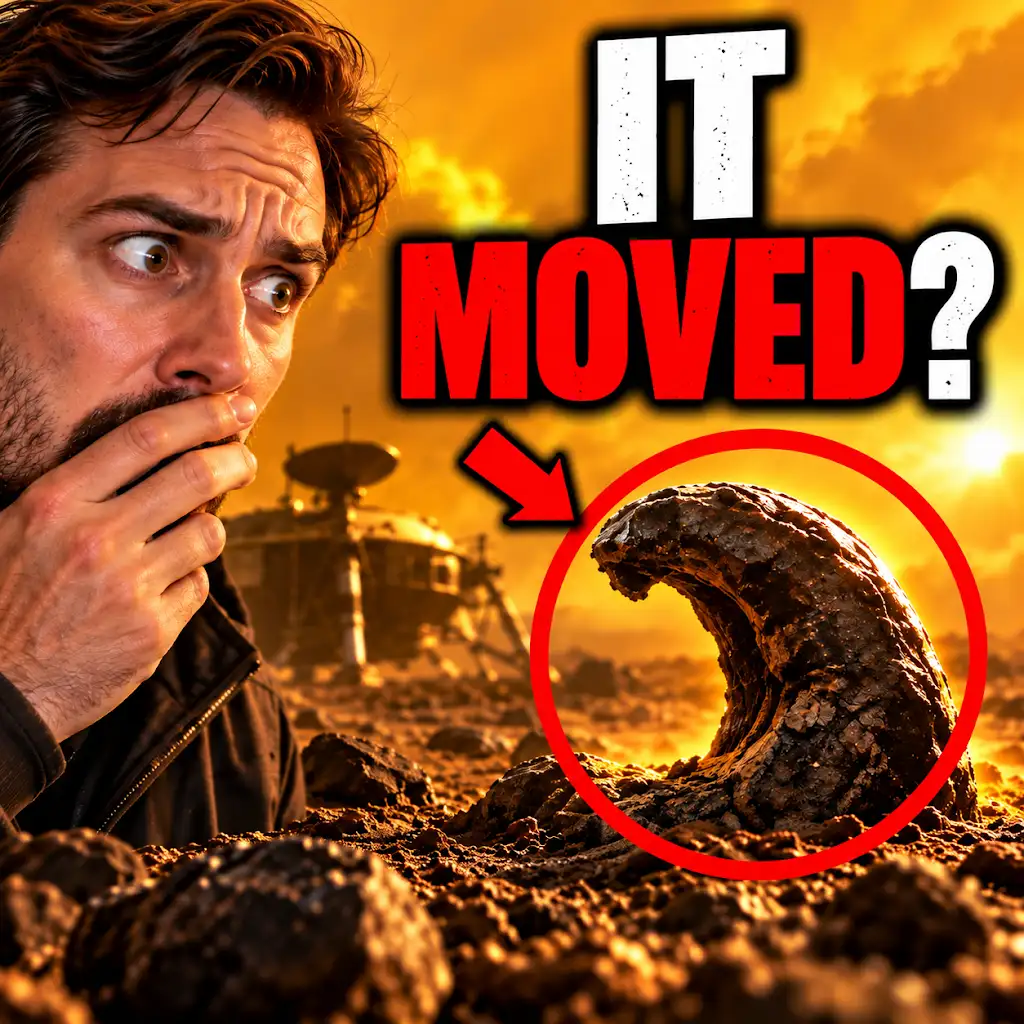
The shadow anomaly associated with Venera 13 refers to a mysterious object that appears in one of the images taken by the spacecraft’s cameras during its mission on Venus.
What does the shadow anomaly look like?
The shadow anomaly in the image taken by Venera 13 appears as a dark, elongated shape that some have speculated could be a rock or a piece of debris.
Has the shadow anomaly on Venera 13 been explained?
As of now, the shadow anomaly on Venera 13 has not been definitively explained, leading to various theories and speculations about its origin.
What was the purpose of Venera 13’s mission to Venus?
The primary purpose of Venera 13’s mission to Venus was to study the planet’s atmosphere, surface conditions, and geology in order to gather valuable scientific data about Earth’s neighboring planet.