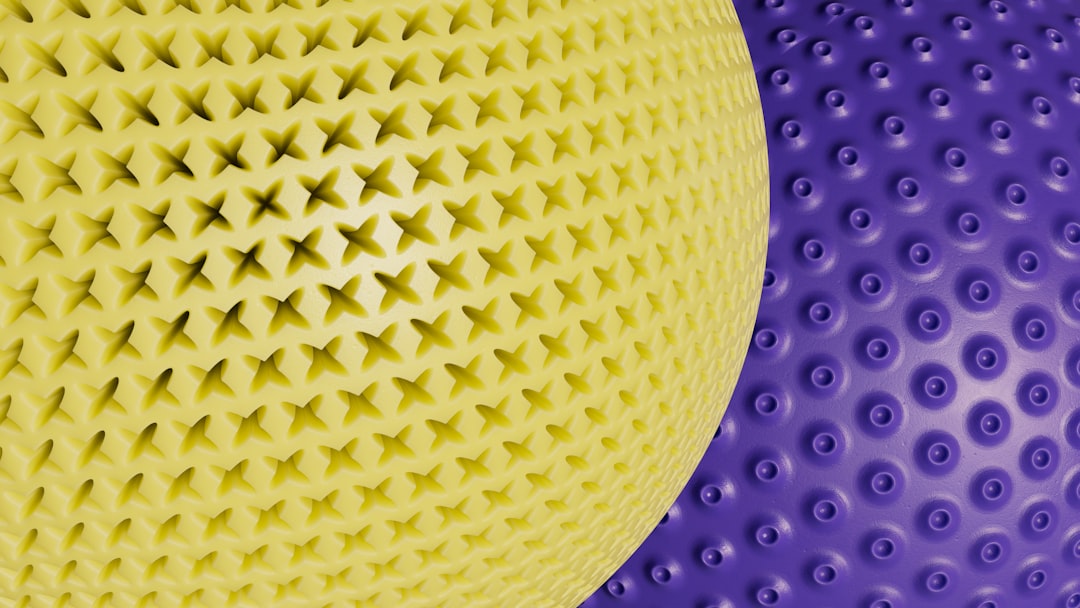
Microscopic trampolines represent an emerging nanotechnology with potential applications in space exploration. These nanoscale structures, developed through advances in materials science, are engineered to store and release energy efficiently. Researchers are investigating how these devices could enhance spacecraft propulsion systems and improve overall mission efficiency.
The development of microscopic trampolines relies on atomic-level manipulation of materials to create structures with unique mechanical properties. Scientists are exploring various applications for this technology in space travel, where maximizing efficiency is essential. However, significant technical challenges remain in adapting these nanoscale devices for practical use in spacecraft systems and long-distance space missions.
Explore the future of space travel with laser sails technology.
Key Takeaways
- Microscopic trampolines utilize nanoscale elastic surfaces to manipulate energy and motion at a tiny scale.
- They offer innovative propulsion possibilities that could enhance efficiency and speed in space travel.
- Overcoming technical challenges like material durability and control mechanisms is crucial for their practical use.
- Their application could revolutionize interstellar travel by enabling new methods of thrust and maneuvering.
- Ongoing research focuses on optimizing these devices while addressing ethical and environmental impacts in space exploration.
The Science Behind Microscopic Trampolines
At the heart of microscopic trampolines lies a fascinating interplay of physics and engineering. These structures are designed to absorb and release energy through elastic deformation, much like a traditional trampoline but on a much smaller scale. When a force is applied, the trampoline deforms, storing energy that can be released when the force is removed.
This principle can be harnessed to create propulsion systems that are not only efficient but also capable of operating in the harsh conditions of space. The materials used to construct these microscopic trampolines are often composites that exhibit remarkable strength-to-weight ratios. By utilizing materials such as graphene or carbon nanotubes, researchers can create trampolines that are incredibly lightweight yet strong enough to withstand the rigors of space travel.
As you consider the implications of these materials, it becomes clear that they could significantly reduce the mass of spacecraft, allowing for more efficient launches and longer missions.
Potential Applications of Microscopic Trampolines in Space Travel

The potential applications of microscopic trampolines in space travel are vast and varied. One of the most promising uses is in propulsion systems, where these devices could enhance thrust generation and maneuverability. By integrating microscopic trampolines into existing propulsion technologies, spacecraft could achieve greater speeds and efficiency, making long-distance travel more feasible.
Imagine being able to traverse the vast distances between planets in a fraction of the time it currently takes. In addition to propulsion, microscopic trampolines could also play a role in energy storage and management aboard spacecraft. As you consider the challenges of sustaining life in space, efficient energy systems become paramount.
This capability would not only improve mission sustainability but also enhance the overall safety and reliability of space missions.
Overcoming the Challenges of Using Microscopic Trampolines in Space
While the potential benefits of microscopic trampolines are exciting, several challenges must be addressed before they can be fully integrated into space travel technologies. One significant hurdle is the durability of these structures in the extreme conditions of space. The vacuum, radiation, and temperature fluctuations present unique challenges that could compromise the integrity of microscopic trampolines.
Researchers must develop methods to enhance their resilience and ensure they can withstand prolonged exposure to these harsh environments. Another challenge lies in the manufacturing processes required to create these tiny devices. Current fabrication techniques may not be scalable or cost-effective for producing microscopic trampolines in large quantities.
As you explore this aspect, you will find that advancements in nanofabrication techniques will be crucial for overcoming these obstacles. Innovations such as 3D printing at the nanoscale or self-assembly methods could pave the way for mass production and widespread adoption of microscopic trampolines in space applications.
Advantages of Using Microscopic Trampolines for Space Travel
| Metric | Value | Unit | Description |
|---|---|---|---|
| Trampoline Diameter | 0.5 | mm | Diameter of individual microscopic trampoline |
| Elastic Modulus | 1.2 | GPa | Material stiffness of trampoline membrane |
| Resonant Frequency | 150 | kHz | Frequency at which trampoline oscillates optimally |
| Energy Storage Capacity | 0.8 | mJ | Maximum energy stored per trampoline cycle |
| Operational Temperature Range | -150 to 120 | °C | Temperature range suitable for space environment |
| Material Composition | Graphene Composite | N/A | Primary material used for trampoline construction |
| Durability Cycles | 10^7 | cycles | Number of oscillation cycles before material fatigue |
| Mass per Unit | 0.02 | mg | Mass of a single microscopic trampoline |
The advantages of incorporating microscopic trampolines into space travel are manifold. One of the most significant benefits is their potential to enhance propulsion efficiency. By utilizing these devices, spacecraft could achieve higher thrust-to-weight ratios, allowing for faster acceleration and deceleration during maneuvers.
This capability would not only shorten travel times but also reduce fuel consumption, making missions more cost-effective. Moreover, microscopic trampolines could contribute to improved stability and control during flight. Their unique energy absorption properties could help dampen vibrations and oscillations that often plague spacecraft during launch and re-entry.
As you consider the implications of this enhanced stability, it becomes evident that it could lead to safer missions and more successful landings on distant celestial bodies.
The Role of Microscopic Trampolines in Propulsion Systems

In propulsion systems, microscopic trampolines could serve as a game-changer by providing an innovative approach to thrust generation. Traditional propulsion methods often rely on chemical reactions or ion propulsion, which can be limited by fuel availability and efficiency. By integrating microscopic trampolines into these systems, you could harness their energy-storing capabilities to create a new class of propulsion technology that operates on different principles.
For instance, imagine a propulsion system that utilizes rapid energy release from microscopic trampolines to generate thrust pulses. This method could allow for continuous acceleration without the need for large fuel reserves, enabling spacecraft to travel further and faster than ever before. As you explore this concept further, you will see how it aligns with humanity’s aspirations for deep space exploration and even interstellar travel.
The Future of Space Travel with Microscopic Trampolines
As you look toward the future of space travel, the integration of microscopic trampolines holds immense promise. With ongoing advancements in nanotechnology and materials science, it is conceivable that these devices will become a standard component in spacecraft design within the next few decades. The ability to achieve faster travel times and more efficient propulsion systems could open up new frontiers for exploration beyond our solar system.
Moreover, as humanity continues to push the boundaries of space exploration, microscopic trampolines may play a crucial role in establishing sustainable habitats on other planets or moons. Their energy storage capabilities could support life support systems and scientific research facilities, enabling long-term missions that were once thought impossible. The vision of colonizing other worlds may become a reality with the help of these innovative technologies.
The Impact of Microscopic Trampolines on Interstellar Travel
When considering interstellar travel, the challenges become exponentially more complex due to vast distances and time constraints. However, microscopic trampolines could provide solutions that make such journeys more feasible. By enhancing propulsion systems with their unique energy storage capabilities, these devices could enable spacecraft to reach speeds previously thought unattainable.
Imagine a future where humanity can send probes to neighboring star systems within a human lifetime rather than waiting centuries for signals to return from distant missions. The implications for scientific discovery and our understanding of the universe would be profound. As you contemplate this future, it becomes clear that microscopic trampolines could be instrumental in unlocking the mysteries of our galaxy and beyond.
Ethical and Environmental Considerations of Microscopic Trampolines in Space
As with any emerging technology, ethical and environmental considerations must be taken into account when discussing microscopic trampolines for space travel. The potential for increased space exploration raises questions about our responsibility to protect celestial bodies from contamination or exploitation. You may find yourself pondering how we can balance our desire for discovery with our duty to preserve the integrity of other worlds.
Additionally, the production and disposal of materials used in microscopic trampolines must be approached with caution. Ensuring that manufacturing processes are sustainable and environmentally friendly will be crucial as we move forward with this technology. As you reflect on these issues, it becomes evident that responsible innovation will be key to ensuring that microscopic trampolines contribute positively to humanity’s exploration efforts.
Current Research and Development in Microscopic Trampolines for Space Travel
Currently, research into microscopic trampolines is gaining momentum as scientists and engineers explore their potential applications in space travel. Various institutions and organizations are conducting experiments to better understand how these structures can be optimized for performance in extreme environments. You may find it fascinating to learn about ongoing projects focused on developing new materials or fabrication techniques that could enhance the capabilities of microscopic trampolines.
Collaborative efforts between academia and industry are also playing a vital role in advancing this field. By pooling resources and expertise, researchers are working towards overcoming existing challenges while pushing the boundaries of what is possible with microscopic trampoline technology. As you follow these developments, you will witness how innovation continues to shape our understanding of space travel.
The Promise of Microscopic Trampolines for the Future of Space Exploration
In conclusion, microscopic trampolines represent an exciting frontier in space exploration technology. Their unique properties offer numerous advantages for propulsion systems and energy management aboard spacecraft, paving the way for faster and more efficient travel through our solar system and beyond. As you reflect on this topic, consider how advancements in nanotechnology may soon transform our approach to exploring the cosmos.
The journey ahead is filled with challenges, but with continued research and development, microscopic trampolines hold great promise for shaping the future of space exploration. As humanity stands on the brink of interstellar travel, these tiny devices may play an essential role in unlocking new possibilities for discovery and understanding our place in the universe. Embrace this vision as we move forward into an era where even the smallest innovations can lead to monumental achievements in our quest for knowledge beyond Earth.
Recent advancements in space travel technology have led to the exploration of innovative concepts, such as microscopic trampolines that could enhance propulsion systems. These tiny devices, designed to harness the energy of molecular interactions, may revolutionize how we navigate the cosmos. For more insights into cutting-edge space technologies, you can read a related article on this topic at My Cosmic Ventures.
WATCH THIS! 🚀✨ Can Laser Sails Take Us to Alpha Centauri in 20 Years?
FAQs
What are microscopic trampolines in the context of space travel?
Microscopic trampolines refer to tiny, flexible structures designed at the micro-scale that can absorb and release energy efficiently. In space travel, they are being explored for applications such as vibration damping, energy storage, or propulsion mechanisms.
How do microscopic trampolines work?
These structures operate by deforming elastically when subjected to forces, storing mechanical energy, and then releasing it upon returning to their original shape. Their small size allows for rapid response times and integration into microelectromechanical systems (MEMS).
Why are microscopic trampolines important for space travel?
Spacecraft and instruments often face vibrations and shocks during launch and operation. Microscopic trampolines can help protect sensitive components by absorbing these forces. Additionally, their energy storage capabilities can be harnessed for micro-propulsion or actuation in space environments.
What materials are used to make microscopic trampolines?
Common materials include silicon, graphene, and other flexible polymers or composites that offer high strength-to-weight ratios and excellent elastic properties suitable for microfabrication techniques.
Are microscopic trampolines currently used in space missions?
As of now, microscopic trampolines are primarily in the research and development phase. Scientists are studying their potential applications and testing prototypes, but widespread deployment in space missions has yet to occur.
What challenges exist in developing microscopic trampolines for space applications?
Challenges include ensuring durability under extreme space conditions (temperature fluctuations, radiation), integrating them with existing spacecraft systems, and scaling up manufacturing processes for reliable performance.
Can microscopic trampolines improve spacecraft propulsion?
Potentially, yes. Their ability to store and release mechanical energy rapidly could be utilized in micro-thrusters or actuators, contributing to precise maneuvering and control of small satellites or probes.
How do microscopic trampolines compare to traditional vibration damping methods?
Microscopic trampolines offer advantages in size, weight, and responsiveness. Unlike bulk damping materials, they can be integrated at the micro-scale, providing localized protection without adding significant mass.
What future developments are expected in this field?
Future research aims to optimize materials, improve fabrication techniques, and demonstrate functional prototypes in space-like environments. This could lead to new classes of microdevices enhancing spacecraft resilience and functionality.