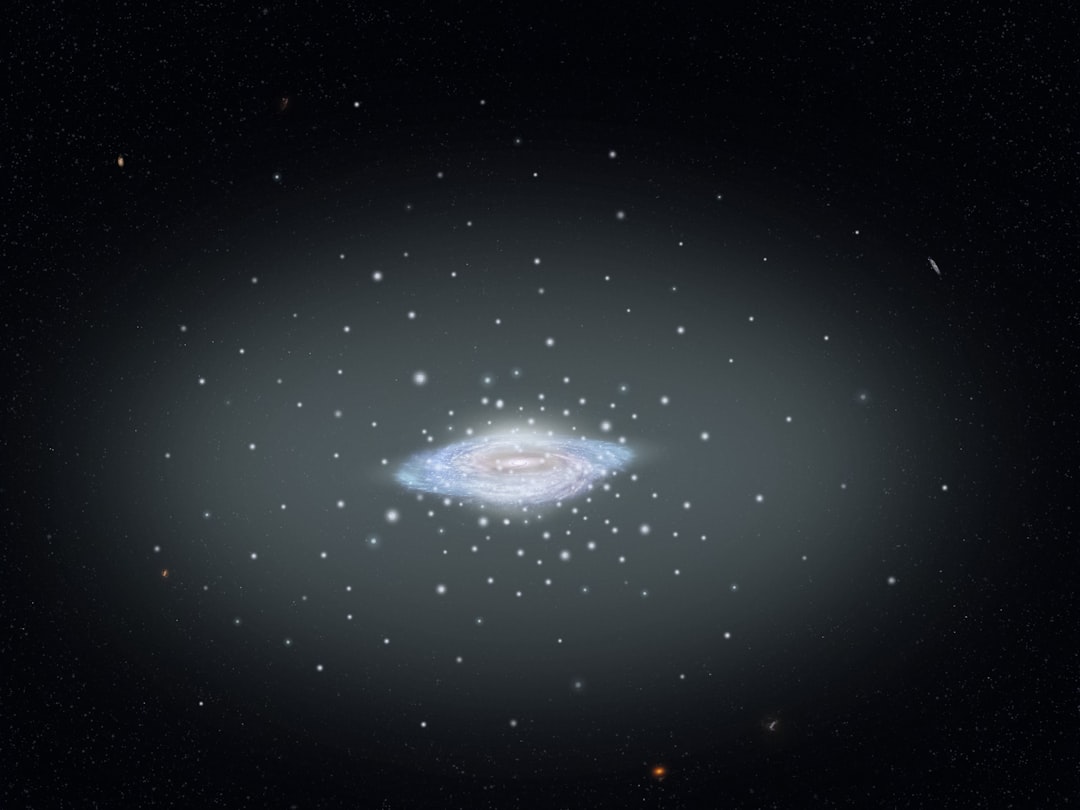
The concept of the expanding universe has captivated astronomers and physicists for decades, fundamentally altering humanity’s understanding of the cosmos. The notion that the universe is not static but rather in a state of continuous expansion was first proposed in the early 20th century, challenging long-held beliefs about the nature of space and time. This expansion implies that galaxies are moving away from each other, leading to profound implications for the fate of the universe itself.
As scientists delve deeper into this phenomenon, they uncover a wealth of information that not only enhances our comprehension of cosmic evolution but also raises intriguing questions about the ultimate destiny of all matter and energy. The expansion of the universe is often likened to the surface of a balloon being inflated, where galaxies are represented as points on the balloon’s surface. As the balloon expands, these points move away from each other, illustrating how space itself is stretching.
This analogy serves as a useful visualization for understanding how distances between galaxies increase over time. The implications of this expansion extend beyond mere distance; they touch upon fundamental concepts such as the nature of gravity, dark energy, and the overall structure of the universe. As researchers continue to explore these themes, they are piecing together a more comprehensive picture of how the universe has evolved since its inception.
Key Takeaways
- The universe is expanding, as evidenced by the redshift of distant galaxies and the cosmic microwave background radiation.
- Hubble’s Law describes the relationship between the distance of a galaxy and its redshift, providing evidence for the expansion of the universe.
- The cosmic microwave background radiation is the afterglow of the Big Bang and provides crucial information about the early universe and its expansion.
- Baryon acoustic oscillations are regular, periodic fluctuations in the density of visible matter in the universe, providing a standard ruler for measuring cosmic distances.
- Gravitational lensing, caused by the bending of light around massive objects, can be used to study the expansion of the universe and the distribution of dark matter.
Hubble’s Law and Redshift
Hubble’s Law is a cornerstone of modern cosmology, providing a quantitative framework for understanding the expansion of the universe. Formulated by Edwin Hubble in the 1920s, this law states that the velocity at which a galaxy recedes from an observer is directly proportional to its distance from that observer. This relationship is expressed mathematically as v = H₀d, where v is the recessional velocity, H₀ is Hubble’s constant, and d is the distance to the galaxy.
The significance of Hubble’s Law lies in its ability to offer a method for measuring vast cosmic distances and establishing a timeline for the universe’s expansion. The phenomenon of redshift plays a crucial role in Hubble’s Law. As galaxies move away from Earth, their light waves are stretched, resulting in a shift toward longer wavelengths—hence the term “redshift.” This effect can be observed across various wavelengths of light, including visible light and radio waves.
By analyzing the redshift of light emitted from distant galaxies, astronomers can determine their velocities and distances, thereby confirming Hubble’s Law. The implications of this relationship are profound; they suggest that not only is the universe expanding, but it is doing so at an accelerating rate, leading to further inquiries into the forces driving this acceleration.
Cosmic Microwave Background Radiation

The Cosmic Microwave Background Radiation (CMB) serves as a relic from the early universe, providing invaluable insights into its origins and evolution. Discovered accidentally by Arno Penzias and Robert Wilson in 1965, the CMB is a faint glow permeating the entire universe, representing the afterglow of the Big Bang. This radiation is remarkably uniform, with slight fluctuations that encode information about the density variations in the early universe.
These fluctuations are crucial for understanding how matter clumped together to form galaxies and large-scale structures. The CMB offers a snapshot of the universe approximately 380,000 years after the Big Bang when it transitioned from an opaque state to one where light could travel freely. By studying its temperature fluctuations and polarization patterns, cosmologists can glean information about fundamental parameters such as the universe’s age, composition, and curvature.
The CMB not only supports the Big Bang theory but also provides evidence for inflation—a rapid expansion that occurred in the universe’s earliest moments. As researchers continue to analyze this cosmic relic with advanced instruments like the Planck satellite, they are refining their models of cosmic evolution and deepening their understanding of fundamental physics.
Baryon Acoustic Oscillations
| Study | Year | Findings |
|---|---|---|
| SDSS-III | 2012 | First detection of Baryon Acoustic Oscillations in the clustering of galaxies |
| BOSS | 2014 | Measurement of Baryon Acoustic Oscillations at higher redshifts |
| eBOSS | 2018 | Further confirmation of Baryon Acoustic Oscillations and improved measurements of cosmological parameters |
Baryon Acoustic Oscillations (BAOs) represent another critical aspect of understanding cosmic expansion. These oscillations are sound waves that traveled through the hot plasma of the early universe before recombination occurred. As matter began to cool and clump together under gravity, these sound waves left imprints on the distribution of galaxies throughout space.
The result is a characteristic scale in galaxy clustering that can be used as a “standard ruler” for measuring cosmic distances. The significance of BAOs lies in their ability to provide a reliable method for determining distances on cosmological scales. By analyzing how galaxies are distributed in relation to these acoustic peaks, astronomers can infer information about the expansion history of the universe.
This technique has been instrumental in confirming the existence of dark energy—a mysterious force driving the accelerated expansion of the universe. As observational techniques improve and more data becomes available, BAOs will continue to play a vital role in refining our understanding of cosmic expansion and its underlying mechanisms.
Gravitational Lensing
Gravitational lensing is a fascinating phenomenon that occurs when massive objects like galaxies or clusters of galaxies bend light from more distant objects due to their gravitational fields. This effect not only provides a unique way to observe distant celestial bodies but also serves as a powerful tool for studying cosmic expansion. By analyzing how light is distorted around massive objects, astronomers can infer their mass distribution and study the large-scale structure of the universe.
One of the most compelling applications of gravitational lensing is its ability to probe dark matter—an elusive component that makes up a significant portion of the universe’s mass-energy content. By examining how light bends around galaxy clusters, researchers can map out dark matter distributions that are otherwise invisible. Additionally, gravitational lensing can magnify distant galaxies, allowing astronomers to study objects that would otherwise be too faint or small to observe.
Type Ia Supernovae
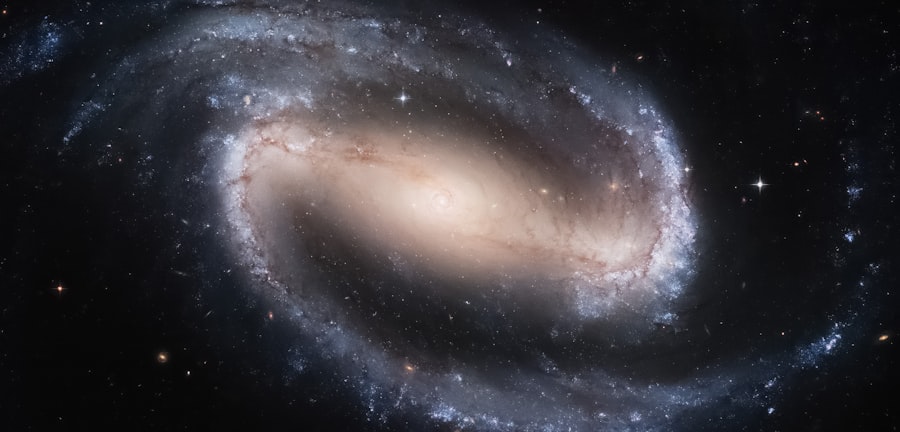
Type Ia supernovae have emerged as one of the most reliable “standard candles” for measuring astronomical distances due to their consistent peak brightness. These stellar explosions occur in binary systems when a white dwarf accretes enough mass from its companion star to reach a critical threshold known as the Chandrasekhar limit. At this point, a runaway nuclear reaction ensues, resulting in a cataclysmic explosion that briefly outshines entire galaxies.
The uniformity in brightness among Type Ia supernovae allows astronomers to use them as distance indicators across vast cosmic scales. By measuring their apparent brightness and comparing it to their intrinsic luminosity, researchers can determine how far away they are located. This method has been instrumental in revealing that not only is the universe expanding but that this expansion is accelerating—a discovery that led to the awarding of the Nobel Prize in Physics in 2011.
The implications of this finding have reshaped our understanding of cosmology and prompted further investigations into dark energy and its role in shaping cosmic evolution.
Galaxy Clustering
Galaxy clustering provides essential insights into the large-scale structure of the universe and its expansion history. Galaxies do not exist in isolation; instead, they form groups and clusters influenced by gravitational interactions. The distribution and clustering patterns of galaxies reveal information about how matter has evolved over time and how it continues to influence cosmic expansion.
By studying galaxy clusters and their dynamics, astronomers can infer details about dark matter and its role in shaping structures within the universe. The clustering of galaxies also serves as an important tool for measuring cosmic distances through techniques such as redshift surveys. These surveys map out large volumes of space by cataloging galaxy positions and redshifts, allowing researchers to analyze how galaxy clustering evolves over time.
Cosmic Distance Ladder
The Cosmic Distance Ladder is an essential framework used by astronomers to measure distances across vast cosmic scales systematically. It consists of a series of methods that build upon one another, allowing researchers to establish distances from nearby objects to those billions of light-years away. Each rung on this ladder relies on different techniques—such as parallax measurements for nearby stars or standard candles like Cepheid variables and Type Ia supernovae for more distant objects.
The importance of this ladder cannot be overstated; it provides a coherent approach for determining distances that ultimately informs our understanding of cosmic expansion. By accurately measuring distances to various celestial objects, astronomers can construct a more comprehensive picture of how fast the universe is expanding and how this rate has changed over time. As new techniques emerge and observational capabilities improve, refinements to this distance ladder will continue to enhance our understanding of cosmology.
Cosmic Chronometers
Cosmic chronometers represent an innovative approach to measuring cosmic time by utilizing passively evolving galaxies as indicators of age. These galaxies evolve slowly over time, allowing researchers to estimate their ages based on their stellar populations and chemical compositions. By comparing these ages with redshift measurements, astronomers can derive information about how fast the universe has expanded at different epochs.
This method offers an independent means of measuring cosmic expansion rates without relying solely on traditional distance indicators like supernovae or BAOs. Cosmic chronometers provide valuable insights into how dark energy influences expansion over time and help refine models that describe cosmic evolution. As observational techniques improve and more data becomes available, cosmic chronometers will play an increasingly important role in understanding both local and distant cosmic history.
Future Techniques for Measuring Universe Expansion
As technology advances, new techniques for measuring universe expansion continue to emerge, promising even greater precision in cosmological studies. One promising avenue involves using gravitational waves—ripples in spacetime caused by massive accelerating objects—as tools for measuring distances across vast scales. By detecting these waves from events like merging black holes or neutron stars, researchers can establish new methods for determining cosmic distances.
Additionally, advancements in space-based observatories equipped with cutting-edge instruments will enhance our ability to observe distant galaxies and measure their properties accurately. Projects like NASA’s James Webb Space Telescope aim to provide unprecedented views into deep space, allowing astronomers to study early galaxies and refine models related to cosmic expansion further. As these new techniques develop alongside existing methods, they will contribute significantly to our understanding of how the universe expands and evolves over time.
Conclusion and Implications for Cosmology
The study of universe expansion has profound implications for cosmology and humanity’s understanding of its place within the cosmos. From Hubble’s Law to Type Ia supernovae and gravitational lensing, each method contributes unique insights into how galaxies move apart and how this movement shapes our understanding of fundamental forces like gravity and dark energy. As researchers continue to refine their techniques and gather more data, they are piecing together an intricate tapestry that reveals not only how the universe has expanded but also hints at its ultimate fate.
The implications extend beyond mere academic curiosity; they challenge humanity’s perception of reality itself. Understanding cosmic expansion raises questions about existence, time, and space—concepts that have fascinated philosophers and scientists alike throughout history. As we stand on the brink of new discoveries fueled by technological advancements and innovative methodologies, humanity’s quest for knowledge about its origins and destiny continues unabated, promising exciting revelations about our ever-expanding universe.
To understand how scientists measure the expansion of the universe, it’s essential to delve into the methods and tools they use, such as observing distant galaxies and analyzing cosmic microwave background radiation. A related article that provides further insights into these techniques can be found on My Cosmic Ventures. This article explores the various astronomical observations and theoretical models that contribute to our understanding of the universe’s expansion. For more detailed information, you can read the article by visiting this link.
WATCH THIS!🚀 The DESI Shockwave: Dark Energy is NOT Constant🚀🚀
FAQs
What is the expansion of the universe?
The expansion of the universe refers to the increase in the distance between galaxies and other celestial objects as time progresses. This phenomenon was first discovered by Edwin Hubble in the 1920s.
How is the expansion of the universe measured?
The expansion of the universe is measured using a variety of methods, including observing the redshift of light from distant galaxies, studying the cosmic microwave background radiation, and analyzing the distribution of galaxies in the universe.
What is redshift and how is it related to the expansion of the universe?
Redshift is a phenomenon in which the light from distant galaxies is shifted towards longer wavelengths, indicating that the galaxies are moving away from us. This is a key piece of evidence for the expansion of the universe, as it demonstrates that galaxies are moving apart from each other.
What is the Hubble constant and how is it used to measure the expansion of the universe?
The Hubble constant is a measure of the rate at which the universe is expanding. It is used to calculate the distance to distant galaxies and to determine the age and size of the universe. The value of the Hubble constant is a topic of ongoing research and debate in the field of cosmology.
What are some of the implications of measuring the expansion of the universe?
Measuring the expansion of the universe has significant implications for our understanding of the cosmos, including the age and ultimate fate of the universe, the nature of dark energy, and the large-scale structure of the universe. It also provides valuable insights into the fundamental laws of physics.