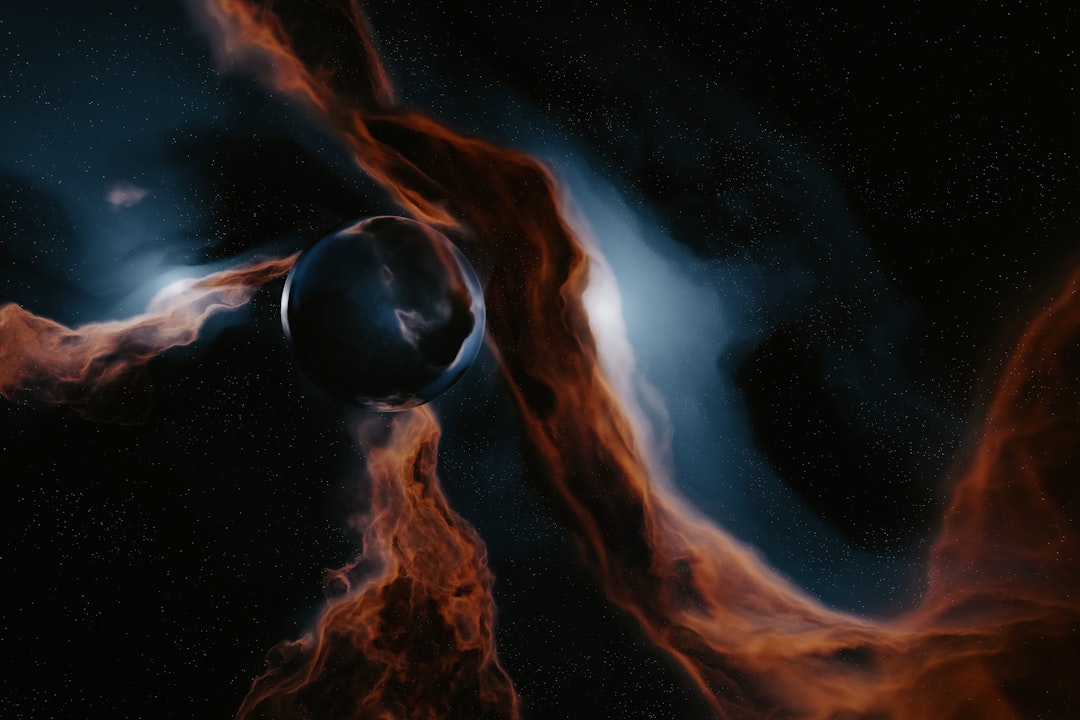
Black holes have long captivated the imagination of scientists and the general public alike. These enigmatic cosmic entities, formed from the remnants of massive stars that have undergone gravitational collapse, possess gravitational fields so intense that nothing, not even light, can escape their grasp. The concept of a black hole challenges our understanding of physics, particularly in the realms of general relativity and quantum mechanics.
As researchers delve deeper into the mysteries of the universe, black holes remain a focal point of study, offering insights into the fundamental nature of space, time, and gravity. The term “black hole” was first coined in the 1960s, but the idea has roots that trace back to the 18th century with the work of John Michell. Since then, advancements in technology and theoretical physics have allowed scientists to explore these celestial phenomena more thoroughly.
The existence of black holes has been confirmed through various observational methods, including the detection of gravitational waves and the imaging of their event horizons. As humanity continues to push the boundaries of knowledge, black holes serve as a reminder of the vastness and complexity of the universe.
Key Takeaways
- Black holes are regions in space where the gravitational pull is so strong that nothing, not even light, can escape.
- Mass and gravity are fundamental concepts in understanding black holes, as their immense mass creates the gravitational force that leads to their formation.
- The Schwarzschild radius is the distance from the center of a black hole to the event horizon, beyond which nothing can escape.
- Observing black holes can be challenging due to their ability to absorb light, but scientists use the Doppler effect to detect their presence.
- Measuring the orbital velocity of stars around black holes and using Kepler’s laws are key methods for calculating the mass of a black hole.
Understanding Mass and Gravity
To comprehend black holes, one must first grasp the fundamental concepts of mass and gravity. Mass is a measure of the amount of matter in an object, while gravity is the force that attracts two bodies toward each other. According to Isaac Newton’s law of universal gravitation, every mass exerts an attractive force on every other mass, with the strength of this force depending on both masses and the distance between them.
This foundational principle lays the groundwork for understanding how black holes operate within the cosmos. In the context of black holes, mass plays a crucial role in determining their properties and behavior. The greater the mass of a black hole, the stronger its gravitational pull.
This immense gravitational force is what allows black holes to attract surrounding matter, including gas and dust from nearby stars. As this material spirals into the black hole, it forms an accretion disk that emits radiation detectable by telescopes. The relationship between mass and gravity is not only essential for understanding black holes but also for exploring the dynamics of galaxies and the universe as a whole.
The Schwarzschild Radius
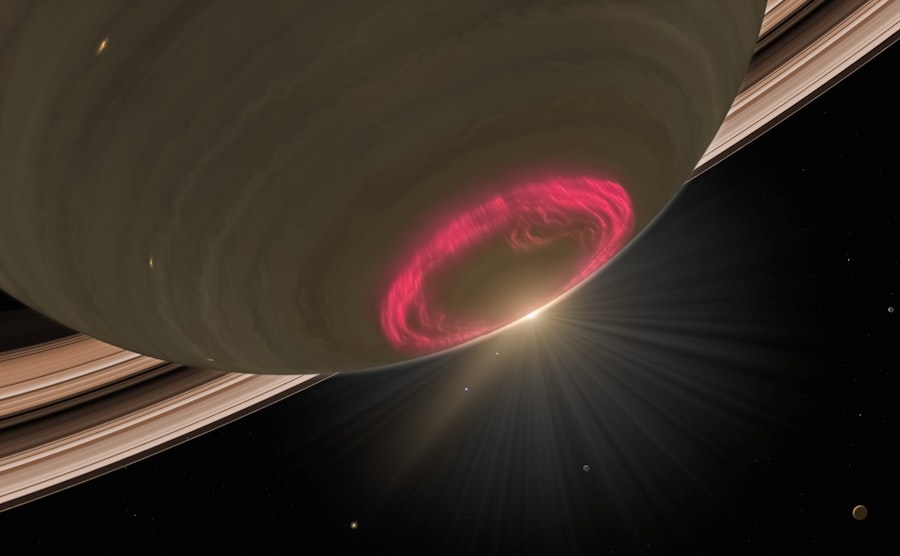
The concept of the Schwarzschild radius is pivotal in understanding black holes. Named after physicist Karl Schwarzschild, who derived it in 1916, this radius defines the boundary around a black hole known as the event horizon. The event horizon marks the point beyond which nothing can escape the gravitational pull of the black hole.
For any given mass, there exists a specific radius at which this phenomenon occurs; this is the Schwarzschild radius. Mathematically, the Schwarzschild radius (Rs) can be expressed as Rs = 2GM/c², where G represents the gravitational constant, M is the mass of the black hole, and c is the speed of light. This equation illustrates that as mass increases, so does the Schwarzschild radius.
For instance, a black hole with a mass equivalent to that of our Sun would have a Schwarzschild radius of approximately three kilometers. Understanding this radius is crucial for astronomers as it helps them identify potential black holes based on their observable effects on nearby objects.
Observing Black Holes
| Black Hole Name | Location | Mass (solar masses) | Event Horizon Size (km) |
|---|---|---|---|
| M87* | Virgo Cluster | 6.5 billion | 38 million |
| Sagittarius A* | Milky Way Galaxy | 4 million | 24 million |
Observing black holes presents unique challenges due to their very nature; they do not emit light or radiation that can be directly detected. However, astronomers have developed innovative techniques to infer their presence and study their properties. One common method involves observing the behavior of stars and gas clouds in close proximity to suspected black holes.
By analyzing their orbits and movements, scientists can deduce the mass and gravitational influence of an unseen object. Another significant advancement in observing black holes came with the advent of gravitational wave astronomy. The detection of ripples in spacetime caused by colliding black holes has opened a new window into understanding these cosmic giants.
In 2015, LIGO made history by detecting gravitational waves from a binary black hole merger, confirming a key prediction of Einstein’s general relativity. Such observations not only provide evidence for black holes but also allow researchers to study their properties in unprecedented detail.
The Doppler Effect
The Doppler effect is a phenomenon that plays a crucial role in observing celestial objects, including black holes. It refers to the change in frequency or wavelength of waves in relation to an observer moving relative to the source of those waves. In astronomy, this effect is often observed in light emitted from stars or other celestial bodies as they move toward or away from Earth.
When an object moves closer, its light shifts toward shorter wavelengths (blue shift), while light from an object moving away shifts toward longer wavelengths (red shift). In the context of black holes, astronomers utilize the Doppler effect to study the motion of stars orbiting around them. By measuring shifts in spectral lines from these stars, scientists can determine their velocities and infer the presence of a massive object exerting gravitational influence.
This technique has proven invaluable in identifying supermassive black holes at the centers of galaxies, where stars exhibit rapid orbital speeds indicative of immense gravitational forces.
Measuring the Orbital Velocity of Stars
Measuring the orbital velocity of stars is essential for understanding the dynamics surrounding black holes. When stars orbit a black hole, their velocities can provide critical information about the mass and gravitational pull exerted by that black hole. Astronomers employ various methods to determine these velocities, often relying on spectroscopy to analyze light emitted from stars.
By examining spectral lines and applying Doppler shift principles, researchers can calculate how fast a star is moving in its orbit around a black hole. This information allows them to estimate the mass of the black hole based on Kepler’s laws of planetary motion. The relationship between orbital velocity and mass is fundamental; as a star’s velocity increases, it indicates a more massive central object exerting gravitational influence.
Using Kepler’s Laws
Kepler’s laws of planetary motion provide a framework for understanding how celestial bodies move in relation to one another. These laws are particularly useful when studying stars orbiting black holes. The first law states that planets move in elliptical orbits around a central body, while the second law describes how a line segment joining a planet and its star sweeps out equal areas during equal intervals of time.
The third law relates the square of a planet’s orbital period to the cube of its average distance from its star. In applying Kepler’s laws to stars orbiting black holes, astronomers can derive important insights into their dynamics. By measuring orbital periods and distances from the central black hole, researchers can calculate its mass using these established relationships.
This method has been instrumental in determining the masses of supermassive black holes located at the centers of galaxies, providing valuable data for understanding galaxy formation and evolution.
Calculating the Mass of a Black Hole
Calculating the mass of a black hole involves combining observational data with theoretical frameworks such as Kepler’s laws and Newtonian mechanics. By measuring the orbital velocities and distances of stars near a suspected black hole, astronomers can apply these principles to derive its mass accurately. The process typically begins with obtaining high-resolution spectroscopic data to determine star velocities through Doppler shifts.
Once velocities are established, researchers can use Kepler’s third law to relate these measurements to mass. The formula M = (v²r)/G allows scientists to calculate mass based on orbital velocity (v), distance from the central object (r), and gravitational constant (G). This method has yielded remarkable results, revealing that many galaxies harbor supermassive black holes at their centers with masses millions or even billions of times that of our Sun.
Challenges in Measuring Black Hole Mass
Despite advancements in technology and methodology, measuring black hole mass remains fraught with challenges. One significant hurdle is accurately determining distances to stars orbiting black holes, especially when they are located in densely populated regions like galactic centers. The presence of dust and gas can obscure observations, complicating efforts to obtain precise measurements.
Additionally, many stars may be influenced by other gravitational forces within their vicinity, leading to complexities in interpreting their motions accurately. These factors can introduce uncertainties into mass calculations, making it difficult for astronomers to arrive at definitive conclusions about a black hole’s properties. As research continues, scientists are developing new techniques and technologies to overcome these obstacles and refine their measurements.
Alternative Methods for Measuring Black Hole Mass
In addition to traditional methods involving stellar orbits, researchers have explored alternative approaches for measuring black hole mass.
As matter falls into a black hole, it heats up and emits X-rays that can be detected by space-based observatories like Chandra or XMM-Newton.
By studying these emissions and their variability over time, scientists can infer properties about the accretion process and estimate black hole mass indirectly. Another promising technique involves using gravitational lensing effects caused by massive objects bending light from background sources. This method allows astronomers to estimate masses based on how light is distorted as it passes near a black hole.
Implications of Measuring Black Hole Mass
The implications of accurately measuring black hole mass extend far beyond individual cosmic entities; they resonate throughout our understanding of astrophysics and cosmology as a whole. By determining masses for supermassive black holes at galactic centers, researchers can gain insights into galaxy formation and evolution processes over cosmic time scales. These measurements help establish correlations between galaxy properties and their central black holes, shedding light on how these systems co-evolve.
Furthermore, understanding black hole masses contributes to broader questions about dark matter and dark energy—two enigmatic components that dominate our universe yet remain poorly understood. As scientists continue to refine measurement techniques and gather more data on black holes across different environments, they will undoubtedly uncover new revelations that challenge existing theories and deepen humanity’s comprehension of the cosmos. In conclusion, measuring black hole mass is an intricate endeavor that combines observational techniques with theoretical frameworks rooted in classical mechanics and modern astrophysics.
As researchers navigate challenges and explore alternative methods for measurement, they continue to unravel the mysteries surrounding these fascinating cosmic phenomena while expanding our knowledge about the universe itself.
In the fascinating realm of astrophysics, understanding how to weigh a black hole is a complex yet intriguing challenge. Black holes, with their immense gravitational pull, do not emit light, making direct measurement impossible. Instead, scientists rely on indirect methods, such as observing the motion of stars and gas clouds orbiting the black hole, to estimate its mass. For those interested in delving deeper into the mysteries of the cosmos, a related article on the topic can be found on My Cosmic Ventures. This article provides insights into the techniques and technologies used to study these enigmatic celestial objects. You can read more about it by visiting My Cosmic Ventures.
WATCH THIS! 🌌The Biggest Black Hole Is A LIE
FAQs
What is a black hole?
A black hole is a region in space where the gravitational pull is so strong that nothing, not even light, can escape from it.
How can we weigh a black hole?
One method to weigh a black hole is by observing the motion of objects around it. By studying the orbits of stars or gas clouds near the black hole, scientists can calculate its mass.
What is the relationship between a black hole’s mass and its size?
The mass of a black hole is directly related to its size. The more massive a black hole is, the larger its event horizon (the boundary beyond which nothing can escape) will be.
Can we directly measure the mass of a black hole?
Directly measuring the mass of a black hole is challenging because it does not emit any light. However, scientists can estimate its mass using indirect methods based on the effects of its gravitational pull on surrounding objects.
Why is it important to weigh black holes?
Weighing black holes helps scientists understand their impact on the surrounding environment and the role they play in the formation and evolution of galaxies. It also provides valuable insights into the fundamental laws of physics.