
The Physics of Steering
Steering involves complex physical principles despite its apparent simplicity. The steering system functions as an interface between driver input and wheel movement, converting directional intentions into vehicle motion.
When a driver rotates the steering wheel, torque is generated and transmitted through the steering mechanism to adjust wheel angles. The specific angle determines the turning radius and characteristics of the vehicle’s path. Friction represents another critical element in steering dynamics.
Tires must maintain sufficient contact with the road surface to effectively implement steering commands. Reduced friction conditions, such as those encountered on wet or icy surfaces, can significantly impair steering response and vehicle control. A thorough understanding of these physical principles provides insight into steering mechanics and their impact on vehicle handling.
This knowledge enables drivers to better anticipate vehicle behavior and make more effective driving decisions under various conditions.
Key Takeaways
- Steering involves understanding physics principles and recognizing physical and environmental constraints.
- Overcoming steering limitations requires specific techniques, especially in tight spaces and challenging environments.
- Mastery of steering control is crucial in adverse weather and varies with different vehicle types.
- Practice, training, and technology significantly enhance steering precision and overall performance.
- Defensive steering techniques and awareness of weight/load impacts are essential for safe driving.
Identifying Constraints in Steering
As you navigate through various driving scenarios, it’s essential to recognize the constraints that can impact your steering capabilities.
Larger vehicles typically have a wider turning radius, making it challenging to maneuver in tight spaces.
This limitation can be particularly frustrating in urban environments where space is at a premium. Understanding your vehicle’s turning radius allows you to plan your maneuvers more effectively and avoid potential obstacles. Another constraint to consider is the road conditions.
Uneven surfaces, potholes, and debris can all affect how your vehicle responds to steering inputs. For instance, if you encounter a pothole while turning, it may cause your vehicle to veer off course or lose traction. Additionally, the weight distribution within your vehicle can also play a role in steering constraints.
A heavily loaded vehicle may handle differently than one that is empty, affecting its responsiveness to your steering actions. By identifying these constraints, you can better prepare yourself for various driving situations and adjust your techniques accordingly.
Overcoming Steering Limitations
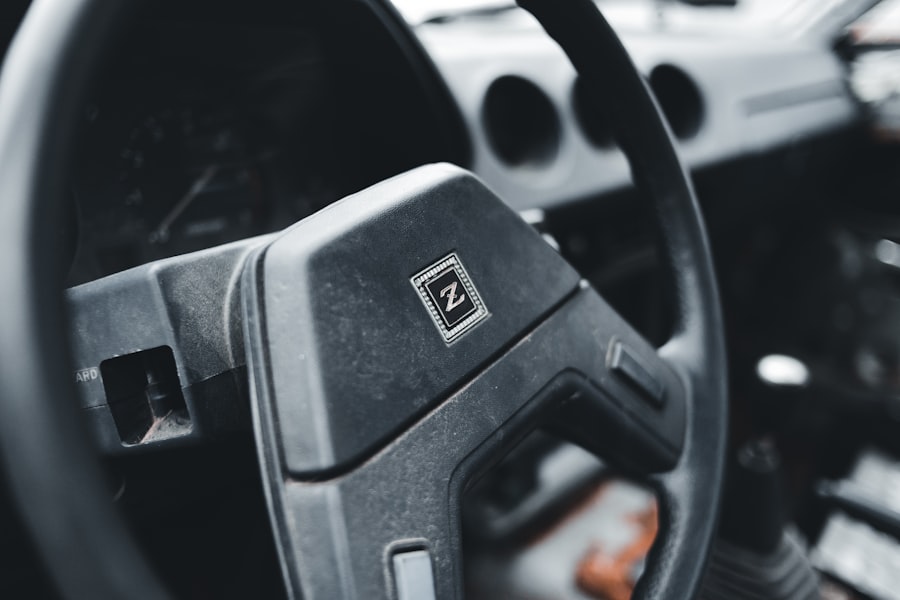
Once you have identified the constraints that affect your steering, the next step is to develop strategies for overcoming these limitations. One effective approach is to practice smooth and gradual steering inputs. Instead of making abrupt turns, which can lead to loss of control, focus on gentle movements that allow your vehicle to respond more predictably.
This technique is especially useful in tight spaces or when navigating through crowded areas where precision is key. Additionally, becoming familiar with your vehicle’s dimensions and handling characteristics can significantly enhance your ability to overcome steering limitations. Spend time practicing in different environments to understand how your vehicle behaves under various conditions.
For example, try maneuvering in a parking lot or an empty road to get a feel for how much space you need for turns. This familiarity will boost your confidence and help you make better decisions when faced with challenging steering situations.
Utilizing Steering Techniques for Tight Spaces
When it comes to navigating tight spaces, employing specific steering techniques can make all the difference. One popular method is known as “hand-over-hand” steering, which involves crossing one hand over the other on the steering wheel as you turn. This technique allows for greater control and precision when making sharp turns or navigating narrow passages.
By using hand-over-hand steering, you can effectively manage your vehicle’s trajectory without losing grip on the wheel. Another useful technique is the “three-point turn,” which is particularly beneficial when you need to change direction in a confined area. This maneuver involves turning the vehicle in a series of steps: first, turning sharply to one side, then reversing while turning the opposite way, and finally moving forward to complete the turn.
Practicing this technique will help you become more adept at handling tight spaces and improve your overall steering skills.
Navigating Steering Challenges in Different Environments
| Metric | Description | Typical Range | Unit | Relevance to Steering Within Constraints |
|---|---|---|---|---|
| Steering Angle | The angle at which the wheels are turned from the straight-ahead position | 0 – 45 | Degrees | Defines the maximum turning capability within mechanical limits |
| Steering Torque | Force applied to the steering wheel to initiate or maintain steering | 0 – 15 | Nm (Newton-meters) | Indicates effort required to steer within physical constraints |
| Turning Radius | Minimum radius of the path the vehicle can follow when steering | 3 – 12 | meters | Represents spatial constraints for maneuvering |
| Steering Response Time | Time taken for the steering system to respond to input | 0.1 – 0.5 | seconds | Measures agility and control within dynamic constraints |
| Maximum Steering Rate | Maximum speed at which the steering angle can change | 100 – 300 | Degrees per second | Limits how quickly steering adjustments can be made |
| Slip Angle | Angle between the direction the wheel is pointing and the actual direction of travel | 0 – 10 | Degrees | Indicates tire grip and control within friction constraints |
Different driving environments present unique challenges that can affect your steering performance. For instance, driving in urban areas often requires quick reflexes and precise steering due to heavy traffic and frequent stops. In contrast, rural driving may involve winding roads and varying terrain that demand a different approach to steering.
Adapting your techniques based on the environment is crucial for maintaining control and ensuring safety. In off-road conditions, for example, you may encounter obstacles such as rocks or uneven surfaces that require a more cautious approach to steering. Here, it’s essential to remain aware of your surroundings and adjust your steering inputs accordingly.
Slower speeds and gentle movements will help you navigate these challenges without risking damage to your vehicle or losing control. By understanding how different environments impact steering dynamics, you can tailor your approach to each situation and enhance your overall driving experience.
Mastering Steering Control in Adverse Weather Conditions

Driving in adverse weather conditions presents a unique set of challenges that can significantly impact your steering control. Rain, snow, fog, and ice can all reduce traction and visibility, making it essential to adjust your steering techniques accordingly. When driving on wet or icy roads, for instance, it’s crucial to reduce your speed and increase following distances to allow for longer stopping times.
This adjustment gives you more time to react to any changes in road conditions. In addition to adjusting your speed, practicing gentle steering inputs becomes even more critical in adverse weather. Abrupt movements can lead to skidding or loss of control, so focus on smooth transitions when turning or changing lanes.
If you do begin to skid, remember to steer into the direction of the skid rather than against it; this technique helps regain control of the vehicle more effectively. By mastering these techniques for adverse weather conditions, you can enhance your safety and confidence while driving.
Adapting Steering Strategies for Different Types of Vehicles
Each type of vehicle comes with its own set of handling characteristics that influence how you should approach steering. For instance, larger vehicles like trucks or SUVs often have a higher center of gravity and may require different techniques compared to smaller cars. Understanding these differences is essential for maintaining control and ensuring safe navigation.
When driving a larger vehicle, be mindful of its turning radius and weight distribution. You may need to allow for more space when making turns or changing lanes. Conversely, smaller vehicles tend to be more agile and responsive but may also be more susceptible to crosswinds or sudden movements from other vehicles.
Adapting your steering strategies based on the type of vehicle you’re driving will help you navigate various situations with greater ease and confidence.
Enhancing Steering Precision through Practice and Training
Like any skill, mastering steering precision requires consistent practice and training. One effective way to enhance your steering abilities is by participating in driving courses or workshops that focus on advanced techniques. These programs often provide valuable insights into proper steering methods and allow you to practice in controlled environments under expert guidance.
Additionally, dedicating time to practice specific maneuvers can significantly improve your steering precision over time. Set aside time in an empty parking lot or open space to work on various techniques such as parallel parking or tight turns. The more familiar you become with your vehicle’s handling characteristics and response times, the more confident you’ll feel behind the wheel.
Regular practice not only enhances your skills but also builds muscle memory, allowing for smoother and more instinctive steering actions.
Utilizing Technology to Improve Steering Performance
In today’s world, technology plays an increasingly important role in enhancing driving performance, including steering capabilities. Many modern vehicles come equipped with advanced steering systems that offer features such as power-assisted steering or lane-keeping assistance. These technologies can help reduce the physical effort required for steering while improving overall control.
Moreover, utilizing tools like backup cameras or parking sensors can aid in precision when maneuvering in tight spaces or during complex parking situations. These technologies provide real-time feedback about your surroundings, allowing you to make informed decisions while steering. By embracing these advancements, you can enhance your overall driving experience and improve your ability to navigate various challenges with confidence.
Understanding the Impact of Weight and Load on Steering
The weight and load of your vehicle significantly influence its handling characteristics and steering response. When carrying heavy loads or towing trailers, for example, the added weight can affect how your vehicle steers and brakes. It’s essential to understand how these factors impact performance so that you can adjust your driving style accordingly.
When driving with a heavy load, be mindful of longer stopping distances and reduced maneuverability. You may need to make wider turns or allow for extra time when changing lanes due to the increased weight affecting your vehicle’s stability. Additionally, distributing weight evenly within the vehicle can help maintain balance and improve handling during turns.
By understanding the impact of weight and load on steering dynamics, you can make safer choices while driving.
Implementing Defensive Steering Techniques for Safety
Defensive driving is an essential aspect of safe driving practices, and implementing defensive steering techniques can significantly enhance your safety on the road. One key principle of defensive driving is maintaining awareness of your surroundings at all times. This awareness allows you to anticipate potential hazards and react accordingly with appropriate steering inputs.
For instance, if you notice a vehicle approaching from behind at high speed or a pedestrian stepping onto the road unexpectedly, being prepared with quick reflexes can make all the difference in avoiding accidents. Additionally, maintaining a safe following distance gives you ample time to react if the vehicle ahead suddenly stops or swerves unexpectedly. By incorporating defensive steering techniques into your driving routine, you not only protect yourself but also contribute to overall road safety for everyone around you.
In conclusion, mastering the art of steering involves understanding its underlying physics, recognizing constraints, adapting techniques for various environments and vehicles, and continuously practicing for improvement. By embracing technology and implementing defensive strategies, you can enhance both your performance and safety on the road.
In exploring the concept of steering within constraints, it’s essential to consider the broader implications of decision-making in complex environments. A related article that delves into this topic can be found at this link, where various strategies for navigating limitations and optimizing outcomes are discussed. This resource provides valuable insights into how individuals and organizations can effectively manage constraints while still achieving their goals.
FAQs
What is steering within constraints?
Steering within constraints refers to the process of guiding or controlling the movement of an object, vehicle, or system while adhering to specific limitations or boundaries. These constraints can include physical boundaries, safety requirements, or operational limits.
Where is steering within constraints commonly applied?
This concept is commonly applied in robotics, autonomous vehicles, computer graphics, and control systems where precise navigation is required within predefined limits to avoid obstacles or maintain safety.
What types of constraints are considered in steering?
Constraints can be geometric (such as walls or obstacles), kinematic (limitations on speed or turning radius), dynamic (forces and accelerations), or environmental (weather conditions or terrain).
How does steering within constraints improve safety?
By ensuring that movement adheres to predefined limits, steering within constraints helps prevent collisions, reduces the risk of accidents, and ensures compliance with operational guidelines.
What methods are used to implement steering within constraints?
Common methods include algorithmic approaches like model predictive control, constraint-based optimization, potential fields, and machine learning techniques that account for constraints during path planning and control.
Can steering within constraints be applied to autonomous vehicles?
Yes, autonomous vehicles rely heavily on steering within constraints to navigate safely through traffic, avoid obstacles, and comply with traffic laws.
What challenges are associated with steering within constraints?
Challenges include accurately modeling constraints, real-time computation requirements, handling dynamic environments, and ensuring robustness against uncertainties or sensor errors.
Is steering within constraints relevant to human-operated vehicles?
While humans naturally consider constraints when steering, advanced driver-assistance systems (ADAS) use steering within constraints algorithms to assist drivers and enhance safety.
How does steering within constraints relate to path planning?
Steering within constraints is a critical component of path planning, ensuring that the planned path is feasible and safe given the system’s limitations and environmental constraints.
Are there software tools available for steering within constraints?
Yes, various simulation and control software platforms provide tools and libraries to model and implement steering within constraints for research and development purposes.