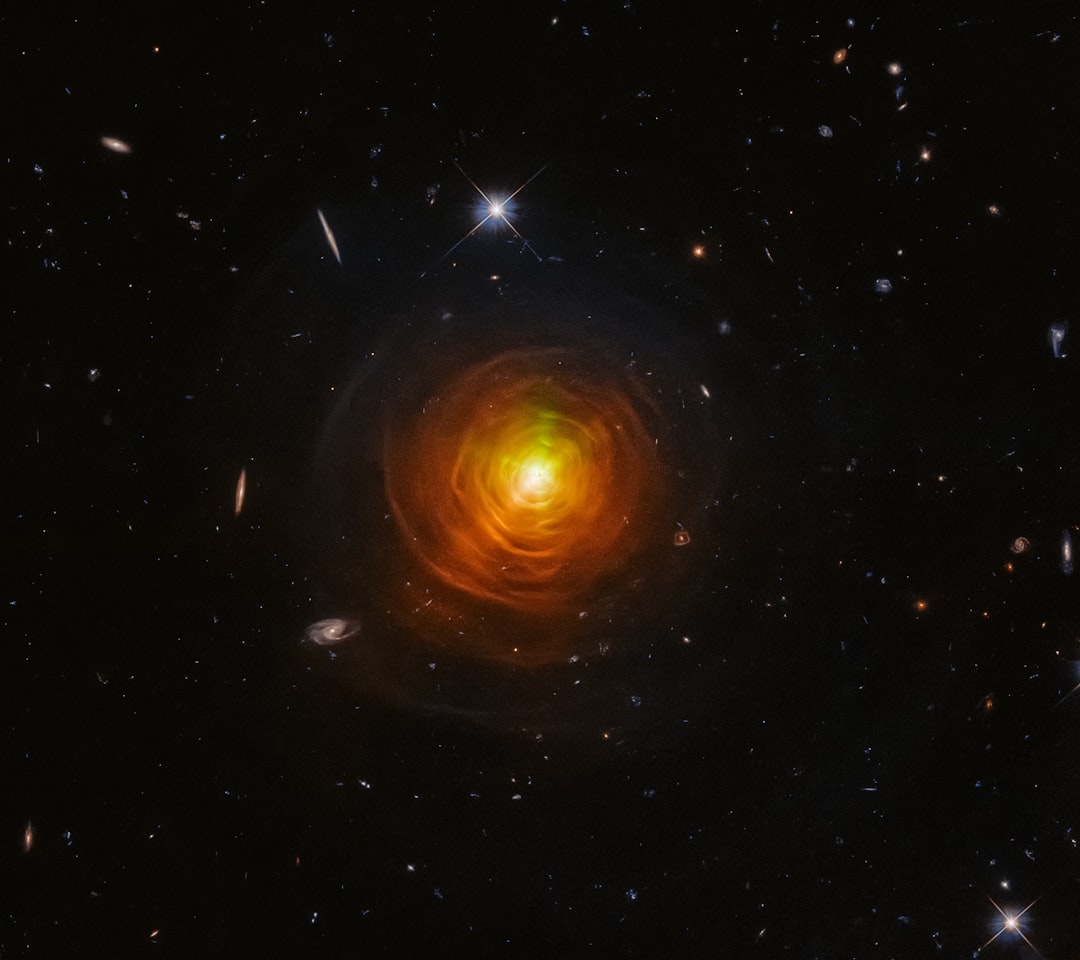
A quasar, short for “quasi-stellar object,” represents one of the most luminous and energetic phenomena in the universe. These celestial entities are powered by supermassive black holes at the centers of distant galaxies, which consume surrounding gas and dust. As matter spirals into the black hole, it heats up and emits tremendous amounts of energy, often outshining entire galaxies.
Quasars are typically observed at great distances, making them some of the earliest objects visible in the universe, providing valuable insights into cosmic evolution.
This broad range of emissions allows astronomers to study them using various observational techniques.
Quasars serve as beacons in the vastness of space, illuminating the conditions of the early universe and offering clues about the formation and growth of galaxies. Their extreme brightness and distance make them essential tools for understanding the cosmos and the fundamental processes that govern it.
Key Takeaways
- Quasars are extremely bright and distant celestial objects powered by supermassive black holes at the centers of galaxies.
- TON 618 is one of the most massive and luminous quasars ever discovered, located about 10.4 billion light-years away from Earth.
- TON 618’s size is estimated to be around 66 billion times the mass of the Sun, making it one of the largest known black holes in the universe.
- The energy output of TON 618 is incredibly powerful, emitting thousands of times more energy than the entire Milky Way galaxy.
- TON 618’s existence has significant implications for our understanding of the early universe, galaxy formation, and the role of supermassive black holes in cosmic evolution.
The Discovery of TON 618
TON 618 was first identified in 1957 as part of a survey of radio sources. Initially cataloged as a radio source, it wasn’t until later that astronomers recognized its true nature as a quasar. The discovery of TON 618 marked a significant milestone in the study of quasars, as it was one of the first to be classified as such.
Its identification helped to solidify the understanding of quasars as not merely stars but rather complex systems powered by supermassive black holes. The significance of TON 618 extends beyond its classification; it also provided a unique opportunity for researchers to explore the properties of quasars in greater detail. As astronomers delved deeper into its characteristics, they uncovered its immense luminosity and distance from Earth, which further fueled interest in studying these enigmatic objects.
The discovery of TON 618 opened new avenues for research, prompting scientists to investigate the mechanisms behind quasar emissions and their implications for cosmic evolution.
TON 618’s Massive Size
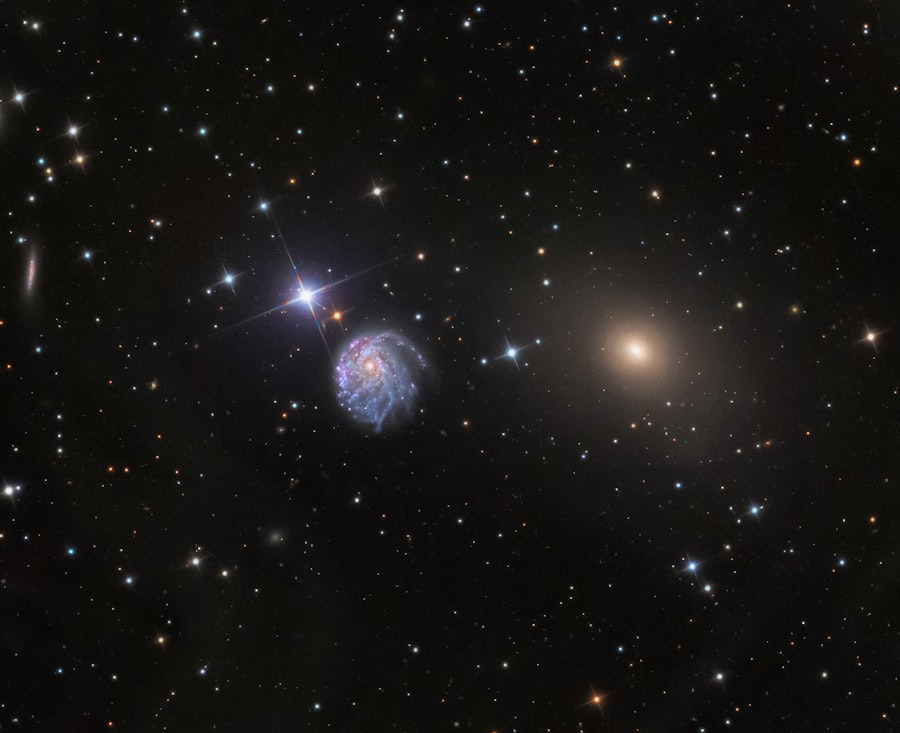
TON 618 is renowned for its staggering size, making it one of the largest known quasars in the universe. Estimates suggest that its supermassive black hole has a mass equivalent to approximately 66 billion solar masses. This colossal size places TON 618 among the most massive black holes ever discovered, challenging previous notions about the limits of black hole growth.
The sheer scale of TON 618 raises intriguing questions about how such a massive black hole could form and evolve over cosmic time. The size of TON 618 is not only remarkable in terms of its black hole but also in its overall structure. The quasar itself is surrounded by an extensive accretion disk composed of gas and dust that spirals inward toward the black hole.
This disk can extend for vast distances, contributing to the quasar’s luminosity as material is heated to extreme temperatures before crossing the event horizon. The immense size and energy output of TON 618 provide a unique laboratory for studying the dynamics of black holes and their interactions with surrounding matter.
The Power of TON 618
| Property | Value |
|---|---|
| Black Hole Name | TON 618 |
| Distance from Earth | 10.37 billion light years |
| Black Hole Mass | 66 billion solar masses |
| Quasar Luminosity | 140 trillion times that of the Sun |
| Black Hole Diameter | about 160 billion kilometers |
The power emitted by TON 618 is nothing short of extraordinary. As one of the brightest quasars known, it radiates energy equivalent to thousands of times that of all the stars in an entire galaxy combined. This immense luminosity allows astronomers to observe TON 618 from billions of light-years away, providing a glimpse into the conditions that prevailed in the early universe.
The energy output is primarily due to the accretion process, where matter falling into the black hole releases gravitational energy in the form of radiation. The power generated by TON 618 also has implications for our understanding of cosmic evolution. Its brightness can influence the surrounding environment, affecting star formation rates and the dynamics of nearby galaxies.
By studying such powerful quasars, researchers can gain insights into how energy from supermassive black holes impacts their host galaxies and contributes to the larger-scale structure of the universe.
TON 618’s Impact on its Surroundings
The influence of TON 618 extends far beyond its immediate vicinity. As a powerful quasar, it emits vast amounts of radiation that can affect the intergalactic medium and neighboring galaxies. This radiation can heat surrounding gas, potentially inhibiting star formation in nearby regions or triggering bursts of star formation under certain conditions.
The interplay between quasars like TON 618 and their environments is a critical area of research in astrophysics. Moreover, TON 618’s energetic output can create outflows and jets that interact with surrounding matter, shaping the evolution of its host galaxy. These outflows can carry material away from the galaxy, redistributing gas and dust throughout intergalactic space.
Understanding how quasars like TON 618 influence their surroundings is essential for comprehending galaxy formation and evolution on a cosmic scale.
The Black Hole at the Center of TON 618

At the heart of TON 618 lies a supermassive black hole that serves as the engine powering this extraordinary quasar. With an estimated mass of around 66 billion solar masses, this black hole is one of the largest known to exist. Its immense gravitational pull governs the dynamics of the surrounding accretion disk, where matter spirals inward at incredible speeds before being consumed by the black hole.
The study of the black hole at the center of TON 618 provides valuable insights into the nature of supermassive black holes and their growth mechanisms. Researchers are particularly interested in understanding how such massive black holes form in the early universe and what factors contribute to their rapid growth. By examining TON 618 and similar quasars, scientists hope to unravel the mysteries surrounding black hole formation and their role in shaping galaxies.
TON 618’s Role in the Early Universe
TON 618 serves as a crucial window into the early universe, offering astronomers a glimpse into conditions that existed billions of years ago. As one of the most distant quasars known, it provides evidence for how supermassive black holes could have formed shortly after the Big Bang. The existence of such massive black holes at an early stage challenges existing models of cosmic evolution and raises questions about how quickly these entities can grow.
The light from TON 618 has traveled for over 13 billion years to reach Earth, allowing scientists to study a time when galaxies were still forming and evolving. By analyzing its properties, researchers can gain insights into the processes that governed galaxy formation during this formative period in cosmic history. Understanding TON 618’s role in the early universe is essential for piecing together the timeline of cosmic evolution.
TON 618’s Influence on Galaxy Formation
The influence of TON 618 extends beyond its immediate vicinity; it plays a significant role in shaping galaxy formation on a larger scale. As a powerful quasar, it emits radiation that can impact star formation rates in its host galaxy and neighboring regions. The energy output from such quasars can either suppress or trigger star formation depending on various factors, including gas density and temperature.
Moreover, TON 618’s jets and outflows can redistribute gas within its host galaxy and beyond, influencing the dynamics of galaxy mergers and interactions. These processes are crucial for understanding how galaxies evolve over time and how supermassive black holes contribute to this evolution. By studying quasars like TON 618, astronomers can gain insights into the complex interplay between black holes and galaxy formation.
Studying TON 618 from Earth
Despite being located billions of light-years away, astronomers have developed sophisticated techniques to study TON 618 from Earth. Observatories equipped with advanced telescopes can capture its light across various wavelengths, allowing researchers to analyze its properties in detail.
The data collected from these observations provide valuable information about TON 618’s luminosity, spectral characteristics, and surrounding environment. By combining observations from different wavelengths, scientists can construct a comprehensive picture of this quasar’s behavior and its impact on cosmic evolution. Ongoing research continues to refine our understanding of TON 618 and its significance within the broader context of astrophysics.
TON 618’s Future Evolution
As with all celestial objects, TON 618 will continue to evolve over time. The future evolution of this quasar will depend on various factors, including its accretion rate and interactions with surrounding matter. If it continues to consume material at its current rate, it may remain an active quasar for billions more years before eventually transitioning into a more dormant state.
The fate of TON 618 also raises questions about the long-term behavior of supermassive black holes in general. Understanding how these entities evolve over cosmic timescales is crucial for developing models that describe their life cycles and their impact on galaxy formation. As researchers continue to study TON 618, they will gain insights into not only its future but also that of other quasars throughout the universe.
The Importance of TON 618’s Existence
The existence of TON 618 holds profound implications for our understanding of the universe. As one of the most massive known quasars, it challenges existing theories about black hole formation and growth while providing valuable insights into cosmic evolution during critical epochs in history. Its study enhances our knowledge about how supermassive black holes influence their host galaxies and contribute to large-scale structures in the cosmos.
Moreover, TON 618 serves as a reminder of the vastness and complexity of the universe we inhabit. It exemplifies how much there is still to learn about celestial phenomena that exist far beyond our immediate reach. By continuing to explore objects like TON 618, astronomers hope to unravel more mysteries about our universe’s origins, structure, and ultimate fate—further enriching humanity’s understanding of its place within this grand cosmic tapestry.
Quasar TON 618 is one of the most massive black holes ever discovered, with an estimated mass of 66 billion solar masses. This astronomical marvel continues to intrigue scientists and enthusiasts alike, as it challenges our understanding of the universe’s most extreme objects. For those interested in exploring more about the fascinating world of quasars and other cosmic phenomena, you can read a related article on the topic by visiting this page. This article delves into the mysteries of quasars and provides insights into their role in the cosmos.
WATCH THIS! 🌌The Biggest Black Hole Is A LIE
FAQs
What is a quasar?
A quasar is an extremely luminous and energetic active galactic nucleus, powered by a supermassive black hole at the center of a galaxy.
What is TON 618?
TON 618 is one of the most massive known quasars, located about 10.37 billion light-years from Earth in the constellation of Canes Venatici.
How massive is TON 618?
TON 618 has an estimated mass of about 66 billion times that of the Sun, making it one of the most massive black holes known.
How does TON 618 compare to other quasars?
TON 618 is one of the most massive and luminous quasars known, with an extremely high accretion rate and intense radiation output.
What are the implications of TON 618’s mass?
The extreme mass of TON 618 challenges current theories of black hole formation and growth, and provides valuable insights into the early universe and the behavior of supermassive black holes.